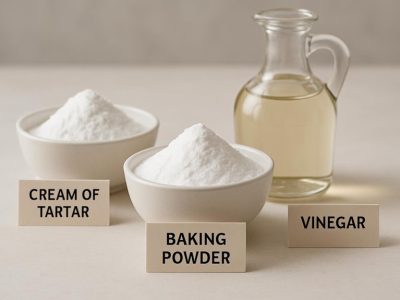
Imagine pulling out your favorite recipe, only to pause at the mention of baking soda or baking powder. They might look similar, even sit side by side in your pantry, but their roles in baking couldn’t be more distinct. One creates a gentle rise, while the other packs a punch, transforming your batter into fluffy perfection. But how do you know which one to reach for?
Understanding the difference between these two kitchen staples isn’t just about chemistry—it’s the secret to avoiding flat cakes or overly dense cookies. Whether you’re an experienced baker or just starting, knowing when to use baking soda or baking powder can make or break your creations. So, let’s unravel the mystery behind these leavening agents and ensure your next bake is nothing short of spectacular.
What Is Baking Soda?
Baking soda, or sodium bicarbonate, is a white crystalline compound essential in various baking recipes. It’s a single-ingredient leavening agent that reacts chemically when paired with an acidic ingredient.
Composition Of Baking Soda
Baking soda, chemically NaHCO₃, is a base with a high pH. When exposed to moisture and an acid, such as lemon juice or vinegar, it releases carbon dioxide gas. This gas forms bubbles within the dough, creating softness and lightness. The compound remains stable in dry environments, making it shelf-stable for long periods.
Uses Of Baking Soda In Baking
Baking soda’s application in baking is precise, relying on its immediate reaction with acids. You frequently find it in recipes where acidic components exist, like buttermilk pancakes and chocolate cake. For example, in cookie recipes, baking soda helps spread and browns the cookies evenly.
Accurately measuring baking soda is critical, as overuse can result in a soapy flavor and an undesirable texture. It’s one of the simplest, yet impactful elements in enhancing baked goods’ structures.
What Is Baking Powder?
Baking powder is a leavening agent commonly used in baking to achieve a light and fluffy texture. It contains multiple components that work together to produce carbon dioxide gas when moistened and heated.
Composition Of Baking Powder
Baking powder typically consists of three key ingredients: a base, an acid, and a drying agent. The base is usually baking soda (sodium bicarbonate). The acid is often cream of tartar (potassium bitartrate) or similar compounds. Cornstarch acts as a drying agent to prevent premature reactions during storage.
The chemical reaction occurs when baking powder combines with liquids and heat, releasing carbon dioxide gas. Some formulations are double-acting, meaning they trigger two reactions—one when mixed with liquids and another during heating.
Uses Of Baking Powder In Baking
Baking powder is versatile in recipes without acidic ingredients. For instance, it’s essential for making pancakes, muffins, and cakes that require aeration without adding tangy flavors. Double-acting baking powder ensures a consistent rise even if the batter sits for a while before baking.
Using too much baking powder can cause baked goods to collapse or taste metallic. Accurate measurement ensures proper leavening and flavor balance.
Key Differences Between Baking Powder And Baking Soda
Understanding the distinctions between baking powder and baking soda is essential for successful baking. These leavening agents differ in composition, reaction type, and their effects on taste and texture in baked goods.
Chemical Properties
Baking soda, or sodium bicarbonate (NaHCO₃), is a single compound. It requires an acidic ingredient like lemon juice to activate and start releasing carbon dioxide. Baking powder, in contrast, contains sodium bicarbonate, an acid (commonly cream of tartar), and cornstarch to prevent premature reactions.
Baking soda is highly alkaline. If used improperly, it can cause an unpleasant bitterness. Baking powder’s balanced composition prevents such issues when measured appropriately.
Leavening Mechanism
Baking soda reacts immediately upon contact with moisture and an acid. Carbon dioxide gas bubbles form, giving baked goods their rise. Its reaction is quick, which means recipes using it must be baked right after mixing.
Baking powder can either be single-acting, reacting once when wet, or double-acting. Double-acting versions release gas twice—once when mixed and again when heated. This delayed action offers more flexibility during preparation.
Flavor Impact
Baking soda magnifies the flavors of acidic ingredients like yogurt or molasses. Using excessive amounts intensifies a soapy or metallic taste that overwhelms sweetness.
Baking powder, being neutral, doesn’t affect flavor significantly. It works well in cakes or muffins where added tang isn’t wanted. Still, excessive quantities can leave a subtle chemical aftertaste.
Substitution Tips
Substituting baking soda with baking powder is feasible by increasing the amount. For example, replace 1 teaspoon of baking soda with 3 teaspoons of baking powder, and omit added acidic ingredients.
If replacing baking powder with baking soda, include additional acid like buttermilk to activate it. Baking soda alone won’t work properly without acidic components in the recipe.
When To Use Baking Powder Vs. Baking Soda
Understanding when to use baking powder versus baking soda is key to perfecting baked goods. Both play crucial roles in achieving the right texture, but their usage depends on the recipe’s ingredients and desired outcome.
Recipes That Require Baking Powder
Baking powder suits recipes without acidic ingredients. Its built-in acidic component ensures proper leavening. Pancakes, muffins, and birthday cakes often rely on baking powder for a consistent rise and a light texture. For instance, classic vanilla cake recipes typically depend on baking powder since its reaction produces carbon dioxide both when moistened and heated. Double-acting baking powder adds reliability, triggering multiple reactions through the baking process.
Accurate amounts of baking powder deliver the ideal fluffiness while preventing structural volatility. Overuse, but, can cause collapsed cakes or an undesirable metallic taste. Stick to recipe measurements to avoid problems. In short, choose baking powder for items like sponge cakes and biscuits where no acidic components appear.
Recipes That Require Baking Soda
Baking soda works best in recipes with acidic ingredients. Its reaction with acids like buttermilk, vinegar, or lemon juice causes immediate carbon dioxide production, essential for quick leavening. For example, chocolate cakes, gingerbread cookies, and buttermilk waffles include acidic elements that pair well with baking soda to create tender, airy textures. Baking soda also neutralizes acidity, balancing flavors.
Use sparingly due to its strength; even a slightly excessive amount can leave a bitter aftertaste and disrupt texture. Recipes explicitly calling for baking soda often integrate it carefully for precise flavor and rise control. Rely on baking soda when working with acidic-heavy recipes or when aiming for dark browning effects, as it enhances Maillard reactions responsible for color and flavor.
Common Myths About Baking Powder And Baking Soda
Baking soda and baking powder are interchangeable
Many believe you can swap baking powder and baking soda in any recipe, which isn’t true. Baking soda requires acidic ingredients to activate, while baking powder contains both an acid and a base, allowing it to work independently. For example, replacing baking powder with baking soda in a pancake recipe without acidic components results in flat, dense pancakes. These two ingredients serve complementary but distinct purposes.
Using more leavening agent improves rising
Some think adding extra baking soda or baking powder leads to fluffier baked goods. Overuse of these ingredients can disrupt the recipe’s balance. Excess baking soda may produce bitter flavors, while too much baking powder can cause cakes to collapse or develop a metallic taste. The key is precise measurement to achieve optimal rise and texture.
Leavening agents can be omitted without issues
Some recipes appear successful even when omitting baking soda or baking powder, but this sacrifices texture and structure. For instance, leaving out baking soda in cookies won’t allow them to spread properly or brown evenly. Similarly, skipping baking powder in cakes makes them dense and heavy. Consistent inclusion of the right leavening agent ensures proper results.
Expired leavening agents still work
Many overlook expiration dates on baking soda and baking powder, assuming they’re always effective. Expired products lose potency, resulting in flat baked goods. To test freshness, dissolve a small amount of baking soda in vinegar or baking powder in water. Active products bubble vigorously, indicating usability.
Leavening agents affect flavor
People often believe leavening agents alter the flavor, but they primarily impact texture. Baking soda can slightly enhance the taste of acidic ingredients, like chocolate or molasses, while excessive amounts create a soapy, bitter aftertaste. In contrast, baking powder is neutral and doesn’t significantly change flavor unless overused.
Double-acting baking powder reacts only once
There’s a misconception that double-acting baking powder activates a single time when mixed. In reality, it reacts twice—once when moistened and again when heated—providing consistent rise throughout the baking process. Pancakes benefit greatly from this dual reaction, as it maintains fluffiness during cooking.
Baking soda deodorizes your baked goods
While baking soda is known for its deodorizing properties in cleaning and freshening, it doesn’t neutralize strong flavors in recipes. Instead, it enhances the profile of certain ingredients, showcasing their natural flavors rather than masking them.
Conclusion
Mastering the differences between baking soda and baking powder can transform your baking results. By understanding their unique roles and how they interact with other ingredients, you can create perfectly risen cakes, cookies, and more.
Pay close attention to your recipe’s requirements and measure carefully to avoid common pitfalls like bitterness or collapsed textures. With this knowledge, you’ll be equipped to tackle any baking challenge with confidence and precision.
To provide the best experiences, we use technologies like cookies to store and/or access device information. Consenting to these technologies will allow us to process data such as browsing behaviour or unique IDs on this site. Not consenting or withdrawing consent, may adversely affect certain features and functions.
Functional
Always active
The technical storage or access is strictly necessary for the legitimate purpose of enabling the use of a specific service explicitly requested by the subscriber or user, or for the sole purpose of carrying out the transmission of a communication over an electronic communications network.
Preferences
The technical storage or access is necessary for the legitimate purpose of storing preferences that are not requested by the subscriber or user.
Statistics
The technical storage or access that is used exclusively for statistical purposes.The technical storage or access that is used exclusively for anonymous statistical purposes. Without a subpoena, voluntary compliance on the part of your Internet Service Provider, or additional records from a third party, information stored or retrieved for this purpose alone cannot usually be used to identify you.
Marketing
The technical storage or access is required to create user profiles to send advertising, or to track the user on a website or across several websites for similar marketing purposes.