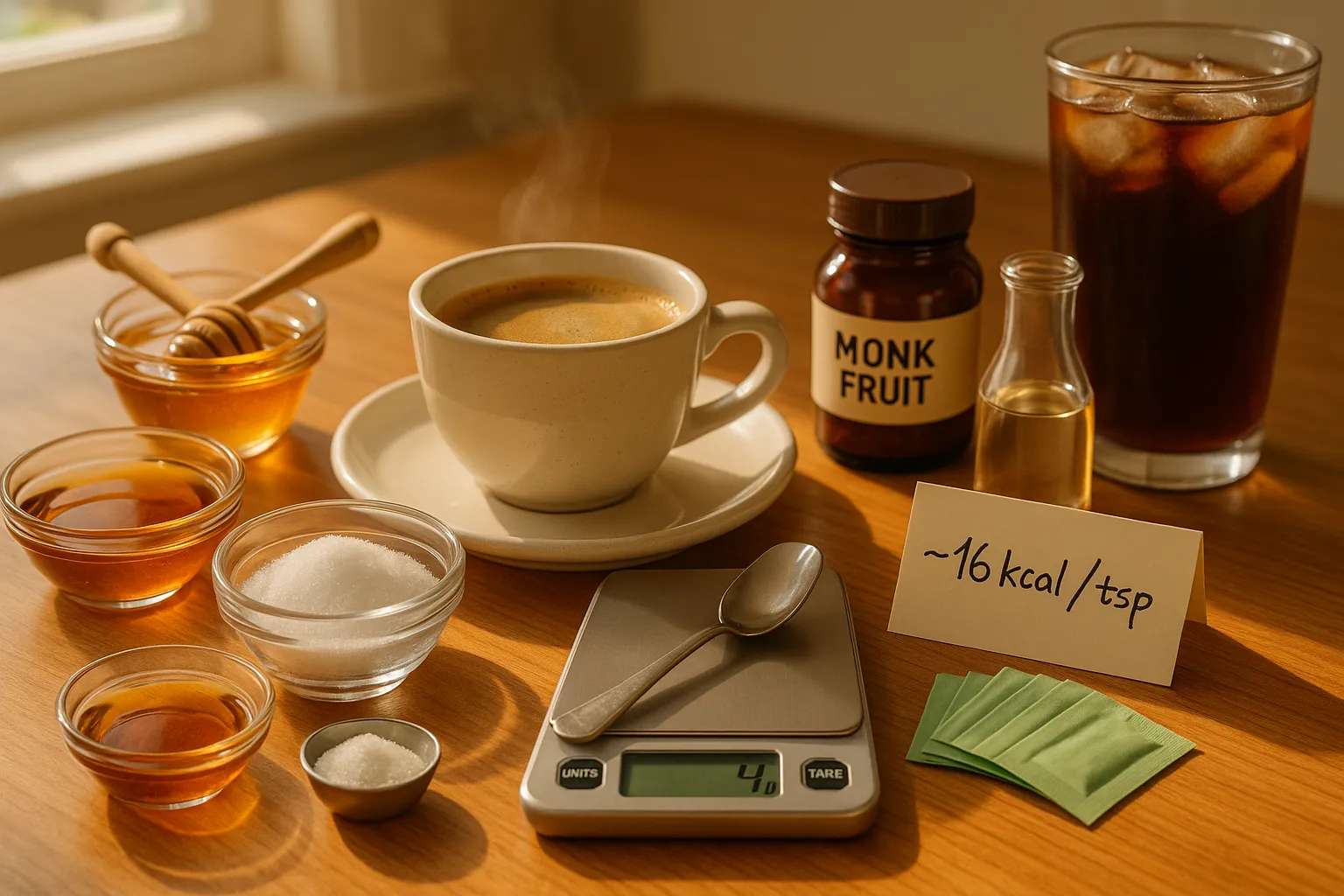
Sugar raises calories and can mask coffee’s true flavors. If you want to cut calories, reduce blood-sugar spikes, or simply taste more of the bean, choosing a different sweetener changes the whole cup. In this guide you’ll find practical alternatives to plain sugar, how they behave in hot coffee, and which ones play well with different roasts and brewing styles. Expect clear ratios, honest trade-offs, and small experiments you can try tomorrow morning to discover a sweeter, but cleaner, cup.
Why Consider Replacing Plain Sugar?
Fact: Plain white sugar adds empty calories and quickly raises blood glucose. Many people switch for health reasons, weight control, diabetes management, or reducing processed foods. But other motives matter too: sugar can flatten delicate floral notes in light roasts and drown single-origin complexity.
Sugar also impacts taste perception. It stimulates sweetness receptors strongly and suppresses bitterness. That’s useful when your coffee tastes harsh. But if you want to explore nuanced acidity or subtle fruit notes, sugar limits your ability to detect them. Consider the effect on routine: sugar requires portion control. A typical teaspoon is about 4 grams and 16 calories. Over several cups daily that adds up.
Practical reasons also exist. Some sweeteners dissolve poorly in cold brew. Others leave aftertastes. You’ll weigh calorie count, glycemic impact, solubility in hot or iced drinks, and flavor footprint. Knowing those trade-offs helps you choose a substitute that fits your goals and your coffee habits.
How To Choose The Right Sweetener For Your Coffee
Answer: Match sweetener traits to your priorities. Start by listing what matters: calories, taste, heat stability, digestive tolerance, and how much you care about natural ingredients.
If calories are the priority, pick erythritol or allulose. If you want a natural, whole-food option, choose honey or maple. If you brew espresso at high temperatures, prioritize heat stability (sucralose and monk fruit blends perform well). If you often drink cold brew, favor fully soluble sweeteners like allulose or liquid stevia extracts.
Taste matters most for many people. Stevia can taste herbal: monk fruit leans cleaner but sometimes has a metallic edge in high doses. Honey and maple add distinct flavor notes that can complement certain beans, think a nutty medium roast with maple, or a floral Ethiopian with a touch of honey. Finally, consider side effects. Sugar alcohols may cause digestive upset for some: they’re fine in small amounts but test slowly.
Quick checklist to use while shopping: calorie profile, solubility (hot vs cold), heat stability, flavor note, and cost. That simple grid moves you from guesswork to a chosen strategy.
Natural Low-Processing Sweeteners
Fact: Natural sweeteners come with flavor and micronutrients, but they add calories. Below you’ll find how each behaves in coffee and when to use them.
Stevia: Uses, Taste Profile, And Best Applications
Stevia is intensely sweet and calorie-free. You should start with a very small amount: a drop or 1/8 teaspoon of powdered extract for an 8-oz cup. Stevia’s strength means a little goes a long way, but at higher doses many people detect a licorice-like aftertaste.
Best uses: dark roast espresso, cold brew with milk, or strong Turkish-style coffee where bitterness covers herbal notes. Stevia dissolves well in hot drinks when using liquid extract. If you prefer solid forms, look for finely milled powders, some clump in humid kitchens.
Monk Fruit: Sweetness, Heat Stability, And Blends
Monk fruit (Luo Han Guo) gives a clean, sugar-like sweetness without calories. It has good heat stability and low aftertaste when used moderately. Pure monk fruit extract can be expensive, so many products mix it with erythritol to mimic sugar’s bulk and mouthfeel.
Best uses: espresso and filter coffee where you want sweetness without flavor distortion. Monk fruit blends are great in iced lattes because they often dissolve easily. If you mix monk fruit with other zero-calorie sweeteners you get a more balanced profile.
Honey: Flavor Notes, When To Use It, And Calories
Honey adds about 64 calories per tablespoon and brings floral, caramel, or herbal notes depending on the varietal. It amplifies sweetness and adds viscosity. Honey dissolves well in hot coffee but can be cloying in large amounts.
Best uses: single-origin coffees with complementary notes, try a wildflower honey with an Ethiopian Yirgacheffe, or buckwheat honey with a dark roast. Use sparingly: start with 1/2 teaspoon and adjust. Keep in mind honey’s sugars affect blood glucose, so it’s not a low-calorie option.
Maple Syrup And Coconut Sugar: Flavor Impact And Tradeoffs
Maple syrup adds woody, caramel notes: coconut sugar offers caramel and toffee with a lower glycemic index than cane sugar but similar calories. Both are minimally processed and add character to coffee. They dissolve well in hot drinks but can be grainy if not fully mixed.
Best uses: medium to dark roasts where caramel notes enhance the cup. Use 1/2 to 1 teaspoon to start. Tradeoffs: they add calories and some minerals, but they don’t lower blood sugar spikes enough for strict diets.
Low- And No-Calorie Sugar Substitutes
Fact: Low- and no-calorie substitutes let you reduce calories but vary in taste and side effects. Below are practical notes to help you test them safely.
Erythritol And Allulose: Taste, Digestive Effects, And Brewing Notes
Erythritol tastes close to sugar but can leave a cooling sensation in the mouth. It’s largely non-caloric and well tolerated in moderate amounts, though high doses may cause mild digestive upset for sensitive people.
Allulose mimics sugar closely, with near-zero calories and no cooling effect. It dissolves easily in hot and cold drinks and browns slightly when heated, which helps in lattes or baked coffee treats. Both work well in blends: many companies pair erythritol with monk fruit to improve mouthfeel.
Best uses: daily sweetening when you want minimal calories and sugar-like taste. Start with equal-to-sugar ratios for allulose, and slightly more for erythritol if you prefer sweetness.
Sucralose And Other Artificial Sweeteners: Pros, Cons, And Heat Stability
Sucralose (Splenda) is extremely sweet, calorie-free, and heat-stable. It dissolves well and resembles sugar’s sweetness without calories. Downsides: some people report a chemical aftertaste, and long-term health debates persist.
Aspartame, saccharin, and acesulfame-K also provide intense sweetness, but aspartame breaks down with heat and is better for cold drinks. If you prefer neutral taste and convenience, sucralose blends or tablets are practical for travel.
Best uses: hot and iced coffee when you want a sugar-like sweetness without calories. Test tiny amounts at first: intensity varies across brands.
Sugar Alcohols And Blends: Balancing Taste And Side Effects
Fact: Sugar alcohols (xylitol, sorbitol) provide bulk and sweet taste but can cause digestive upset at higher doses. Xylitol tastes close to sugar and supports oral health but is toxic to dogs, store carefully.
Blends often combine sugar alcohols with high-intensity sweeteners (stevia, monk fruit) to reduce calories while preserving texture and sweetness. These mixes aim to mimic sugar’s mouthfeel without large doses of any single ingredient.
Best uses: home baking with coffee flavors, or daily sweetening if you test tolerance slowly. Start with small servings to gauge digestive response.
Flavor-Forward Alternatives That Reduce Or Replace Sweetness
Fact: You can reduce perceived bitterness without adding much sugar by amplifying flavor or mouthfeel. Use spices, dairy, or tiny salt to shift perception.
These techniques let you enjoy less sweetness and taste more of the bean.
Spices And Extracts: Cinnamon, Cardamom, Vanilla, And Cocoa
Cinnamon and cardamom add warmth and a hint of sweetness without sugar. Vanilla extract rounds bitterness and creates a perception of sweetness by enhancing the coffee’s aromatic profile. Cocoa nibs or cocoa powder add bitter-sweet chocolate notes that many people enjoy with little or no added sugar.
Use a pinch of ground spice or a few drops of vanilla. For cardamom, bruise one pod and steep with grounds for brewed coffee. These additions enhance sweetness perception and can cut your required sweetener by half.
Dairy And Plant Milks: How Fat And Proteins Soften Bitterness
Milk and cream reduce perceived bitterness through fat and protein. Whole milk gives a rounder mouthfeel: oat milk often adds natural sweetness due to oat processing. If you use plant milks, choose barista versions for better texture.
Try 1–2 tablespoons of milk in a strong black coffee before adding sweetener. Often you’ll discover you need less sugar because the dairy softens sharp acids and balances bitterness.
Salt, Citrus Zest, And Bitter Enhancers: Tiny Additions, Big Effects
A tiny pinch of salt reduces bitterness and sharpness. Citrus zest (orange or lemon) brightens acidity and can trick your palate into perceiving more sweetness. Bitter enhancers like gentian or quinine are niche, but a dash of tonic water in an iced coffee gives complexity that reduces the need for sugar.
Use sparingly: a single grain of salt or a sliver of orange peel can shift the whole cup. These tactics are low-calorie and instantly reversible.
Practical Switching Tips, Ratios, And Brewing Considerations
Fact: Start with small experiments and adjust. Changing sweeteners is a small habit change but it often needs repeated tasting to settle your preference.
Below are practical guidelines to get you started right away.
Sweetener Conversion Guidelines And Starting Ratios
Insight: Replace one teaspoon of sugar (4 g) with these starting points:
Stevia (liquid): 2–3 drops for 8 oz. Stevia (powdered extract): 1/16–1/8 tsp.
Monk fruit blend: 1:1 by sweetness to sugar (check label): with erythritol blends use slightly more if you prefer stronger sweetness.
Honey: 1/2 teaspoon to 1 teaspoon (use less than sugar due to stronger perceived sweetness).
Maple syrup: 1/2–1 teaspoon to start.
Allulose: 1:1 replacement works well.
Erythritol: start with 1:1, increase if mild sweetness is desired.
Taste after stirring, then wait 15–30 seconds, flavors evolve as the cup cools slightly.
How Temperature, Acidity, And Coffee Roast Affect Sweetener Choice
Fact: Temperature changes solubility and perceived sweetness. Hot coffee masks some aftertastes: iced coffee can accentuate cooling effects (erythritol) or metallic notes (stevia). Acidity and roast matter: light roasts benefit from subtle sweeteners that preserve floral and fruity notes: dark roasts tolerate bolder, flavored syrups.
If your coffee is bright and acidic, favor neutral sweeteners (allulose, monk fruit). If your coffee is chocolatey and low-acid, natural syrups (maple, honey) can deepen flavor. For espresso served short, use concentrated sweeteners (liquid stevia, sucralose) to avoid watering down the shot.
Combining Sweeteners And Creating Custom Blends
Insight: Blends often solve single-sweetener weaknesses. Combine erythritol (bulk, sugar-like mouthfeel) with monk fruit (high-intensity, clean sweetness) to reduce cooling and aftertaste. Mix a touch of honey with stevia to get natural flavor plus low-calorie impact.
Recipe to try: 1 teaspoon erythritol + 2 drops liquid monk fruit for an 8-oz cup. Another: 1/4 teaspoon honey + 1/8 teaspoon allulose for a slightly richer profile with fewer calories than sugar.
Document your experiments. Keep a small notebook or a note in your phone: record bean, roast, brew method, sweetener and ratio. Over a week you’ll find patterns and settle on a few reliable combinations. Try one change at a time so you know which switch produced which effect.
To provide the best experiences, we use technologies like cookies to store and/or access device information. Consenting to these technologies will allow us to process data such as browsing behaviour or unique IDs on this site. Not consenting or withdrawing consent, may adversely affect certain features and functions.
Functional
Always active
The technical storage or access is strictly necessary for the legitimate purpose of enabling the use of a specific service explicitly requested by the subscriber or user, or for the sole purpose of carrying out the transmission of a communication over an electronic communications network.
Preferences
The technical storage or access is necessary for the legitimate purpose of storing preferences that are not requested by the subscriber or user.
Statistics
The technical storage or access that is used exclusively for statistical purposes.The technical storage or access that is used exclusively for anonymous statistical purposes. Without a subpoena, voluntary compliance on the part of your Internet Service Provider, or additional records from a third party, information stored or retrieved for this purpose alone cannot usually be used to identify you.
Marketing
The technical storage or access is required to create user profiles to send advertising, or to track the user on a website or across several websites for similar marketing purposes.