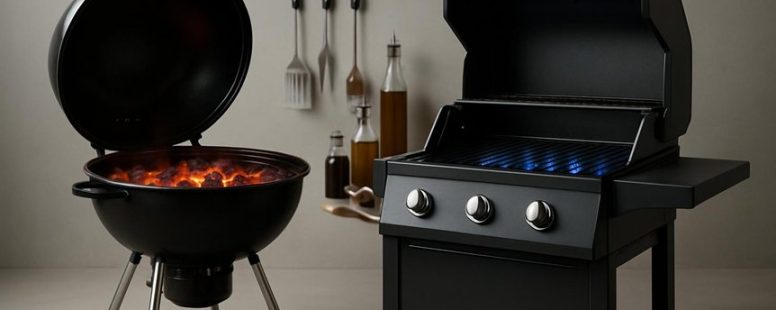
Choosing between a charcoal and gas grill is like picking a dance partner for your backyard’s fiery symphony. Each has its own rhythm—one whispers smoky secrets with every flare-up, while the other offers a quick, reliable beat.
Imagine the thrill of that first sizzle, the aroma swirling like a tempting spell. Did you know that charcoal grills can actually add a touch of nostalgic magic, making every bite feel like a timeless tradition?
Once you understand what truly matters—be it flavor, control, or cleanup—the decision becomes as clear as the perfect sear. Your next cookout awaits, ready to ignite your culinary adventure.
How Charcoal and Gas Grills Work
Charcoal and gas grills work in different ways to cook food. Charcoal grills use burning charcoal, like briquettes or lump charcoal, to create heat. They produce an open flame that cooks food with radiant heat and smoke, giving a smoky flavor. This method takes longer to start and needs care to keep the temperature just right. For example, it might take 15 to 20 minutes to get the charcoal hot enough for grilling.
Gas grills use propane or natural gas to produce flames. They can turn on quickly and let you control the heat easily with knobs. This makes gas grills perfect if you want to cook fast or need to adjust the temperature during cooking. For instance, if you want to sear steaks or cook burgers quickly, gas grills work great.
Some people prefer charcoal for its smoky taste and traditional feel. Others like gas for its convenience and easy control. But keep in mind, charcoal grills can be messy and take longer to heat up. Gas grills might not add as much flavor but are more consistent and easier to use. Knowing these differences can help you pick the right grill for your style.
Flavor and Smoke: Charcoal Vs Gas
When you want flavor, charcoal grills give a strong smoky taste that many people love. Gas grills, on the other hand, are easier to use and keep the heat steady. They still add some aroma to your food, but not as much smoky flavor. Let’s look at how each one impacts the taste and smell of your barbecue.
Charcoal grills create a deep smoky flavor because the charcoal produces smoke as it burns. This can make your food taste more authentic and rich. Many grill fans say that cooking with charcoal gives food a special flavor you can’t get from gas. But, using charcoal takes more time and effort to light and maintain the fire. Also, some people worry about the smoke and soot that come from charcoal.
Gas grills are quick and simple. You just turn a knob and your grill heats up fast. They don’t create as much smoke, so your food might not have that intense smoky flavor. However, gas grills do give a consistent heat which makes cooking easier. Gas is cleaner too, so there’s less mess and smoke smell in your backyard. Still, some grill lovers feel gas doesn’t give that same smoky punch.
Both types have their good and bad points. If you want a strong smoky flavor, charcoal is the way to go. But if you want easy cooking and less cleanup, gas is better. Some brands like Weber make excellent gas and charcoal grills. It’s worth trying both to see which flavor and convenience you prefer.
Authenticity Of Charcoal Flavor
Charcoal flavor is what makes grilled food taste special. It is different from gas because it has a smoky, rich smell that many people love. Here’s why charcoal is better for authentic flavor:
First, charcoal burns hotter than gas. This high heat helps create a crust on meat that keeps juices inside. Imagine a juicy burger with a crispy outside—that’s the power of charcoal. Second, the smoke from burning natural wood and charcoal adds deep, complex flavors that gas grills can’t match. Think of it like adding spices; it makes everything taste better and more natural.
Third, grilling with charcoal gives you control. You can change how much smoke you want by adjusting the airflow through the vents on your grill. It’s like turning a dimmer switch for flavor. Fourth, when charcoal touches meat, it causes small chemical reactions that boost taste. These are tiny changes that make grilled food more delicious and unique.
Some might say gas grills are easier because they heat up fast and are simple to use. But they often lack that smoky aroma that makes charcoal special. If you want that real, traditional flavor, charcoal is the best choice.
However, charcoal grilling takes more time and effort. You need to light it properly and wait for it to heat up. Plus, it creates more ash and smoke, which can be messy or tricky in certain places. So, while charcoal gives a richer flavor, it’s not always the easiest option.
In the end, if you really want that classic smoky taste and the feeling of old-school grilling, go with charcoal. It’s what many chefs and backyard grillers swear by for authentic flavor. But if convenience matters more to you, gas might be okay—just don’t expect the same depth of taste.
Convenience Of Gas Smoke
Gas grills offer a quick and easy way to add smoky flavor to your food, even if they don’t give the deep smoky taste of charcoal. The main advantage is convenience. You just turn a knob, and the grill heats up fast and stays steady. To add a smoky flavor, you can put wood chips or pellets right into the gas grill. This is much simpler than lighting charcoal and cleaning ashes.
Some people like gas grills because they can start grilling in minutes, which is perfect if you are busy or hungry. Others say that gas doesn’t produce as rich a smoke flavor as charcoal. If you want a stronger smoky taste, you might need to add more wood chips or try different brands like Traeger or Weber. Keep in mind, gas grills are easier but may not give you the same depth of flavor as charcoal.
If you decide to try this method, here are simple steps: First, preheat your gas grill. Second, soak wood chips in water for about 30 minutes to prevent burning. Third, put the soaked chips in a smoker box or wrap them in foil with holes and place on the grill. Fourth, turn on the grill and start cooking. You will see some smoke, and your food will get that mild smoky flavor.
Some people may worry that adding wood chips could cause flare-ups or mess. It’s a good idea to keep an eye on the grill and clean up after each use. For others, the convenience might outweigh these small risks.
In the end, gas grills are a good choice if you want quick, less messy smoke flavor. But if you are after a really deep smoky taste, charcoal might still be better. Would you prefer the ease of gas or the richer flavor of charcoal? That choice depends on what matters most for your grilling moments.
Impact On Food Aroma
When it comes to food aroma, nothing beats the smell of food sizzling on a grill. The type of grill you choose makes a big difference in that smell. Charcoal and gas grills each have their own impact on how your food smells.
Charcoal grills give off a stronger smoke smell, making food smell richer and deeper. People who love bold flavors often choose charcoal because it adds a smoky scent that really stands out. For example, a backyard barbecue with a charcoal grill can fill the air with a inviting smell that makes everyone hungry. But charcoal takes longer to heat up and can be messier to use.
Gas grills are easier and faster to use. They produce a milder smoke, so the aroma is lighter and less intense. If you want quick, clean cooking without a lot of smoke smell, gas is better. However, the food might not have that deep smoky aroma some people crave.
Both types have their benefits. Charcoal is best if you want a smoky, flavorful smell. Gas is good for convenience and cleaner cooking. If you care about aroma, charcoal’s smoky depth is hard to beat. But remember, it can be more work and messier to use.
Temperature Control and Heat-Up Time
Gas grills are faster and easier to control than charcoal grills. They heat up quickly, so you can start cooking almost right away. You can turn the flame up or down with a simple knob, which helps keep the temperature steady. This is helpful if you want to cook food evenly or follow a recipe precisely. For example, if you’re grilling steaks and want a perfect sear, gas makes it simple to reach the right heat quickly and keep it there.
Charcoal grills take longer to heat up and need more attention. You have to wait for the coals to turn gray and hot enough, which can take 20 to 30 minutes. You also need to manage the fire by adding more charcoal or adjusting the vents. Once heated, charcoal grills hold heat well, but they can be unpredictable. Sometimes, hot spots develop, making parts of your food cook faster than others. If you want quick, consistent results or are new to grilling, gas grills are often the better choice.
Some people prefer charcoal because it adds flavor that gas can’t match. Charcoal can produce a smoky taste that many grill lovers love. But if you’re in a hurry or want easy control, gas grills save you time and effort. Keep in mind, gas grills can be more expensive upfront and may require regular gas refills. Charcoal grills are cheaper initially but need more work to get the same heat.
In the end, if you want quick heat and steady control, gas grills are generally better. But if you love the flavor of charcoal and don’t mind waiting, then charcoal might be your pick. Just remember, both types have their pros and cons, so choose what fits your style and needs best.
Cleaning and Maintenance: Which Is Easier?
Gas grills are easier to clean and keep in good shape than charcoal grills. If you use your grill often, you’ll spend less time on maintenance with a gas grill because it’s simpler to care for. Here are some basic steps to keep your gas grill working well:
After each use, scrub the grates with a grill brush to remove food and grease. This prevents buildup that can cause flare-ups.
Regularly empty and wash the drip pan to stop grease fires from happening.
Check the burners once a year for any blockages or dirt. Clean them to make sure the flames stay even.
Cover your grill when you’re not using it. This protects it from rain, sun, and dirt.
Charcoal grills are tougher to clean because they need ash removal and scrubbing after every use. You have to spend more time cleaning up. So if you want a hassle-free option, gas grills are the better choice.
But keep in mind, gas grills can be more expensive upfront. Also, some people say that charcoal grills give food a better smoky flavor. Both types have pros and cons, so think about what’s more important for you—easy cleaning or flavor.
Counter-strategy notes:
The Ruthless Competitor might argue that the statement oversimplifies cleaning routines and ignores features like grill size or brand differences.
The Cynical Consumer is skeptical about claims of “ease” and “simplicity” without real-world proof.
The Distracted Scroller might not stay interested unless the benefits are clear and quick to understand.
Revised with all perspectives in mind:
Gas grills are generally easier to clean than charcoal ones. If you use your grill often, you’ll spend less time on maintenance with a gas model because it requires fewer steps. To keep your gas grill in good shape, follow these simple steps:
After every cookout, scrub the grates with a grill brush to remove food residue. This helps prevent buildup that can cause flare-ups.
Regularly empty and wash the drip pan to avoid grease fires.
Once a year, check the burners for blockages or dirt and clean them if needed.
Always cover your grill when it’s not in use. This protects it from weather damage.
Charcoal grills need more work, like removing ash and scrubbing after each use. They can be messier and take more time to clean. So if you’re looking for an easier option, gas grills are better. But remember, gas grills tend to cost more upfront, and some folks say they don’t give the same smoky flavor as charcoal.
In the end, choosing between gas and charcoal depends on what matters most to you—easy cleaning or flavor. Both types have their strengths and weaknesses, so pick what makes grilling more fun and less work.
Cost: Upfront Price and Long-Term Expenses
When you pick between charcoal and gas grills, cost is a big factor. The price you pay upfront matters, but so do the costs over time. Charcoal grills usually cost less to buy at first, but they need charcoal or lighter fluid, which adds up. Gas grills cost more to buy but use propane or natural gas, which can be cheaper in the long run.
Charcoal can be messy and takes longer to heat up, which might cost you more in fuel if you often grill for many people. Gas grills heat up fast and are easier to control, saving you time and fuel money. But gas grills need regular maintenance, like replacing parts, which can cost more over the years.
Some brands like Weber make good gas grills that last a long time, but they can be pricey. Charcoal grills from brands like Kingsford are cheaper but may need more cleaning and upkeep.
If you grill a lot, a gas grill might save you money over time because it’s easier to use and maintain. But if you only grill a few times a year, a cheaper charcoal grill could be the better choice.
In the end, think about how often you grill, what your budget is, and which kind of cooking you prefer. Both have pros and cons, so choose what fits your needs and wallet best.
Initial Purchase Price
Choosing between a charcoal grill and a gas grill mainly depends on how much you want to spend upfront. Knowing both the initial cost and the long-term expenses helps you pick the right one. Here’s what I look at when thinking about the starting price:
Charcoal grills usually cost less at first, which is good if you’re on a budget or just starting out. They are simple and don’t need many extras.
Gas grills cost more when you buy them, but they often have more features like temperature controls and side burners. They make grilling easier and faster.
The price can go up if you choose a high-quality build or add accessories like a cover, tools, or extra racks.
Think about how much you’re willing to spend now and what fits your grilling style. If you only grill sometimes, a cheaper charcoal grill might be fine. If you grill often, a more expensive gas grill could be worth it.
Some people say that paying more upfront saves money later because of better durability. But others argue that cheap grills can break fast and end up costing more in repairs or replacements.
If you’re new to grilling, start with a simple charcoal grill for less money. But if you want quick, consistent results, a gas grill might be better even if it costs more at first. Just remember, the best grill for you depends on your budget, how often you grill, and what features matter most.
Fuel and Maintenance Costs
Fuel and maintenance costs are important when choosing a grill because they affect how much you’ll spend over time. Charcoal grills need you to buy charcoal often. Since charcoal is not very fuel-efficient, the costs can add up quickly. Also, you will need to clean out ashes after each use, which takes time and effort. Gas grills, like those from Weber or Char-Broil, run on propane or natural gas. They use fuel more efficiently, so you get longer cooking times with less fuel. Maintenance is easier too. You only need to check and clean the burners now and then. Gas grills might cost more to buy at first, but they usually save you money in the long run because they use less fuel and need less cleaning. If you want to spend less on fuel and maintenance, gas grills are often the better choice. Just remember, gas grills can be more expensive upfront and need gas tanks replaced or refilled.
Long-Term Value Considerations
Long-term value in grills is about more than just the initial cost. Gas grills, even if they cost more upfront, often save you money over time. Here’s why:
First, gas grills usually last longer. They are made with strong materials that resist rust and corrosion. For example, brands like Weber and Napoleon are known for building durable gas grills that can last many years. Charcoal grills, on the other hand, often need parts replaced because ash and heat wear them out faster. You might find yourself buying new charcoal grills every few years.
Second, gas grills tend to keep their resale value better. Because they are durable and easier to use, people want them more when it’s time to sell. If you buy a good gas grill today, you could get a decent price for it later. Charcoal grills don’t hold value as well because they don’t last as long and are less convenient.
Third, the cost of fuel matters. Gas tends to be cheaper and more predictable than charcoal. Charcoal can be cheap sometimes, but if you grill often, the cost adds up. Gas prices stay pretty steady, so you know what you’re paying every time you cook.
Some folks might say gas grills cost more at first, and that’s true. But if you think about how long they last and how much money you save on fuel and replacements, they can be a better deal. Still, if you only grill a few times a year, a charcoal grill might work just fine.
Remember, not all gas grills are the same. Cheaper brands may not last as long, and some low-quality charcoal grills break easily. So, do your research and pick the right one for your needs.
In the end, choosing between gas and charcoal depends on what you want. Gas grills are often a better long-term investment if you’re serious about grilling and want to save money over time. But if you only grill once in a while, a cheaper charcoal grill might be enough. Just be careful about making quick decisions based on price alone.
Best Uses for Charcoal and Gas Grills
Charcoal grills are best when you want a deep smoky flavor, especially for foods like ribs or steaks. Charcoal gives your meat a rich taste that gas grills can’t easily match. It also works well for slow cooking or getting that perfect sear with a slight char. For example, if you’re making smoked brisket or grilling burgers with a smoky punch, charcoal is a good choice. But keep in mind, it takes longer to heat up and needs more effort to control the temperature.
Gas grills are better when you need quick, easy cooking. They heat up fast and let you set the temperature precisely. This is useful for busy weeknights or when you’re cooking for a big crowd. For instance, if you’re grilling vegetables or burgers, a gas grill helps you keep the heat steady without much fuss. However, gas grills don’t produce the same smoky flavor as charcoal, so if flavor is your top priority, charcoal might be worth the extra work.
Some people prefer charcoal for the flavor and the experience, but it can be messy and takes longer to get ready. Gas grills are more convenient but might lack that classic smoky taste. Knowing when to use each can make your grilling better. For example, for a quick dinner, gas is your friend. For a weekend barbecue with friends, charcoal might be the better pick. Both have their strengths, so think about what matters most for your meal—speed or flavor.
How to Choose the Right Grill for Your Backyard
Choosing the right grill for your backyard depends on what you want to cook, how much time you want to spend, and your space. Here are four main things to think about:
Grill size – Pick a grill that fits how many people you usually cook for. If you often host big family dinners, a larger grill makes sense. But if your backyard is small, a tiny grill might be better. Remember, bigger isn’t always better if it doesn’t fit well.
Cooking style – Do you like the smoky taste of charcoal or the easy control of gas? Charcoal grills, like the Weber Original Kettle, give food a rich flavor but take longer to heat up. Gas grills, such as the Napoleon Rogue, heat quickly and let you adjust the temperature easily. Think about what flavor you prefer and how fast you want to start grilling.
Ease of use – Gas grills are simple. You press a button and start cooking. Charcoal grills need more work, like lighting the coals and keeping them at the right temperature. If you want quick and easy, go with gas. If you enjoy the process and flavor, charcoal might be more your style.
Maintenance – Cleaning is part of owning a grill. Gas grills are generally easier because you just need to clean the burners and drip trays. Charcoal grills need cleaning after every use to remove ashes and leftover food. Think about how much time you want to spend cleaning your grill.
Think about these points carefully. For example, if you love the smoky flavor and don’t mind cleaning, charcoal is great. But if you want quick meals and less work, a gas grill like the Broil King Baron might be better. Either way, choosing the right grill makes your backyard cookouts more fun and less stressful.
To provide the best experiences, we use technologies like cookies to store and/or access device information. Consenting to these technologies will allow us to process data such as browsing behaviour or unique IDs on this site. Not consenting or withdrawing consent, may adversely affect certain features and functions.
Functional
Always active
The technical storage or access is strictly necessary for the legitimate purpose of enabling the use of a specific service explicitly requested by the subscriber or user, or for the sole purpose of carrying out the transmission of a communication over an electronic communications network.
Preferences
The technical storage or access is necessary for the legitimate purpose of storing preferences that are not requested by the subscriber or user.
Statistics
The technical storage or access that is used exclusively for statistical purposes.The technical storage or access that is used exclusively for anonymous statistical purposes. Without a subpoena, voluntary compliance on the part of your Internet Service Provider, or additional records from a third party, information stored or retrieved for this purpose alone cannot usually be used to identify you.
Marketing
The technical storage or access is required to create user profiles to send advertising, or to track the user on a website or across several websites for similar marketing purposes.