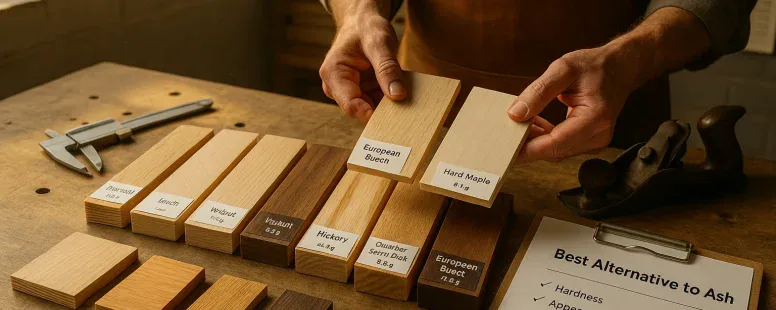
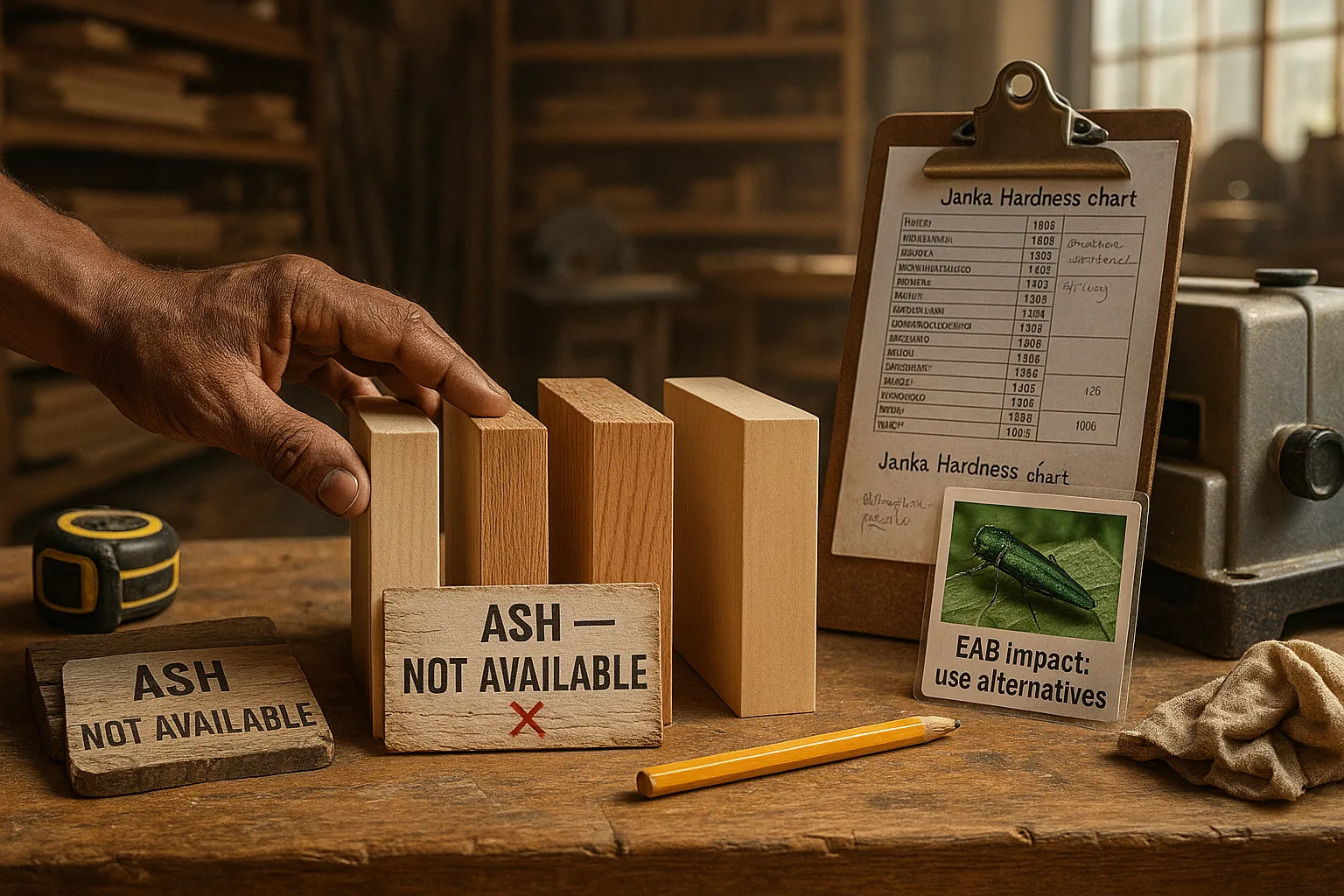
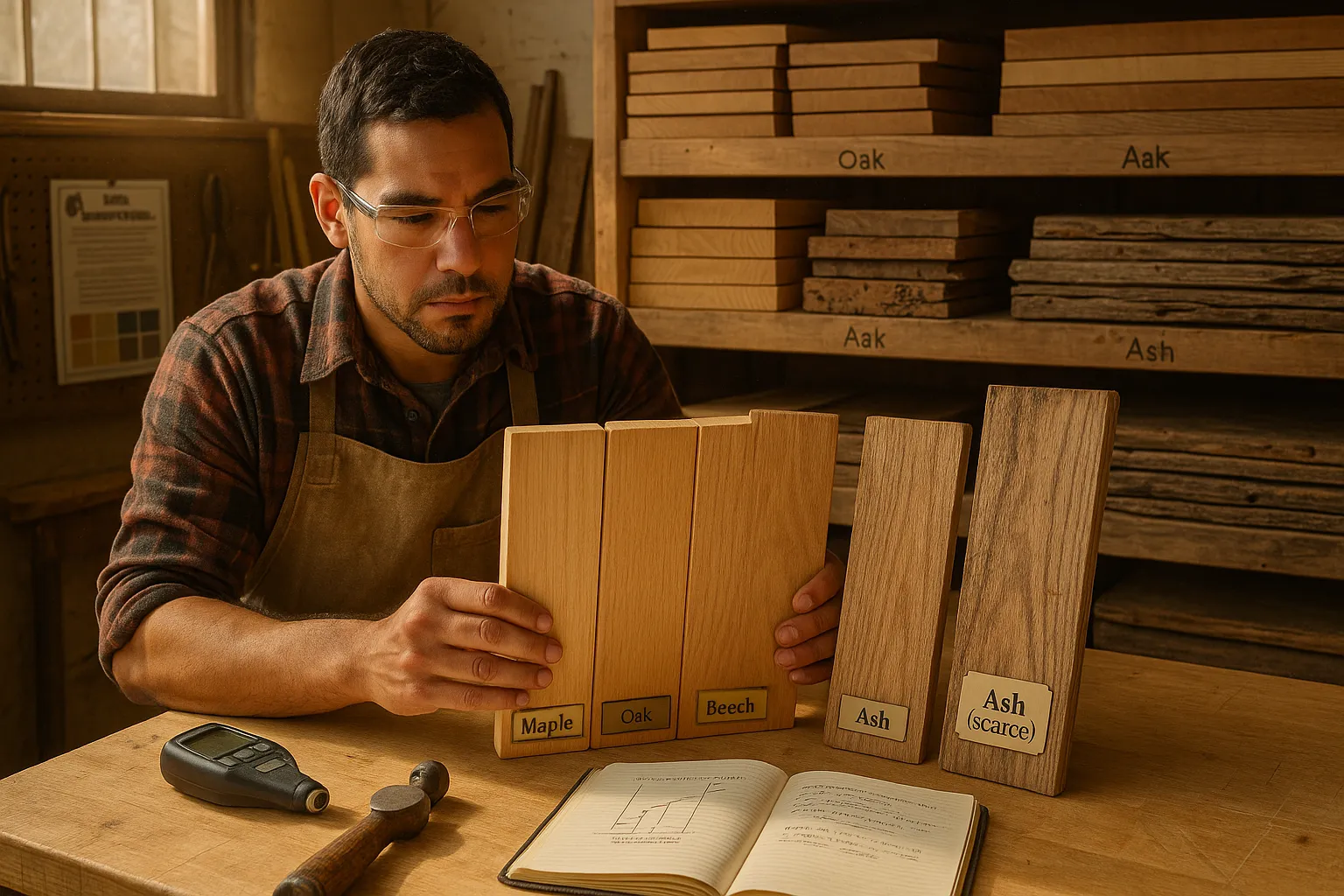
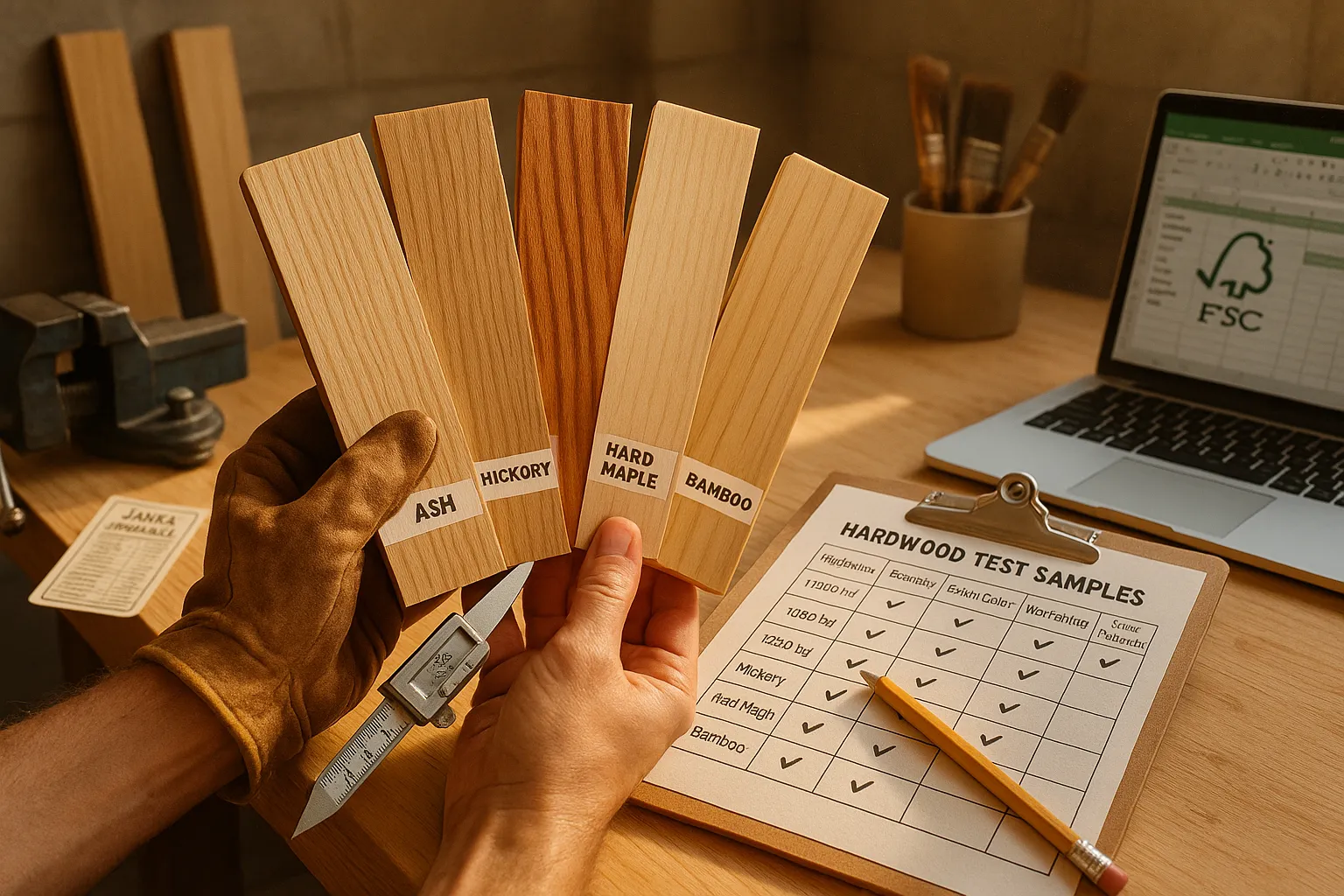
Ash has long been prized for its straight grain, light color, and springy strength. But you may not find ash easily today: emerald ash borer infestations, supply shifts, and regional scarcity push many woodworkers, homeowners, and manufacturers to look for substitutes. The right alternative can match ash’s look, match or exceed its strength, or cost less, sometimes all three. This article cuts through the noise to show clear, practical alternatives to ash, when to choose each, and how to make a substitute look and behave like ash in your projects.
Why Choose An Alternative To Ash? Key Reasons To Consider
Fact: supply and pest pressure make ash harder to source in many markets.
You choose an alternative to ash when availability, cost, or performance no longer line up with your needs. The emerald ash borer (Agrilus planipennis) killed millions of ash trees across North America. Retail lumber supplies tightened and prices rose. Also, some projects require higher hardness, moisture resistance, or a different grain character than ash provides.
Consider these common motivations:
Availability and cost: You may pay more or wait longer for kiln-dried ash. Local mills often stock maple, oak, or beech instead.
Mechanical needs: For impact-prone pieces, ladder rungs, tool handles, baseball bats, you might need higher shock resistance than typical ash grades deliver.
Aesthetic match: You may want a pale, straight-grained look without ash’s open pores or without its particular ray fleck.
Sustainability: In areas hit by pests, using alternative species can reduce pressure on remaining ash stands and support local forestry goals (U.S. Forest Service guidance encourages species diversification).
Anticipate follow-ups: if you worry about strength, look for Janka hardness and modulus of rupture numbers in the comparison sections below. If appearance matters most, scan the finishing section for stain recipes and grain-matching tips.
Factors To Use When Comparing Wood Alternatives
Fact: compare hardness, dimensional stability, grain, cost, and sustainability when choosing a substitute.
Use a simple checklist while you compare species. That keeps decisions objective and reproducible.
Key factors (and why they matter):
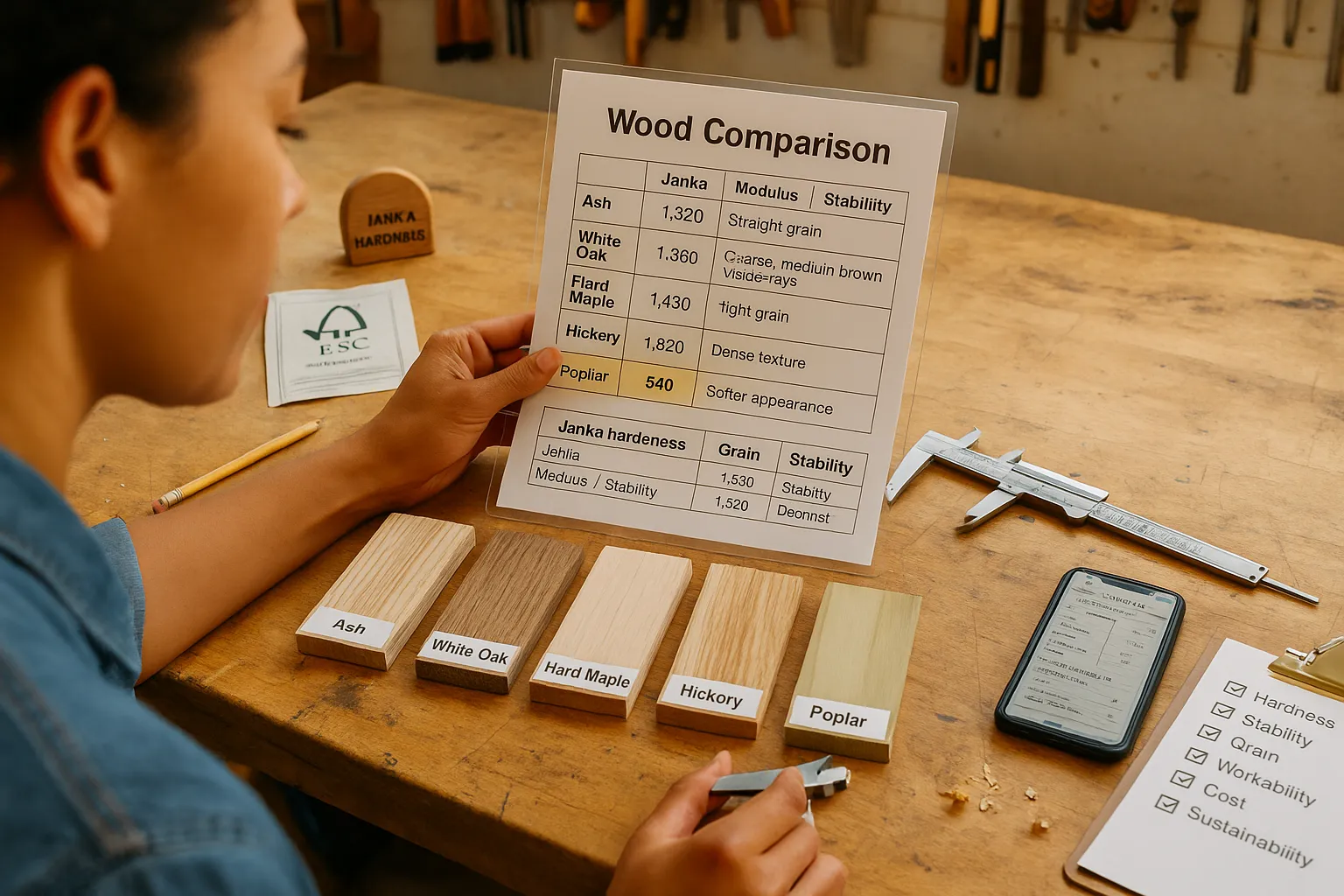
Hardness (Janka rating): Hardness predicts dent resistance and everyday wear. Ash sits around 1320 lbf. You’ll pick a softer or harder wood based on traffic and impact.
Modulus of rupture and elasticity: These numbers show break strength and spring. Sporting equipment or bent laminations need higher values.
Grain and color: Grain affects look and finishing. Straight grain dyes predictably: interlocked grain can make planing harder but give visual interest.
Dimensional stability: Movement with humidity affects joinery and finishes. Woods with high radial/tangential shrinkage can make tight joints open.
Workability and tool wear: Some hardwoods blunt cutters faster (e.g., silica in bamboo). Others glue and plane easily.
Cost and availability: Regional mills and big-box stores set price and lead times. Also ask about certified sources like FSC for sustainability.
This checklist gives you a repeatable way to rank options for any use case.
Top Wood Alternatives To Ash And When To Use Them
Fact: several species match ash’s core traits: each has clear strengths and trade-offs.
Below you’ll find practical profiles. Each starts with the quick insight, then adds specifics and use cases.
Maple — Appearance, Performance, And Best Uses
Fact: hard maple (Acer saccharum) offers higher hardness and a clean, pale appearance similar to ash.
Maple runs around 1450 Janka for hard maple, so it resists dents better than ash. The grain is tighter and less open-pored, which means it takes some finishes differently: stains may appear blotchy without a conditioner. Maple machines well and glues reliably.
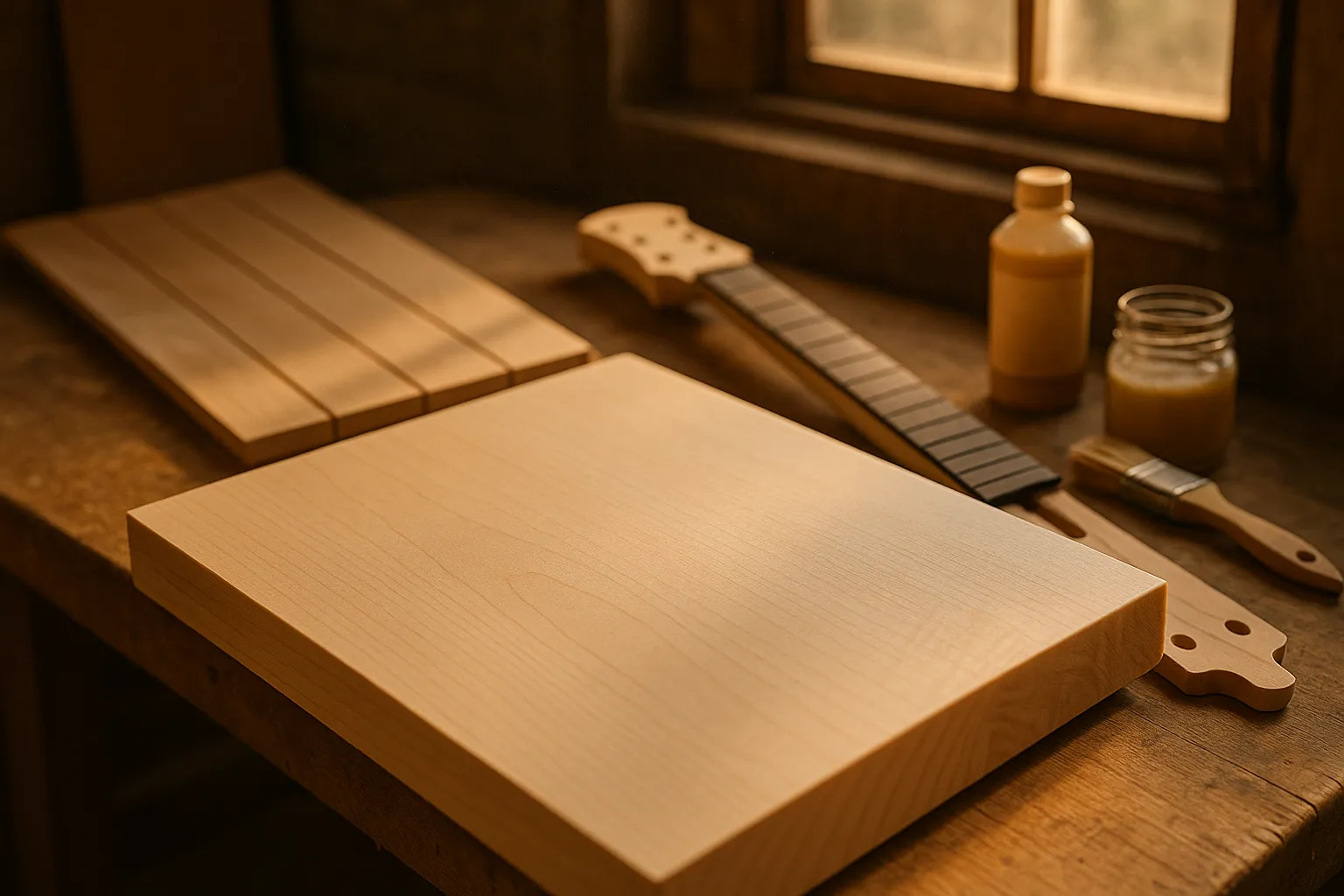
Best uses: furniture tops, flooring in moderate-traffic rooms, and instrument parts. If you want a pale, uniform look, maple is a strong pick. Note: curly or figured maple gives a distinct look that won’t mimic plain ash exactly.
White Oak — Durability, Grain, And Moisture Resistance
Fact: white oak (Quercus alba) gives superior moisture resistance and strong durability compared with ash.
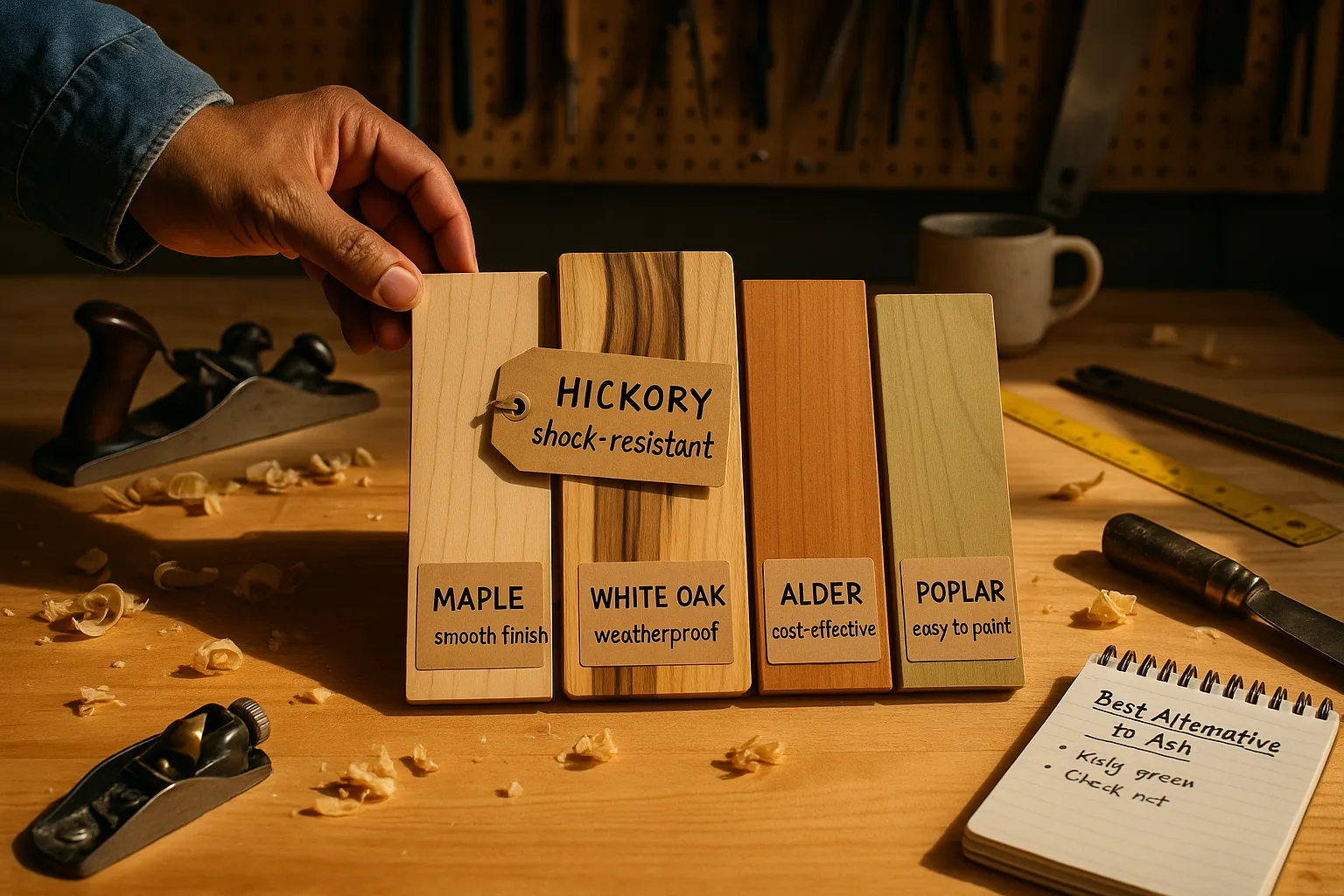
White oak’s closed-cell tyloses make it more rot-resistant than ash. Janka hardness sits about 1360 lbf, slightly tougher than ash, and the grain is more pronounced with ray fleck in quartersawn boards. It accepts water-based and oil finishes well and works for both indoor and exterior projects.
Best uses: exterior furniture, flooring, butcher blocks, and any project exposed to occasional moisture. White oak will show a different grain character than ash, but it’s often preferred for durability.
Hickory — Hardness, Shock Resistance, And Rustic Appeal
Fact: hickory (Carya spp.) scores very high in hardness and shock resistance, making it ideal where toughness matters.
Hickory’s Janka often lands between 1820–1880 lbf. It bends and resists impact well, so tool handles, flooring in high-traffic kitchens, and rustic furniture use it. The color range is wide, from creamy sapwood to dark heartwood, which gives a strong, rustic look.
Best uses: sporting goods, handles, heavy-use floors, and reclaimed-style furniture. Hickory will not mimic ash’s light, uniform look without heavy finishing and selective board choice.
Walnut — Aesthetic Strengths And Limitations For High‑End Pieces
Fact: walnut (Juglans nigra) is prized for deep color and refined grain but is softer than some ash alternatives.
Walnut’s Janka is about 1010 lbf. It carves beautifully and finishes to a rich chocolate-brown. Use walnut where appearance and luxury matter more than maximum hardness.
Best uses: high-end furniture, veneers, and instrument faces. Walnut won’t replace ash’s pale look but will elevate a design with warmth and contrast.
European Beech And Birch — Cost‑Effective, Stable Choices
Fact: European beech (Fagus sylvatica) and birch (Betula spp.) give stable, affordable, pale options similar to ash.
Beech has a tight, straight grain and good workability: birch offers a light color and uniform texture. Both are commonly used in cabinet making and mass-produced furniture. Their Janka ratings are close to ash but vary by species and grade.
Best uses: budget furniture, cabinet frames, shelving, and components where consistent color and low cost matter.
Bamboo And Engineered Woods — Sustainable And Dimensionally Stable Options
Fact: bamboo and engineered products offer sustainability and reduced movement compared with solid ash.
Bamboo (technically a grass) can match hardwood hardness when strand-woven. Engineered woods, plywood, LVL, and cross‑laminated panels, bring dimensional stability and consistent supply. They reduce waste and often come from certified mills (look for FSC, PEFC).
Best uses: flooring (strand-woven bamboo), curved components (ply), cabinets (veneered plywood), and where you want predictable performance across boards. Note: some engineered products contain formaldehyde adhesives, ask for low-VOC or CARB-compliant options.
Comparing Alternatives: Durability, Cost, Finish, And Sustainability
Fact: no single wood beats ash on every metric: you trade one advantage for another.
Quick comparison insights:
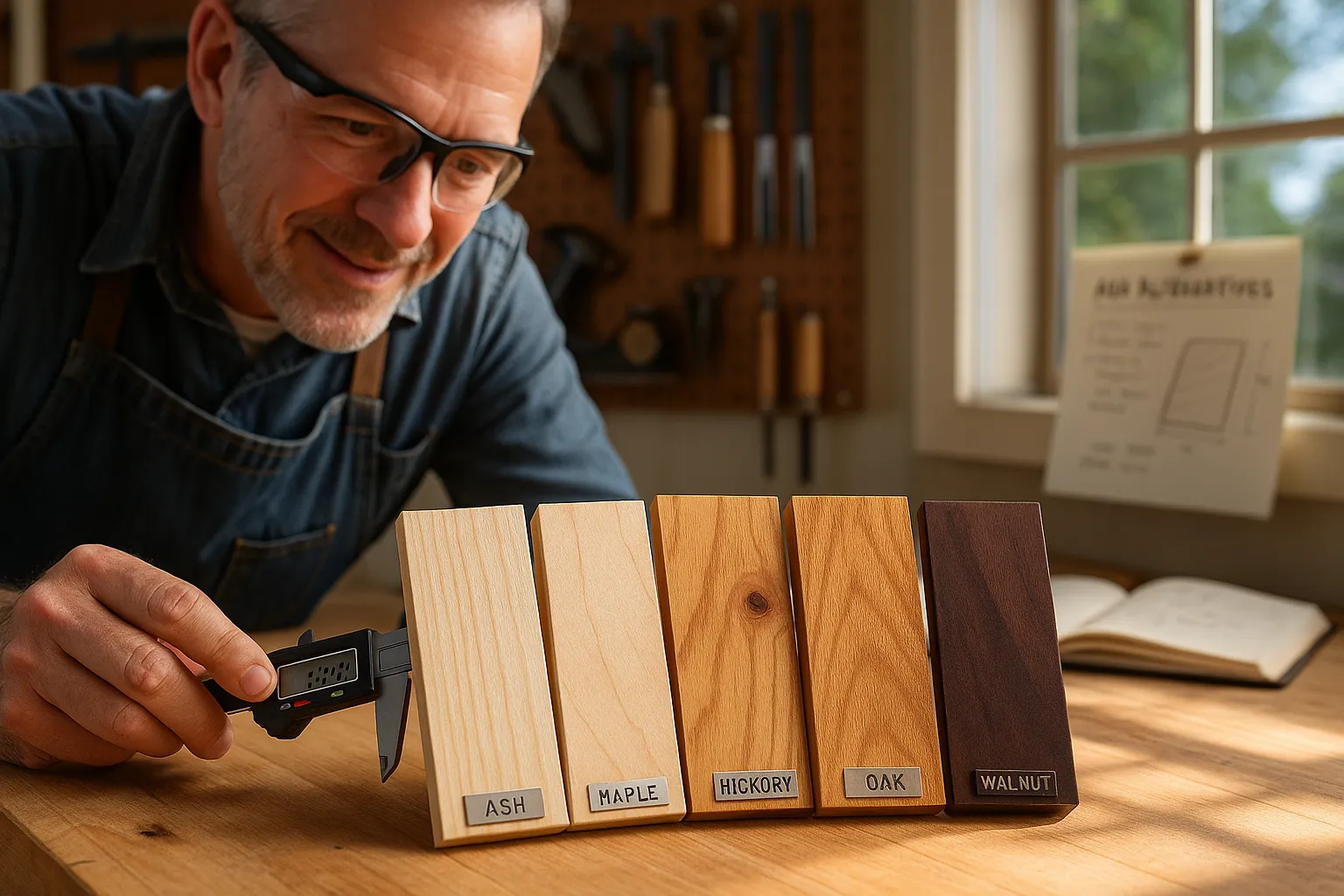
Durability: Hickory > Maple ≈ White Oak > Ash > Walnut (by Janka). For shock, hickory leads.
Cost: Birch/European beech and domestic maple are often cheaper than white oak and walnut. Bamboo varies by product.
Finish: Maple needs conditioners to avoid blotchiness: oak shows grain: walnut needs less staining and often just oil.
Sustainability: Bamboo (fast-growing) and certified engineered woods often score best. Local sourcing matters: domestic species reduce transport footprint.
Practical tip: create a simple matrix for your project listing required hardness, appearance, cost per board foot, and sustainability. Score each species and pick the winner.
How To Choose The Right Alternative Based On Use Case
Fact: match the wood’s properties to the intended use case before you buy.
Below are targeted recommendations for common applications. Start with the clear match, then refine by grade and finish.
Choosing For Flooring: Hardness, Wear Layer, And Finish
Fact: select a species with a Janka rating appropriate for traffic and choose a proper finish.
For flooring: pick maple or white oak for residential traffic: use strand-woven bamboo for high hardness and sustainability. For engineered flooring, verify wear-layer thickness (2–6 mm) and finish compatibility. Prefinished floors from brands like Armstrong or Mohawk come with durable factory coatings, but on-site oil finishes give a different hand-feel.
Choosing For Furniture: Workability, Joinery, And Appearance
Fact: furniture needs good workability and consistent aesthetics: maple and European beech are common choices.
Choose maple for clean, pale pieces and easy shaping. Choose beech or birch for cost-sensitive casework. For heirloom or statement pieces, use walnut or quarter-sawn white oak for grain interest. Test joinery: glue surfaces should be flat and compatible with your adhesive (PVA, hide glue, or epoxy).
Choosing For Sporting Goods Or Bent Components: Flexibility And Shock Resistance
Fact: select species with high modulus of elasticity and proven shock resistance for sporting or bent parts.
Hickory and hard maple are traditional choices for bats, tool handles, and ladder rungs. For bent laminations, use rotary-cut birch or good-quality plywood for consistent bending. Test samples under expected loads: empirical testing beats theoretical numbers for safety-critical parts.
Finishing, Staining, And Achieving An Ash‑Like Look
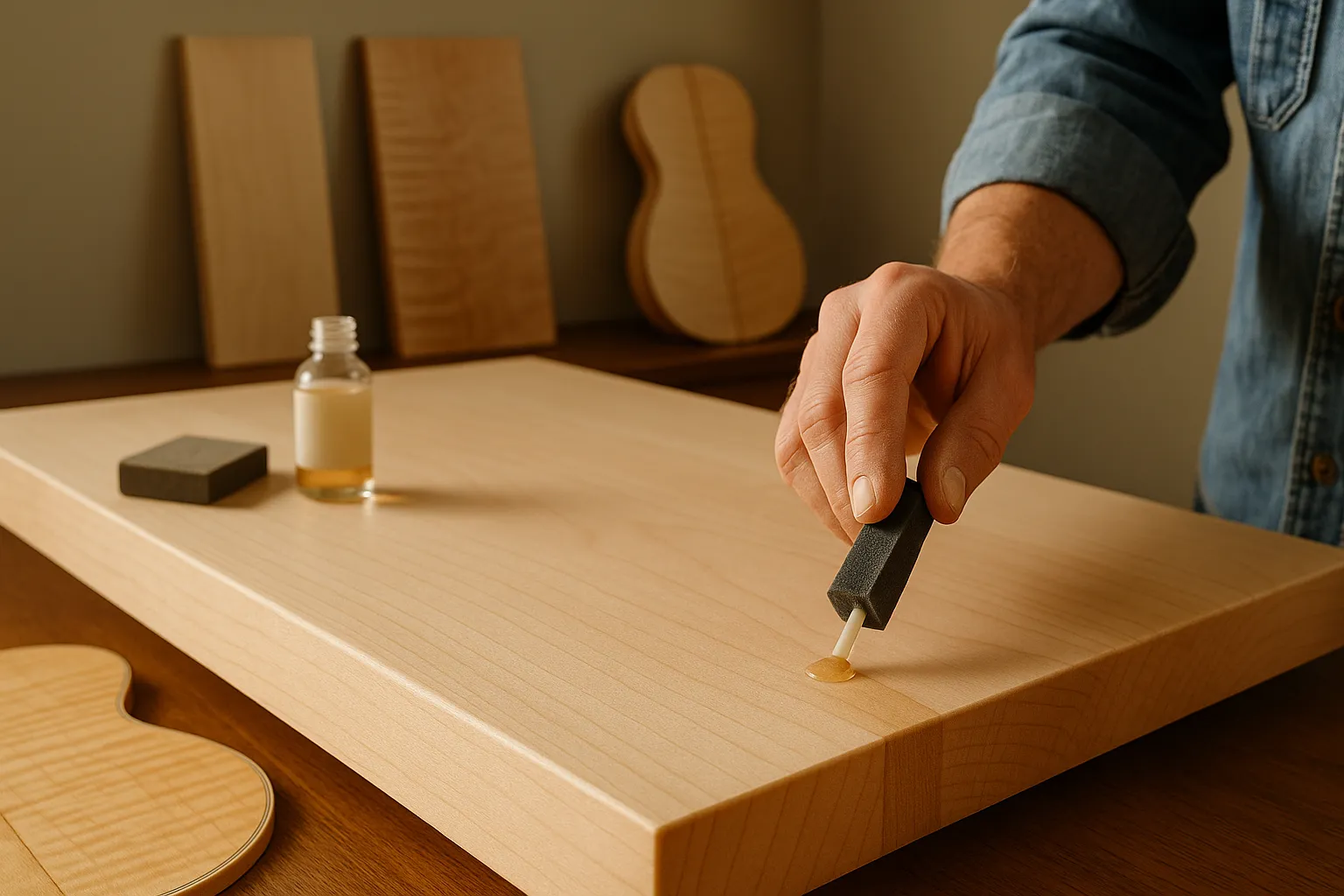
Fact: you can approximate ash’s light, open-grain look with stain, filler, and the right topcoat.
Steps to mimic ash:
Choose a pale substrate: select maple, beech, or birch as your base.
Use a grain raiser or open-pore filler to replicate ash’s texture when needed.
Apply a water‑based toner or dye to pull the color toward gray-beige. Mix small batches and test on scrap.
Seal with an oil-based or water-based poly depending on desired sheen.
Practical stain tip: use pre‑stain conditioner on maple to avoid blotchiness. For a period-correct finish on furniture, thin aniline dyes into a wiping stain and follow with Danish oil.
Maintenance, Longevity, And Common Care Tips For Alternatives
Fact: most hardwoods need simple, regular care to last decades.
Care tips:
Clean with a damp (not wet) cloth and mild soap. Avoid harsh chemicals that strip oils.
Recoat polyurethane finishes every 5–15 years depending on wear.
Protect high‑use surfaces with mats and coasters to limit dents.
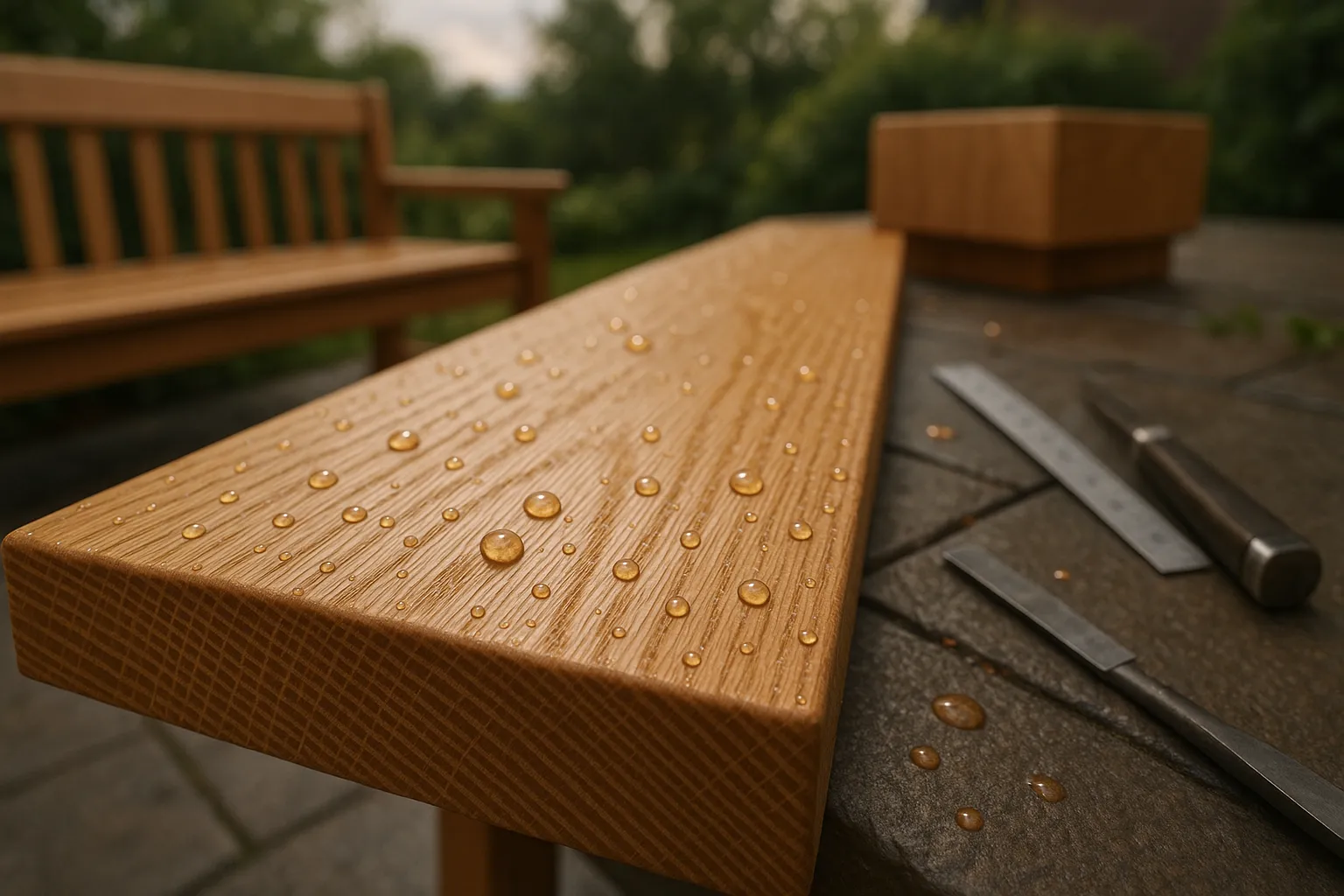
For outdoor use, use penetrating oils and check for surface checking annually.
Honest warning: even hard woods dent under heavy impact. Prevent damage by design choices, sacrificial wear layers, replaceable skids, or protective metal fittings.
Where To Buy And What To Ask Your Supplier Or Mill
Fact: buy from a trusted supplier and ask targeted questions about grade, moisture content, and certification.
Ask these items when you call a mill, lumberyard, or a vendor like Rockler, Woodcraft, or your local sawmill:
Species and common name confirmation (e.g., hard maple, Quercus alba).
Grade and cut type (plain-sawn, quarter-sawn, rift-sawn).
Kiln-dried moisture content and sticker date.
Board dimensions and available run lengths.
Certification (FSC, PEFC) and source region.
Any milling defects or common warping on the batch.
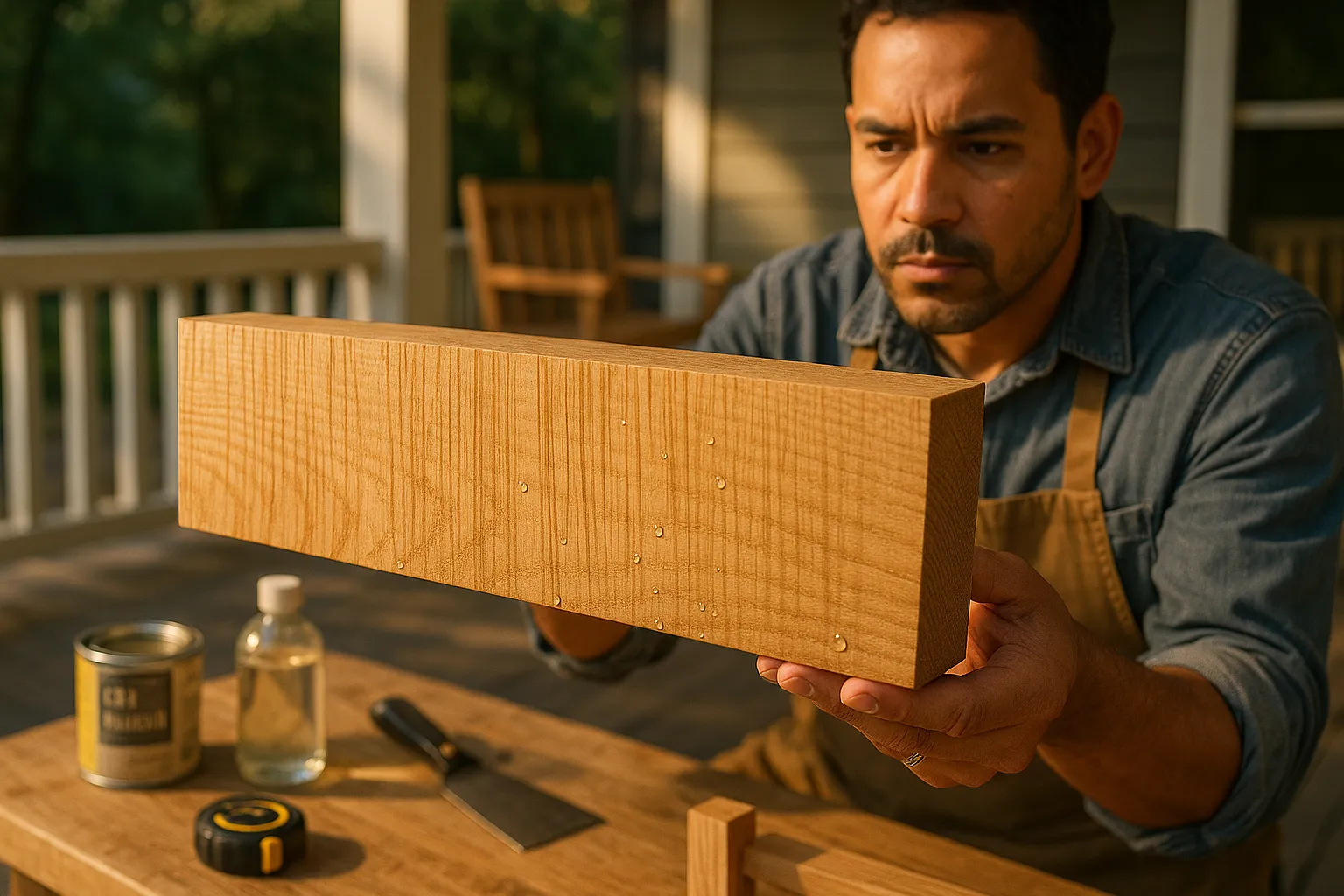
Buying tip: inspect boards in person when possible. Look for consistent color and tight knots if you need a uniform look. Request samples for finishing tests before making a major purchase.
To provide the best experiences, we use technologies like cookies to store and/or access device information. Consenting to these technologies will allow us to process data such as browsing behaviour or unique IDs on this site. Not consenting or withdrawing consent, may adversely affect certain features and functions.
Functional
Always active
The technical storage or access is strictly necessary for the legitimate purpose of enabling the use of a specific service explicitly requested by the subscriber or user, or for the sole purpose of carrying out the transmission of a communication over an electronic communications network.
Preferences
The technical storage or access is necessary for the legitimate purpose of storing preferences that are not requested by the subscriber or user.
Statistics
The technical storage or access that is used exclusively for statistical purposes.The technical storage or access that is used exclusively for anonymous statistical purposes. Without a subpoena, voluntary compliance on the part of your Internet Service Provider, or additional records from a third party, information stored or retrieved for this purpose alone cannot usually be used to identify you.
Marketing
The technical storage or access is required to create user profiles to send advertising, or to track the user on a website or across several websites for similar marketing purposes.