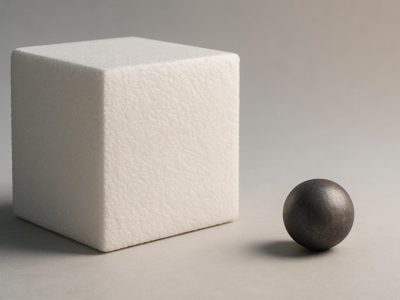
Imagine holding a shiny metal spoon in your hand. It feels smooth, solid, and cool to the touch—these are physical properties you can observe without altering the spoon itself. Now think about what happens when that same spoon is exposed to extreme heat and starts to melt or oxidize. These changes reveal chemical properties, tied to how the material reacts and transforms.
Understanding the difference between physical and chemical properties isn’t just for science textbooks—it’s a key to recognizing how materials behave in the world around you. From the way water freezes into ice to how wood burns into ash, these properties shape everything you see, touch, and use daily. By grasping this distinction, you’ll uncover the fascinating ways matter interacts, adapts, and changes, making the ordinary feel extraordinary. Ready to dive deeper? Let’s explore what sets these properties apart.
Understanding Physical Properties
Physical properties describe the attributes of a material that you can observe or measure without altering its composition. Recognizing these properties helps you understand how matter behaves in different contexts.
Definition And Examples Of Physical Properties
Physical properties can be identified without changing a substance’s molecular structure. These include measurable attributes like density, color, boiling point, melting point, and hardness. For instance, water freezes at 32°F and boils at 212°F under standard conditions. A metal’s shininess or a wood’s grainy surface are observable examples.
Examples of physical properties:
Density: Gold’s density is 19.32 g/cm³, which makes it heavier than most metals.
Color: Copper has a distinct reddish-brown hue.
Melting Point: Ice turns to liquid at 32°F, showcasing its low melting threshold.
Understanding these properties offers insights into categorizing substances and predicting their behavior.
Key Characteristics Of Physical Properties
Physical properties are typically measurable, observable, and reversible, distinguishing them from chemical characteristics. For example, changes in state, such as water vapor condensing into liquid, don’t alter the substance itself. Also, they can vary across conditions like temperature or pressure.
Key features include:
Non-altering Nature: Observing texture or shape doesn’t involve a substance’s inherent change.
Dependence on Conditions: Properties like viscosity decrease as temperature rises.
Quantifiability: Attributes like volume (e.g., 10 ml), mass, or transparency can be precisely measured.
This framework aids you in distinguishing between substances like oil and water based on their unique densities or solubility properties, even within complex mixtures.
Exploring Chemical Properties
Chemical properties reveal how a substance interacts with others, leading to changes in its composition. These traits become evident during reactions, showcasing the potential for transformation.
Definition And Examples Of Chemical Properties
Chemical properties define how a material reacts under specific conditions, altering its molecular structure. Examples include flammability, reactivity with acids, toxicity, and heat of combustion. For instance, iron’s ability to rust when exposed to oxygen highlights its reactivity, while wood’s flammability demonstrates its potential to release energy as heat when burned.
Another example is sodium’s vigorous reaction with water, which produces hydrogen gas and heat. Acid-base interactions also illustrate chemical properties, such as vinegar (acetic acid) reacting with baking soda (sodium bicarbonate) to form carbon dioxide bubbles. These examples emphasize the role of chemical reactions in exposing these characteristics.
Key Characteristics Of Chemical Properties
Chemical properties are observable during a reaction and depend on molecular interactions. They involve permanent changes in a substance’s composition, making the transformations irreversible. For example, burning paper changes it into ash and gases, with no method to revert.
These properties also depend on environmental factors like temperature, pressure, or concentration. Higher temperatures may accelerate reactivity, as seen when enzymes in your body work more efficiently at optimal temperatures. Unlike physical properties, observing chemical properties involves altering the substance, often releasing or absorbing energy.
Chemical properties guide you in understanding material behaviors in applied and theoretical contexts. Knowing them enhances your ability to predict reactions, synthesize compounds, or evaluate material suitability for specific applications.
Difference Between Physical And Chemical Properties
Physical and chemical properties differ primarily in how they affect a substance’s composition and observability. These distinctions help define matter’s behavior and categorize its reactions under varying conditions.
Observability And Reversibility
You observe physical properties without changing a substance’s chemical structure. Attributes like color, melting point, and density are measurable and do not alter the material. For instance, ice turns to water at 32°F, yet its chemical composition, H₂O, remains unchanged. These properties are typically reversible. If you freeze water, it solidifies; melting restores its liquid form.
Chemical properties require interaction to become observable. Take flammability—you identify it only when a material combusts. This process transforms the substance permanently, making such changes irreversible. Iron rusting after exposure to oxygen and moisture exemplifies this; the resulting compound, iron oxide, differs in composition and cannot revert to pure iron through simple physical means.
Change In Composition
Physical properties don’t modify a substance’s molecular structure. A piece of gold retains its atomic arrangement, whether cut or melted at its 1,948°F boiling point. Changes in state—solid to liquid or gas—affect the material’s form but not its identity.
Conversely, chemical properties inherently involve a transformation in composition. When vinegar reacts with baking soda, carbon dioxide gas forms. This new product signifies a fundamental change. External factors like temperature or pressure often influence these reactions, adding complexity to predicting results. For example, sodium reacts violently with water, but the intensity can vary based on specific conditions.
Understanding these key differences sharpens your perspective on material behavior. It equips you to classify substances, anticipate interactions, and navigate complex environments with greater insight.
Importance Of Understanding These Differences
Recognizing the distinction between physical and chemical properties deepens your grasp of material behavior. It fosters informed decisions in scientific, industrial, and daily scenarios.
Applications In Science And Industry
Understanding these differences drives advancements in research and manufacturing. Physicists use physical properties like melting points and boiling points to design precise instruments. Material scientists examine hardness and density when developing stronger alloys. Chemical properties, such as flammability, guide the creation of safer energy sources. Industries from pharmaceuticals to food production rely on this knowledge to ensure quality and safety.
For instance, pharmaceutical formulations balance physical solubility with chemical stability to produce effective drugs. Steel manufacturers consider iron’s reactivity with oxygen to develop rust-resistant coatings. Such differentiation not only optimizes processes but also minimizes hazards and enhances product performance.
Everyday Implications
Grasping these differences simplifies your interactions with common materials. From cooking to cleaning, you’re intuitively leveraging these properties. Boiling water, freezing food, and identifying corrosion all involve physical or chemical property observations.
Handling household chemicals demonstrates their importance. You check flammability warnings on aerosols or assess bleach’s reactivity with other cleaners. Also, distinguishing physical wear from irreversible chemical damage helps maintain tools and appliances effectively. By understanding these traits, practical problems in everyday life become more manageable.
Conclusion
Understanding the difference between physical and chemical properties equips you with valuable insights into how materials behave and interact. This knowledge not only enhances your scientific curiosity but also helps you make informed decisions in everyday life, from choosing materials to predicting reactions. By exploring these properties further, you can better navigate the complexities of the world around you and appreciate the fascinating nature of matter.
To provide the best experiences, we use technologies like cookies to store and/or access device information. Consenting to these technologies will allow us to process data such as browsing behaviour or unique IDs on this site. Not consenting or withdrawing consent, may adversely affect certain features and functions.
Functional
Always active
The technical storage or access is strictly necessary for the legitimate purpose of enabling the use of a specific service explicitly requested by the subscriber or user, or for the sole purpose of carrying out the transmission of a communication over an electronic communications network.
Preferences
The technical storage or access is necessary for the legitimate purpose of storing preferences that are not requested by the subscriber or user.
Statistics
The technical storage or access that is used exclusively for statistical purposes.The technical storage or access that is used exclusively for anonymous statistical purposes. Without a subpoena, voluntary compliance on the part of your Internet Service Provider, or additional records from a third party, information stored or retrieved for this purpose alone cannot usually be used to identify you.
Marketing
The technical storage or access is required to create user profiles to send advertising, or to track the user on a website or across several websites for similar marketing purposes.