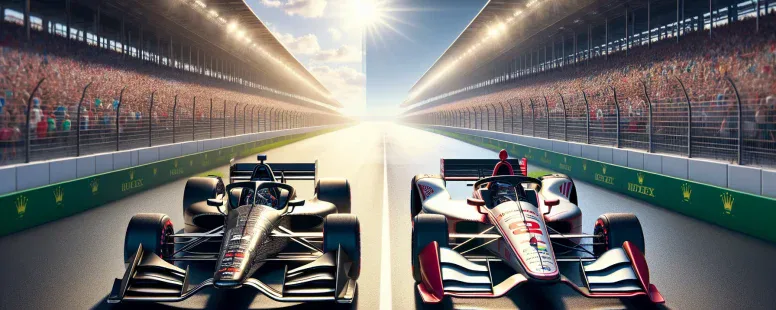
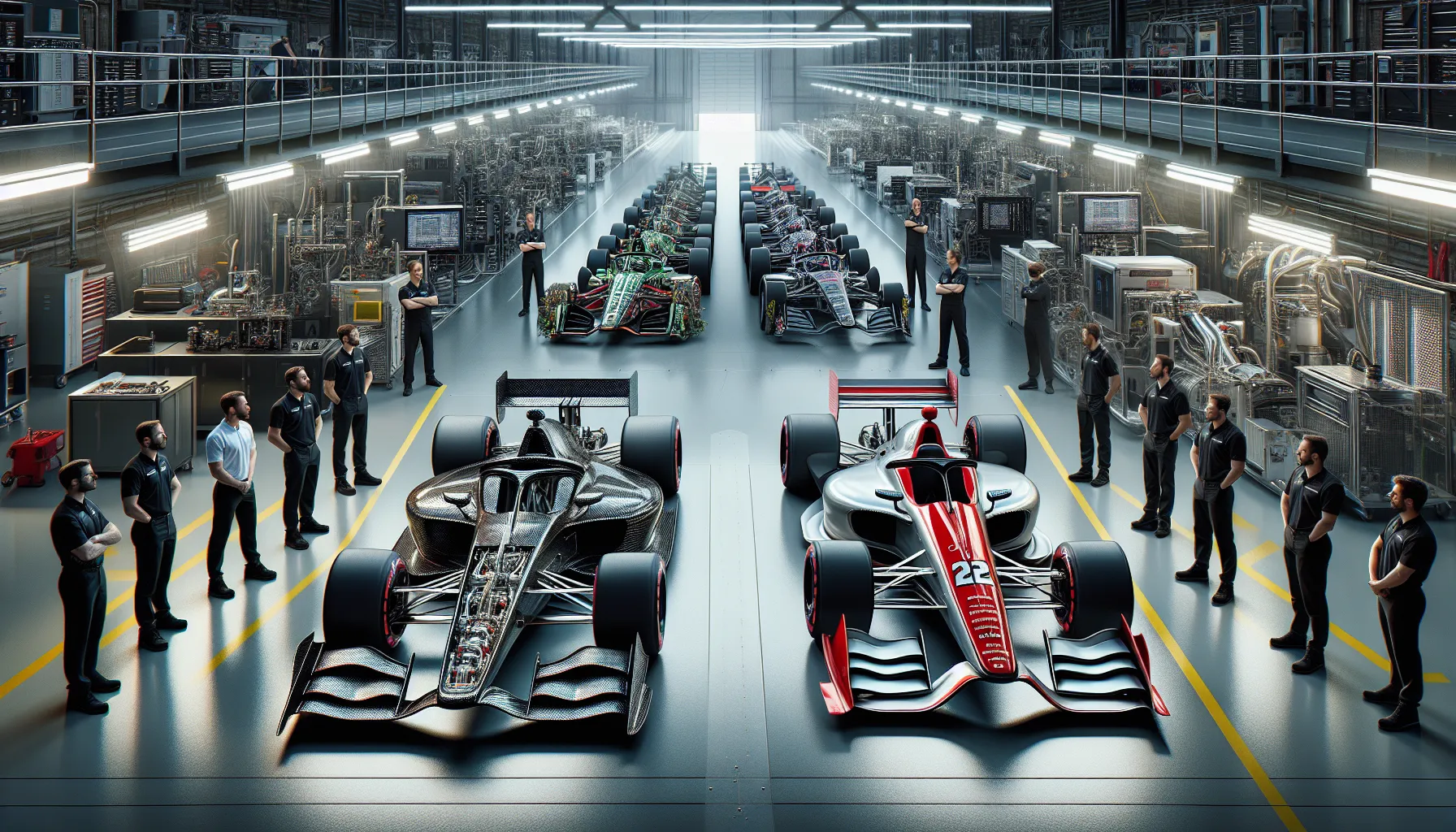
Speed has always captivated human imagination, from the thrill of witnessing a race to the awe-inspiring technology powering these marvels. Among the elite motorsport leagues, Formula 1 (F1) and IndyCar stand as benchmarks of advanced engineering and driver expertise. Yet outright speed, one question consistently emerges: which is faster? Today, let’s dive deep into the nuances, comparisons, and insights that distinguish these two racing giants.
Overview of Formula 1 and IndyCar Racing
Key Differences Between F1 and IndyCar Designs
Formula 1 cars feature closed cockpit designs tailored towards maximizing aerodynamic efficiency, while IndyCars emphasize adaptability to a variety of track conditions, including ovals.
Introduction to Aerodynamics and Performance
Aerodynamics play a pivotal role in both categories. F1 leverages intricate wing structures and underbody diffusion systems, while IndyCar optimizes packages for flexibility across diverse circuits.
Engine and Powertrain Comparisons
Contrasting F1’s use of hybrid power units generating around 1,000 horsepower with IndyCar’s less-convoluted but robust 2.0L twin-turbocharged engines showcases stark technical disparities.
Comparative Analysis of Lap Times and Top Speeds
Studying Lap Record Data
Analyzing lap records highlights that F1 cars are significantly quicker on most circuits, evident in their advanced aerodynamic profiles.
Impact of Track Layouts and Conditions
Tight turns and high-speed straights benefit from the precision of F1’s tighter corners and IndyCar’s adaptability on ovals.
How Circuits Affect Overall Speed Evaluation
The layout often determines optimal setups, with F1 excelling in technical prowess and IndyCar in sustained high speeds on larger circuits.
Real-World Examples: Competing on Similar Tracks
Specific Case Studies and Results
Instances where both leagues have contested on analogous tracks emphasize F1’s faster cornering and IndyCar’s ability to maintain momentum on straights.
Driver Skill Levels and Their Influence
The skill discrepancy isn’t significant: both leagues require exceptional driver capabilities, but driving strategies vary due to circuit demands.
Technological Innovation Trends in Both Formulas
Future Developments Predicted for F1 and IndyCar
Increasing emphasis on hybrid systems in F1 and streamlined car designs in IndyCar hint at ongoing evolutions in engineering.
Integration of Sustainable Practices
Efforts toward sustainability span both, with electrification in F1 and eco-fuel initiatives in IndyCar leading the way.
To provide the best experiences, we use technologies like cookies to store and/or access device information. Consenting to these technologies will allow us to process data such as browsing behaviour or unique IDs on this site. Not consenting or withdrawing consent, may adversely affect certain features and functions.
Functional
Always active
The technical storage or access is strictly necessary for the legitimate purpose of enabling the use of a specific service explicitly requested by the subscriber or user, or for the sole purpose of carrying out the transmission of a communication over an electronic communications network.
Preferences
The technical storage or access is necessary for the legitimate purpose of storing preferences that are not requested by the subscriber or user.
Statistics
The technical storage or access that is used exclusively for statistical purposes.The technical storage or access that is used exclusively for anonymous statistical purposes. Without a subpoena, voluntary compliance on the part of your Internet Service Provider, or additional records from a third party, information stored or retrieved for this purpose alone cannot usually be used to identify you.
Marketing
The technical storage or access is required to create user profiles to send advertising, or to track the user on a website or across several websites for similar marketing purposes.