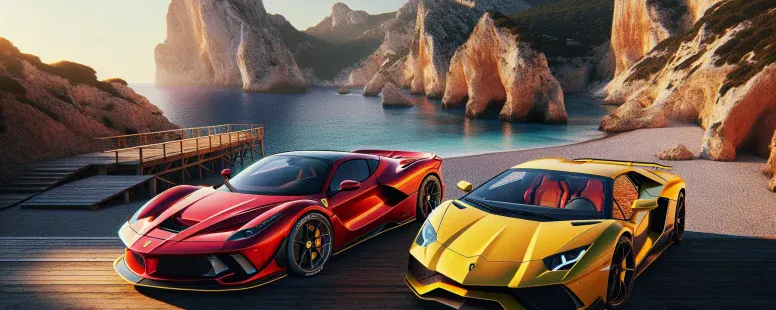
Which Is Better Ferrari or Lamborghini? Key Differences Explained for Supercar Fans
Picture sliding behind the wheel of a roaring masterpiece, the engine’s growl vibrating through your bones as you grip the leather-wrapped steering wheel. You’re caught in a timeless rivalry where passion meets power—Ferrari versus Lamborghini. Both brands ignite the senses, but which one truly revs up your soul?
Choosing between these Italian legends isn’t just about speed or style. It’s about the experience—the thrill of precision engineering, the allure of iconic design, and the legacy that each car carries. Whether you crave the refined elegance of Ferrari or the aggressive boldness of Lamborghini, this showdown goes beyond the surface. Ready to jump into what makes each brand uniquely irresistible? Let’s explore the surprising perks and hidden gems that might just tip the scales in your favor.
Design and Aesthetics
Design and aesthetics play a crucial role in shaping the identity of Ferrari and Lamborghini. Both brands captivate audiences with striking looks, yet their approaches to design reflect distinct philosophies that influence your emotional connection with each car.
Ferrari’s Design Philosophy
Ferrari embraces a design philosophy rooted in elegance and aerodynamic efficiency. Its sleek lines flow seamlessly from front to rear, emphasizing balanced proportions and subtle curves that enhance performance and visual harmony. You’ll notice the signature “coke bottle” shape in many models, which not only improves airflow but also creates a timeless silhouette. According to automotive design experts, Ferrari integrates form with function, ensuring that every aesthetic choice serves a technical purpose. For example, the Ferrari F8 Tributo combines aggressive air intakes with sculpted bodywork to optimize cooling and speed without sacrificing its refined appeal. By blending tradition and innovation, Ferrari appeals to those who value heritage with a modern twist.
Lamborghini’s Design Approach
Lamborghini favors a bold, angular design that exudes aggressiveness and theatricality. Its sharp edges and geometric shapes demand attention and evoke power even when standing still. Think of the Lamborghini Aventador’s sharply defined lines and futuristic profile—each facet reflects a rebellious spirit that challenges conventional automotive norms. Lamborghini’s design language prioritizes visual drama over subtlety, grabbing eyes whether on city streets or racetracks. You might consider Lamborghini’s exterior as a sculptural statement, intentionally loud to capture passion and excitement. Critics and fans alike recognize this approach as a way to embody the raw intensity and fearless energy of the brand. For those craving standout presence, Lamborghini’s designs make a compelling choice.
| Brand | Design Focus | Style Elements | Example Model |
|---|---|---|---|
| Ferrari | Elegance, Aerodynamics | Smooth curves, Balanced form | F8 Tributo |
| Lamborghini | Boldness, Angular Shapes | Sharp lines, Futuristic | Aventador |
Both brands create masterpieces that speak different languages of Italian craftsmanship and automotive artistry. You might prefer Ferrari if your aesthetic leans toward sophisticated performance, or embrace Lamborghini’s daring designs if you seek a daring visual story. Understanding these distinct design approaches can help you appreciate how form and function merge in extraordinary ways to define your dream car.
Performance and Engineering
Performance and engineering define what separates Ferrari and Lamborghini beyond mere looks. Each brand delivers a unique driving entity shaped by advanced mechanics, engine might, and tailored handling.
Engine Specifications and Power
Ferrari engines exhibit an evolutionary marvel blending Formula 1 technology with road car usability. For example, the Ferrari 812 Superfast features a 6.5-liter V12 aspirated engine, delivering 789 horsepower and 530 lb-ft torque. Ferrari’s commitment to aspirated engines, until recently introducing hybrid systems, offer instantaneous throttle response and high-revving experiences. Conversely, Lamborghini favors audacious power and impact; the Aventador SVJ’s 6.5-liter V12 churns out 770 horsepower and 531 lb-ft torque with a roaring exhaust note that commands attention. Lamborghini’s frequent use of all-wheel drive systems maximizes power delivery off the line, enhancing grip.
Considering power-to-weight ratios, Ferrari often edges out Lamborghini slightly through lighter chassis compositions and engineering focused on weight savings. If balanced power and efficient energy use matter, Ferrari you might value; if raw, thunderous power grabs you, Lamborghini suits better.
| Model | Engine Type | Displacement | Horsepower | Torque (lb-ft) |
|---|---|---|---|---|
| Ferrari 812 Superfast | V12 NA | 6.5 L | 789 | 530 |
| Lamborghini Aventador SVJ | V12 NA | 6.5 L | 770 | 531 |
Handling and Driving Experience
Handling epitomizes the engineering philosophies behind these Italian beasts. Ferrari engineers cars to feel like extensions of your body — fluid, agile, quick to react. Their magnetic suspension systems and rear-wheel drive configurations invite precise cornering and feedback, encouraging an engaging drive on twisting roads or tracks. The LaFerrari Aperta showcases this approach by merging hybrid power with razor-sharp chassis dynamics.
Lamborghini delivers a more visceral experience. Expect sharp, aggressive handling character mixing with all-wheel drive stability that lets you push harder with more confidence. The Huracán’s steering, often described as raw and direct, speaks to drivers who thrill on limiting handling margins. Its dramatic yaw moments resemble a bull in the ring, charging with force and spectacle.
If you seek harmonious finesse and connection, Ferrari’s approach to handling likely appeals. For those craving an aggressive, adrenaline-pumping drive, Lamborghini commands attention. Which side do you align with? Does control seduce you, or does raw emotion fuel your passion?
Both brands push boundaries with cutting-edge aerodynamics and active suspension tech, innovating ways to blend speed with safety. Real drivers often testify that mastering either car demands respect, rewarding repeated learning with exhilarating trust and precision.
Explore reviews by reputable outlets like Car and Driver or Motor Trend to assess firsthand driver impressions and performance tests. Experiencing these cars live reveals nuances no spec sheet captures.
Choosing between Ferrari’s refined yet fierce engineering against Lamborghini’s dramatic and powerful performance challenges perceptions about what performance means. Your decision depends on whether you prioritize technical finesse or commanding road presence.
Isn’t it thrilling to engage with these engineering masterpieces that challenge you to drive not just faster, but smarter? Find your ultimate Italian muse by weighing power, precision, and passion woven into every detail.
Brand Heritage and Legacy
Understanding Ferrari’s and Lamborghini’s brand heritage deepens your appreciation for their unique appeal. Their legacies are not just about cars; they reflect visions, rivalries, and relentless pursuit of automotive greatness.
Ferrari’s Racing History
Ferrari’s name is inseparable from racing. Founded by Enzo Ferrari in 1939, the brand’s DNA pulses with motorsport heritage. You might wonder how a company so focused on road cars maintains its racing dominance. The answer lies in Ferrari’s 16 Formula 1 Constructors’ Championships and over 230 Grand Prix wins, a record unmatched by most in the sport. Models like the Ferrari 250 GTO, one of the most valuable cars ever sold, trace their lineage directly from racetracks to roadways.
This racing pedigree informs every road car Ferrari builds. For example, when the 812 Superfast’s V12 engine thrums, it channels decades of engineering honed on tracks worldwide. This symbiosis between track and road is what makes Ferrari unique: its cars aren’t just fast; they’re tested champions molded by competition. Picture the thrill of pushing a car to its limits, knowing every curve, every gear shift, reflects a race-winning formula. No other brand integrates racing heritage into road cars so seamlessly.
Lamborghini’s Evolution
Lamborghini began its journey later, in 1963, with Ferruccio Lamborghini’s ambition to challenge Ferrari’s supremacy. Born out of frustration with existing sports cars, Lamborghini sought to craft vehicles that were not just fast but artistically bold. This ambition birthed icons like the Miura, considered the first supercar, which stunned the world with its mid-engine design and aggressive styling.
In contrast to Ferrari’s race-bred lineage, Lamborghini’s evolution centers on innovation and flair. Over time, it transformed from making tractors to pushing boundaries of design and engineering with models like the Murciélago and Huracán. You see Lamborghini’s legacy in its audacious approach to performance — its cars roar with a distinctive voice and boast avant-garde looks that demand attention on any street or track.
Unlike Ferrari, Lamborghini forged a place by rejecting tradition, favoring boldness over racing trophies. This made it a symbol of rebellious luxury. Think about it: while Ferrari perfected the racecar, Lamborghini redefined what a supercar looks and sounds like, turning each model into a statement of individuality.
| Brand | Founding Year | Motorsport Focus | Iconic Models | Legacy Highlight |
|---|---|---|---|---|
| Ferrari | 1939 | Formula 1 and endurance racing | 250 GTO, 812 Superfast | Integration of race technology into road cars |
| Lamborghini | 1963 | Limited direct motorsport | Miura, Murciélago, Huracán | Bold design, engineering innovation, and cultural icon status |
You face a choice between a heritage carved by relentless racing precision and one built on bold innovation and cultural impact. Each brand’s legacy invites you to engage differently with the idea of what a supercar represents: pure racebred engineering excellence or unrestrained creative power.
Which legacy resonates with your driving spirit? Would you favor Ferrari’s championship-winning blueprint or Lamborghini’s audacity that reshaped an industry? Your answer shapes not just your car selection but your connection to decades of Italian automotive mastery.
Interior and Comfort
You expect a luxury supercar to deliver not only speed but also an immersive, comfortable cabin. Ferrari and Lamborghini craft interiors that reflect their unique identities while offering a blend of comfort and cutting-edge technology.
Ferrari’s Cabin Features
Ferrari’s cabins focus on driver-centric ergonomics and subtle luxury, placing control and connection at the forefront. The seats embrace you snugly, made from premium leather and Alcantara, designed for long drives without fatigue. Touching the steering wheel of a Ferrari like the SF90 Stradale connects you directly to Formula 1 racing heritage, thanks to integrated controls and a rotary manettino dial managing drive modes.
Ferrari incorporates digital displays with crystal-clear graphics, placing vital information right in front of your eyes, enabling you to keep focus on the road and performance. Ambient lighting is understated, complimenting the elegant dashboard contours instead of overpowering them. Storage space, while limited—as expected in a supercar—is cleverly arranged to accommodate essentials without distracting from the minimalist design ethos.
This attention to detail creates an environment where you feel like co-pilot to precision engineering. If you value a cockpit that merges advanced tech with artisanal craftsmanship, Ferrari’s cabin invites you to savor every second behind the wheel.
Lamborghini’s Interior Design
Lamborghini throws tradition out the window, offering a cabin that screams audacity and futuristic flair. Sitting inside the Huracán or Aventador feels like entering a cockpit from a sci-fi movie, with angular lines, hexagonal motifs, and bold color contrasts that command attention. You notice right away the dramatic use of Alcantara and carbon fiber, materials crafted to impress as well as provide grip and comfort.
Unlike Ferrari’s subtlety, Lamborghini engages your senses with bright digital displays and aggressive stitching patterns. Controls are intuitive but look like they’ve been ripped from a spaceship dashboard, reinforcing Lamborghini’s identity as more than just a car—it’s an experience.
Luggage space is scarce, yet Lamborghini offsets this with creative storage solutions and adjustable seats that keep you comfortable whether carving mountain roads or cruising city streets. The cabin’s noise levels match the roar of the engine outside, enveloping you in a symphony of power and excitement that some may find thrilling but others distracting.
When comfort is your priority but you also desire a setting that fuels your adrenaline, Lamborghini’s interior sets a stage that captivates and energizes.
| Aspect | Ferrari | Lamborghini |
|---|---|---|
| Seating | Ergonomic, snug, luxury materials | Bold design, grip-focused |
| Dashboard | Minimalist, driver-focused | Futuristic, aggressive styling |
| Controls | Integrated with racing heritage | Spaceship-inspired, tactile |
| Ambient Lighting | Understated, elegant | Vibrant, attention-grabbing |
| Storage Space | Limited, cleverly arranged | Creative, minimal |
| Noise | Balanced, focused | Loud, immersive |
Which interior suits your style: Ferrari’s refined comfort or Lamborghini’s dramatic sprawl? Your choice defines how you’ll experience not just speed but the very essence of Italian supercar culture. Dive deeper, and you’ll find that the cabin reflects the heart of each brand—either poised precision or untamed power.
Exploring both gives you a richer appreciation for what ‘better’ really means here. Why not test each to feel how nuances in design shape your driving passion? The answer lies in your senses, your preferences, and your drive for distinction.
Price and Value
Choosing between Ferrari and Lamborghini involves weighing cost against value. Each brand commands premium pricing, yet their resale potential and ownership experience unfold differently.
Cost Comparison
Ferrari models generally start around $250,000 and climb beyond $350,000 for advanced versions like the SF90 Stradale. Lamborghini’s base price hovers near $215,000, escalating to over $500,000 for flagship cars like the Sián FKP 37. The price gap stems from design philosophies and production volumes; Ferrari often limits production, creating exclusivity, while Lamborghini balances bold tech with slightly larger runs. You pay a premium for Ferrari’s racing heritage embedded in each engine, but Lamborghinis delivers jaw-dropping style and raw power for the money. Keep in mind maintenance costs; both brands require specialized service and pricey parts, but Ferrari’s Formula 1 pedigree leads to higher tooling expenses that reflect on upkeep bills.
Resale and Ownership Experience
Ferrari’s resale values tend to hold steadier, with some classic models appreciating significantly due to rarity and racing history. The Ferrari F40, for example, broke auction records as collectors recognized its significance. Lamborghini’s resale values exhibit more volatility but can soar with limited editions or standout models like the Countach. Ownership involves more than upkeep though; Lamborghini offers an avant-garde lifestyle appeal, drawing enthusiasts who crave a dramatic presence on roads and social scenes. Ferrari owners often cherish a connection to a legacy of motorsport excellence, fueling a different kind of passion that resonates in exclusive events and racing circuits worldwide. For you, the decision requires weighing whether you value lasting heritage or high-impact spectacle, keeping in mind that both experiences demand dedication, investment, and appreciation for automotive art.
| Model Example | Starting Price | Notable Feature | Resale Outlook |
|---|---|---|---|
| Ferrari SF90 Stradale | $390,000 | Hybrid powertrain, F1 tech | Strong, appreciates over time |
| Lamborghini Sián FKP 37 | $520,000 | Limited edition, supercapacitor | Variable, rare models prized |
| Ferrari F40 | $1.5 million+ | Iconic 80s supercar | High appreciation |
| Lamborghini Countach | $400,000+ (auction) | Classic wedge design | Resale fluctuates, collector’s item |
Deciding which brand holds better value hinges on what drive you behind the wheel and in your heart. Do you pursue thrilling heritage or bold presence? The key lies in understanding these distinctions and envisioning how ownership fits your lifestyle, tastes, and long-term goals.
Conclusion
Choosing between Ferrari and Lamborghini eventually comes down to what excites you most. Whether you value Ferrari’s refined precision and racing heritage or Lamborghini’s bold design and raw power, both brands offer an unforgettable driving experience.
Your decision reflects your personal style and what you want from a supercar—be it elegance and engineering or drama and adrenaline. Either way, you’re stepping into a world where performance meets passion, and Italian craftsmanship shines at its finest.

- Top FBM Competitors Every Seller Should Watch - October 3, 2026
- Oxiclean Competitors - October 3, 2026
- Competitors Time Brella: Top Weather App Alternatives - October 3, 2026
by Ellie B, Site Owner / Publisher