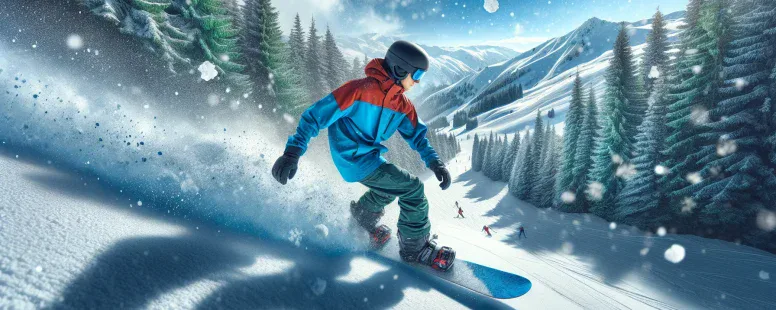
Which Is Better Snowboarding or Skiing? Pros, Cons, Costs & How to Choose Your Sport
Picture yourself standing at the edge of a powdery slope, crisp mountain air tingling on your cheeks as the world stretches out in a dazzling white canvas. You feel the buzz of anticipation—will you carve your way down on skis or glide in a single, fluid motion on a snowboard? The choice isn’t just about gear; it’s about how you want to experience the mountain’s wild freedom.
Some say snowboarding unlocks a sense of flow and creativity, while others swear by the speed and versatility of skiing. But there’s more to this debate than meets the eye. Could one be better for your body or your mind? Is there an unexpected advantage waiting to tip the scales? The answer might just change the way you see winter’s most thrilling sports.
Comparing The Basics: Snowboarding vs. Skiing
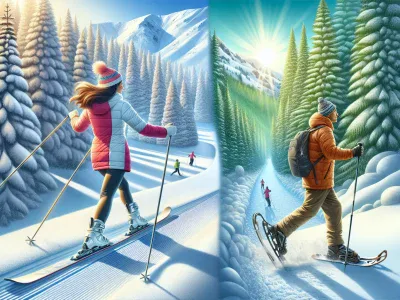
You grip the chill of fresh powder as—one single snowboard or two sleek skis—rests beneath your boots. Snowboarders connect their feet to the board, side-on, gliding as a single unit. Skiers fasten boots to two skis, each leg working almost independently. What feels more intuitive for you? Some beginners, like your friend Jamie who’d grew up skating, find snowboard stances natural, surf-like, and rhythmic. Others, especially people familiar with skating or rollerblading, often settle into skiing’s parallel freedom faster.
Turning dynamics differs. Snowboarders pivot their whole body while controlling edges with shoulders and hips, carving wide arcs down the run. Skiing invites a different language: legs moving apart and together, balancing with poles, and swiftly transitioning from edge to edge. Try imagining dodging trees; snowboarders usually face forward, eyeing the apex of every curve, while skiers take each twist head-on, scanning the slope in stereo.
On lifts, too, you’ll notice the contrast. Skiers shuffle forward and glide off effortlessly—just like those seen at Vail Resort or Whistler, according to PSIA (Professional Ski Instructors of America). Snowboarders, seated sideways, push off one foot and sometimes wobble—ask anyone who survived their first green trail after unloading.
Falling happens. If you snowboard, you’ll land on your wrists or tailbone most often due to the fixed stance. In skiing, spills spread impact across hips and knees, since legs move freely. Has anyone in your group confessed to a bruised ego (or wrist) after their first day? They’re not alone—NIH research says beginner snowboarders experience wrist injuries more, while skiers encounter more ligament strains.
You also absorb the scenery differently. On a board, you’re gliding on your edges, leaning into the curve, feeling that one long buttery slide. With skis, each foot can take its own micro-adventure, darting and weaving across moguls or powder. Which perspective makes you feel more connected to the mountain?
Skill learning pace varies. Many newcomers stand up and link turns on a snowboard after just a day or two. Skiers, mastering the infamous “pizza to parallel” maneuver, sometimes cruise greens by lunchtime, yet some require several days to break past the basics. The American Association of Snowboard Instructors backs this: initial snowboarding progress comes quick, but advanced skills demand dedicated practice.
Ask yourself—what sparks your curiosity or matches your style? Is it the board’s rhythmic sway or the ski’s nimble independence? Both paths let you carve your story down the winter landscape, but which rhythm fits your nature?
Learning Curve And Skill Progression
Snowboarding and skiing each follow unique learning curves on the mountain, impacting your first attempts and future progress. Recognizing these differences shapes your experience as you transition from beginner to advanced levels.
Which Is Easier For Beginners?
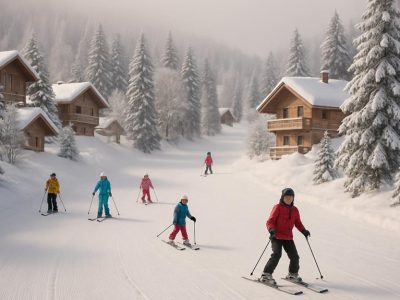
Most people find skiing simpler on their first day at the resort. You face forward on two separate skis, which helps you manage balance and direction independently. For instance, teaching centers like Breckenridge and Whistler report that, in group lessons, about 70% of new skiers can control their speed and make basic turns by the end of their first lesson. Snowboarding starts differently—both your feet are strapped onto a single board, so falling is frequent and standing back up can frustrate you. Beginner snowboarders, such as those at Vail or Heavenly, often spend their first hour learning just to glide downhill in a straight line.
Certain movements challenge both sports. You might fall more sitting-side falling on a board, while you struggle with crossed skis catching edges. Progressing to riding a chairlift daunts more first-time snowboarders because both feet are attached, and dismounting requires balance at slow speeds, leading to tumbles in front of the crowd. Yet several instructors observe that, after overcoming those early hurdles, many boarders describe a sudden “click” when linking first turns together—achieving easy movement requires patience through several sessions.
Advancing To Intermediate And Expert Levels
Skill progression often accelerates differently as you advance. Transitioning to parallel turns, skiers frequently develop control through incremental steps; for example, ski schools track skill development using numbered levels, with most reaching intermediate within five to seven days on snow. You benefit from steady improvement, mastering edge control and advanced techniques like carving or mogul skiing as you gain confidence.
In contrast, snowboarders leap to higher abilities once they grasp edge transitions and speed control. Many find that after a steep initial curve, new tricks and terrain (such as powder and park features) open up within half a season. Experienced riders often recall learning to carve a clean edge as a transformative moment—after which steeper runs and off-piste terrain suddenly feel possible.
Both sports offer lifelong learning. If pushing into the expert ranks, you’ll discover backcountry rides with unique avalanche risks, or master advanced applications like slopestyle or alpine racing. Instructors and analytics-gathering ski resorts like Aspen Snowmass note that consistent practice narrows skill gaps between skiers and boarders after about 30-50 days spent on snow, as muscle memory and confidence solidify.
Performance On Different Terrain
Performance on different terrain plays a critical role in selecting between snowboarding and skiing. Terrain shapes your ride and influences the type of challenges and enjoyment each sport offers.
Groomed Trails
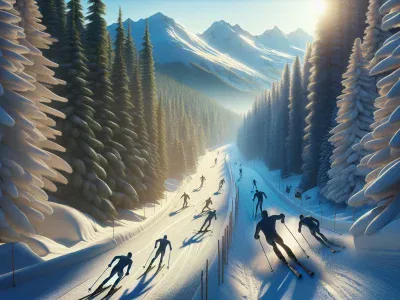
Groomed trails support both skiers and snowboarders but favor different movement dynamics. Skiers glide parallel, using independent leg action to carve sharp turns and control speed, especially on firm hardpack. You notice how moguls align perfectly with the rhythm of classic ski turns, creating a natural flow.
Snowboarders travel edge-to-edge, using the entire body to initiate transitions. You find wide, open groomers ideal for smooth, sweeping carves. Snowboarders hold a distinct advantage when linking deep S-turns because both feet move together. On steeper or icy sections, skiers gain better grip and step precision, while snowboarders can struggle with edge catch if not skilled. Every winter, ski resorts like Whistler and Vail showcase high-speed carving from both groups, but intermediate skiers outnumber snowboarders on narrow, crowded runs, according to the National Ski Areas Association (NSAA).
Powder And Off-Piste Conditions
Powder and off-piste terrain change the dynamics entirely. Snowboarders float better in deep powder since their larger board distributes weight, making it easier to glide on the surface. With each shift in snow texture, you’ll notice snowboarders surfing fresh snow with less effort and fewer face plants. Experienced snowboarders often describe powder days as “riding a wave,” illustrating how the sport excels in these conditions.
Skiers, when using wide, rockered skis, match this floatation but demand more technical skill, especially when navigating tight trees or variable off-piste snow. Many backcountry guides (see American Institute for Avalanche Research and Education) prefer skis for skinning uphill or traversing mixed terrain efficiently. Alpine skiers, who tackle steep couloirs, often use poles for stability and jump turns to manage narrow features—something snowboarders handle less nimbly.
Terrain Parks And Tricks
Terrain parks and trick zones open creative possibilities for both snowboarders and skiers. Snowboarders dominate rails and boxes by locking into a single stance, which gives balance on narrow features. Iconic events like the X Games highlight snowboard tricks like spins and grabs that capture fans’ attention through style and amplitude.
Skiers now rival snowboarders in slopestyle and halfpipe, using twin-tip skis for switch landings and aerial spins. You see skiers execute impressive tricks like corks and double flips, with freeskiing pioneers (such as Tanner Hall and Sarah Burke) pushing boundaries. The learning curve for rails tends to be easier for snowboarders due to the lower center of gravity, but skiers advance quickly once they adapt to side approaches. In local parks, you’re just as likely to see young skiers landing 360s as snowboarders sliding kinked rails, with many progressing together session after session.
Performance shifts as you move between groomed slopes, deep powder, and freestyle features—each discipline stakes its claim on different terrain, but skill, creativity, and passion always drive your experience.
Gear, Comfort, And Safety
You step into the heart of winter sports, where gear weight and comfort shape your whole day on the mountain. The right setup lets you carve with confidence, while the wrong fit can leave you sore even before lunch.
Equipment Differences
You spot a skier—two separate boots clicking into narrow skis, poles swinging in each hand, helmet and goggles snug against biting wind. Then, a snowboarder slides by—feet locked side by side on a single broad board, arms often out for balance, sitting to buckle in at every lift top.
Ski equipment leans toward modularity: you select boots, then skis, then bind. Each boot flexes at the ankle, giving control, but often feels stiff walking around the lodge or parking lot. Lugging two skis, five-foot-long each, plus poles, creates a juggling act that many first-timers remember (and sometimes dread).
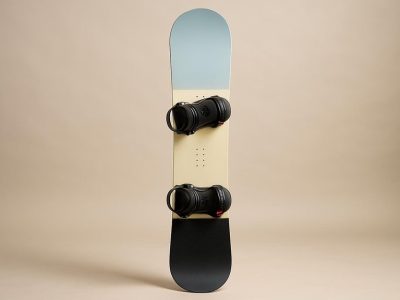
Snowboarding gear sticks to unity. You snap into soft boots—flexible and bootlike, making that walk to the café feel nearly normal. The single board simplifies transport but poses a puzzle when crossing flat slopes, as you unstrap one foot and push like a skateboarder. And there’s just one boot type—a boon if you value simplicity in rental shops.
Equipment choices effect more than carry weight. For example, skis and poles help you maneuver in lift lines, while a snowboard’s shape can snag on crowded days. Children often favor snowboard boots for less pinching, though older skiers sometimes say a stiff ski boot brings better edge power.
Comfort And Injury Risks
You focus on comfort, and comfort fights a subtle battle with safety across both sports. Ski boots—designed for power transmission—may squeeze shins and calves, sometimes numbing feet during long bluebird days. In contrast, snowboard boots cradle ankles and permit a bit of swagger off the hill but can rub ankles raw on icy days if the fit slips.
Injury risks tilt based on gear design. For skiers, falls often twist the lower leg, increasing ACL strain (The American Journal of Sports Medicine, 2012). Knee braces and modern binding-releases lower risk, but knee injuries persist at about 50% of all skiing-related injuries. Think of Simone, who returned to the slopes on new skis, only to twist her knee catching an edge on a windy day.
Snowboarders, meanwhile, avoid many knee injuries but face upper-body impacts—wrist fractures and shoulder separations when learning. During icy conditions, Erik—trying to bomb a green slope—caught his front edge, flipping onto his wrists and spending the winter in a cast. Wrist guards reduce fractures by up to 85% among beginners (British Journal of Sports Medicine, 2010), yet many riders skip them for style.
Resort design affects comfort too. You linger in liftlines—skis let you shuffle along, while snowboarders hop and sidestep, sometimes stretching calves after five minutes. On crowded gondolas, skiers lean upright, boards across laps, while snowboarders often struggle for space, their wide planks banging knees and neighbors alike.
| Gear/Aspect | Skiing | Snowboarding |
|---|---|---|
| Boots | Rigid, ankle support, less walk comfort | Soft, flexible, more comfy walking |
| Poles | Necessary for stability, movement | Not used |
| Carrying | Skis + poles, awkward for some | Single board, easier carry |
| Boot-Injury Link | Higher knee injury risk (ACL, MCL) | Higher wrist/shoulder injury risk |
You weigh thousands of gear and comfort moments each day, often trading ease for control, or flexibility for stability. Would you rather risk a sore wrist from a hard fall or an aching knee after a long day chasing moguls? Your answer shifts with every run, every crash, every boot you lace up or strap in.
Cost And Accessibility
Grasping the true cost of snowboarding and skiing is like peering into a mountain fog; the details sometimes blur until you stand at the base lodge, wallet in hand. Your journey through either sport begins long before your board or skis ever touch fresh powder, and the choices you make echo across your entire experience.
Lift Tickets And Lessons
Lift tickets for both snowboarding and skiing average $90 to $150 per day at major US resorts like Vail or Mammoth, though you might snatch $50 early-season deals or bundle discounts at regional ski hills (NSAA, 2024). Think for just a second—have you ever paid more for the promise of downhill adventure than a stadium seat at a playoff game? Many have. If you buy a multi-day or season pass, you can cut per-day costs, but upfront totals balloon beyond $600. Consider group lessons: For snowboarding or skiing, hourly rates can hit $60 for youth and $120 for adults, according to PSIA-AASI. Private instruction, which accelerates learning but requires deep pockets, often tops $600 for a full day—not exactly lunch money. You might wonder: Why is expert mountain guidance more expensive than private music lessons? The answer lies in employer liability, instructor certification, and demand during holidays. Across the US, resorts like Breckenridge or Park City structure lesson pricing to make snowy thrills accessible, but not cheap.
Equipment Rental And Purchases
Renting snowboard or ski equipment costs about $40 to $60 per day for entry-level gear, but if you chase high-performance skis or demo snowboards, prices climb toward $75 daily (SIA, 2023). For example, the Burton LTR snowboard or Rossignol Experience 74 skis both represent reliable rental staples, but their purchase counterparts call for more significant investment, $400 to $900 for boards or $350 to $1,200 for skis. Boots and bindings add $200 to $600. Buying a “full kit” means you may spend $800 to $2,000 before zipping your jacket. Don’t forget the helmet ($70+), goggles ($40+), and gloves ($35+), all of which add up. Maybe you’ll find yourself, as thousands do, renting the wrong size boots, limping back to the shop with sore ankles after only an hour. Or maybe you’re joining those who browse end-of-season sales, scoring new Salomon ski boots for half price—rewarding patience and luck equally.
Accessibility matters, too. Urban dwellers in places like Boston or Denver catch ski buses or trains to nearby slopes, while others commute hours or even fly, raising costs drastically. Resorts such as Big Sky or Jackson Hole offer shuttle services, but remote locations handicap spontaneity. You ever wondered why locals seem to ride the lifts after work while visitors only show up on weekends? The answer sits in the intersection of geography and financial flexibility.
| Expense Type | Typical Range (US$) | Snowboarding Example | Skiing Example |
|---|---|---|---|
| Lift Ticket (Day) | $90–$150 | Breckenridge Adult Board | Vail Adult Ski Pass |
| Group Lesson (Hour) | $60–$120 | Snowboard Youth Class | Ski Adult Group Lesson |
| Private Lesson (Day) | $400–$900 | Park City Snowboard Guide | Aspen Ski Instructor |
| Rental (Day) | $40–$75 | Burton LTR Board & Boots | Rossignol Skis, Poles, Boots |
| Kit Purchase Total | $800–$2,000+ | Lib Tech Board, K2 Boots | Salomon Skis, Atomic Ski Boots |
What if costs steer you clear of the slopes? Your story’s not uncommon. Adaptive programs and local nonprofits like Share Winter Foundation break barriers, offering gently-used gear or subsidized tickets—changing lives one run at a time.
Balancing numerical costs with real-world tales, you now see that the trail to the mountain begins in bank accounts and budget plans as much as snowy parking lots.
Personal Preference: Lifestyle And Community
Choosing between snowboarding and skiing often comes down to your personal lifestyle and the communities each sport inspires. You might’ve noticed on the mountain how the snowboarders—boots unbuckled, lounging at the lodge like a pack of wolves—show off a vibe that’s laid-back, expressive, even a little rebellious. Snowboard culture, born from surf and skate roots (Burton, 2023), thrives on creativity and an unspoken code of camaraderie: strangers high-fiving after a great run, crowds cheering in the terrain park, young riders swapping stickers and sharing tips on tricks. Do you get caught up in the rhythm of hip-hop blasting from Bluetooth speakers at the rail jam?
Meanwhile, step into a ski town café at sunrise, and you’ll hear a different rhythm. Skiers tend to form tight-knit crews, talking line choices and snowpack conditions over strong coffee. Multi-generational family trips, competitive racing teams, or groups who cross continents chasing powder—these are some hallmarks of ski culture. The tradition runs deep: some resorts celebrate torchlight descents and après-ski chalets, where the day’s exploits become tomorrow’s legends (National Ski Areas Association).
Ask yourself, which tribe feels more like home? You can join snowboard meet-ups—in Tahoe, the “Shred Sisters” Facebook group plans monthly rides and potlucks. Or maybe you’re drawn to the precision of ski camps, where Olympians coach you through perfecting your carve. Is it the call of freestyle, where you film edits for your crew’s YouTube channel, or the alpine ambition of logging vertical feet and comparing Strava stats with your ski club friends?
Both sports pose questions about identity: how do you express yourself on the mountain, and whose company do you cherish when the lifts shut down? You might find yourself inspired by athletes like Chloe Kim in snowboarding, breaking barriers and defining a new voice for the sport—or by Mikaela Shiffrin, whose technical mastery on skis sparks admiration across disciplines. Each discipline anchors you differently to winter itself, shaping the stories you tell after a long, star-lit drive back home.
Whether you’re drawn to snowboarding’s countercultural gatherings or skiing’s legacy of alpine tradition, your choice reflects the lifestyle you want to live—and the community you’ll come to call your own. Who said you got to pick just one anyway?
Conclusion
Choosing between snowboarding and skiing is a personal journey shaped by your goals, comfort, and the kind of mountain experience you crave. Whether you’re drawn to the thrill of carving fresh powder or the camaraderie of a vibrant community, both sports offer unique rewards.
Let your curiosity and passion guide you as you step onto the slopes. No matter which path you take, you’ll discover new skills, unforgettable moments, and a lifelong love for winter adventure.

- Best Ylvis Songs - September 22, 2026
- Best Oats Alternative - September 21, 2026
- Router Software Comparison: OpenWrt vs. DD-WRT vs. PfSense - September 21, 2026
by Ellie B, Site Owner / Publisher