Imagine standing at the edge of a snow-covered mountain or a crumbling hillside, feeling the tense silence before chaos erupts. The difference between an avalanche and a landslide might seem subtle, but it can spell the line between safety and disaster.
These natural giants move with a silent whisper or a thunderous roar, each triggered by distinct forces and behaving in unique ways. Understanding their contrasting nature is not just an academic exercise; it’s a vital tool for survival.
Surprisingly, knowing these differences can even help in early warning efforts, giving us a fighting chance when nature’s fury strikes. Let’s uncover where these mighty forces diverge and why those distinctions truly matter.
What Are Avalanches and How Do They Happen?
Avalanches are big slides of snow that suddenly rush down a mountain. They happen when the snow on a slope becomes unstable and falls apart. The main reason for this is snowpack stability. If the layers of snow do not stick together well, a weak layer inside the snowpack can cause a slide.
Mountain terrain also matters a lot. Steep slopes, especially those between 30 and 45 degrees, are the most likely to have avalanches. Think of it like a heavy object tipping over on a steep hill. Weather plays a role too. Heavy snow, rain, or quick temperature changes can make the snow layers weaker. For example, warm rain can soak into the snow and make it more likely to slide.
When these weather conditions come together, the snowpack can break apart suddenly, releasing a huge amount of snow down the mountain. This can be dangerous for skiers, hikers, and anyone in the area.
Understanding how the shape of the mountain and the stability of the snow work together helps us guess when avalanches might happen. But even with careful checks, avalanches can still occur unexpectedly. Always be cautious when in snowy mountains and pay attention to signs that an avalanche might happen.
What Causes Landslides and When Are They Most Likely?
Landslides are when large amounts of soil, rocks, or debris slide down a slope. They happen mostly when the ground becomes weak or unstable. Heavy rain, earthquakes, and human activities like construction can cause this. For example, after a big storm, you might see mudslides on a hillside.
Landslides are most likely to happen when the ground is already loose or filled with water. Water from rain or melting snow can make the soil heavy and slippery. Earthquakes shake the ground, making rocks and dirt fall. When people cut into hillsides or build on slopes, they can also make landslides more likely.
Some places are more at risk because of their terrain or climate. For instance, California has many hills and gets heavy rain, so landslides happen there often. But it is not always easy to predict exactly when a landslide will happen. Sometimes, heavy rain or an earthquake can trigger one unexpectedly.
There are two main views about how to prevent landslides. Some experts believe planting trees and strengthening slopes can help. Others say that better warning systems and avoiding construction in risky areas are better ways to keep people safe.
In the end, understanding what causes landslides and when they are most likely can help us stay safe. Always pay attention to weather warnings and avoid building on unstable ground when possible.
Factors Triggering Landslides
Landslides happen when slopes become unstable and slide down. Knowing what causes landslides can help people stay safe and protect property. Several natural and human-made factors can trigger these slides.
Heavy rain or quick snowmelt is one of the main causes. When too much water soaks into the soil, it becomes heavy and slippery. This can make the ground slide down a hill or mountain. For example, after a big storm in California, many landslides blocked roads and damaged homes.
Earthquakes are another cause. When the ground shakes during an earthquake, it can weaken the slope’s structure. Sometimes, a strong quake like the one in Haiti in 2010 caused many landslides. The shaking makes the soil and rocks move suddenly.
People also cause landslides. Cutting down trees, building houses, or mining can disturb the natural stability of a slope. Without trees to hold the soil, rain can wash it away more easily. Construction on a hillside, if not done carefully, can make the ground weaker and more likely to slide.
Understanding these triggers is key to staying safe. If you know heavy rain or earthquakes are coming, you can be more alert. Communities can also plan better by avoiding construction in risky areas or planting trees to hold the soil.
Some landslides happen suddenly, while others develop slowly over time. Both can be dangerous, so it’s good to watch for warning signs. By knowing what causes landslides, we can act to reduce the risks and save lives.
High-Risk Conditions Occur
High-risk conditions are factors that make landslides more likely to happen. When certain conditions happen together, the risk increases even more. For example, heavy rain or snow melting quickly can soak the ground, making slopes unstable. This can cause the soil to slide down. Earthquakes can also shake loose ground, making landslides happen more often. When the earth shakes, already unstable slopes are more likely to slide. Deforestation, or cutting down trees, weakens the support that holds slopes in place. Without trees, soil and rocks can fall more easily.
Knowing these high-risk conditions helps people prepare and protect themselves. For example, if a heavy rain is forecasted, communities can watch slopes carefully for signs of danger. Just like how avalanche safety experts check snow conditions before skiing, engineers and residents need to look at slope stability to prevent landslides.
Sometimes, these conditions happen alone, but they can also combine. For example, a steep slope with little vegetation that gets heavy rain and is shaken by an earthquake is very likely to slide. Recognizing these warning signs helps communities act early, set up alerts, and reduce damage.
However, it is not always possible to stop landslides completely. Some places are more at risk because of their geography or weather patterns. Understanding high-risk conditions is a helpful tool, but it does not guarantee safety. Still, being aware of these factors can save lives and protect property before a disaster happens.
How Do Avalanches and Landslides Behave Differently?
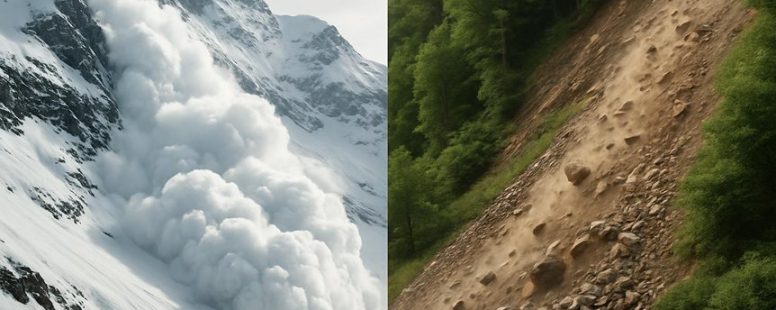
An avalanche is a fast-moving slide of snow down a mountain slope. It happens when the snowpack becomes unstable, often on steep slopes between 30 and 45 degrees. The snow breaks loose and slides smoothly downhill, with speed depending on how solid or loose the snow is. For example, a fresh snowfall on a mountain like the Rockies can easily cause an avalanche if the snowpack is weak.
A landslide is the sudden movement of rock, dirt, or soil. It usually happens because of heavy rain or erosion that makes the ground unstable. Landslides can move in different ways. Sometimes big chunks of earth slide down quickly, like a block falling off a cliff. Other times, soil and rocks move slowly downhill. For example, after a heavy storm in California, a hillside might suddenly slide and block a road.
Avalanches are more predictable when the snowpack gets fragile. If snow layers are weak or there is a lot of new snow, an avalanche is more likely. Landslides can happen suddenly after events like rainfall or earthquakes, but sometimes they can be slow and happen over days.
Both avalanches and landslides can be dangerous, but they behave differently because of what they are made of and what causes them. Knowing these differences can help keep people safe when they are in mountains or on hills.
What Factors Influence the Risk of Avalanches and Landslides?
Avalanches and landslides happen when slopes give way. Several factors influence how likely these events are to happen.
One key factor is the slope’s steepness. Steeper slopes are more likely to slide because gravity pulls material downhill. For example, mountains with very steep sides are more prone to avalanches. Weather also matters a lot. Heavy snowfall can make snowpack unstable, especially if the snow is wet or layered unevenly. Similarly, rain can soak soil, making it heavier and more likely to slide.
The type of land and plants on the slope also affect risk. Dense forests can hold soil and snow in place, but when trees are cut down or burned, the land becomes more vulnerable. Soil saturation from rain or melting snow can weaken the ground, causing landslides. In some places like California or Norway, heavy rain and snow increase landslide chances.
People’s actions can also make slopes more dangerous. Building homes, mining, and cutting trees can disturb the land’s natural stability. For example, construction on a hillside without proper support can trigger a slide.
But some communities see natural hazards like avalanches and landslides as unavoidable. They don’t take many precautions because they believe nature cannot be controlled. Others, however, understand these risks and take steps to reduce them. These include installing barriers, monitoring weather, and avoiding construction in risky areas.
In the end, understanding these factors helps us know when and where avalanches or landslides might happen. Some risks can be reduced with proper planning and safety measures. But it’s still important to stay alert, especially in areas with steep slopes and heavy snow or rain.
What Are the Impacts of Avalanches and Landslides on People and Property?
Avalanches and landslides are natural events that can cause serious harm to people and damage property. They happen quickly and can be deadly or costly. Here are the main impacts:
Personal injuries and loss of life: When an avalanche or landslide occurs, it can bury or crush people nearby. For example, skiers caught in an avalanche in Colorado often get trapped under snow, risking severe injuries or death. Landslides can also trap hikers or residents, making rescue difficult. Because these events happen suddenly, safety measures like warning systems or evacuation plans are very important.
Damage to buildings and infrastructure: These events can destroy homes, roads, bridges, and other structures. For instance, a landslide in California knocked out a highway, blocking traffic for days. Avalanches can demolish ski resorts or mountain cabins. This damage can force families to leave their homes and disrupt daily life.
Economic costs and emotional effects: Repairing damage from avalanches and landslides costs a lot of money. Communities may lose businesses, and the cost to rebuild can be huge. Also, the trauma from losing loved ones or homes can stay with people long after the event. People often feel scared and worried about future events.
Some experts believe that with better warning systems and land use planning, many of these impacts can be reduced. For example, avoiding building in known landslide zones or installing early warning signs can save lives and money. But, others warn that not all areas can be protected, and natural events will still happen sometimes.
How Can You Recognize the Signs of an Impending Avalanche or Landslide?
Recognizing the signs of an avalanche or landslide can help you stay safe and avoid danger. An avalanche is a large amount of snow sliding down a mountain, while a landslide involves soil or rocks moving downhill. Both can happen suddenly, but there are warning signs you can look for.
For avalanches, watch for fresh snow on unstable layers. When new snow falls on top of older, weak snow, it can cause a slide. Also, listen for cracking sounds during snowstorms. If you hear unusual noises like cracking or rumbling, it might be a sign that snow is about to slide. In snowy mountain areas like the Rockies or the Alps, these signs are common before an avalanche.
Landslides often happen after heavy rain or rapid snow melt. Look for ground vibrations or small shakes, especially after storms. Trees leaning downhill or new cracks in the ground are signs the soil is loosening. If you see recent heavy rain or hear rumbling sounds, it could mean a landslide might occur soon. Hillsides with loose soil or clay are more prone to landslides, especially during storms.
Both avalanches and landslides show early signs. These might include unusual sounds, ground shifts, or leaning trees. Staying alert and watching your environment can help you spot these warning signs early. For example, if you are hiking in the mountains or on a hillside, paying attention to these clues can save your life.
Some people believe that ignoring warning signs is safe because they think it will not happen. However, many accidents happen when warning signs are ignored. It is best to stay cautious, especially in risky areas. Keep a close eye on the weather and landscape. Use tools like weather apps or ask local experts about current conditions.
What Are Effective Ways to Prevent or Reduce the Impact of Avalanches and Landslides?
Preventing or reducing the damage from avalanches and landslides is important for safety. The best way to do this is by controlling unstable snow and soil before problems happen. Here are some simple steps to help keep communities safe:
Keep an eye on snow conditions. Regularly check snowpack levels to see if the snow is getting too unstable. If it looks dangerous, authorities can take action early.
Use controlled triggers. This means setting off small avalanches on purpose when the snow is unstable. It releases the snow safely before a big, destructive avalanche can happen. This method is used in places like Colorado and Switzerland.
Plant and protect deep-rooted plants and trees. Vegetation helps hold soil in place and stops landslides. Preserving forests on hillsides is a natural way to reduce risks.
Some people also think about building barriers like walls or snow nets that catch falling snow or soil. These can be helpful but might not work everywhere. Also, some methods, like controlled avalanches, require trained experts and special equipment. They are effective but need careful planning.
While these measures reduce risks, they are not perfect. Nature can still surprise us, especially during heavy storms or rapid weather changes. For example, in 2014, a big avalanche in Washington State was caused by heavy snowfall, despite safety measures. So, it’s good to stay aware and prepared.
When Should You Be Most Concerned About These Disasters?
The risk of avalanches and landslides is highest during certain times. Usually, these disasters become a danger when there is heavy snow or lots of rain. When snow builds up on mountains or slopes get soaked, the ground can give way. For example, after a big storm, avalanches are more likely to happen.
Remote monitoring tools are very helpful in these situations. They give real-time data on ground movement or snow conditions. These systems can warn communities early so they can prepare or evacuate if needed. Imagine a weather sensor on a mountain that detects shifting snow and sends an alert. That can save lives.
Community preparedness is also very important. People should know the safest escape routes and safety rules. When storms forecast heavy rain or snow melts quickly, the danger increases. During these times, everyone should stay alert and watch the weather closely.
Some experts say that knowing the right times increases safety. Others warn that even with monitoring, surprises happen. For example, a small landslide can turn into a big disaster if not caught early.
Why Understanding the Differences Between Avalanches and Landslides Is Important
Understanding the differences between avalanches and landslides is very important because it helps keep us safe and makes prevention easier. An avalanche happens when a large amount of snow suddenly slides down a mountain. A landslide is when soil, rocks, or debris move quickly down a slope. Knowing what causes each one can help us prepare better.
For example, avalanches often happen after heavy snowfalls or when the snowpack becomes unstable, especially on steep slopes. Landslides can occur after heavy rains or earthquakes that loosen the ground. If we know these causes, we can avoid risky areas or take safety steps.
Some people think all mountain slides are the same, but they are not. Avalanches mainly involve snow, while landslides involve dirt and rocks. This difference affects how we should protect ourselves. For instance, avalanche safety gear like beacons and airbags can save lives, but they won’t help in a landslide.
However, understanding the differences has limits too. Sometimes, a landslide can trigger an avalanche, or vice versa. Both hazards can happen in the same area, so staying alert is always smart. Recognizing these hazards early can save lives, but it’s not always easy to predict exactly when they will happen.
In short, knowing what causes avalanches and landslides helps us stay safe. It helps us decide where to go, what gear to use, and when to stay away from dangerous slopes. This knowledge can prevent accidents and even save lives in emergencies.
Impact on Safety
Knowing the difference between avalanches and landslides is very important for safety. These natural hazards are different, and understanding how helps us respond better. When authorities give clear warnings, people know what to do and can stay safe. Also, knowing the hazards helps in planning evacuations and choosing where to send emergency help. Here is why understanding these hazards matters:
Clear warnings: If you know whether a threat is an avalanche or a landslide, you get the right alert. For example, avalanche warnings are common in mountain areas like Colorado, while landslides often happen after heavy rain in places like California.
Better evacuation plans: Different hazards need different escape routes. You might run to higher ground for a landslide but move away from steep slopes for an avalanche.
Smarter use of resources: Emergency teams can focus their efforts on places most at risk if they know what kind of hazard is coming.
Some people think all mudslides and snow slides are the same, but they are not. Knowing the difference can save lives. Still, it’s good to remember that sometimes warnings can be confusing or wrong. No system is perfect, and new hazards can happen unexpectedly.
Understanding these hazards helps make safety plans stronger. It helps us act quickly and avoid injuries when a disaster happens.
Prevention Strategies
Prevention strategies work best when they match the specific hazard. Avalanches and landslides are different problems, so they need different ways to stop them. Avalanches happen when snow suddenly slides down a mountain. To prevent this, we focus on keeping the snowpack stable. This can mean controlled triggering, where experts carefully set off small avalanches to prevent big ones later. Monitoring snow conditions also helps warn us before a big slide happens.
Landslides, on the other hand, are caused by loose soil or rocks sliding downhill. To stop landslides, it helps to keep vegetation, like grass and trees, on slopes. Plants hold the soil in place and stop erosion. Building barriers or drainage systems can also help move water away from risky areas.
Some people might think one method works for both hazards, but that is not true. Each hazard has its own triggers and behaviors. For example, a landslide can happen after heavy rain, while an avalanche depends on snow conditions and temperature. Using the wrong prevention method might not work or could even make things worse.
There are some limits to these strategies. Controlling avalanches can be dangerous and expensive, and not all areas can be monitored closely. Similarly, planting vegetation may not stop a big landslide if the slope is very steep or the soil is loose. It’s good to understand these limits so communities can choose the best methods for their situation.
To provide the best experiences, we use technologies like cookies to store and/or access device information. Consenting to these technologies will allow us to process data such as browsing behaviour or unique IDs on this site. Not consenting or withdrawing consent, may adversely affect certain features and functions.
Functional
Always active
The technical storage or access is strictly necessary for the legitimate purpose of enabling the use of a specific service explicitly requested by the subscriber or user, or for the sole purpose of carrying out the transmission of a communication over an electronic communications network.
Preferences
The technical storage or access is necessary for the legitimate purpose of storing preferences that are not requested by the subscriber or user.
Statistics
The technical storage or access that is used exclusively for statistical purposes.The technical storage or access that is used exclusively for anonymous statistical purposes. Without a subpoena, voluntary compliance on the part of your Internet Service Provider, or additional records from a third party, information stored or retrieved for this purpose alone cannot usually be used to identify you.
Marketing
The technical storage or access is required to create user profiles to send advertising, or to track the user on a website or across several websites for similar marketing purposes.