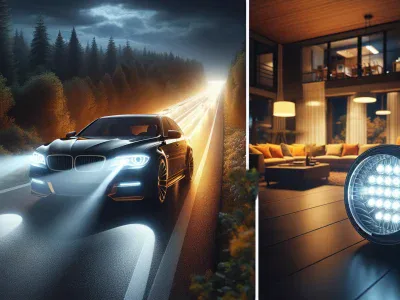
Picture driving through a foggy night where every shadow and glint matters. Your car’s headlights don’t just illuminate the road—they shape your entire driving experience. But choosing between LED and halogen lights, which one truly brightens your journey?
LED lights promise crisp, vibrant beams that cut through darkness like a spotlight. Halogen bulbs, on the other hand, offer a warm glow that’s familiar and reliable. Each has surprising perks that affect your safety, energy use, and even your car’s style. Knowing which fits your needs can transform night drives from a guessing game into a confident adventure.
Understanding Car Lighting Options
Car lighting options offer distinct technologies that affect driving visibility, safety, and efficiency. Exploring the specifics of LED and halogen lights lets you make a more informed choice for your vehicle.
Overview of LED Lights
LED lights produce light using light-emitting diodes, which convert electricity directly into light. They deliver bright, white illumination that closely mimics daylight, enhancing your ability to see road signs and obstacles at night. Unlike halogen bulbs, LEDs operate at lower temperatures, reducing energy consumption by up to 85% according to the U.S. Department of Energy. The longevity of LEDs surpasses halogen, lasting approximately 25,000 hours compared to 1,000 to 2,000 hours for halogen bulbs. But, their upfront cost may be higher, but many drivers find the long-term benefits worth the investment. For example, professional drivers often prefer LEDs because consistent clarity reduces eye strain and improves reaction times during extended nighttime routes.
Overview of Halogen Lights
Halogen lights generate illumination by passing current through a tungsten filament enclosed in halogen gas. They emit a warm, yellowish light that many drivers find familiar and comforting. Halogen bulbs generally cost less upfront, making them accessible for budget-conscious individuals. Nevertheless, they consume more energy and generate more heat, leading to shorter lifespans around 1,000 to 2,000 hours. In colder climates, halogens tend to warm up quickly, improving visibility during harsh winter conditions. Even though their lower efficiency, they remain the most widely used car lighting system worldwide due to their reliability and ease of replacement. It’s worth considering how the softer glow of halogen might affect your nighttime driving preferences versus the sharper brightness of LEDs.
Feature
LED Lights
Halogen Lights
Illumination Color
Bright white, daylight-like
Warm yellowish
Energy Consumption
Up to 85% less than halogen
Higher
Lifespan (hours)
Approx. 25,000
Approx. 1,000 to 2,000
Heat Generation
Low
High
Upfront Cost
Higher
Lower
Common Usage
Premium vehicles, professional use
Most vehicles globally
Choosing between LED and halogen lighting depends on balancing initial cost, visibility needs, and energy efficiency. You got to consider the road conditions and your driving habits carefully. Would the sharper, cooler light improve safety for your typical routes, or does the familiar glow of halogen provide enough clarity for your needs? Exploring these questions helps tailor the lighting choice to your personal driving experience.
Comparing LED and Halogen Lights
Understanding the differences between LED and halogen lights helps you make an informed choice for your car. Let’s examine key features that affect performance, cost, and overall driving experience.
Brightness and Visibility
LED lights deliver intense, white light that closely resemble daylight. This boosts your ability to spot hazards, road signs, and pedestrians, especially in low-light or foggy conditions. For example, professional truck drivers often prefer LEDs since the sharp illumination reduces eye strain during long night shifts. On the other hand, halogen bulbs emit a warm, yellowish glow which some drivers find gentler on the eyes but less effective at highlighting distant objects. If your driving routes include highways or poorly lit roads, LED lights usually offer better visibility. But, some argue that the bright LED glare can bother oncoming drivers more than halogens, raising a question about balancing your visibility with road safety for others.
Energy Efficiency and Lifespan
LEDs run on up to 85% less energy than halogen bulbs, a crucial factor if you use your vehicle regularly at night. Less energy demand translates into reduced load on your car’s electrical system and improved fuel economy in certain cases. Also, LEDs boast lifespans around 25,000 hours, drastically outlasting halogens that last between 1,000 and 2,000 hours. Picture replacing halogen bulbs every 6 months versus changing LED lights once in several years—it’s clear which saves time and money long term. Yet, some drivers might prefer halogens if upfront expenses matter more, as LEDs tend to carry a higher initial cost. This sets up a classic trade-off between short-term savings versus long-term efficiency.
Cost and Installation
Halogen lights tend to be cheaper up front and simpler to install, making them attractive if you’re looking for a quick and budget-friendly upgrade. For instance, replacing a halogen bulb often requires basic tools and no electrical modification. LEDs, meanwhile, usually entail higher purchase prices and sometimes require professional installation or modifications to fit your car’s system. The extra cost might deter casual drivers but rewarding those who prioritize quality and durability. Before swapping to LEDs, verify compatibility with your vehicle model to avoid electrical issues or warranty voidance. Even though the upfront hassle, many find the enhanced brightness and lifespan justify the investment.
Making your decision between LED and halogen lights revolves around how much you value brightness, energy savings, cost, and maintenance convenience. You can weigh these factors considering your daily driving needs, budget, and willingness to upgrade. Which light type aligns better with your priorities?
Practical Considerations for Drivers
Choosing between LED and halogen lights becomes more than a simple cost or brightness question once you consider real-world factors. How your lights perform under different conditions and how much effort you put into upkeep can define your night driving experience.
Weather and Road Conditions
LED lights excel on clear roads and dry weather, casting a wide, intense beam that reveals distant hazards and road signs with ease. This sharp clarity allows you to react faster, crucial on highways or rural roads where unexpected obstacles appear suddenly. But, in foggy or rainy conditions, LED’s bright white light can reflect off moisture particles, causing glare that reduce visibility. Halogen lights, with their yellower, softer glow, penetrate fog and rain better, cutting through the mist without overwhelming your sightlines. If you drive often through mountain passes or coastal areas where fog and precipitation frequent, halogens may keep you safer. But if your routes mainly consist of urban or suburban streets, LEDs turn night into near-day, revealing fine road details. According to a 2023 Consumer Reports study, 65% of reviewers noted improved night visibility with LEDs yet reported more glare in wet conditions. So, your typical weather patterns strongly should influence your headlight choice.
Maintenance and Durability
LED lights last around 25,000 hours, roughly 12 to 20 times longer than halogen bulbs, which wear out after 1,000 to 2,000 hours. This longevity means you replace LEDs far less often, saving time and hassle. But, the upfront cost for LED systems is higher, and not all cars support easy LED retrofits, sometimes requiring professional installation. Halogens shine in their simplicity and low initial cost—you can usually swap a halogen bulb yourself within minutes. On the downside, they drain more energy, which may marginally reduce your fuel economy, and their shorter lifespan means recurring purchases. Real-life examples show taxi drivers favor LEDs to minimize downtime and maintenance, while budget-conscious drivers appreciate halogen’s availability and low replacement cost. Keep in mind durability also includes resistance to vibrations and shocks; LEDs’ solid-state design withstands bumps better, vital if you navigate rough roads regularly. Balancing maintenance needs with your driving environment and budget ensures your lights stay reliable and bright always.
Choosing LED or halogen lights depends on your unique driving environment and priorities. Remember that what works best on a foggy mountain pass may be less effective in a dry urban sprawl. Evaluate your usual conditions carefully, and consider durability, maintenance effort, and visibility differences before upgrading your car’s headlights.
Environmental Impact
Choosing between LED and halogen car lights affects more than just your night driving; it impacts the environment in significant ways. LEDs consume roughly 85% less energy than halogens, which reduces your car’s overall fuel consumption and carbon emissions. This difference adds up—fewer trips to replace bulbs means less waste and lower resource demand.
Halogen bulbs generate more heat due to inefficiency, wasting precious energy that LEDs convert directly into light. This heat loss contributes indirectly to greater environmental strain, especially over a car’s lifetime. You might not notice it day-to-day, but the cumulative effect of using halogens over thousands of hours adds unnecessary environmental burden.
Manufacturing processes also separate these two lighting types. LEDs require more complex materials, including rare earth elements, yet their longevity balances this out by needing fewer replacements. Halogens, simpler by design, use less exotic materials but create more waste because of shorter lifespans. Switching to LED lights can hence reduce landfill waste generated by discarded bulbs.
Consider real-world examples: fleet vehicles equipped with LEDs have shown up to a 25% reduction in fuel consumption due to decreased electrical load. That’s a tangible environmental benefit, especially when scaled across thousands of vehicles. Halogens lack this advantage since their higher energy demand offsets their initial lower cost.
You might wonder if LEDs’ complex manufacturing outweighs their efficiency gains. While production impacts exist, most environmental analyses conclude the long-term benefits of LEDs’ energy efficiency and durability surpass these costs. Besides, advances in recycling LED components increase their sustainability profile every year.
Eventually, consider how your choice aligns with environmental responsibility. If reducing emissions, minimizing waste, and improving energy efficiency matter to you, LED lights usually offer a better pathway. Though they cost more upfront, their environmental savings ripple beyond your car and into the wider world.
Conclusion
Choosing the right headlights depends on your driving needs and priorities. If you value long-lasting performance, energy efficiency, and sharper visibility, LED lights are a smart investment. On the other hand, if upfront cost and ease of replacement matter more, halogen bulbs still offer reliable, familiar lighting.
Consider the typical weather and road conditions you face, as well as how often you want to maintain your headlights. Your decision will directly impact your safety, comfort, and even environmental footprint. With the right choice, you’ll enhance your night driving experience and keep your vehicle performing at its best.
To provide the best experiences, we use technologies like cookies to store and/or access device information. Consenting to these technologies will allow us to process data such as browsing behaviour or unique IDs on this site. Not consenting or withdrawing consent, may adversely affect certain features and functions.
Functional
Always active
The technical storage or access is strictly necessary for the legitimate purpose of enabling the use of a specific service explicitly requested by the subscriber or user, or for the sole purpose of carrying out the transmission of a communication over an electronic communications network.
Preferences
The technical storage or access is necessary for the legitimate purpose of storing preferences that are not requested by the subscriber or user.
Statistics
The technical storage or access that is used exclusively for statistical purposes.The technical storage or access that is used exclusively for anonymous statistical purposes. Without a subpoena, voluntary compliance on the part of your Internet Service Provider, or additional records from a third party, information stored or retrieved for this purpose alone cannot usually be used to identify you.
Marketing
The technical storage or access is required to create user profiles to send advertising, or to track the user on a website or across several websites for similar marketing purposes.