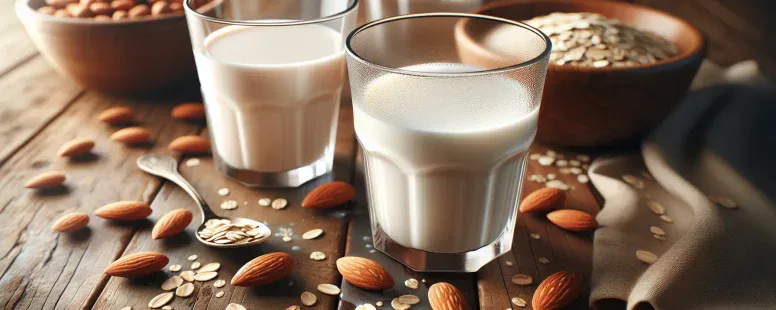
Picture this: you’re swirling a creamy splash into your morning coffee, but instead of the usual dairy, you’re faced with two contenders—almond milk and oat milk. Each boasts a loyal following, promising not just a tasty sip but a healthier, more sustainable lifestyle. The subtle nuttiness of almond milk dances on your tongue, while oat milk’s velvety texture wraps your taste buds in comfort.
But which one truly deserves a spot in your fridge? Beyond flavor, both options offer unexpected perks—think lower calories or a gentler impact on the planet. As plant-based milks shake up kitchens everywhere, your choice goes far beyond taste. Get ready to explore the surprising advantages and discover which milk fits your life best.
Nutritional Comparison: Almond Milk vs. Oat Milk
You notice in a grocery aisle, almond milk stands quietly next to oat milk—almost as rivals as much as milk alternatives themselves. Which packs more nutrition for your daily routine, and does reaching for either carton change your breakfast game? If you’ve ever poured both over granola and wondered about their protein, fiber, or vitamin punch, you’ll find answers below.
Calories and Macronutrients
Almond milk usually offers fewer calories than oat milk. Most unsweetened almond milks contain 30–50 calories per 8 oz (237 ml), compared to oat milk’s 90–120 calories (Source: USDA). That means, if you’re tracking energy intake, almond milk might seem lighter—maybe like the feather drifting from an almond tree, while oat milk feels more substantial, like a spoonful of oatmeal.
Protein levels differ: almond milk provides about 1 g per serving, whereas oat milk delivers closer to 2–4 g. Don’t expect them to rival soy milk, which brings roughly 7 g, but for your morning shake, that difference could matter. Oat milk usually has higher carbs (15–19 g) than almond milk (1–2 g). So, if you’re counting net carbs for, say, low-carb diets, almond milk might fit better.
Fat content stays low in both. Almond milk sometimes has 2–3 g of fat, largely unsaturated. Oat milk, often lower, includes heart-healthy types, too. Ever wonder whether these numbers really affect you? Try logging a week’s worth of lattes and switching milks. You might see changes in your calorie tracker most of all.
Typical Nutrition Table
Milk Type
Calories (per 8 oz)
Protein (g)
Carbs (g)
Fat (g)
Almond
30–50
1
1–2
2–3
Oat
90–120
2–4
15–19
1–2
Vitamins and Minerals
Oat milk, often fortified, brings more riboflavin (vitamin B2) and sometimes B12 to your glass, especially brands like Oatly or Chobani. Almond milk usually gets fortified with calcium and vitamin D, sometimes matching or outpacing cow’s milk for bone support. Isn’t it something, pouring that creamy swirl knowing it delivers vitamins lab-crafted straight into the carton?
Natural almond milk—made at home, for instance—offers fewer minerals than commercial versions, but you might taste a nuttier note, similar to raw almonds. Oat milk, pressed from whole oats, has more phosphorus and manganese, vital for metabolic health.
Brands vary widely; always read labels. If, for example, you compare two mainstream almond milks, their vitamin E can hit 20–50% DV, besting oat milk on antioxidant content. Oat milk frequently contains potassium and iron—making it a player for those monitoring heart health or combating anemia. Ask yourself: Does a rainbow of micronutrients fit your needs, or are you chasing a single vitamin boost for your smoothie?
If you crave more nutritional detail, brands such as Califia, Silk or Planet Oat publish verified nutrition panels online. You’ll spot, sometimes, that an oat carton has added zinc or vitamin A, whereas an almond milk skips them. The blend is as unique as your own dietary preferences.
Environmental Impact
You probably wonder whether reaching for almond milk or oat milk helps the planet more. Global demand for non-dairy milks surges, but every choice sends ripples through fields, rivers, and markets—sometimes in places you didn’t even expect.
Water use headlines the conversation. Growing almonds in California, which produce 80%+ of the globe’s supply (source: California Almond Board), consumes roughly 1.1 gallons of water per single nut—kind of a shocking fact if you picture it raining nuts, right? Legions of almond groves drink up over 15% of the state’s agricultural water supply during long, hot summers. Now, oat farming uses less water by comparison. Oat milk production averages about 6 gallons of water per 1 glass of milk, according to a 2018 University of Oxford study. Unlike almond orchards, oat fields can thrive in wetter, milder climates with less irrigation pressure.
Greenhouse gas emissions reveal another story. Oat milk ranks much below cow’s milk or almond milk about CO₂ output. For instance, producing 1 liter of oat milk emits about 0.9 kg of CO₂-equivalent, while almond milk produces closer to 0.7–0.8 kg per liter—both way lower than dairy’s hefty 3.2 kg (source: Poore & Nemecek, Science, 2018). What if you care about carbon footprint? Both alternatives cut climate impact dramatically when stacked up against dairy, but oats add a grain of hope for rain-fed sustainability.
Land use differs as well. Almond trees require dedicated, perennial farmland, making crop rotation rare and pest problems more persistent. Oat crops can rotate through farmland with wheat, barley, and rye, which improves soil health and reduces monoculture stress. if your morning cereal and your milk come from the same field in the spring and fall? Sometimes they honestly might!
On the flip side, almond pollination depends on bees—so much so that each February, almost 70% of the US commercial bee population migrates to California vineyards, bringing both economic lifelines and ecological risks. Surging demand has caused bee stress, disease, and winter colony declines. Oats do not need insect pollination, which means less pressure on already stressed bee populations (source: Xerces Society).
But let’s not ignore the transportation factor. Local oat milk producers can supply regional stores in wet states, while almond milk travels farther from Western mega-farms to urban markets. That mileage adds up, though it’s a minor slice compared to water and land issues. What are the air miles hidden in your cup?
With every stat, your everyday choice shapes food chains and landscapes—sometimes in ways you’ll never see. Will the promise of preservation outweigh the convenience of resource-heavy cropping? Can stories about orchards and oat fields reshape how you fill your cart or your breakfast bowl tomorrow?
Taste and Texture Differences
Taste defines your morning ritual more than macros or sustainability ever could. Almond milk greets your palate with a crisp, slightly nutty sensation—think of the subtle echo of marzipan in a chilled glass. For many, the flavor’s lightness makes it the invisible ingredient in smoothies, cereals, and even coffee (1). Yet, sip slowly, and you might catch faint bitterness, especially in unsweetened versions. Have you ever noticed how homemade almond milk carries a buttery finish compared to most store-bought blends?
Oat milk, in contrast, comforts you with gentle sweetness and a luxuriously creamy mouthfeel reminiscent of melted vanilla ice cream. Picture the memory of warm oatmeal cookies—oat milk delivers that in liquid form. Your latte might foam richer and smoother with oat milk, creating velvety microbubbles that almond milk sometimes struggles to match (2). Did you ever wonder why baristas reach for oat milk when crafting the perfect latte art?
Texture isn’t just about thickness. Almond milk usually feels thin or watery, particularly if you pour the shelf-stable type over granola. Some brands add thickeners like gellan gum for body, but can the result mimic the richness you crave? Oat milk achieves a creamier body—sometimes even thicker than low-fat dairy—because beta-glucans, soluble fibers from oats, turn water into silk on your tongue. If you want a frothy cappuccino or a hearty chia pudding, oat milk often gives you more structure to work with.
Nostalgia shapes your preferences, too. Maybe almond milk reminds you of the first dairy alternative you ever tried, or perhaps the texture of oat milk stirs visions of breakfast at a favorite café. Which experience speaks louder to your senses? Think about the flavors you mix with—berries, chocolate, espresso. Does the background taste of almonds enhance or distract from your favorite combos? Does the oat’s natural sweetness complement your morning coffee or make it too dessert-like?
Both milks adapt to your kitchen experiments, but their personalities stay distinct. Almond milk’s clean finish can highlight crisp, citrusy smoothies—picture lemon zest meeting a faint almond note. Oat milk’s thicker character turns into decadent golden lattes, amplified when paired with cinnamon and turmeric. Which texture fits your rituals?
Next time you swirl one into your mug, ask yourself: does this milk become the star, or does it let your ingredients shine? Taste has the final say, and your cup tells the story every morning.
(1) Riaz, M.N. et al., “Non-Dairy Milk Alternatives: Flavor and Applications,” Food Technology, 2023.
Your morning latte holds a secret battlefield for those with food allergies—the difference between almond milk and oat milk can be the thin line between comfort and discomfort. Almonds, after all, belong to the tree nut family, which the Food Allergy Research & Education (FARE) organization points out as one of the “Big Nine” allergens, causing reactions in about 1% of US adults. Someone at your breakfast table could break out in hives from a splash of almond milk, even if they’d never react to oats.
Picture the college student—let’s call her Ana—who grabs oat milk for her cereal every morning. She knows, from years of experience, that her nut-free dorm means oat milk is the safest bet for roommates who’ve got severe nut allergies. Oats are rarely linked to allergic responses, though gluten-sensitive people might hesitate before they pour. Some oat milk brands, like Oatly, explicitly label their products “gluten-free”, but not all do—making label-checking a daily ritual for people with celiac disease.
You might be surprised by cross-reactivity, a less-obvious plot twist: tree nut-allergic individuals occasionally react to other seeds or legumes, but they wouldn’t typically cross-react with oat proteins. But, if oats are processed in facilities with wheat, barley, or other gluten grains, cross-contamination becomes a real risk, muddying the waters for those with both nut and gluten sensitivities.
Table: Allergy and Dietary Considerations for Almond Milk vs. Oat Milk
Factor
Almond Milk
Oat Milk
Tree Nut Allergen
Yes (Source: FARE)
No
Gluten Content
Gluten-free typically
Varies (check if certified GF)
Cross-Contamination Risk
Possible with other nuts
Possible with gluten grains
Lactose-Free
Yes
Yes
Vegan/Plant-Based
Yes
Yes
Kosher/Halal Availability
Widely available
Widely available
Your lifestyle probably shapes your choices. If you’re on a keto diet, the super-low carb count found in almond milk often make it the go-to, while oat milk’s thicker texture and higher carb count fit perfectly for those craving a creamier mouthfeel or following a more plant-forward diet. By all means, don’t assume one works for all: what nourishes one person might trouble another.
Did you ever thought how much personal history informs the way you look at food? Someone with a childhood nut allergy may instinctively avoid almond milk, even when their tolerance changes as adults. Conversely, a barista might recommend oat milk for anyone who asks about nut allergies, but forgets to mention that oat milk sometimes contains added oils or sugars. It’s not a one-size-fits-all beverage story.
If you find yourself standing at that milk aisle, reading tiny ingredient lists and allergy warnings, you’re not alone. Each splash, each pour, represents not just a health decision, but a string of shared moments—morning coffees with friends, late-night baking, first attempts at latte art. In those stories lay the true difference between almond and oat milk.
Price and Availability
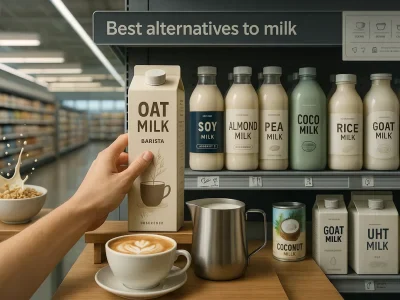
Shopping for almond milk or oat milk often feels like exploring a bustling farmer’s market. Each brand stacks their cartons in bright rows, touting phrases like “barista blend” or “organic,” but price tags sometimes reveals more than the labels. Almond milk, often considered a pantry staple, usually costs less than oat milk—think $2.30 for a half-gallon store brand almond milk compared to $3.95 for the same size of oat milk at major retailers (Source: Instacart, 2023). Oat milk, especially those with added protein or flavor enhancers, tend to carry premium price points, driven by demand from coffee shops, bakeries, and plant-based enthusiasts.
Availability, on the other hand, depends on where you shop. Most national grocery chains in the US, like Kroger, Walmart, and Target, carry at least four to six almond milk brands—Silk and Califia Farms, for example—across sweetened, unsweetened, and vanilla varieties. Oat milk grew its shelf presence rapidly after 2018, but some smaller towns, convenience stores, or school cafeterias may still stock more almond milk options. If you’re scanning the dairy aisle in a city like San Francisco or Portland, oat milk cartons line up in every café fridge; stroll through a southern gas station, though, and almond milk is more likely to make the cut.
When price savings matter most, almond milk usually leads, especially for families or frequent buyers seeking bulk discounts at warehouse clubs like Costco. For trendsetters seeking specialty oat milk to steam into a perfect microfoam, urban groceries or online delivery platforms like FreshDirect list exclusive brands—Oatly and Minor Figures, for instance—that rarely appear outside well-stocked metropolises.
Seasonal promotions also shape your choices. Almond milk sales spike each January with New Year health resolutions, while oat milk supply might ebb during late spring when oat crops are in transition. Sometimes, retailers limit promotions for oat milk when production can’t keep pace with vegan café trends.
Here’s a quick comparison:
Milk
Average Retail Price (½ Gallon, US)
Availability (Major US Chains)
Key Brands
Almond Milk
$2.30–$3.50
Widespread (rural & cities)
Silk, Almond Breeze, Califia Farms
Oat Milk
$3.00–$5.00
Increasing (esp. urban)
Oatly, Planet Oat, Califia Farms
Have you ever bit into a pastry and wondered which carton made the batter fluffier? Chefs report oat milk gives muffins extra lift because of its beta-glucans, while almond milk keeps pancakes crisp at the edges. If scarcity in your zip code frustrate you, online groceries almost always bridge the gap, sometimes with free shipping on your first vegan-friendly bundle.
Price and availability sway daily rituals, but they also spark big questions: Does the few dollars extra for oat milk buy more convenience—or just an Instagram-worthy coffee swirl? Are bargain almond milks missing out on creamy textures or ethical sourcing? Those small decisions transform a grocery run into a statement about priorities—flavor, budget, or sustainability. Even a hurried Tuesday morning can become a crossroads, where your choice of carton signals something bigger than breakfast.
Which Is Better: Almond or Oat Milk for Different Lifestyles?
You stand at a crossroads, almond milk on one hand—oat milk on the other. Do you ever wonder how your choice ripple through your day and echo through the environment? The answer hinges on more than taste—immerse, weigh the nuances, and find the milk that matches your life.
For Weight Management
You reach for almond milk thinking fewer calories mean less guilt. Unsweetened almond milk typically contain 30-50 calories per cup, much lower then oat milk’s 120-130 calories, according to data from the USDA. If you’re strategically cutting calories and carbs—picture someone prepping for a fitness competition—almond milk integrates seamlessly, keeping smoothies light and protein shakes creamy without tipping the scale. Oat milk, with its higher carbohydrate load, tends to satisfy longer but it might undermine ultra-low-calorie goals. But picture finishing your cereal bowl and still feel full: oat milk’s fiber slows digestion, so you snack less.
For Sustainability
You pour oat milk, its creamy swirl a quiet nod to the planet. Almonds, grown largely in California, guzzle as much as 15 gallons of water per nut, says the Water Footprint Network. By contrast, oats thrive in cooler climates and rotate with other crops, reducing monoculture fatigue. If you’re motivated by headlines about droughts or are passionate about lowering your carbon footprint, oat milk provide a more eco-friendly story to tell at your next brunch. Some environmentalists, like author George Monbiot, question even oat’s long-term viability but for now, its lifecycle gets more green thumbs up than almond’s thirsty roots.
For Dietary Restrictions
You scan labels, cautious—a nut allergy lurking or a celiac diagnosis shaping every purchase. Almond milk immediately off the table for anyone with tree nut allergies, a demographic estimated by FARE to include one in 50 Americans. Oat milk, often labeled gluten-free, caters to those with celiac, but cross-contamination risks persist unless specified as certified gluten-free. Lactose-intolerant people, counting nearly 68% of the world’s population (NIH), usually embrace both almond and oat milk as their default. Have you ever experienced a flare after sipping the wrong milk? Some almond milk include added protein from peas, while oat milk often fortifies with B12 and D2 for vegan balance—finding your match means studying ingredient lists and knowing your body’s quirks.
If you had to pick, does convenience win, or does conscience? Your cup, your context, and your story—each pour a choice echoing beyond the mug.
Conclusion
Choosing between almond and oat milk really comes down to what matters most to you. Think about your taste preferences, dietary needs, and how much you value sustainability or budget. You might find that your priorities shift over time or even change depending on the recipe or occasion.
Don’t hesitate to try both and see which one fits better into your daily routine. Your choice isn’t just about what goes in your cup—it’s a reflection of your lifestyle and the values you want to support.
To provide the best experiences, we use technologies like cookies to store and/or access device information. Consenting to these technologies will allow us to process data such as browsing behaviour or unique IDs on this site. Not consenting or withdrawing consent, may adversely affect certain features and functions.
Functional
Always active
The technical storage or access is strictly necessary for the legitimate purpose of enabling the use of a specific service explicitly requested by the subscriber or user, or for the sole purpose of carrying out the transmission of a communication over an electronic communications network.
Preferences
The technical storage or access is necessary for the legitimate purpose of storing preferences that are not requested by the subscriber or user.
Statistics
The technical storage or access that is used exclusively for statistical purposes.The technical storage or access that is used exclusively for anonymous statistical purposes. Without a subpoena, voluntary compliance on the part of your Internet Service Provider, or additional records from a third party, information stored or retrieved for this purpose alone cannot usually be used to identify you.
Marketing
The technical storage or access is required to create user profiles to send advertising, or to track the user on a website or across several websites for similar marketing purposes.