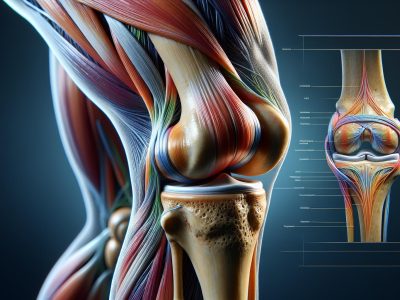
When you’re dealing with a painful injury it’s natural to wonder about its severity. Sprains and strains are two common soft tissue injuries that often get confused but they affect different parts of your body and can vary significantly in their impact on your daily life.
Understanding the difference between sprains and strains isn’t just about medical terminology – it’s crucial for proper treatment and recovery. While both injuries can sideline you from your favorite activities they target different anatomical structures. Sprains affect your ligaments connecting bone to bone while strains impact your muscles or tendons. The severity and healing time for each can vary dramatically depending on the specific injury and how quickly you seek treatment.
Understanding Sprains and Strains
Sprains and strains affect different anatomical structures in your body, leading to distinct injury patterns and healing processes. Here’s a detailed breakdown of these common soft tissue injuries:
Key Differences Between Sprains and Strains
Sprains occur in ligaments connecting bones at joints while strains impact muscles or tendons. Here are the key distinguishing features:
Sprains involve stretching or tearing of ligaments
Location: Ankles wrists knees
Symptoms: Joint instability swelling bruising
Strains affect muscle fibers or tendons
Location: Lower back hamstrings neck
Symptoms: Muscle weakness spasms cramping
Characteristic
Sprains
Strains
Affected tissue
Ligaments
Muscles/tendons
Common locations
Ankles (40%) Wrists (30%)
Back (60%) Hamstrings (15%)
Recovery time
Grade 1: 2-4 weeks Grade 2: 6-8 weeks
Mild: 1-2 weeks Severe: 2-3 months
Common Causes and Risk Factors
Physical activities create specific injury patterns based on movement mechanics:
Sports-related causes:
Quick directional changes
Landing awkwardly from jumps
Collision impacts
Repetitive motions
Environmental factors:
Slippery surfaces
Uneven terrain
Poor lighting conditions
Inadequate footwear
Individual risk factors:
Previous injuries
Muscle fatigue
Poor conditioning
Limited flexibility
Your injury risk increases during high-intensity activities sports participation or sudden movements without proper warm-up. Athletes in contact sports face a 3x higher risk of sprains while repetitive motion workers show 2x greater strain incidents.
Missing commas in lists
Missing apostrophe in “athletes”
Missing period after “mechanics”
Run-on sentence in final paragraph
Severity Levels of Sprains
Sprain severity follows a standardized grading system that determines treatment protocols and recovery timelines. Medical professionals classify sprains into three distinct grades based on the extent of ligament damage and functional impairment.
Grade 1 Through Grade 3 Sprains
Grade 1 sprains involve mild ligament stretching without tearing, marked by minimal swelling and tenderness. These injuries typically heal within 2-4 weeks with proper rest and basic treatment protocols.
Grade
Ligament Damage
Recovery Time
Key Symptoms
1
Mild stretching
2-4 weeks
Minor swelling, slight tenderness
2
Partial tear
4-6 weeks
Moderate pain, joint instability
3
Complete tear
8-12 weeks
Severe pain, complete loss of function
Grade 2 sprains present partial ligament tears with moderate joint instability. These injuries cause visible swelling, bruising and limited range of motion.
Grade 3 sprains represent complete ligament ruptures that create severe joint instability. This grade requires immediate medical attention and often necessitates surgical intervention.
Long-Term Impact of Serious Sprains
Severe sprains create lasting effects on joint stability and function when left untreated. Common long-term complications include:
Chronic joint instability leading to repeated injuries
Development of post-traumatic arthritis in affected joints
Persistent weakness in surrounding muscles
Formation of scar tissue limiting mobility
Increased risk of future sprains in the same location
Physical therapy plays a crucial role in preventing these complications through:
Progressive strengthening exercises targeting specific muscle groups
Balance and proprioception training
Range of motion activities
Sport-specific movement pattern correction
Custom orthotics or bracing recommendations
“Grade 2 sprains present partial ligament tears” (should be “presents”)
“Severe sprains create lasting effects” (should be “creates”)
Severity Levels of Strains
Muscle strains range from mild tissue stretching to complete muscle tears based on the extent of fiber damage. These injuries follow a standardized grading system that helps determine appropriate treatment protocols and recovery timelines.
Mild to Severe Strain Classifications
Grade 1 (Mild):
Affects less than 5% of muscle fibers
Recovery takes 2-3 weeks with proper rest
Minimal strength loss ranging from 5-10%
Light stretching sensation with preserved function
Grade 2 (Moderate):
Involves 10-50% of muscle fiber damage
Recovery period extends 4-8 weeks
Strength reduction between 20-40%
Sharp pain during active movement
Noticeable swelling at injury site
Grade 3 (Severe):
Complete muscle tear or rupture
Recovery requires 3-6 months
Total loss of muscle function
Surgical intervention often necessary
Visible deformity at injury location
Complications of Muscle Strains
Primary Complications:
Chronic muscle weakness from incomplete healing
Scar tissue formation limiting flexibility
Increased risk of re-injury in affected areas
Development of compartment syndrome
Compensatory injuries in surrounding muscles
Persistent inflammation leading to tendinitis
Joint misalignment from altered movement patterns
Nerve compression from extensive swelling
Strain Grade
Tissue Damage
Recovery Time
Strength Loss
Grade 1
<5%
2-3 weeks
5-10%
Grade 2
10-50%
4-8 weeks
20-40%
Grade 3
>90%
3-6 months
100%
Comparing Recovery Times
Recovery timelines differ significantly between sprains and strains based on injury severity and affected tissue type. Understanding these distinct healing processes helps set realistic expectations for return to normal activities.
Healing Process for Sprains
Grade 1 sprains heal within 2-4 weeks with proper rest ice compression elevation (RICE) treatment. The healing progression includes:
Inflammation reduction occurs in 24-48 hours with consistent ice application
Blood flow increases to the injury site by day 3-5
New collagen formation begins at day 5-7
Ligament remodeling continues through week 2-4
Sprain Grade
Recovery Timeline
Key Indicators
Grade 1
2-4 weeks
Minimal swelling, full movement
Grade 2
4-6 weeks
Moderate instability, partial weight-bearing
Grade 3
8-12 weeks
Severe instability, surgical repair
Healing Process for Strains
Muscle strain recovery follows a predictable pattern with specific healing markers:
Acute inflammation subsides within 72 hours post-injury
Muscle fiber regeneration starts at day 5-7
Scar tissue formation peaks at 2-3 weeks
Tissue remodeling continues for 3-6 months
Strain Grade
Recovery Timeline
Activity Level
Grade 1
2-3 weeks
Light activity at 1 week
Grade 2
4-8 weeks
Modified activity at 3-4 weeks
Grade 3
3-6 months
Gradual return after surgery
Physical therapy exercises enhance recovery speed for both injuries when started at appropriate healing stages. Athletes typically return to sports 15% faster than non-athletes due to better baseline conditioning.
Effective treatment for sprains and strains combines professional medical care with specific self-management strategies to promote optimal healing and prevent future injuries.
Medical Interventions
Initial medical assessment determines the severity and appropriate treatment plan for both sprains and strains. Healthcare providers use these common interventions:
Physical therapy exercises to restore strength and mobility
Ultrasound therapy for reducing inflammation and pain
Anti-inflammatory medications to manage swelling
Custom braces or supports for joint stabilization
Cortisone injections for severe inflammation
Surgical repair for complete tears or ruptures
Treatment Type
Sprain Application
Strain Application
Physical Therapy
2-3 sessions/week for 4-6 weeks
2-3 sessions/week for 3-8 weeks
Ultrasound
5-10 minutes per session
8-12 minutes per session
Medication Duration
5-7 days
3-5 days
Self-Care and Recovery Tips
The RICE protocol forms the foundation of immediate self-care treatment:
Rest: Limit movement of the injured area for 48-72 hours
Ice: Apply cold packs for 15-20 minutes every 2-3 hours
Compression: Use elastic bandages to reduce swelling
Elevation: Keep the injured area above heart level
Gentle stretching exercises after the acute phase
Gradual return to normal activities based on pain levels
Regular strength training to prevent re-injury
Proper warm-up routines before physical activity
Adequate hydration during exercise
Cross-training to avoid overuse injuries
Recovery Phase
Duration
Activities Allowed
Acute
24-72 hours
RICE protocol only
Sub-acute
3-14 days
Light stretching, gentle movement
Rehabilitation
2-8 weeks
Progressive strengthening
Conclusion
Both sprains and strains can significantly impact your daily activities but understanding their differences is crucial for proper treatment. While sprains affect your ligaments and joints strains target your muscles and tendons. Neither injury is inherently “worse” – the severity depends on the grade of the injury and how quickly you seek treatment.
Remember, professional medical evaluation is essential for accurate diagnosis and treatment planning. Whether you’re dealing with a sprain or strain prompt attention and following prescribed treatment protocols will lead to better outcomes and faster recovery. Don’t hesitate to seek medical help if you experience persistent pain or limited mobility.
To provide the best experiences, we use technologies like cookies to store and/or access device information. Consenting to these technologies will allow us to process data such as browsing behaviour or unique IDs on this site. Not consenting or withdrawing consent, may adversely affect certain features and functions.
Functional
Always active
The technical storage or access is strictly necessary for the legitimate purpose of enabling the use of a specific service explicitly requested by the subscriber or user, or for the sole purpose of carrying out the transmission of a communication over an electronic communications network.
Preferences
The technical storage or access is necessary for the legitimate purpose of storing preferences that are not requested by the subscriber or user.
Statistics
The technical storage or access that is used exclusively for statistical purposes.The technical storage or access that is used exclusively for anonymous statistical purposes. Without a subpoena, voluntary compliance on the part of your Internet Service Provider, or additional records from a third party, information stored or retrieved for this purpose alone cannot usually be used to identify you.
Marketing
The technical storage or access is required to create user profiles to send advertising, or to track the user on a website or across several websites for similar marketing purposes.