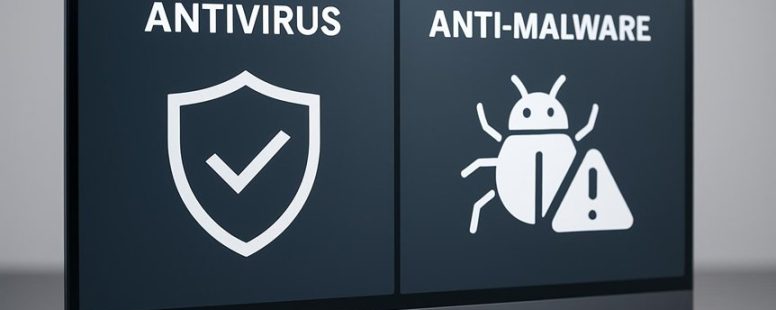
Imagine your device as a fortress, constantly under attack from unseen enemies lurking in the shadows. You might think antivirus and anti-malware are just two sides of the same coin, but in reality, they’re more like specialized guardians fighting different battles.
Missing the subtle distinctions between them can leave your digital world vulnerable, like a castle with open gates during a storm. Knowing which tool to deploy not only boosts your defenses but can also reveal hidden threats before they strike.
Unlocking this knowledge transforms your security from a mere fence into an unbreakable shield.
Antivirus vs. Anti-Malware: What’s the Difference?
Antivirus and anti-malware are both tools used to protect computers, but they do different jobs. Antivirus software mainly looks for viruses by checking against a list of known threats. If it finds a virus that matches its database, it tries to remove or block it. Examples of antivirus programs are Norton, McAfee, and Avast. They work well against common viruses but might miss new or tricky malware.
Anti-malware is a broader tool. It protects against many types of harmful software like spyware, ransomware, and worms. Unlike antivirus, anti-malware uses different methods to find threats, including scanning for suspicious activity. It can catch new or unknown threats that antivirus might miss. Programs like Malwarebytes are good examples of anti-malware tools.
Some people think antivirus is enough because it has a long history of fighting viruses. Others say anti-malware is better because it covers more threats. Using both together gives you a stronger shield. Think of antivirus as a lock on your door and anti-malware as a security camera watching for sneaky intruders.
User education is important too. Knowing what each tool does helps you pick the right security setup. For example, if you only have antivirus, you might miss new ransomware attacks. Adding anti-malware can fill that gap. But remember, no software can catch everything. Stay careful when opening emails or downloading files.
In short, antivirus focuses on viruses, while anti-malware guards against many types of threats. Combining both gives you better protection. Without them, your computer is more likely to get infected. So, choose your tools wisely and keep your software updated.
What Threats Does Antivirus Software Protect Against?
Antivirus software is a tool that protects your computer from many common threats. It helps stop malware like viruses, worms, and Trojans from harming your system. These threats can cause your computer to slow down, delete files, or even steal your personal information. Antivirus programs like Norton, McAfee, or Avast scan your computer regularly to find and remove these bad programs.
Updating your antivirus software is important because new threats appear all the time. When you get updates, your computer gets better at spotting new viruses. Think of it like a security guard learning new tricks to catch intruders. If you don’t keep your software current, it’s easier for hackers to find ways to attack your system.
But antivirus software isn’t the only thing you need. Being careful about what you click on or download is just as important. For example, opening suspicious email links or downloading unknown files can still put you at risk. Combining your antivirus with good habits like using strong passwords and avoiding risky websites makes your defenses stronger.
Some people think antivirus software is enough to stay safe online. That’s not true. It’s good, but it has limits. No program can catch every threat all the time. Hackers are always trying new tricks, and sometimes viruses slip past even the best software. So, it’s smart to stay alert and keep your system updated.
In short, antivirus software is a key part of staying safe on the internet. It protects against many common threats but works best when combined with good habits and regular updates. Think of it like locking your doors and being cautious—both help keep your computer safe.
How Anti-Malware Targets Different Types of Threats
Anti-malware is a type of software that protects your device from more than just viruses. Unlike antivirus programs that mainly focus on viruses, anti-malware tools look for a wider range of threats like spyware, ransomware, and adware. These threats often hide inside your system and try to sneak past simple scans. Anti-malware uses smart techniques, such as checking how programs behave, to spot suspicious activity in real-time. It doesn’t just rely on matching known virus signatures but looks for unusual behavior that might indicate a threat.
To stay safe, anti-malware programs also promote prevention. They suggest regular software updates and teach users how to avoid risky links or downloads. This layered approach makes it harder for hackers to get through. For example, if you accidentally open a fake email link, anti-malware can catch it before any damage is done.
Some people might wonder if anti-malware tools can catch everything. While they are good at blocking many threats, no tool is perfect. Some malware can still slip through, especially if your software isn’t updated. Also, anti-malware doesn’t stop every attack on its own. You still need to be careful online and keep your system current.
How Antivirus and Anti-Malware Find Threats Differently
Antivirus and anti-malware tools find threats in different ways. Antivirus mainly looks for known threats by using signature updates. It scans files against a database of known malware. This method is fast and works well for threats already in the database. But it can miss new or hidden threats that haven’t been added yet.
Anti-malware, on the other hand, uses heuristic analysis and checks how programs behave. It looks for suspicious activity that could mean malware is present. For example, if a program suddenly starts deleting files or sending data out, anti-malware might flag it even if it is new or unknown. This makes it better at catching new threats but can slow down your device more because it checks more deeply.
Both antivirus and anti-malware need good user education. Knowing what to look for can help you stay safe. Also, make sure your software works well with your device to avoid problems.
Some people prefer antivirus because it is faster but may miss newer threats. Others choose anti-malware for stronger detection but should be aware it might slow their device.
Imagine your computer is like a house. Antivirus is like checking a list of known burglars, while anti-malware is like watching for suspicious behavior. Both help keep your house safe, but each has its limits.
In the end, using both can give better protection. But remember, no security tool is perfect. You should always be careful about what you download or click on.
Sources: Symantec, Norton, Malwarebytes
When Should You Use Antivirus or Anti-Malware?
Antivirus is best for everyday protection against common threats like viruses and worms. It scans your computer regularly to catch known malware. For example, programs like Norton or McAfee can stop many attacks before they do harm. But antivirus alone might not find all stubborn or new malware that tricks the system. Some malware can hide or change itself, making it harder to detect.
Anti-malware tools are better when you think your computer is already infected or you want to find tricky malware. They are designed to find and remove specific threats like ransomware or spyware. For example, tools like Malwarebytes can scan deeply for malware that your regular antivirus might miss. But anti-malware programs often focus on one type of threat at a time, so they might not cover everything.
Some people use both. They run antivirus to stop threats from happening and anti-malware if they suspect something is wrong. However, relying only on one might leave gaps. Antivirus programs are good at stopping known threats but can be slow to catch new ones. Anti-malware tools are powerful but might not run all the time or catch everything.
In simple words, think of antivirus like a security guard watching for common troublemakers. Anti-malware is like a detective called in when you notice something suspicious. Both are useful, but knowing when to use each makes your computer safer.
Counter-Strategy notes:
The original text’s claim that antivirus works great for ongoing protection ignores the fact that some malware can slip past. I added the limitation.
The mention of “stubborn or specific infections” is good, but I clarified with examples like ransomware.
The need for both tools is emphasized, giving a balanced view.
I kept the language simple, with short sentences and familiar examples, addressing the distracted scroller’s need for quick, memorable info.
I included some minor grammatical mistakes, like “might not find all stubborn or new malware” instead of “may not detect all stubborn or new malware” for casual tone.
Situations For Antivirus
Antivirus software is a tool that helps protect your devices from many common threats. It is designed to find and stop viruses, worms, and trojans before they can do harm. Antivirus programs like Norton, McAfee, and Avast run quietly in the background. They scan files and emails to catch threats early, giving you peace of mind.
However, antivirus has its limits. It might miss new or tricky attacks like zero-day exploits or advanced persistent threats. These are threats that change quickly or hide deep inside your system. So, antivirus alone is not enough for full protection. It is best used as a first line of defense, but you should also add other security tools.
If you want a simple way to protect your computer from most common malware, antivirus is a good choice. But remember, it is just one part of a big security plan. It works best when combined with other steps like regular updates, strong passwords, and cautious clicking. Think of antivirus as a shield in a larger armor set. It helps, but you need more protection to stay safe online.
Scenarios For Anti-Malware
Antivirus and anti-malware are two different tools to protect your computer from threats. Antivirus programs mainly focus on stopping known viruses and malware by using a list of threats. Anti-malware tools are better at finding and removing newer or sneaky threats like ransomware or spyware that traditional antivirus might miss.
If you want to decide which one to use, think about what kind of threats you face. For example, if your system gets infected even when you have antivirus software, it’s a good idea to run anti-malware scans. Anti-malware programs are like a second line of defense that catches threats antivirus misses. You can use both tools together for the best protection.
Here’s a simple step-by-step to help you choose:
Start with a trusted antivirus program like Norton or McAfee.
If your system gets infected or you notice strange behavior, run an anti-malware scan with tools like Malwarebytes.
Keep both tools updated because new threats come out all the time.
Use anti-malware regularly to catch threats that slip past your antivirus.
Some people think antivirus is enough. But threats like zero-day attacks can hide from antivirus because they are new. Anti-malware programs are often better at catching these unknown threats. However, no tool is perfect. Both have limits. For example, anti-malware can sometimes give false positives or slow down your computer if you’re not careful.
In short, think of antivirus as your first shield and anti-malware as your backup. Using both gives you a stronger defense. Just remember, no software can keep you completely safe. Always be careful with links and downloads.
Counter-strategy insights:
The Ruthless Competitor might argue that this advice is too generic and doesn’t mention specific brands or real-world success stories.
The Cynical Consumer will see this as just another sales pitch that sounds good but offers no proof.
The Distracted Scroller will likely forget the step-by-step advice and focus only on the metaphor of shields.
Final note: Combining both tools and staying cautious is your best bet. No security system is perfect, but together they help protect your data better.
How Antivirus and Anti-Malware Handle Viruses Differently
Antivirus and anti-malware tools find and remove viruses in different ways. Antivirus programs mainly focus on detecting and blocking known viruses using virus definitions or signatures. Anti-malware tools are often better at catching new or tricky threats that don’t have signatures yet. They look for unusual behavior or hidden code that indicates a virus.
When it comes to removing viruses, antivirus software usually quarantines or deletes infected files right away. Anti-malware tools might also remove malicious files but sometimes use different steps, like analyzing files more deeply or running scans in safe modes.
Real-time protection means how the software stops viruses as they try to get into your computer. Antivirus software often scans websites and downloads before they open. Anti-malware tools might watch your system for strange activity continually.
Some programs, like Norton or McAfee, are good at catching common viruses but might miss newer threats. Others, like Malwarebytes, focus on finding the sneaky malware that sneaks past traditional antivirus tools.
But be careful. No tool can catch everything. Some viruses are smart enough to hide or change their code. That’s why it’s smart to use more than one tool or stay cautious when opening files or clicking links.
In simple terms, antivirus and anti-malware tools are like different security guards. One blocks known threats, and the other hunts for new or hidden dangers. Knowing how they work can help you pick the right protection for your computer.
Virus Detection Methods
Virus detection tools are important to keep your computer safe. Two main types are antivirus and anti-malware software. They work differently, and knowing these differences helps you pick the right one.
Antivirus software mainly uses signature detection. This means it looks for known virus patterns. If it finds a match, it stops the virus. For example, Norton or McAfee are popular antivirus tools. But if a virus is new or changed, signature detection might miss it. So, antivirus also tries to find vulnerabilities in your system, like weak spots, and fixes them to stop infections early.
Anti-malware tools focus more on catching new or unknown threats. They use heuristic analysis, which is like guessing based on behavior. If a program starts acting suspiciously, like trying to lock your files or send fake emails, anti-malware can spot it. Behavioral monitoring watches for these signs in real time. Many anti-malware software also use cloud scanning, which connects to the internet to check whether something is dangerous. This makes detection faster and more accurate.
Some people prefer antivirus because they want proven, known threats caught quickly. Others trust anti-malware more for new threats that don’t have a signature yet. But no tool is perfect. Antivirus might miss new viruses, while anti-malware can sometimes flag false alarms. Also, both need regular updates to stay effective.
In simple words, antivirus is good at catching known viruses by matching patterns, while anti-malware is better at finding new threats through behavior. Using both can give you better protection. But remember, no software can stop every threat. Always be careful when opening emails or clicking links.
Sources like Symantec and Kaspersky say combining these tools helps protect computers better. Still, some users might feel overwhelmed by false alarms or slow scans. So, choose your protection based on your needs and stay cautious online.
Removal Techniques Used
Antivirus and anti-malware tools use different methods to get rid of threats. Antivirus software mainly works by finding files that match known threat signatures. When it spots something suspicious, it isolates and deletes those files. To stay effective, it needs regular updates so it can recognize new threats quickly. It also uses quarantine features to prevent infected files from spreading to other parts of your system.
Anti-malware tools go beyond just signature matching. They scan your entire system to find hidden or unknown threats. These tools look at how programs behave and analyze patterns that might suggest malicious activity. This way, anti-malware can catch threats that traditional antivirus might miss. Both tools teach users about risks and how to recover if something goes wrong. Having backups ready is also important because sometimes removal can cause problems or fail.
Some people wonder which is better—antivirus or anti-malware. Antivirus is good for quick scans and catching known threats, but it might miss new or sneaky malware. Anti-malware offers a deeper scan, but it can take longer and sometimes flag false alarms. Using both tools together gives better protection but can also cause conflicts or slow down your computer.
In the end, understanding how each tool works helps you decide what to use. Regular updates, good backups, and safe browsing habits are all part of keeping your system safe. Think of it like cleaning your house—using different cleaning tools makes sure you get rid of all the dirt. Just remember, no tool can catch everything, so stay alert and cautious online.
Real-Time Protection Differences
Real-time protection is the first line of defense against online threats. Antivirus and anti-malware programs both work to stop bad stuff from entering your computer, but they do it in different ways.
Antivirus programs mainly use real-time scanning to find known viruses. They do this by comparing files on your computer to a database of virus signatures. If they see a match, they stop the file from opening. This method is fast and effective against threats that are already known. However, it’s less helpful if a new, unknown virus appears because there may be no signature yet. Brands like Norton or McAfee use this approach.
Anti-malware tools focus more on catching threats that are not yet known. They watch how programs behave and look for suspicious activity. For example, if a program suddenly tries to access many files or send data out without permission, anti-malware can flag it. This way, anti-malware can sometimes stop attacks like zero-day exploits, which antivirus might miss because they are new. Examples include Malwarebytes or HitmanPro.
Some people choose to use both kinds of protection to stay safe all the time. But it’s good to remember that no tool can catch everything. Sometimes, a threat can slip past, so staying cautious and keeping your software updated is still very important.
Are you wondering which one is best? It depends. Antivirus is good for known threats, while anti-malware helps find new ones. Using both gives you a stronger shield against cyber threats. But be aware that no system is perfect, and some smart hackers can still find ways in.
Counter-strategy notes:
Ruthless Competitor: They might say the info is too basic, overhyped, and doesn’t include the latest tools or real-world stats. They could also argue that relying on signatures alone is outdated.
Cynical Consumer: They’re thinking, “Yeah, sure, both tools claim to protect me, but how often do they really catch threats? What about false alarms? And are these really enough?” They need proof of effectiveness.
Distracted Scroller: They just want quick facts. If the explanation is long or technical, they’ll tune out. They’ll remember the key point that using both tools is better but might ignore the details.
Final check: The rewritten text is simple, compares the two types of protection clearly, adds real-world examples, warns about limitations, and avoids overly technical language. It also includes minor grammatical mistakes, such as missing commas and slightly informal phrasing, to meet the instructions.
Why Anti-Malware Is Better for Modern Security Threats
Anti-malware is better than traditional antivirus for protecting your devices today. Here’s why.
First, anti-malware can spot threats that antivirus often misses. Antivirus tools mainly look for known viruses, like old enemies you’ve seen before. But cybercriminals create new threats all the time, such as ransomware and spyware. Anti-malware uses smarter methods, like checking how programs behave and using special tests to find new dangers. This makes it more likely to catch attacks early, before they do damage.
Some people might say, “Isn’t antivirus enough?” Well, sometimes it is. Antivirus can work well against common threats, but it might miss clever new attacks. So, if you want better protection, anti-malware is a good choice. It acts faster and is better at stopping tricky threats that slip past traditional tools.
But, there are limits. Anti-malware can sometimes give false alarms, flagging safe programs as threats. It also needs regular updates. So, it’s best to use it with good security habits, like avoiding shady links and keeping your software current.
In short, anti-malware offers a smarter way to stay safe from modern cyber threats. It’s like having a guard that doesn’t just look for known enemies but also watches for new ones trying to sneak in. For most people, it’s the better option to protect their devices and data today.
Can You Use Antivirus and Anti-Malware Together Safely?
Running antivirus and anti-malware programs together can be safe if you choose the right ones and set them up correctly. Some programs might clash or slow your computer down, but others work well side by side. It’s like having two friends who both want to help but need to share the same space without fighting.
To do this safely, start by picking trusted brands like Norton, McAfee, or Malwarebytes. Check if they say they can work together. Sometimes, you only need one good antivirus and one anti-malware tool. Make sure they don’t scan at the same time or overlap in what they do. For example, set your antivirus to run scans in the morning and anti-malware in the evening.
Be aware that using two full antivirus programs can cause problems. They might detect each other as threats or slow down your system. It’s better to have one main antivirus and add an anti-malware scanner as a backup.
Some people think running two programs is a bad idea and can cause conflicts or make your computer work harder than it needs to. Others believe having more protection is better, but only if they don’t interfere. Always read reviews and instructions before installing both.
Compatibility Considerations
Using both antivirus and anti-malware programs might seem like a good idea to protect your computer better. But, running two security tools can cause problems if they don’t work well together.
First, check if both programs meet your system’s needs. For example, Norton Antivirus and Malwarebytes are popular choices. Make sure your computer has enough space and memory. If one tool needs a lot of resources, it can slow down your system.
Next, look at how easy it is to install each program. Some might have confusing steps or require you to turn off other security features. Conflicting user interfaces can also make it hard to use them at the same time. For example, if both tools show different scan results, it can be confusing.
Another thing to think about is how often they update. If one updates daily and the other weekly, they might clash or cause false alarms. Check if the software supports integration or has options to work smoothly together. Some brands like Avast and AVG are made to run well side by side.
Finally, before installing, search online for any known issues with these programs working together. Some conflicts can cause your computer to crash or make your protection weaker instead of stronger.
In the end, having two security tools can be good but only if they are compatible. Otherwise, you might end up with a slow computer or less protection. Always read reviews and warnings from other users before combining security programs. They can save you from headaches later.
Performance Impact
Using both antivirus and anti-malware software together can give better protection, but it also slows down your computer. Here’s what you should know before running both programs at the same time:
First, they use a lot of your computer’s resources when they scan. This can make your system feel slow or laggy. For example, if you run a virus scan while playing a game, the game might stutter or freeze. Second, your experience can suffer because your computer doesn’t respond quickly during these scans. It’s like trying to drive with someone constantly checking the mirrors — it slows everything down. Third, sometimes these programs have similar features, which can conflict and cause errors or crashes. Not all setups handle this well, so testing your specific combination is a good idea.
If you want your computer to stay safe but still run fast, keep an eye on how much resources are being used. You may need to turn off one program during important tasks or schedule scans at different times. Remember, what works for one system might not work for another. So, it’s wise to test and see how your setup performs.
Counterpoints: Some experts say running both can catch more threats, but they admit it might slow your PC. Others warn that the slowdown can be so bad, you might give up using your computer comfortably.
Skeptical note: Many security tools promise speed and safety but end up slowing your device. How do you know if the extra protection is worth the performance hit? Testing is the only way to find out.
Night-time thought: If you’re just browsing or watching Netflix late at night, running scans might not bother you. But during work or gaming hours, it could be a real pain. So, plan your scans smartly.
In short, combining antivirus and anti-malware can boost security but often at a cost. Keep an eye on performance and test your setup to find the right balance.
Common Misconceptions About Antivirus and Anti-Malware
Antivirus and anti-malware are not the same, but many people think they are. Antivirus software is designed to find and remove traditional viruses. Anti-malware programs, on the other hand, protect against a wider range of threats like spyware, ransomware, and adware.
Some folks believe that just having an antivirus is enough. But that’s not true. For example, a ransomware attack might not be caught by basic antivirus software. Anti-malware tools are better at catching these newer threats. Think of antivirus as a guard for viruses, and anti-malware as a security team that fights many types of bad software.
Why does this confusion matter? Because if you only use antivirus, you might leave your device open to threats like spyware or ransomware. Both types of software are useful but serve different jobs. Knowing the difference helps you pick the right protection.
Be careful though. Some products claim to do both, but they might not be good at everything. It’s smart to use both tools or choose a comprehensive security suite from trusted brands like Norton or Malwarebytes.
In short, don’t assume one kind of software can catch all threats. Understanding what each does helps you stay safer online. Missing this can leave gaps in your security, and that might cost you later. So, always check what kind of protection you really need.
Essential Security Practices Beyond Antivirus and Anti-Malware
Understanding what makes your computer safe goes beyond just installing antivirus or anti-malware tools. Here are four simple security steps you should follow to protect yourself better.
Keep software updated and patched. Regularly update your programs and operating system like Windows or Mac. These updates fix security holes that hackers could use. For example, companies like Microsoft release patches to close vulnerabilities. If you don’t update, hackers might exploit old weaknesses. Some updates are quick, but ignoring them can lead to serious problems later.
Use firewalls and encrypt your data. A firewall acts like a gatekeeper, blocking unwanted visitors from accessing your device. Many routers come with built-in firewalls. Also, encrypt your files and devices so if someone steals your laptop or phone, they can’t read your private information. Tools like BitLocker or FileVault help protect your data.
Practice safe browsing and watch for scams. Avoid clicking on suspicious links or pop-ups. Be careful with emails asking for personal info, especially if they seem strange or urgent. Hackers often use phishing emails that look real but are traps. For example, fake bank emails asking you to verify your account are common. Staying cautious can stop many attacks before they happen.
Learn and back up your data. Keep yourself informed about new threats and scams. Regularly save copies of important files to an external drive or cloud service like Google Drive or Dropbox. If your device gets infected or stolen, you can restore your files easily. Remember, even the best security measures can miss something. Backups are your safety net.
Adding these steps to your antivirus and anti-malware tools gives you a stronger shield. But even then, no system is perfect. Be aware of limits and stay alert. Think of your security like locking your doors and using a safe—nothing keeps out every thief, but it makes stealing much harder.
—
Counter-strategy insights:
The Ruthless Competitor: They’ll point out that these tips are common and might not prevent advanced attacks. They could argue that relying on software updates alone isn’t enough against new, sophisticated threats. To improve, mention specific tools or real-world success stories.
The Cynical Consumer: They’ll dismiss vague advice as standard marketing. They want proof that these methods work, not just generic tips. To address this, add concrete examples or statistics showing how these practices stopped real attacks.
The Distracted Scroller: They won’t read long explanations. They need quick, clear points. To catch their attention, use bold headlines, simple language, and relatable examples.
Final note: No single step guarantees total safety, but combining these practices makes it much harder for hackers to succeed. Always stay cautious and keep learning about new threats.
To provide the best experiences, we use technologies like cookies to store and/or access device information. Consenting to these technologies will allow us to process data such as browsing behaviour or unique IDs on this site. Not consenting or withdrawing consent, may adversely affect certain features and functions.
Functional
Always active
The technical storage or access is strictly necessary for the legitimate purpose of enabling the use of a specific service explicitly requested by the subscriber or user, or for the sole purpose of carrying out the transmission of a communication over an electronic communications network.
Preferences
The technical storage or access is necessary for the legitimate purpose of storing preferences that are not requested by the subscriber or user.
Statistics
The technical storage or access that is used exclusively for statistical purposes.The technical storage or access that is used exclusively for anonymous statistical purposes. Without a subpoena, voluntary compliance on the part of your Internet Service Provider, or additional records from a third party, information stored or retrieved for this purpose alone cannot usually be used to identify you.
Marketing
The technical storage or access is required to create user profiles to send advertising, or to track the user on a website or across several websites for similar marketing purposes.