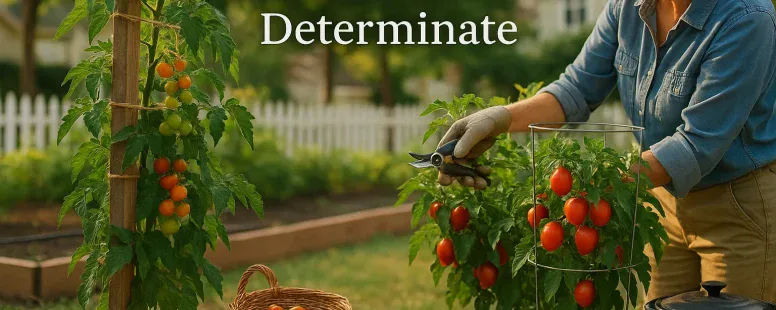
Tomatoes: Indeterminate Vs. Determinate
Tomato plants divide into two clear habits that change how you plan, prune, and harvest: indeterminate and determinate. Picture vines that keep reaching for the sun and still set new fruit late into fall, versus bushy plants that ripen a flood of tomatoes all at once. Knowing which habit you have changes your season: it affects space, stakes, watering, and whether you’ll can a month’s worth of sauce or snack on cherry tomatoes every day. This guide gives you direct, practical answers and real variety names so you can match plants to your garden goals.
What “Indeterminate” And “Determinate” Mean
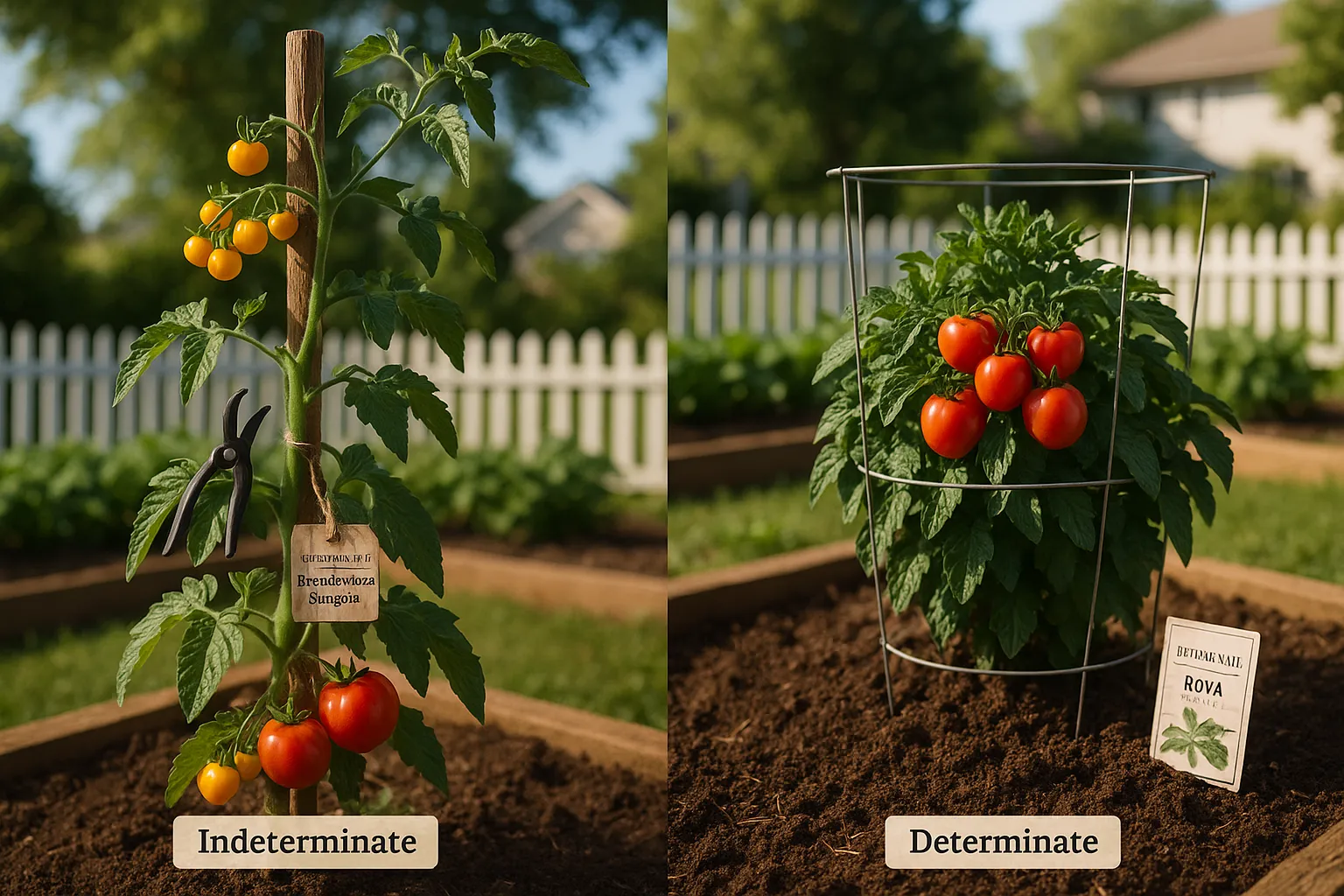
Fact: Indeterminate tomatoes grow and set fruit throughout the season: determinate tomatoes grow to a fixed size and set most fruit in a short window.
Key Traits Of Indeterminate Tomatoes
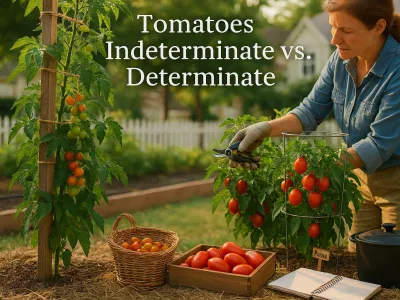
Indeterminate plants continue vegetative growth at the shoot tip. They can reach 6–12+ feet given support. You will find repeated flowering clusters along a long main stem. They need regular pruning or training to control size and to keep fruit quality high. Common named examples include ‘Brandywine’, ‘Sungold’, and ‘Cherokee Purple’, brands and seed companies like Baker Creek and Burpee sell many indeterminate varieties.
Indeterminate plants produce fruit over weeks to months, so you harvest many times. They demand more staking and more consistent feeding. Many commercial greenhouse operations use indeterminate types for continuous harvest.
Key Traits Of Determinate Tomatoes
Determinate plants stop growing once they form a terminal flower cluster. They generally stay 2–4 feet tall and form a compact bush. Variety examples include ‘Roma’, ‘Celebrity’ (a widely sold hybrid), and ‘San Marzano’. Determinate types bear most fruit in a concentrated period, perfect when you want a harvest for canning or a single market day.
Determinate varieties often need less pruning and less vertical support, though they benefit from light staking or a cage. Seed catalogs usually note habit: look for “indeterminate” or “determinate” on the packet.
Side-By-Side Comparison: Growth Habit, Size, And Fruiting Pattern
Fact: Growth habit predicts size and fruiting rhythm.
- Growth habit: Indeterminate = vining and continuous. Determinate = bushy and limited.
- Size: Indeterminate can exceed 6 ft: determinate typically remain 2–4 ft.
- Fruiting pattern: Indeterminate yields staggered fruit over the season: determinate yields a peak harvest.
This quick table helps you choose: if you want daily salad tomatoes, pick indeterminate. If you want one-time processing, pick determinate. If you’re unsure, start with one of each and track yield and labor in your garden journal.
How Growth Habit Affects Yield And Harvest Timing
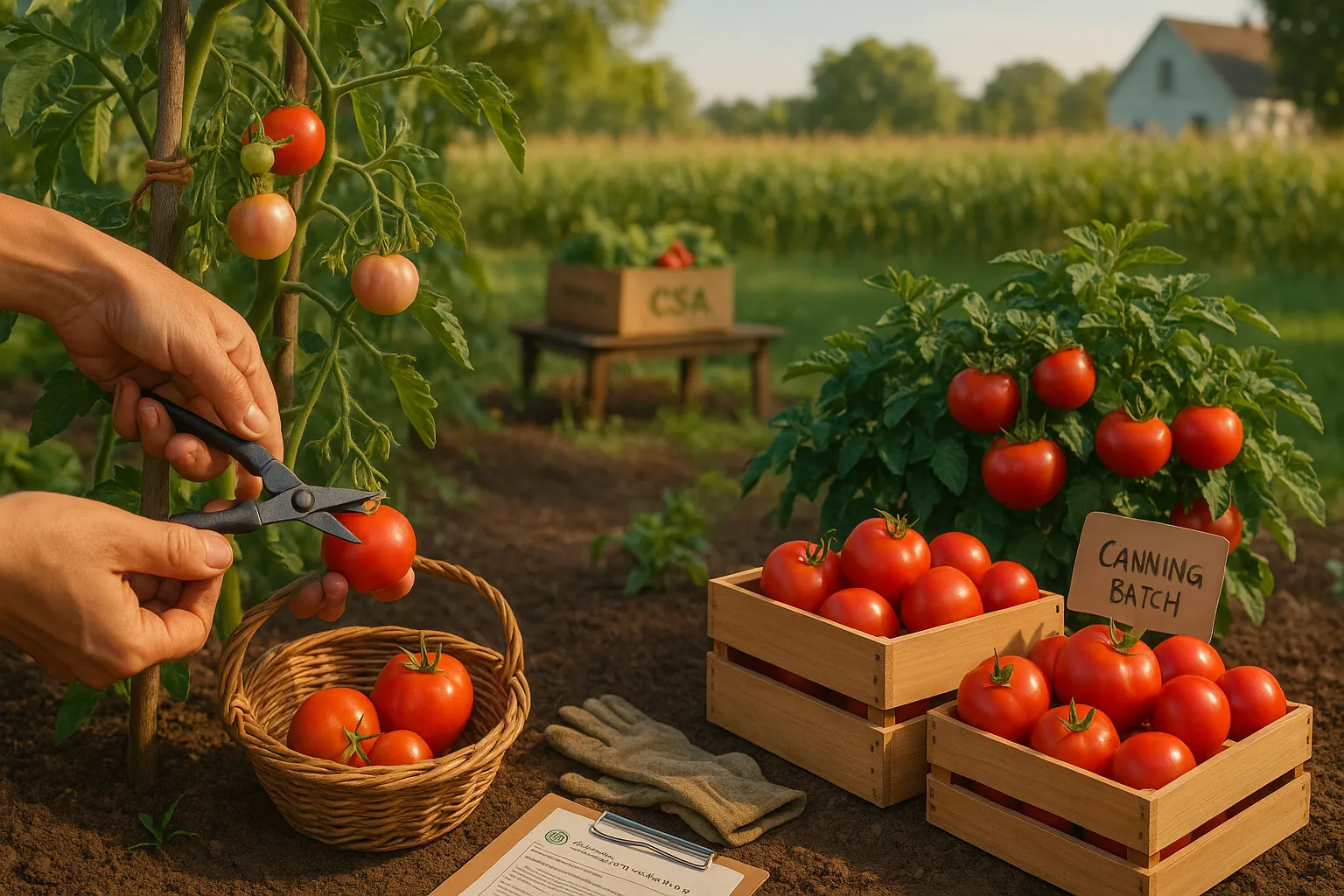
Fact: Indeterminate habit gives steady harvests: determinate gives concentrated harvests.
Harvest Schedule: Continuous Versus Concentrated Yields
Indeterminate: You harvest repeatedly. Once fruit set begins, you’ll pick small batches every few days until frost. This suits CSA boxes or home snacking because supply stays even.
Determinate: You harvest many ripe fruits within a few weeks. This suits canning, sauces, or market stalls that need a large uniform batch. Expect intense picking for 2–4 weeks after the main set matures.
Total Yield, Fruit Size Variability, And Seasonal Planning
Fact: Total seasonal yield can be similar between habits, but distribution differs.
Indeterminate plants often produce more fruit over time, but fruit size varies depending on pruning and resources. Determinate plants can produce a heavy, predictable load: fruit size is often consistent. If you plan a winter pantry, determinate varieties let you schedule a single processing day. If you sell at farmers markets across the season, indeterminate plants give ongoing inventory.
Practical note: University extension services, such as the University of California Cooperative Extension, record that yield depends heavily on cultivar, fertility, and climate, not just habit. So choose cultivars with known productivity for your climate.
Choosing The Right Type For Your Garden Or Purpose
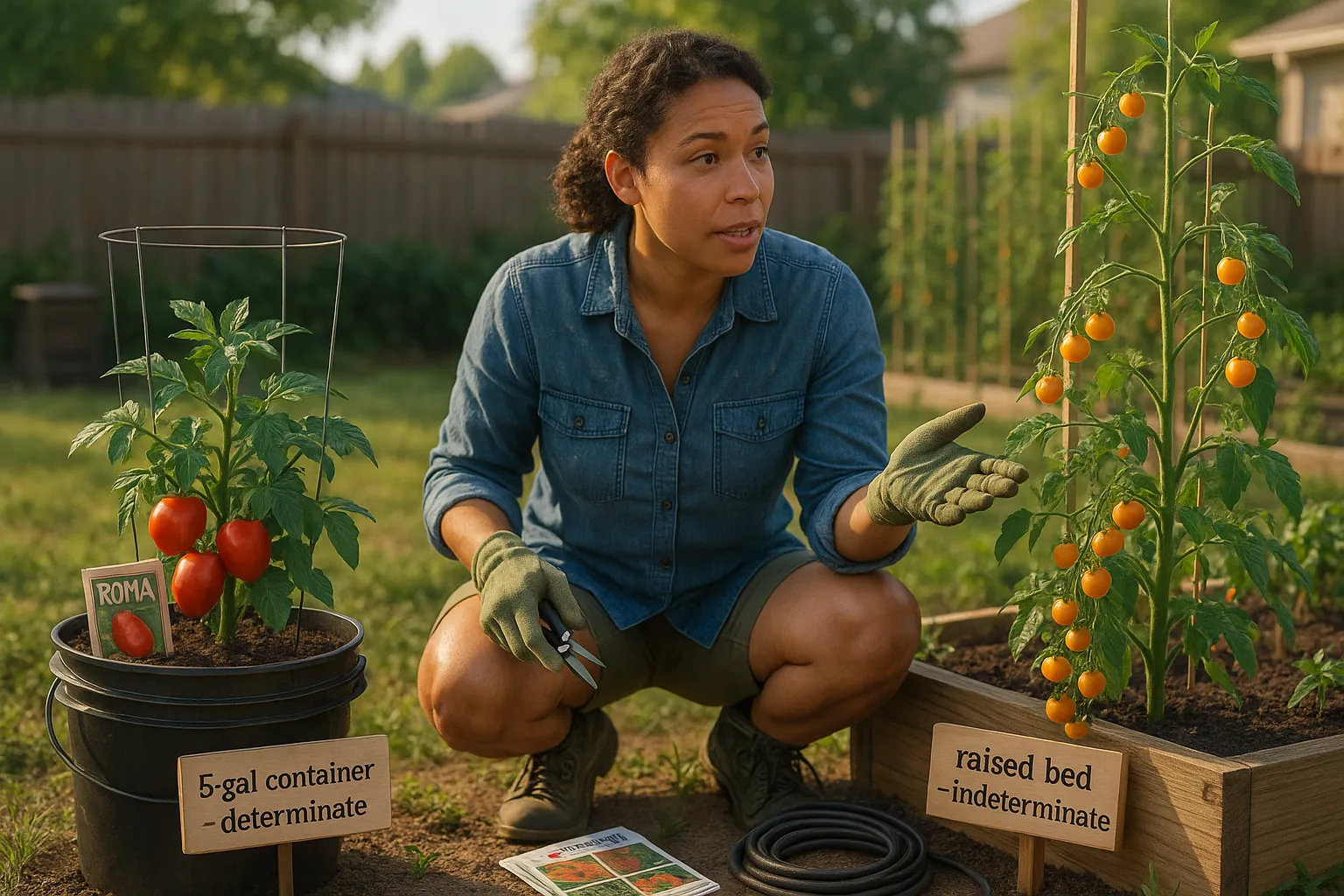
Fact: Match habit to space and purpose, not to myths about ‘better taste.’
Selecting For Space: Containers, Small Gardens, And Large Beds
If you grow in containers, determinate or dwarf indeterminate varieties work best. Determinate plants fit 5-gallon buckets well and need a small cage. In a small raised bed, one or two indeterminate plants will quickly dominate the bed unless you prune.
Large beds and fields favor indeterminate varieties when you want seasonal yield. Market growers choose indeterminate vines for trellis systems because they increase per-foot productivity. Hobby growers with limited time often pick determinate types because they require fewer interventions.
Choosing For Use: Fresh Eating, Canning, Processing, And Market Production
Fact: Use-case directs variety choice.
- Fresh eating/snacking: Small-fruited indeterminate types like ‘Sungold’ or ‘Sweet 100’ are ideal.
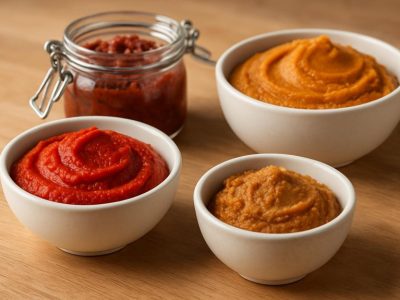
- Canning/processing: Determinate paste types like ‘Roma’ and ‘San Marzano’ give concentrated yield and firmer flesh.
- Market production: Indeterminate hybrids with disease resistance (for example certain F1s sold by Johnny’s Selected Seeds) give steady supply and easier labor scheduling.
Variety Examples And When To Pick Them (Short List By Use)
Fact: Varieties are tools: pick them by use-case.
- Snack/baby tomato: ‘Sungold’ (indeterminate), pick for flavor and steady pickings.
- Slicing tomato: ‘Brandywine’ (indeterminate), pick for large, heirloom slices.
- Sauce/paste: ‘Roma’ (determinate), pick for canning and sauces.
- Early market hybrid: ‘Early Girl’ (often indeterminate), pick for earlier continuous fruit.
These named varieties appear in seed catalogs from Baker Creek, Johnny’s, and Burpee. Local extension trials can help you pick regionally adapted cultivars.
Planting, Spacing, And Cultural Care Differences
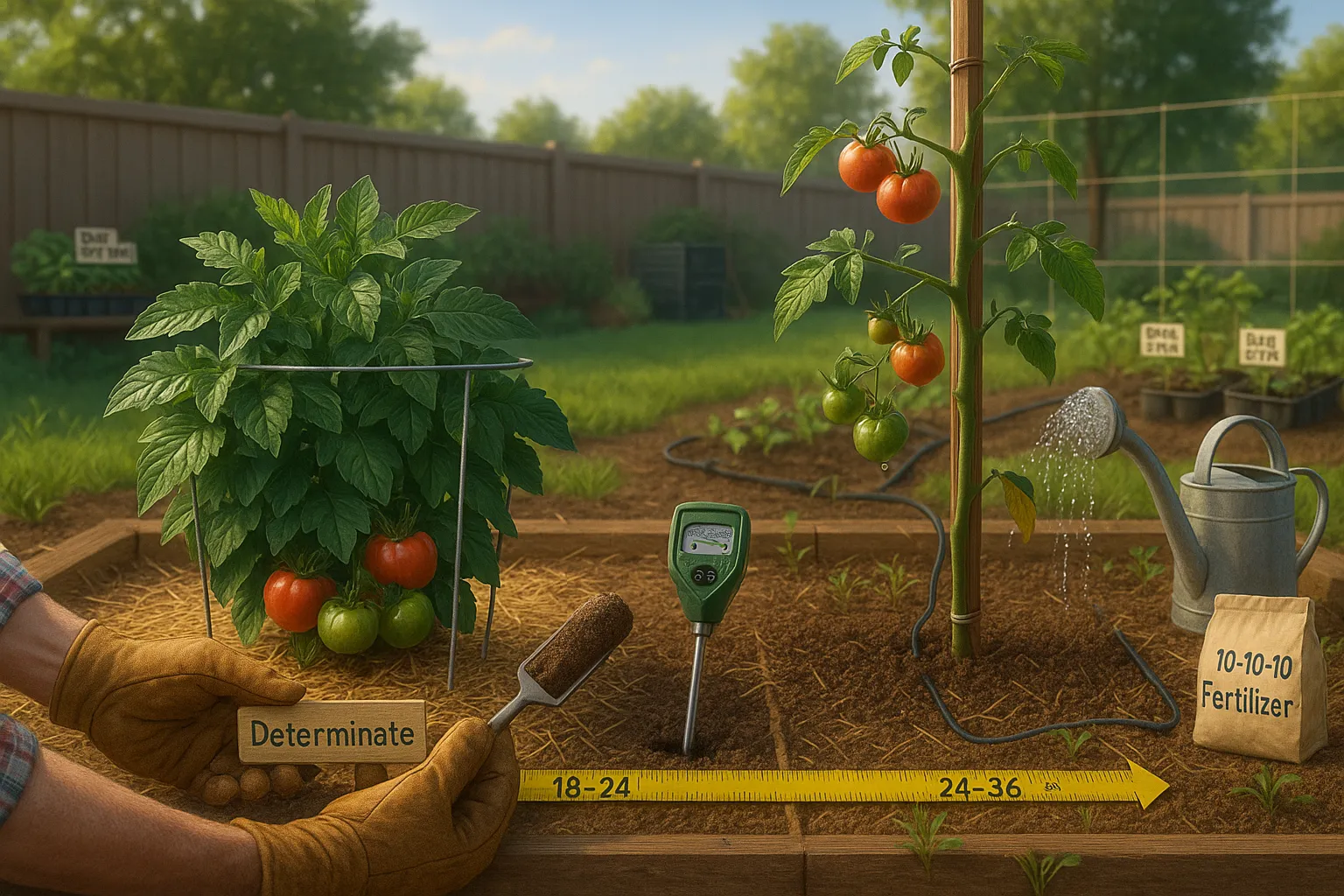
Fact: Spacing and support reflect plant habit and root demand.
Recommended Spacing And Support Needs For Each Type
Determinate: Space plants 18–24 inches apart with 2–3 feet between rows. Use a sturdy 18–24 inch cage or single stake. Keep them compact: heavy fruit may topple unsupported bushes.
Indeterminate: Space plants 24–36 inches apart with 3–4 feet between rows if trellised. Use tall stakes (6–8 ft), the Florida weave, or trellis systems. Train one or two main stems to reduce shading and disease.
Watering, Fertilizing, And Soil Considerations
Fact: Both types need steady water and fertile soil, but indeterminate plants demand more sustained feeding.
- Soil: Aim for well-draining loam with pH 6.0–6.8.
- Watering: Give deep, regular water. Mulch to maintain moisture and reduce cracking.
- Fertilizer: Start with balanced fertilizer: switch to higher potassium once fruit sets. Indeterminate vines benefit from steady, lower-dose feeding throughout the season: determinate plants need a stronger push before and during their main set.
Timing: When To Start Seeds Or Plant Transplants Based On Habit
Fact: Planting dates stay the same: habit affects how long you manage the plant.
Start indeterminate seeds indoors 6–8 weeks before last frost. Start determinate seeds 5–7 weeks before. Transplant both after the danger of frost: indeterminate plants will need long-term support after transplanting. If you want earlier fruit, choose an early-maturing determinate or an early hybrid like ‘Early Girl.’
Pruning, Training, And Support Techniques
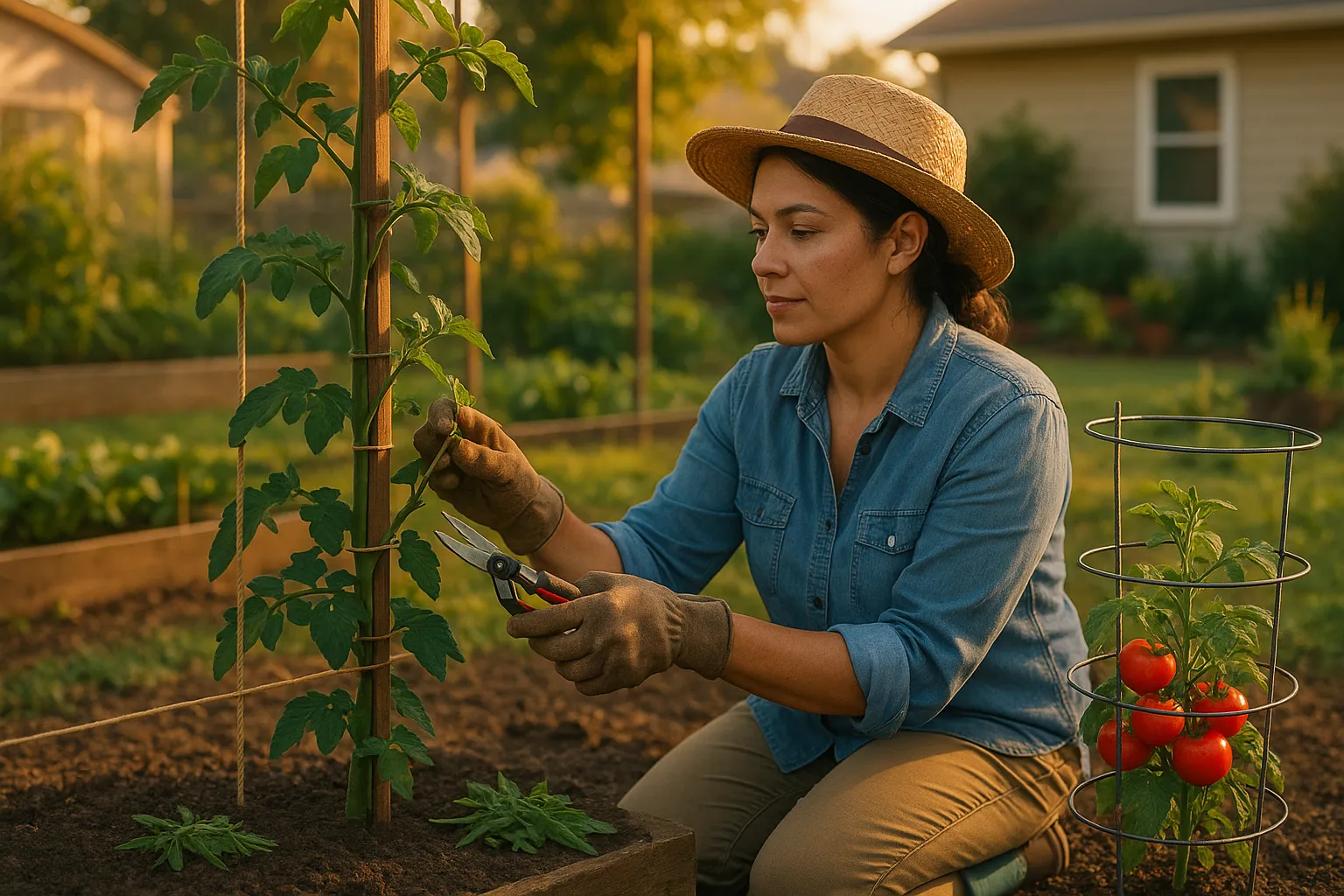
Fact: Proper pruning and support boost air flow and fruit quality: techniques differ by habit.
Staking, Caging, And Trellising Indeterminate Varieties
Staking and trellising help indeterminate vines focus energy into fruit rather than sprawling. Use single-stem training or the Florida weave for row crops. Secure twine every 12–18 inches as the vine grows. In greenhouse production, single-leader trellises allow mechanized harvesting.
Minimal Pruning And Management For Determinate Varieties
Determinate plants need only light pruning: remove dead foliage and any low suckers that interfere with airflow. Avoid heavy sucker removal because this can reduce the size of the concentrated crop. A short tie to a cage keeps fruit off the soil.
When And How To Prune Without Reducing Yield Unduly
Fact: Time pruning to growth stage.
Prune indeterminate suckers (side shoots) when they are small, 2–4 inches, to avoid large wounds. Prune after the first few trusses to encourage fruiting. Never remove more than 20–30% of foliage at once: you reduce photosynthesis and risk sunscald. For determinate plants, restrict pruning to dead wood and to opening the center for airflow.
Common Problems, Pests, And Disease Considerations By Habit
Fact: Habit influences disease risk via plant density and air flow.
Disease Susceptibility And Airflow Considerations
Indeterminate vines can become dense and humid if not trained, raising risk of early blight and powdery mildew. Determinate bushes can also trap moisture if crowded. Improve airflow with proper spacing, mulching, and removing lower leaves. University extension bulletins often recommend crop rotation and resistant varieties to reduce soilborne diseases.
Pests, Blossom Problems, And Fruit Issues (Blossom-End Rot, Cracking)
Fact: Both habits face the same pests, but symptoms can appear differently.
- Blossom-end rot: Caused by calcium uptake issues tied to irregular watering. It affects fruit regardless of habit, so maintain steady moisture.
- Cracking: Heavy, uneven rain after dry spells causes splitting: consistent irrigation and mulch help reduce it.
- Pests: Tomato hornworms, aphids, and whiteflies attack both habits. Indeterminate plants may hide more foliage and so shelter pests: inspect vines regularly.
Troubleshooting: Low Yield, Late Ripening, And Overgrowth
Fact: Diagnose by matching symptom to cause.
- Low yield: Check pollination, nutrient levels, and heat stress. High nighttime temperatures can reduce set.
- Late ripening: Remove excess vegetation to allow sun to reach fruit: consider calcium nitrate foliar sprays if deficiency is suspected.
- Overgrowth (indeterminate): Remove top growth only to manage size, but do it gradually. If a determinate crop sets poorly, check for late blight or pests during flowering.
Include honest admission: you will make mistakes, over-prune, under-water, or choose the wrong variety. Learn by tracking what you planted, when they fruited, and what went wrong. That record will be your best tool next season.

- Tomatoes: Indeterminate Vs. Determinate - June 16, 2026
- Best Tv on a Budget 2026 - June 16, 2026
- Best Substitute for Cilantro - June 16, 2026
by Ellie B, Site Owner / Publisher