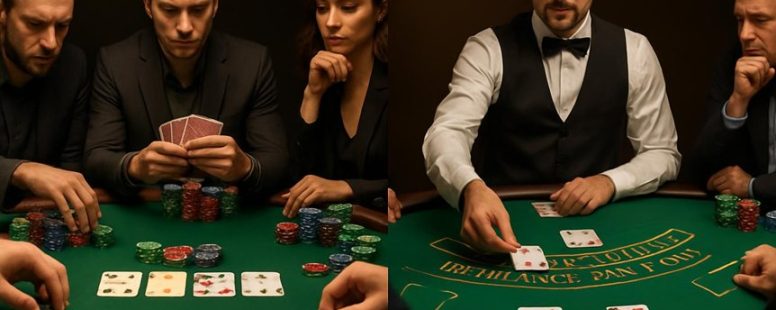
Imagine sitting at a casino table, the clatter of chips and the murmur of players filling the air. Blackjack offers a house edge as low as 0.5 percent, like a well-oiled machine working quietly behind the scenes.
In contrast, poker’s advantage hinges on your skill and strategy, turning the game into a dynamic battle of wits. This stark difference isn’t just trivia—it shapes your entire approach and potential winnings.
Surprisingly, mastering poker can give you an edge even over luck, like wielding a secret weapon. Understanding what sets these games apart can transform your play from mere chance to a calculated art.
Poker vs. Blackjack: How Do They Differ?
Blackjack is a game where players try to get a hand value as close to 21 as possible without going over. Players often use card counting to try and gain an advantage, which means keeping track of high and low cards that have been played. Since players are competing against the house, the dealer’s actions are very important. The dealer follows fixed rules, like hitting or standing based on their hand, and this affects how the game goes. Knowing these dealer rules helps players decide their moves.
Poker, however, is mainly about skill and reading other players. Instead of counting cards, players focus on bluffing and understanding what their opponents might do. Betting strategies are very important in poker, and players try to hide what they have in their hands. The dealer’s role is small because the game is driven by players, not the house.
These differences change how people play each game. Blackjack is more about math and following rules, while poker is about psychology and betting. Some players enjoy blackjack because it feels more like a game of chance, while others prefer poker because it tests their skill. Both games can be fun, but they need different strategies and mindsets.
What Are the Basic Rules of Poker and Blackjack?
Poker and blackjack are popular card games with simple rules, but each has its own way of deciding who wins.
In poker, the goal is to make the best hand possible or trick other players into thinking you have a strong hand. The game uses hand rankings, with the royal flush being the best and a high card being the lowest. Players bet chips based on how confident they are in their hands or how much they want to bluff. The betting usually goes in rounds, and players can fold, call, or raise. The game ends when all bets are settled, and the player with the best hand wins the pot.
Blackjack, also called 21, is easier to understand. The main goal is to get your cards total as close to 21 as possible without going over. Each card has a value: number cards are worth their number, face cards are worth 10, and aces can be 1 or 11. Players are dealt two cards and can choose to “hit” and take more cards, or “stand” and keep their current total. The dealer also plays by specific rules, and if your total is higher than the dealer’s without going over 21, you win.
Both games use betting, but poker often involves more strategic betting and bluffing, while blackjack focuses on making the best total and understanding when to hit or stand. Knowing these basic rules helps players decide how to play and improve their chances of winning.
Hand Rankings and Goals
The main difference between poker and blackjack is what players try to do to win. In poker, the goal is to have the best hand or to trick other players into thinking you do. Hands are ranked from high card to royal flush, which is the best possible hand. Players can bet, bluff, and use strategy to win. For example, if someone has a straight flush, they win unless someone else has a higher one. Sometimes, players bluff by betting big even if their hand isn’t good, hoping others will fold.
In blackjack, the goal is much simpler. You want to get a total card value as close to 21 as possible without going over. You are playing against the dealer, not other players. For example, if your cards add up to 19 and the dealer has 18 showing, you win. But if you go over 21, you bust and lose. You decide whether to hit (take another card) or stand (keep your total) based on your cards and what the dealer shows.
Some players prefer poker because it involves more skill and strategy, like reading opponents and bluffing. Others like blackjack because it’s more straightforward, focusing on luck and quick decisions. Both games can be fun, but they have very different ways to win. Understanding these differences helps players choose which game suits them best.
Betting Structures and Turns
Blackjack and poker are different in how they handle betting and turns.
In blackjack, players bet once during each round. After betting, they take turns deciding whether to hit or stand, trying to get as close to 21 as possible without going over. The goal is to beat the dealer’s hand, and the game has clear rules about when players can act. For example, everyone plays their turn one after the other, following the same order.
Poker, on the other hand, has several betting rounds. Players can bet, raise, check, or fold as the game goes on. These rounds happen after players see their hands and decide whether to keep playing or give up. The betting continues until everyone has either matched the highest bet or folded. This makes poker more strategic because players can change their bets based on what others do.
The turn order is different in each game. Blackjack has simple, fixed turns with one action per player per round. Poker’s turns are more flexible, with multiple betting opportunities. This affects how players make decisions and how long each game lasts.
Good table manners are important in both games. Respecting other players’ turns and following rules keeps the game fair and fun. For example, in blackjack, it’s polite to wait for your turn before acting. In poker, it’s considered rude to slow down the game or make confusing bets.
Winning Conditions and Ties
Winning conditions and ties are different in blackjack and poker, and knowing these differences helps players make better choices.
In blackjack, the main goal is to have a hand that beats the dealer’s without going over 21. If your total is higher than the dealer’s and less than or equal to 21, you win. If both you and the dealer have the same total, it is called a tie or push. In this case, your bet is usually returned, and no one wins or loses money. For example, if you have 19 and the dealer also has 19, the game ends in a push. Players should know that in blackjack, pushing means no one gains or loses chips, so it’s a safe outcome.
Poker works differently. In poker, players try to make the best hand possible or win by betting strategically. Winning can happen in two ways: having the best hand at the showdown or convincing others to fold through bets. Poker games often last several rounds, and players can build winning streaks by winning multiple pots in a row. If two players have the same hand at the end, the pot is split evenly. For example, if two players both have a straight, the chips are shared. Some poker games, like Texas Hold’em, have specific rules for tie hands, so players should learn those before playing.
Knowing these rules helps players decide when to risk more chips or hold back. It also helps in understanding what happens when there is a tie. In blackjack, ties mean no one wins or loses, so some players might choose to stand on a safe total. In poker, ties usually split the winnings, but the rules can change depending on the game. For example, in some poker versions, ties might favor the player with the higher card.
Both games have their own strategies for winning and handling ties. But, it’s good to remember that luck plays a big part in both, and even the best players can lose because of chance. So, always play responsibly and understand the rules for each game.
Understanding Strategies and Betting in Poker and Blackjack
Understanding strategies and betting in poker and blackjack means knowing how to use patterns and tactics to win more often. In poker, you can gain an edge by watching how your opponents bet and adjusting your moves based on their behavior. For example, if someone bets big when they have a strong hand, you might fold when they raise. In blackjack, players often follow specific betting systems like the Martingale, where you double your bet after losing to try and win back your money.
To do well in both games, it helps to be flexible and ready to change your strategy. For instance, in poker, if you notice that an opponent is bluffing a lot, you might call more often. In blackjack, sticking to a plan can keep your risks predictable. But beware, betting systems like Martingale can lead to big losses if you hit a losing streak.
Some players prefer to adjust their tactics based on their luck and the game flow. Others stick to fixed rules. Both ways have pros and cons. For example, adaptive strategies can give you an advantage, but they also need good observation skills. Fixed systems are simple but might not work well if the game changes suddenly.
In short, understanding betting patterns and choosing the right approach can help you win more. But always remember that both poker and blackjack are games of chance. No strategy guarantees a win every time.
Betting Patterns and Tactics
Betting patterns and tactics in poker and blackjack are different because players think differently about risk and decisions. In poker, bluffing is a key tactic. Players try to trick others by betting in ways that hide their true hand strength. For example, a player might bet big to make others believe they have a strong hand, even if they don’t. In blackjack, players usually follow simple strategies. They decide whether to hit or stand based on the dealer’s visible card, aiming to win or avoid losing money.
Here are four common tactics used in these games:
Using unpredictable betting patterns to keep opponents unsure about what a player has. For instance, a poker player might suddenly raise after a series of small bets to surprise others.
Changing bets depending on what is happening at the table. If a player notices others are cautious, they might bet more aggressively.
Bluffing to influence how opponents act. A poker player might pretend to have a strong hand to make others fold.
Reading opponents’ betting behavior to judge how confident or nervous they are. For example, a hesitant bet might mean they are unsure of their hand.
These tactics show how poker relies more on psychological tricks, while blackjack focuses on math and strategy. Both games require players to understand what their betting behavior says about their confidence or plans.
Some players find bluffing fun and effective, but it can also backfire if others see through it. Blackjack players should be careful not to rely only on strategies that work only sometimes. Both games have risks, and no tactic guarantees wins every time.
Strategy Flexibility and Adaptation
Strategy flexibility means changing your game plan as things happen. In poker and blackjack, being able to adapt helps you win more often.
In poker, players watch their opponents closely. If someone bets big early, you might decide to raise or fold based on how the game is going. For example, if a player seems nervous when betting, you could take advantage by raising. Adjusting your bets and reading opponents’ habits is key. This helps you avoid losing chips when your hand isn’t strong and take more when you have a good chance to win.
Blackjack players usually follow basic rules, but they also change their decisions. If the dealer shows a low card like 4 or 5, you might be more aggressive. If the dealer shows a 10 or an Ace, you may need to be more cautious. Knowing when to hit, stand, or double down depends on what the dealer is showing. This quick adjustment can make a difference in your overall score.
Both games need good risk management. Sometimes being careful saves chips. Other times, taking a chance pays off. Good players know when to be conservative and when to be bold. For example, in blackjack, it might be smart to stand on 12 if the dealer shows a 2. But if the dealer shows a 7, you might choose to hit.
Being flexible gives you an advantage. It helps you take advantage of opportunities and avoid big losses. But it’s not always easy. Sometimes your opponents surprise you, or the game doesn’t go as planned. That’s why practicing how to change your strategy quickly is so important. It can turn a losing streak into a winning one.
Some players believe strict rules are best, but others find success by adjusting to what’s happening. Keep in mind that overthinking every move can also lead to mistakes. So, learn when to stick to your plan and when to change it. This balance is what makes a good player stand out from a beginner.
How Do Skill and Luck Influence Outcomes?
Skill and luck both affect the outcomes in poker and blackjack, but they do so in different ways. In poker, skill is very important because players use probability to decide what to do and keep their emotions in check. This helps them make smarter choices based on the chances and what they think other players might have. Luck still matters because the cards are dealt randomly, but skilled players can reduce luck’s impact over many hands.
In blackjack, luck has a bigger role since the cards are dealt randomly each time. However, players can improve their chances by following basic strategies and staying disciplined. For example, knowing when to hit or stay can help you avoid losing more money.
To better understand how skill and luck influence results, think about these points:
Probability modeling helps predict what might happen next. For instance, a poker player might estimate the chance of getting a winning hand based on previous cards.
Emotional control is key in poker because it helps players stay calm and make clear decisions, even when they are losing.
Variance, or the ups and downs in results, plays a big role in short-term games. Even the best players can have bad luck in the short run.
Over many hands, skill becomes more important because consistent decisions can outweigh the randomness of luck.
Knowing these things helps explain why poker tends to reward skill more than blackjack. While luck always plays a part, being good at reading odds and controlling emotions can give you an edge. But remember, no matter how skilled you are, luck can still turn the tables unexpectedly.
The Psychology of Bluffing and Reading Opponents
Bluffing and reading opponents are key parts of poker. Bluffing is when you pretend to have a stronger hand than you actually do. Reading opponents means watching for clues in their behavior that show if they are confident or unsure. Knowing when to bluff and how to read others can help you win more often.
To bluff well, you need to hide your real feelings. For example, if you have a weak hand but want others to think you have a strong one, you might act calm or confident. If you show nervous or excited reactions, players might see through your bluff. Practicing controlling your emotions helps make your bluffs more convincing.
Reading opponents involves paying attention to small signs. Look at their body language, betting patterns, and facial expressions. For instance, if a player suddenly shifts in their seat or hesitates before betting, they might be nervous about their hand. Some players, like professional poker players, are very good at hiding these clues, which makes reading them harder.
There are two main views on bluffing. Some say it’s a smart move that can change the game, especially if you are good at convincing others. Others warn that bluffing can backfire if you get caught. If you bluff too often, players may start to see through you and call your bets more often.
Mastering these skills takes practice and patience. You need to become aware of your own feelings while observing others. When you get better at reading people and hiding your own reactions, bluffing becomes a powerful tool. But remember, it’s not foolproof. Sometimes, even the best bluff can fail, so use it wisely.
House Edges and Payouts: What Are Your Chances?
House edges and payout structures show how much the casino expects to keep and how much you can win. Knowing these helps you understand your chances when playing. Here’s what you need to know:
Blackjack’s house edge can be as low as 0.5 percent if you play perfectly. But things like how often the cards are shuffled can make the house edge higher. For example, if the dealer reshuffles often, it’s harder to count cards and your odds get worse.
Poker’s payout structure depends a lot on how skilled the players are and their strategies. Unlike other games, poker players are competing against each other, not the house. This means your chances can be better if you know how to play well, but luck still plays a big role.
Casino psychology influences how games are shown and marketed. Sometimes, casinos make certain bets look more exciting to get players to spend more money. For example, bright lights and loud sounds can make players more confident in risky bets.
How the cards are shuffled really matters. If the shuffle is fair and random, everyone has a better chance. But if the shuffle favors the house or is predictable, it can make winning harder for players.
Knowing these details helps you make smarter choices when you sit at the table. Remember, no game is a sure bet, and understanding the house edge and payouts won’t guarantee a win but can help you play smarter.
Common Mistakes to Avoid in Poker and Blackjack
Knowing the house edges and payout structures helps you make smarter bets in poker and blackjack. But even experienced players often make common mistakes that hurt their chances. One big mistake is not using proper tournament strategies. These strategies are different from casual play and can make a difference in your results. Relying only on instinct without a plan can cause poor decisions, especially when your chip stack changes.
Another mistake is misreading what other players are doing. Assuming everyone behaves the same way can lead to costly errors. Watching how opponents play and staying patient can help you spot their habits. For example, if a player always bets big when they have a good hand, you can use that to your advantage. But if you guess wrong, you might lose chips fast.
Emotional reactions are also a common trap. Chasing losses by betting more or playing too aggressive can cloud your judgment. It’s better to stay calm and stick to your strategy. Sometimes, players get upset after losing a few hands and make rash moves that cost them even more money.
Understanding these mistakes and avoiding them can improve your game. Whether you are playing casually or in a tournament, having a clear plan and staying level-headed will help you make smarter decisions. Remember, poker and blackjack are not just about luck—they are about making good choices with the cards you are dealt.
Why Knowing the Differences Helps You Play Smarter
Knowing the differences between poker and blackjack can help you play smarter. These games have different rules, strategies, and ways to bet. Understanding their background and culture also helps you know why players do things differently. Here are some key points:
Blackjack is based on European gambling traditions. This makes players focus on luck and quick decisions. For example, the game is fast, and your choices depend on the cards you see. Knowing this can help you stay calm and make smart moves when the game moves quickly.
Poker started as a social game that uses skill and strategy. Players bet based on their confidence and reading opponents. If you understand poker’s roots, you can plan your bets better and stay patient, especially in longer games.
Different cultures influence how players act at the table. In some places, players are more aggressive, while others prefer cautious play. Recognizing these habits lets you change your style to fit the setting. For example, in Las Vegas, players might be more daring, so you might want to bluff more often.
Knowing what makes each game unique helps you avoid mistakes. For instance, in blackjack, sticking to basic strategy reduces the house edge. In poker, knowing when to fold can save you chips. Also, spotting opportunities unique to each game can give you an advantage. But remember, no strategy guarantees wins. Both games also involve luck, so play responsibly.
Some people say understanding these differences is key to improving. Others warn that no strategy can beat luck all the time. So, learn and practice, but don’t forget to have fun and gamble responsibly.
To provide the best experiences, we use technologies like cookies to store and/or access device information. Consenting to these technologies will allow us to process data such as browsing behaviour or unique IDs on this site. Not consenting or withdrawing consent, may adversely affect certain features and functions.
Functional
Always active
The technical storage or access is strictly necessary for the legitimate purpose of enabling the use of a specific service explicitly requested by the subscriber or user, or for the sole purpose of carrying out the transmission of a communication over an electronic communications network.
Preferences
The technical storage or access is necessary for the legitimate purpose of storing preferences that are not requested by the subscriber or user.
Statistics
The technical storage or access that is used exclusively for statistical purposes.The technical storage or access that is used exclusively for anonymous statistical purposes. Without a subpoena, voluntary compliance on the part of your Internet Service Provider, or additional records from a third party, information stored or retrieved for this purpose alone cannot usually be used to identify you.
Marketing
The technical storage or access is required to create user profiles to send advertising, or to track the user on a website or across several websites for similar marketing purposes.