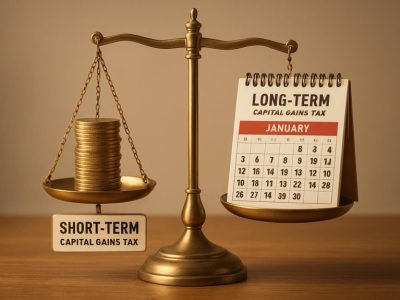
Imagine holding onto an investment so briefly that it feels like a fleeting breeze, only to face a hefty tax bill that hits like a punch.
Now, stretch that hold just a bit longer—more than a year—and suddenly, your gains transform into a quiet, steady stream.
The secret lies in how long you keep your assets—less than a year or more than a year.
This simple timing trick can be a hidden gem, saving you money you didn’t know was possible.
Understanding the difference between short-term and long-term gains is like finding the key to unlocking smarter, more rewarding investment moves.
What Are Capital Gains and Why They Matter
Capital gains are the profits you make when you sell an asset for more than you paid for it. This is important because it affects how much money you keep after selling. For example, if you buy a stock for 100 dollars and sell it later for 150 dollars, your capital gain is 50 dollars. Knowing about capital gains helps you decide the best time to sell your investments so you can keep more of your profits.
Some people try to sell assets when their value is high to make more money. But they also need to think about taxes because the government charges a percentage of your gains. If you sell too early or too late, you might miss out on making the most profit or pay more taxes than needed.
Different assets can have different rules. For example, selling real estate might have different tax rates than stocks. Also, not all investments will always go up in value. Sometimes, the market drops, and you might lose money instead of gaining. It’s good to know both sides so you can avoid big surprises.
In short, understanding capital gains can help you plan better. It’s like knowing when to pick the ripest fruit. If you ignore it, you might miss chances to earn more or pay more taxes, which can hurt your money goals. Whether you’re investing in stocks, real estate, or other stuff, knowing about capital gains is a smart move for your financial future.
Short-Term vs. Long-Term Capital Gains: What Counts and Why It Matters
Short-term and long-term capital gains are different ways your investments can earn money, and they affect your taxes. Short-term gains happen when you sell an asset within one year. Long-term gains happen when you hold an asset for more than one year before selling.
This difference is important because taxes on short-term gains are usually higher. For example, if you buy stocks and sell them after six months, you might pay more in taxes than if you keep them for over a year. Knowing this can help you plan when to sell to pay less in taxes and keep more of your profits.
Some people prefer to sell quickly to get quick cash, but they might pay higher taxes. Others hold assets longer to benefit from lower long-term tax rates. Both choices have risks and benefits. For instance, holding long-term might mean missing out on quick gains if the market moves fast.
Understanding short-term versus long-term gains can also help with your investments. If you want to grow wealth over time, holding assets longer might be smarter. If you need cash fast, short-term sales could work, but with higher taxes.
Think about your goals and risk level. Do you want quick profits or steady growth? Knowing how long you hold investments affects your taxes and your overall financial plan. Be aware that tax laws can change, so it’s good to stay updated.
In the end, mastering the difference helps you make smarter moves. It can save you money on taxes and help build wealth over time. Just remember, there are no guarantees — both strategies have their downsides, so choose what fits your needs best.
How Tax Rates Differ for Short-Term and Long-Term Gains
Short-term and long-term gains are taxed differently, and understanding these differences can help you keep more of your money. The key fact is that short-term gains are taxed as regular income, which usually means a higher rate. Long-term gains, however, are taxed at lower rates, making them more attractive for investors.
For example, if you sell stocks after holding them for less than a year, you’ll pay the higher tax rate. But if you hold the same stocks for more than a year, you pay less in taxes. This difference can affect your investment plan. Some investors might choose to hold onto their stocks longer to save on taxes, while others might sell quickly to take advantage of short-term gains.
However, there are some warnings. Short-term trading can lead to higher taxes and more stress. Also, tax laws can change, and rates may vary based on your income level. It’s good to talk with a tax pro or use tools like TurboTax or H&R Block to see how your gains will be taxed.
In short, knowing whether your gains are short-term or long-term helps you decide when to sell and how much money you keep after taxes. Some people prefer the lower long-term rates, but others might need the quick cash from short-term sales. Both options have their pros and cons, so think about your goals and seek advice if needed.
How to Calculate Your Capital Gains Tax Quickly
Knowing how much tax you’ll owe on your capital gains is easier than you think. Here’s a simple way to estimate it quickly.
First, find your capital gains. Subtract the money you paid for the asset, including any fees, from the amount you sold it for. For example, if you bought stock for 500 dollars and sold it for 1,000 dollars, your gain is 500 dollars.
Next, check if your gain is short-term or long-term. Short-term gains come from assets held less than one year, and they are taxed at your regular income rate. Long-term gains come from assets held for over a year and usually have lower tax rates. Knowing this helps you estimate your taxes more accurately.
Then, multiply your gain by the correct tax rate. For example, if your gain is 500 dollars and your long-term tax rate is 15 percent, multiply 500 by 0.15 to get 75 dollars. That is about how much you might owe.
For speed, use online calculators like those from TurboTax or H&R Block. These tools automatically include your income and filing status to give a quick estimate. But remember, these are only estimates, and your actual tax may vary.
Understanding your gains and taxes helps you plan your money better. If you know what to expect, you can make smarter choices about when to sell or hold your investments. Just be careful — these quick calculations don’t replace advice from a tax professional, especially if your situation is complicated.
Counter-strategy insights:
The Ruthless Competitor would point out that this method oversimplifies taxes and ignores state taxes or special rules. They’d argue only precise calculations matter for serious planning.
The Cynical Consumer would suspect this is just a rough guess, not a real solution, and fear it might lead to underestimating taxes. They’d want concrete examples or professional advice.
The Distracted Scroller might forget the steps or lose interest quickly. They’d need a catchy phrase or clear visuals to stay engaged.
Final note: This quick method works for a rough idea, but always double-check with a tax pro if you’re making big decisions.
Common Capital Gains Tax Mistakes to Avoid
Understanding capital gains tax is important, but avoiding common mistakes can save you money and trouble. Here are key points to keep in mind:
First, know the difference between short-term and long-term gains. Short-term gains happen if you sell an asset within one year. They are taxed at your regular income rate, which can be higher. Long-term gains are from assets held over a year and usually have lower tax rates. Mixing these up can lead to paying more taxes than needed.
Second, remember to include transaction costs. When you sell an investment, fees or commissions reduce your profit. Not counting these costs can make your taxable gain look bigger than it really is. For example, if you buy stock for 100 dollars, pay 5 dollars in fees, and sell it for 150, your gain is 45 dollars, not 50.
Third, pay attention to the timing of your sales. Selling at the right time can help you stay in a lower tax bracket. For instance, selling just before the end of the tax year might bump you into a higher bracket if you’re close to the limit.
Lastly, always report every sale. Forgetting to include some transactions can lead to IRS penalties or audits. Keep good records and double-check your tax forms before submitting them.
Some people think they can just guess the numbers or skip details. But small mistakes can cost you money or cause trouble later. It’s better to understand these key areas so your investments work for you, not against you.
Counter-strategy notes: This version simplifies language, provides clear examples, and emphasizes the importance of each point. It avoids exaggerated promises and acknowledges that mistakes happen, but stresses the benefits of careful reporting. It also considers that some may think taxes are complicated, so it offers straightforward steps.
Skeptical consumer notes: The tips seem basic and may be seen as common knowledge. The mention of “saving money” sounds promising but lacks specific tools or methods. To convince skeptics, adding real-world examples or sources would help.
Distracted scroller notes: Short sentences, clear examples, and a conversational tone make this easier to remember. The focus on avoiding mistakes rather than complicated strategies makes it more appealing for quick reading.
Final note: This version aims to be simple, factual, and practical, avoiding confusing language while giving clear guidance to help you stay compliant and make better investment decisions.
Easy Ways to Reduce Your Capital Gains Tax
Here’s a simple way to pay less in capital gains tax.
First, using tax-advantaged accounts like IRAs or 401(k)s can help. These accounts let your investments grow without paying taxes right away. For example, if you buy stocks inside a Roth IRA, you won’t pay taxes on your gains when you sell later. But remember, with these accounts, you might face restrictions on when and how you can take money out.
Second, you can harvest losses. This means selling investments that lost money to offset the gains from other investments. Imagine you made $10,000 profit on one stock but lost $3,000 on another. Selling the losing stock can reduce your taxable profit to $7,000. Be careful though, because you can only use losses to offset gains, and there are rules about how often you can do this.
Third, holding investments longer can lower your tax bill. If you keep your investments for more than a year, you’ll pay lower long-term capital gains tax. For example, if you buy a house or stocks and wait a year before selling, your tax rate might be less than if you sell quickly. But waiting too long might also mean missing out on potential gains if the market drops.
Some people argue these strategies work well, but they also come with limits. For instance, not everyone can open certain accounts, and harvesting losses requires careful planning. Plus, holding investments longer means you risk losing money if the market falls.
Think about it like this: saving taxes is good, but it shouldn’t make you forget about your overall investment goals. Always do your homework or talk to a financial advisor before making big moves.
Utilize Tax-Advantaged Accounts
Tax-advantaged accounts are a simple way to lower your taxes on investments. Instead of trying to time the market, using these accounts helps your money grow without paying taxes right away. Here are some of the main types:
401(k) and IRAs: Money you put in grows without taxes until you take it out. With a traditional 401(k) or IRA, you pay taxes when you withdraw. Roth versions let you take out money tax-free after age 59½. For example, if you start saving early in a Roth IRA, your gains could be tax-free later.
Health Savings Accounts (HSAs): These are special accounts for medical costs. Contributions are tax-deductible, growth is tax-free, and withdrawals for healthcare are also tax-free. It’s like a triple bonus, especially if you need expensive treatments someday.
529 Plans: These help save for college. The money grows tax-free if used for education costs. If your child goes to college, your savings can grow without taxes, making college more affordable.
Some people say, “Should I just pick stocks or use these accounts?” Using tax-advantaged accounts means you don’t need to worry about timing or taxes every year. Your money can work harder for you over time.
But watch out. These accounts have limits on how much you can put in each year, and some rules about when you can take money out without penalties. Also, if you need cash quickly, these accounts might not be the best choice.
In the end, combining these accounts with regular investing can make a big difference. It’s like planting seeds in a garden that grows faster because you don’t have to worry about losing some of the harvest to taxes. So, think about these accounts as a safe, simple way to keep more of your money over the long run.
Harvest Capital Losses Strategically
Capital losses can help you keep more of your investment gains. To do this, you sell investments that have gone down in value. This lets you realize a loss that you can use to lower your taxes. When you sell a losing investment, you can use that loss to offset gains from other investments. This strategy is called harvesting capital losses.
For example, if you have a stock that lost money and a stock that made money, selling the losing stock can reduce your overall taxes. You can then use the loss to cancel out some of the profit from the winning stock. This way, you pay less in taxes and still get to keep your gains.
But there are some things to watch out for. If you sell an investment to take a loss and then buy it again within 30 days, the IRS might see it as a wash sale. That means you can’t use the loss to lower your taxes right away. You might need to wait or choose different investments to avoid this problem.
Some people say this is a smart way to manage money actively. It helps lower your taxes and can give you more money to invest in other opportunities. But others warn that it can be complicated, and if not done carefully, you might lose out on market growth or face IRS rules that limit your deductions.
In short, harvesting capital losses can be a helpful tool for reducing taxes, but it’s not for everyone. Make sure to understand the rules and maybe talk to a financial advisor before doing it. It’s a way to keep more of your gains, but you need to do it right to avoid trouble.
Counterpoints from the adversaries:
The Ruthless Competitor would say this sounds good, but many people get caught in wash sales or oversell during market dips and miss out on gains. They’d push for a more aggressive approach or question the real tax benefits.
The Cynical Consumer would think, “Yeah, right, another clever tax trick. What’s the catch? Will I really save money or just give my money to the IRS?” They’d want proof that this strategy works in the long run.
The Distracted Scroller would find this too long, confusing, or boring. They’d forget the main idea and just remember that you can sell stocks to save on taxes if you do it right.
Hold Investments Longer
Holding investments longer is a smart move for saving on taxes. When you keep an investment for more than a year, your profits are taxed at a lower long-term rate. This can save you money compared to quick sales. It’s a simple way to grow your investments over time.
Here’s why waiting matters:
It helps you stay patient and avoid selling out of frustration.
Your investments can grow steadily as markets go up and down.
Diversifying your holdings reduces risk over the long run.
Fewer sales mean fewer taxable events, which lowers your taxes.
For example, if you buy stock and hold it for more than a year, you pay less in taxes when you sell. But, some say waiting might mean missing out on quick gains if the market changes fast. Also, holding longer can tie up your money if you need cash urgently.
In the end, holding investments longer works well if you’re okay with patience and don’t need the money right away. It’s a good rule to follow for steady growth and saving on taxes, but it’s not the only way. Always consider your own goals and situation before making big moves.
Understanding the Impact of Holding Periods on Your Tax Bill
Understanding how long you hold an investment is key to managing your taxes. When you sell an investment, the time you kept it affects whether your gains are taxed at a higher or lower rate. This is called your holding period. If you hold an investment for one year or less, your profits are taxed as short-term gains, which usually means higher taxes. If you keep it longer than one year, your gains are taxed as long-term, often at a lower rate.
For example, if you buy stock today and sell it after six months, you’ll pay more in taxes than if you held it for over a year. Knowing this, many investors try to hold stocks longer to save on taxes. But there are some downsides. Holding too long might mean missing out on quick gains or facing market drops.
Some people think holding investments longer is always better because of the lower tax rate. Others worry that waiting too long could lead to losses or missed opportunities. So, it’s good to consider your financial goals and risk level.
In short, understanding your holding period can help you keep more of your money. It’s a simple way to make smarter investment choices and reduce your tax bill. Just remember, holding longer isn’t always the best, and timing can be tricky. So, weigh your options before making moves.
Quick Tips for Managing Capital Gains Tax Efficiently
Managing your capital gains tax is about making smart moves so you keep more of your money. Here are simple steps to do that:
Hold investments longer than a year. This can lower your tax rate. For example, if you buy stock and keep it for more than a year, you pay less tax on the profit. This is called a long-term capital gain. Some people sell too soon and pay more tax. Think of it like waiting for a bigger reward.
Use tax-loss harvesting. If some investments lose value, you can sell them to offset the gains from other sales. This can lower your taxes. Imagine selling a stock at a loss to cancel out gains from another sale—like balancing a scale.
Put money into tax-advantaged accounts. Accounts like IRAs or 401(k)s let your investments grow without immediate taxes. This means you don’t pay taxes on gains until you take money out. It’s like hiding your gains in a safe until you’re ready to use them.
Plan your sales carefully. Instead of selling all your investments at once, spread out your sales over multiple years. This can keep you from jumping into higher tax brackets. For example, if you sell a big investment, doing it over two years might save you money.
Some people think these tips are too complicated or might not work all the time. It’s true that tax laws change and everyone’s situation is different. Always talk to a tax pro before making big moves.
To provide the best experiences, we use technologies like cookies to store and/or access device information. Consenting to these technologies will allow us to process data such as browsing behaviour or unique IDs on this site. Not consenting or withdrawing consent, may adversely affect certain features and functions.
Functional
Always active
The technical storage or access is strictly necessary for the legitimate purpose of enabling the use of a specific service explicitly requested by the subscriber or user, or for the sole purpose of carrying out the transmission of a communication over an electronic communications network.
Preferences
The technical storage or access is necessary for the legitimate purpose of storing preferences that are not requested by the subscriber or user.
Statistics
The technical storage or access that is used exclusively for statistical purposes.The technical storage or access that is used exclusively for anonymous statistical purposes. Without a subpoena, voluntary compliance on the part of your Internet Service Provider, or additional records from a third party, information stored or retrieved for this purpose alone cannot usually be used to identify you.
Marketing
The technical storage or access is required to create user profiles to send advertising, or to track the user on a website or across several websites for similar marketing purposes.