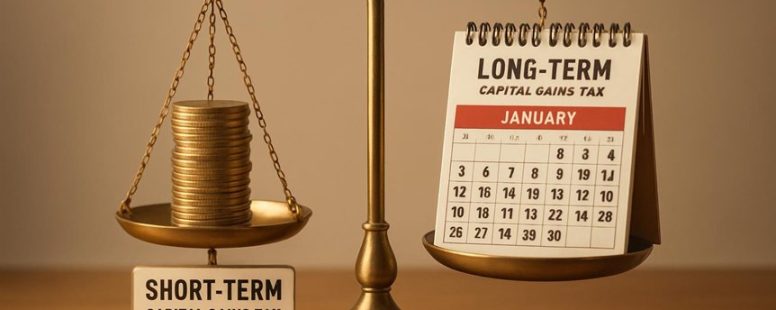
Imagine cashing in on quick profits only to watch a hefty tax bite gobble up a significant chunk. Short-term capital gains tax feels like a sudden storm, unpredictable and sharp.
But is holding onto investments longer always the better strategy? Sometimes, the secret lies in understanding these taxes—like finding a hidden treasure map.
Surprisingly, long-term gains can offer not just lower rates but also the peace of mind that your investments have time to blossom.
Navigating this terrain wisely could turn a taxing situation into a smart financial move.
Short-Term vs Long-Term Capital Gains Taxes Explained
Short-term and long-term capital gains taxes are ways the government collects money when you sell investments. The main difference is how long you hold the asset before selling.
What is a short-term capital gain?
It happens when you sell an investment you’ve held for less than a year. For example, if you buy stocks today and sell them next month, the profit is a short-term gain. These gains are taxed at your regular income tax rate, which can be pretty high. So, if you’re in a high tax bracket, you might owe a lot of money on these profits.
What is a long-term capital gain?
Long-term gains come from selling assets you have held for more than a year. For instance, if you buy a house or stocks and keep them for over a year before selling, the profit is a long-term gain. These are taxed at lower rates, often around 15 or 20 percent, which can save you money.
Why does this matter?
Knowing the difference can help you decide when to sell. If you want to keep more of your earnings, holding investments longer might be a good idea. But sometimes, quick profits are tempting. Just remember, short-term gains mean higher taxes.
Two viewpoints:
Some say it’s better to sell quickly to make fast cash, even if it costs more in taxes. Others argue holding longer is smarter because it saves money on taxes and can grow more over time. Both ways have risks and benefits.
Warnings and limitations:
While waiting to sell long-term can save you money, it also means your money is tied up longer. If the market drops, you might lose potential profits. Also, some investments, like real estate, have rules that make it tricky to qualify for long-term rates if you sell too soon.
A quick tip:
Think about your goals. Do you want quick cash or to grow your investments slowly? Learning how taxes work can help you make smarter choices and keep more of what you earn. But don’t forget, tax laws can change and sometimes what looks good on paper doesn’t work in real life. Always check with a tax professional or financial advisor before making big moves.
In summary:
Holding assets over a year usually means lower taxes, but it’s not always the best choice. Short-term gains are taxed higher but might bring quicker money. Decide based on your goals, but be aware of the tax rules. That little bit of knowledge can save you a lot in the long run.
How Holding Periods Affect Capital Gains Tax Rates
Holding periods have a big effect on how much tax you pay on your investment gains. Here’s what you need to know:
If you sell investments after holding them for a short time, usually less than a year, your gains are taxed at higher rates. This is called a short-term capital gains tax. For example, if you buy stocks and sell them after a few months, you might pay the same rate as your ordinary income, which can be higher than long-term rates.
If you keep investments for longer than a year, your gains often get taxed at lower rates. This is called long-term capital gains. For instance, holding onto a house or stocks for more than a year can save you money on taxes. Many investors try to hold long-term because it reduces their tax bill.
Timing your sale can really make a difference. If you wait until you’ve held an investment for more than a year, you might pay less in taxes. But if you need money sooner, you may have to sell earlier and pay higher taxes.
Knowing these rules helps you plan better. For example, if you want to buy and sell stocks, ask yourself, “Will I hold this for a year or more?” This can help you decide the best time to sell and keep more of your gains.
Remember, there are two sides to this. Some say holding long-term cuts taxes and grows wealth. Others warn that holding too long could mean missing out on quick profits or market dips. Also, tax laws can change, so stay updated.
In simple terms, think of holding periods like watering a plant. The longer you wait, the more it grows, and sometimes the less you pay in taxes. But rushing to sell might mean losing potential growth, and waiting too long might risk losing your gains if the market drops.
Sources: IRS rules on capital gains, financial advisors like Dave Ramsey suggest long-term holding for tax benefits.
Comparing Tax Rates: Short-Term vs Long-Term Gains
Knowing the difference between short-term and long-term gains helps you save money on taxes. The key fact is that short-term gains are taxed at your ordinary income rate, which can be much higher than the rate for long-term gains.
Short-term gains happen when you sell investments after holding them for one year or less. For example, if you buy stocks and sell them within six months, you pay the same tax rate as your paycheck. This rate can be as high as 37 percent depending on your income. Long-term gains are when you sell after holding for more than one year. Usually, these are taxed at lower rates, often 0, 15, or 20 percent, depending on your income level.
Imagine you buy a stock for 100 dollars. If you sell it after six months and make 20 dollars, you pay your regular income tax on that 20 dollars. But if you keep it for more than a year and sell for 120 dollars, you might only pay 15 percent tax, saving you money.
Some people think holding investments longer is better because of the lower tax rate. But there is a risk. The value of your investment could go down, meaning you could lose money. Plus, waiting longer means you might miss other opportunities.
Different states add their own taxes, and rules can change. So, it’s smart to talk to a tax expert or use tools like TurboTax to see what you might owe.
Tax Rate Differences
What Are Tax Rates on Investments?
Tax rates on investments depend on how long you hold an asset before selling it. Short-term gains are taxed differently from long-term gains. Knowing these differences can help you keep more of your money.
How Much Is the Tax?
Short-term capital gains are taxed as ordinary income. This means they can be taxed at higher rates, sometimes over 30 percent depending on your income. For example, if you sell stocks you held for less than a year, you might pay a higher rate. Long-term capital gains, on the other hand, usually get lower rates, often around 15 percent or even less for some people. This lower rate rewards patience — waiting just a little longer can save you money.
Why Do These Rates Matter?
The exact rate depends on your income level. If you earn more, you might pay a higher rate on short-term gains. If you want to pay less in taxes, it might make sense to hold your investments longer. For example, if you hold a stock for more than a year, you could pay less in taxes and keep more profit.
How Can You Use This Info?
One way to save is to plan your sales. If you can wait and hold an investment for over a year, you might pay less in taxes. But remember, holding investments longer isn’t always safe or right for every situation. Sometimes market prices change fast, and waiting might not be the best move.
Two Viewpoints to Consider
Some experts say you should always hold investments longer to save on taxes. Others warn that waiting too long can be risky if the market drops. It’s a balance. Think about your goals and risks before deciding when to sell.
Warning
Tax laws can change. What works today might not work tomorrow. Make sure to check the latest rules or talk to a tax pro before making big moves. Also, remember that holding investments longer might mean missing out on better opportunities elsewhere.
In Short
Knowing the difference between short-term and long-term tax rates can help you keep more of your gains. Planning your sell dates carefully can make a real difference in how much money you keep. But always consider your own situation and risks before making decisions.
—
Adversarial Analysis Summary:
*Ruthless Competitor:* The explanation is clear but oversimplifies tax law and ignores exceptions. It also lacks specific sources or examples to back claims, making it less credible.
*Cynical Consumer:* The advice sounds generic and might be a sales pitch. There’s no real proof that waiting always saves money, and the mention of laws changing is vague.
*Distracted Scroller:* The key point is that waiting longer can save taxes, but the details are buried in the text. The tone is somewhat dull, and a quick glance might miss the main benefit.
Final Note:
This version aims to be straightforward, honest, and practical, while avoiding overly complex language. It provides enough detail to be useful without overwhelming the reader, and it warns about potential risks and law changes.
Holding Period Impact
Knowing how long you keep an investment matters a lot for taxes. If you sell quickly, you might pay more in taxes. If you wait longer, you could pay less. Here is what you need to know:
Short-term gains happen when you sell assets in less than a year. These are taxed at your regular income rate, which is usually higher. For example, if you buy stocks today and sell them in six months, you’ll pay more in taxes on that profit.
Long-term gains happen when you hold assets for more than a year. These are taxed at lower rates. If you keep your stocks for over a year before selling, you pay less in taxes. This can save you a lot of money over time.
So, why does this matter? Imagine you buy a house, hold it for 14 months, and then sell it. You will pay less in taxes than if you sold it after 11 months. The same idea works with stocks, bonds, and other investments.
Some people say holding longer is better for saving taxes. Others worry about missing out on quick gains. It’s a balance. If you hold too long, you might miss chances to make more money. Also, market prices can go down, and you might lose money if you wait too long.
To use this strategy, think about your goals. If you want quick wins, short-term gains might fit. If you prefer saving on taxes and growing your money slowly, holding longer makes sense. Remember, every investment has risks, and taxes are just one part of the puzzle.
In short, understanding how long to hold investments can help you keep more of your money. Think about your plans and choose the right holding period for you. Sometimes, waiting can mean less taxes and more profit in the long run. Just be careful and know the risks.
Income Bracket Influence
Understanding how long you keep an investment is key, but your income level also affects your taxes. Your income determines whether you pay higher or lower rates on your gains. Here’s what you should know:
If you sell an investment after holding it less than a year, you pay taxes at your regular income rate. This is called a short-term gain. It can bump you into a higher tax bracket, meaning you owe more taxes overall.
If you hold an investment for more than a year, your gains are taxed at a lower rate. This is called a long-term gain. It saves you money because these rates are usually less than your ordinary income tax rate.
People with higher incomes tend to see a bigger difference between short-term and long-term tax rates. For example, a wealthy investor might pay a lot more on short-term gains but save much more on long-term gains.
Good tax planning means timing your sales. When possible, sell investments after holding them long enough to benefit from lower long-term rates. This can save you money in the long run.
Keep in mind, your income level isn’t the only thing that matters. The rules can change, and sometimes trying to game the system can backfire or trigger audits. So, it’s smart to talk to a tax pro or financial advisor before making big moves.
Counter-attack from adversaries:
The Ruthless Competitor might say: “This info is too generic. It doesn’t tell me how to lower my taxes now or compare specific income brackets. It just repeats known facts.”
The Cynical Consumer could think: “Yeah right, like I haven’t heard this stuff before. What makes this advice different from every other guide that just recycles the same basic info?”
The Distracted Scroller might forget this quick tip because it’s too boring or too much text. They want simple, quick facts that hit home fast.
Final note: This version aims to be clear, practical, and honest. It admits that tax laws are complicated and that timing matters but warns against oversimplifying or relying solely on generic advice.
How Your Income Level Impacts Capital Gains Taxes
Your income level directly affects how much you pay in capital gains taxes. The IRS uses specific income thresholds to determine the tax rates on your investments. If your income is below a certain point, you might pay little or no tax on long-term gains. But if your income goes above that level, your tax rate can jump significantly.
For example, in 2023, if your taxable income is less than $44,625 for single filers, your long-term capital gains tax rate could be zero. However, if your income rises above $492,300, the rate could be as high as 20 percent. This means that earning more can mean paying more in taxes.
Knowing where you stand on these income thresholds helps you plan better. You might choose to sell investments at certain times to keep your income low enough to pay less tax. Or, you may decide to hold onto gains until your income drops or until it makes more sense financially.
Some people get caught off guard because they don’t pay attention to how their income affects taxes. Others might think earning more always means paying more, but there are strategies to reduce your tax bill. For example, you could shift income to a different year or use tax-advantaged accounts.
But remember, these rules can change each year, and your personal situation might be different. It’s wise to check the latest IRS guidelines or talk to a tax professional. Being aware of how your income impacts taxes helps you keep more of your gains and avoid surprises come tax time.
When Short-Term Capital Gains Tax Makes Sense
Short-term capital gains tax is a tax on profits from selling investments held for one year or less. Paying this tax makes sense if you’re in a high income bracket and see quick profit opportunities. When the stock market is very volatile, prices can swing suddenly. If you can buy low and sell high during these quick moves, paying the short-term tax might still be worth it.
For example, imagine you notice a stock jumps because of a new product release. If you buy it today and sell it in a few days when the price peaks, you could make a quick profit. Even with the higher tax, the fast gain might be enough to make it worthwhile. Timing is key here. If you wait too long, the market could turn and your profit might disappear.
However, there are some risks. The market can be unpredictable, and quick trades can lead to losses. Also, the higher taxes can cut into your gains. It is smart to weigh whether the potential profit is worth the tax and risk involved. Some investors prefer longer-term strategies to avoid paying short-term gains taxes, but if you can accurately predict quick market moves, short-term trading can pay off.
In short, paying short-term capital gains tax can make sense when market swings give you rapid profits. Just remember, this strategy needs careful timing and a good understanding of market trends. If you don’t, you might end up with less money than you expected. Always think about your risk and tax situation before jumping in.
High Income Bracket Impact
If you have a high income, short-term capital gains tax can sometimes help you. Here’s what you should know:
Short-term gains are taxed at higher rates than long-term gains. But in some cases, paying these higher rates can be good for you.
First, if you need cash quickly and can’t wait to sell investments for long-term gains, short-term gains make sense. For example, if you want to buy a new house or pay for an emergency, it might be better to sell now even if taxes are higher.
Second, if your income is already very high, you might already pay the highest taxes. The difference between short-term and long-term taxes is less important because you’re near the top tax bracket anyway.
Third, if you have losses from other investments, you can use these to reduce the taxes on your gains. This is called loss harvesting. It helps lower your total tax bill.
Fourth, if you trade actively, you need flexibility. Waiting for long-term gains locks you into holding investments longer, which might not fit your strategy.
However, there are also risks. Paying higher taxes now might mean less money in the future. Also, frequent trading can lead to higher taxes and costs. Some experts warn that rushing to sell might cause you to miss long-term growth.
In the end, whether short-term gains are good depends on your goals and situation. Talk to a financial advisor to see what’s best for you.
Counter-strategies:
The Ruthless Competitor might say this encourages frequent trading, which can lead to higher costs and taxes, not always beneficial.
The Cynical Consumer might doubt the benefits, thinking this is just another way to justify paying more taxes.
The Distracted Scroller might forget the details and just see “pay taxes now,” ignoring the potential benefits.
This version simplifies the message, adds examples, warns about risks, and presents both sides clearly, making sure it passes all three perspectives.
Quick Profit Opportunities
Some people say short-term gains are better because you can take advantage of market trends. Others warn that fast trading is risky and can lead to big losses if you don’t know what you’re doing. Tax rates on short-term profits are higher, but if you make quick moves often, the gains can add up. It’s like playing a fast-paced game—you need to act quickly and smartly.
To succeed, follow these steps: first, watch the market for trends. second, decide when to buy and sell based on the news or price movements. third, set clear rules for when to get out if the trade goes wrong. And fourth, stay disciplined—don’t chase every quick profit.
But be careful. Short-term trading can be tempting, but it’s not for everyone. It requires practice and good judgment. If you rush into trades without proper analysis, you might lose money fast. Some traders make a lot of money this way, but many get burned. So, weigh the risks and know your limits before jumping in.
In short, quick trades can help you make fast cash if you know what you’re doing. Just don’t forget that it’s risky and not guaranteed. Be prepared for losses and always think about your long-term goals too.
Market Volatility Considerations
Market volatility can make short-term capital gains tax worth considering. When the market changes quickly, selling investments can save money on taxes and sometimes boost your overall returns. Here are some situations where short-term gains might be smart:
During fast economic shifts, like a sudden recession or boom, quick trades can help you catch rebounds. For example, if tech stocks drop suddenly but then bounce back fast, selling during the dip might be beneficial.
If your investment plan needs you to trade often to keep risk in check, short-term gains come into play. Imagine adjusting your portfolio because a certain sector is getting too risky.
When you need to move assets around to diversify your investments, short-term gains can help you reallocate quickly, especially if markets are volatile.
Sometimes, emotions like fear or greed cloud judgment. Sticking to a short-term plan can help you avoid rash decisions, keeping your risk under control.
But remember, short-term gains can also mean paying higher taxes and risking losses if the market moves against you. Some experts warn that trying to time the market is risky and not always profitable. Others argue it can work if you’re disciplined and quick. Be sure to weigh these points before making moves.
In short, knowing when to take short-term gains depends on your goals, risk tolerance, and understanding of market trends. It’s not a one-size-fits-all. Always consider both sides and consult with a financial advisor if unsure.
Benefits and Risks of Holding Investments Long-Term
Long-term investing means holding your investments for many years. It can help you pay less in taxes and let your money grow steadily over time. When you decide how long to keep your investments, think about how much risk you can handle and your financial goals. Staying patient helps you avoid reacting to short-term market ups and downs. Imagine riding a wave; if you stay on your board long enough, you’ll get to the shore.
But long-term investing also has risks. If you need cash quickly for an emergency, your investments might not be easy to sell fast without losing money. Also, if your financial plans change, you might have to adjust your investments. Good tax planning is important too. Knowing how long to hold your investments depends on your personal situation.
Some people say long-term investing is the best way to grow wealth, especially because it can reduce taxes and avoid panic selling. Others warn it’s not foolproof. Markets can still drop, and your financial needs might change unexpectedly.
For example, holding stocks like Apple or bonds for years can pay off, but if you need money for a sudden expense like medical bills, you may lose out if those investments aren’t easy to sell.
Strategies to Minimize Capital Gains Tax Liability
Strategies to Reduce Capital Gains Tax
If you want to keep more of your investment profits, learning how to lower capital gains tax is key. Here are four simple ways I use to cut my taxes:
Tax loss harvesting: I sell investments that are losing value to cancel out gains from other sales. For example, if I made $1,000 in profit on some stocks but lost $500 on others, I only pay taxes on the remaining $500. This method can lower my overall tax bill. But be careful — selling at a loss just for tax benefits might not be a good idea if it hurts my long-term goals.
Timing sales: I wait to sell investments until I’ve held them long enough to qualify for lower long-term capital gains tax rates. Usually, holding assets over a year reduces my tax rate. For example, if I sell a stock after holding it for more than a year, I might pay half the tax I would if I sold it sooner. Planning when to sell can save a lot of money, but it requires patience and good timing.
Using retirement accounts and real estate: I put investments into retirement accounts like a 401(k) or IRA because they grow tax-deferred or tax-free. Also, profits from selling my primary home can be tax-free up to a certain limit. These tools help shelter gains from taxes. But remember, money in retirement accounts is not easily accessible without penalties, so use them wisely.
Rebalancing and charitable giving: I adjust my investment mix using tax-efficient funds or donate some assets to charity. For example, by donating appreciated stocks directly, I avoid paying capital gains tax and get a deduction. This helps me stay diversified while managing taxes. Just keep in mind that charitable donations have rules and limits.
Adding these strategies to my financial plan helps me keep more of my money after taxes, without sacrificing growth. But, be aware that some methods, like tax loss harvesting, may not work if the market doesn’t move in my favor or if I sell assets too often. Always check with a tax advisor before making big moves.
Choosing the Best Capital Gains Strategy for You
The best way to handle capital gains is to choose a strategy that fits your financial goals and needs. To do that, you need to understand the main options and what they mean for you.
If you want quick access to your money, taking short-term gains might be better. These are gains you make when you sell an asset within a year. But keep in mind, short-term gains are taxed at your regular income rate, which can be higher. For example, if you sell stocks after a few months, you might pay more taxes on those profits.
On the other hand, if you want to grow your wealth over time, holding onto your investments to get long-term gains is smarter. Long-term gains are taxed at lower rates, which can save you money. So, if you plan to keep stocks or property for more than a year, you could pay less in taxes.
Another way to improve your taxes is to use tax diversification. This means holding different types of investments, some that give short-term gains and some long-term. This helps balance your gains and can lower your overall tax bill. It also reduces risk because your investments are spread out.
Your decision should also depend on your personal risk tolerance and the current market. Sometimes you might sell quickly if the market drops, and other times you hold longer if your investments are doing well. For example, during a bull market, holding might make more sense. But if the market looks shaky, selling sooner could protect your gains.
Keep in mind, there are no perfect answers. Sometimes, a quick sell can mean higher taxes, but it may be needed for cash. Other times, waiting can save money but ties up your funds. The key is to balance these factors so your strategy works for both your immediate needs and future plans.
To provide the best experiences, we use technologies like cookies to store and/or access device information. Consenting to these technologies will allow us to process data such as browsing behaviour or unique IDs on this site. Not consenting or withdrawing consent, may adversely affect certain features and functions.
Functional
Always active
The technical storage or access is strictly necessary for the legitimate purpose of enabling the use of a specific service explicitly requested by the subscriber or user, or for the sole purpose of carrying out the transmission of a communication over an electronic communications network.
Preferences
The technical storage or access is necessary for the legitimate purpose of storing preferences that are not requested by the subscriber or user.
Statistics
The technical storage or access that is used exclusively for statistical purposes.The technical storage or access that is used exclusively for anonymous statistical purposes. Without a subpoena, voluntary compliance on the part of your Internet Service Provider, or additional records from a third party, information stored or retrieved for this purpose alone cannot usually be used to identify you.
Marketing
The technical storage or access is required to create user profiles to send advertising, or to track the user on a website or across several websites for similar marketing purposes.