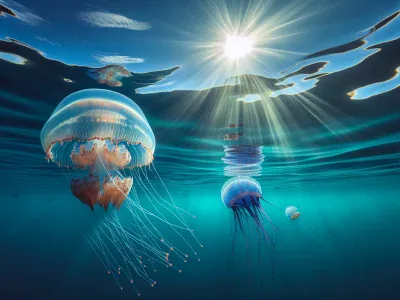
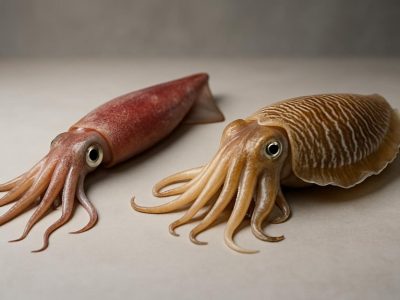
Picture this: you’re snorkeling in the ocean, surrounded by vibrant marine life, when two mysterious creatures glide into view. One jets through the water with sleek precision, while the other seems to dance, its tentacles swirling like ribbons in the current. Squid or octopus? These fascinating sea dwellers may look similar at first glance, but their differences are as striking as their shared allure.
Whether you’re a marine biology enthusiast or just curious about the ocean’s wonders, understanding what sets these cephalopods apart is like revealing a secret of the deep. From their unique anatomy to their clever survival tactics, squids and octopuses each bring their own flair to the underwater world. So, which one reigns supreme in adaptability, intelligence, or sheer intrigue? Immerse as we unravel the mysteries and marvels of these captivating creatures.
Anatomy And Physical Differences
Squids and octopuses share some similarities in their anatomy but differ significantly in structure and form. These distinctions reflect their unique adaptations to marine life.
Body Structure
Squids have a streamlined, torpedo-shaped body with a stiff internal structure called a pen, which helps maintain their shape. Octopuses lack this rigid support, featuring a soft, sack-like body that’s highly flexible. This enables octopuses to squeeze through narrow crevices to escape predators or hunt for prey. Squids, being faster swimmers, rely on their shape for speed and agility in open water.
Tentacles And Arms
Squids possess eight arms and two elongated tentacles equipped with suckers and often hooks for capturing prey. Octopuses, by contrast, have only eight arms, which are more uniform in length. These arms are lined with suction cups that provide a strong grip, aiding in movement, feeding, and manipulating objects. For example, octopuses use their arms dexterously to open jars or unscrew lids, showing their intelligence and adaptability.
Size Variations
Squid species vary widely in size, ranging from the small, 2-inch pygmy squid to the colossal squid, which can exceed 40 feet in length. Octopuses also vary, with the common octopus spanning around 12-36 inches, while the giant Pacific octopus can reach up to 16 feet across its arms. The considerable size range in both creatures highlights the diversity within each group.
Habitat And Distribution
Squid and octopus thrive in diverse marine environments, each adapted to unique ecosystems that support their survival strategies and lifestyles.
Preferred Environments
Squid inhabit open ocean zones, often in pelagic waters. Their streamlined bodies and propulsion mechanisms suit life in constant motion. Deep-sea species, like the giant squid, prefer depths beyond 1,000 meters, where sunlight doesn’t reach. In contrast, octopuses favor coastal regions, reefs, and seafloor habitats. Their soft bodies allow them to hide in crevices and under rocks, making them masters of camouflage and ambush hunting. Some species, like the mimic octopus, exploit their environment to imitate predators or other animals for survival.
Geographic Locations
Squid species distribute across all oceans, from the Arctic to Antarctic waters. Temperatures, food supply, and depth availability play significant roles in determining their presence. For example, the Humboldt squid populates the Pacific coast of the Americas, while the European squid thrives in the Mediterranean and Northeast Atlantic. Octopuses, too, are globally available but lean toward warmer, shallow waters. The common octopus is frequently seen in the Mediterranean and Eastern Atlantic, while the giant Pacific octopus dominates the chilly northern Pacific coasts. Both species exhibit adaptive traits allowing them to exploit niches in their respective marine ecosystems.
Behavior And Intelligence
Squids and octopuses are renowned for their exceptional behavior and cognitive abilities, making them some of the most intelligent marine animals. Their interactions with their environments showcase evolutionary advancements unique among cephalopods.
Hunting Techniques
Both squids and octopuses employ distinct hunting styles. Squids are active predators, using their speed and streamlined bodies to chase prey in open waters. They rely on their elongated tentacles equipped with sharp hooks and suction cups to grasp fish or crustaceans efficiently. For instance, the Humboldt squid hunts in groups, or shoals, synchronizing movements to trap schools of fish, leveraging collaboration to maximize success.
Octopuses, but, adopt stealth and ingenuity. They ambush prey by blending into their surroundings with chromatophores, specialized pigment cells. Once close, they use their flexible arms to envelop and subdue their targets. The common octopus can pry open hard-shelled prey like crustaceans, using its beak to break through. You might witness an octopus ‘walking’ across the seafloor using two arms while holding its catch—a behavior highlighting its adaptability.
Problem-Solving Skills
Octopuses exhibit advanced problem-solving abilities that surpass most other marine species. They demonstrate tool use, as seen in the veined octopus, which collects coconut shells to create protective shelters. In laboratory settings, octopuses solve puzzles, open jars, and navigate mazes, showcasing memory and learning capabilities. These feats underline their neural complexity, with 500 million neurons distributed throughout their arms and brain.
Squids display group-based cognitive attributes. For example, certain squid species use intricate light patterns via bioluminescence for communication within shoals, signaling warnings or coordinating movements. While individual problem-solving isn’t as well-documented in squids, their ability to hunt collaboratively suggests social intelligence.
Squids and octopuses’ behaviors, whether in tracking prey or solving challenges, highlight their adaptability and resourcefulness in diverse marine ecosystems.
Reproduction And Lifespan
Squids and octopuses display fascinating reproductive behaviors and stark differences in life expectancy. By understanding these cephalopods’ life cycles, you gain insight into their survival strategies and evolutionary adaptations.
Mating Rituals
Squid and octopus mating involves unique, species-specific rituals. Male squids, for instance, transfer spermatophores (packets of sperm) to females using specialized tentacles or hectocotylus arms. Some squid species engage in competitive group spawning, where multiple males try to fertilize a single female’s eggs. This process often occurs in the open water, with females laying thousands of eggs in gelatinous strings.
Octopuses follow a more solitary approach. Males use their modified arm, the hectocotylus, to insert spermatophores directly into the female’s mantle cavity. Certain species, like the blanket octopus, exhibit dramatic sexual dimorphism; males are much smaller and often die shortly after transferring sperm. Females, in turn, guard their eggs for weeks or months, displaying extraordinary maternal dedication.
In both species, reproduction marks the beginning of the end for adults, as most die shortly after completing this process.
Life Expectancy Comparison
Squids and octopuses have comparatively short lifespans, though variations exist between species. Most squid live for 1–3 years, with larger types, like the giant squid, surviving up to 5 years. Their fast maturation and short existence emphasize rapid reproduction.
Octopuses also have brief lifespans, typically ranging from 1 to 2 years. Some, such as the giant Pacific octopus, can live up to 5 years under optimal conditions. Interestingly, an octopus’s life often ends shortly after reproduction, as females starve while protecting their eggs and males degenerate post-mating.
These limited lifespans underscore the evolutionary trade-offs focused on growth, reproduction, and survival in marine environments.
Dietary Preferences
Squids and octopuses show distinct patterns in their feeding behaviors, influenced by their anatomy and environment. Their diets align closely with their hunting methods and habitats.
Feeding Habits
Squids feed in open waters, relying on their speed and precision to capture prey. Using their two elongated tentacles, they strike swiftly, often targeting fish and smaller cephalopods. Squids hunt in groups, showcasing cooperative strategies that enhance their success in catching mobile prey.
Octopuses prefer solitary hunting, ambushing prey from concealment. They crawl along the seafloor, using their flexibility to access hard-to-reach areas. Powerful beaks and venomous saliva enable them to tackle tougher prey like crabs and mollusks. If you’re observing an octopus, its calculated movements highlight its strategic approach to securing food.
Prey Types
Squids primarily consume fish, shrimp, and even other squids. For example, species like the Humboldt squid display opportunistic feeding, sometimes attacking creatures larger than themselves. Their rapid digestion supports their high-energy lifestyle.
Octopuses favor crustaceans, bivalves, and occasionally smaller fish. The common octopus uses its dexterous arms to pry open shells, revealing a preference for shellfish in its diet. In rare cases, octopuses exhibit cannibalistic behavior, which underscores their adaptability under resource-limited conditions.
Both cephalopods demonstrate diet versatility, enabling them to thrive across diverse marine ecosystems. Their feeding habits reflect their remarkable intelligence and ecological roles.
Interaction With Humans
Squids and octopuses fascinate and captivate people worldwide. Their interactions with humans range from ecological impacts to cultural and culinary importance.
Role In Ecosystems
Squids and octopuses play essential roles in the marine food web. Squids serve as prey for larger marine predators, like sperm whales and sharks, supporting species balance. Octopuses control populations of crustaceans and mollusks, regulating marine biodiversity. Their adaptability in hunting and survival demonstrates their significance in ocean ecosystems.
Human fishing activities affect these cephalopods. Overfishing of squids, a highly demanded seafood, disrupts predator-prey dynamics, potentially impacting marine environments. Similarly, octopus harvesting can deplete local populations, altering their ecological roles. Sustainable fishing practices, such as catch quotas and habitat preservation, are crucial for maintaining this balance.
Cultural And Culinary Significance
Squids and octopuses hold unique places in cuisines and cultures globally. In Mediterranean countries, grilled octopus is a culinary staple, while Asian cuisines often feature squid in stir-fries and soups. Calamari, derived from squid, is a popular dish in Western cuisine. These cephalopods’ tender texture and distinct flavor make them a gastronomic delight.
Culturally, octopuses symbolize intelligence and mystery in various myths, such as the Kraken in Scandinavian folklore. Squids, particularly the giant and colossal species, appear in literature and media as sea monsters, reflecting human fascination with the unknown. Artists and storytellers draw inspiration from their intricate forms and enigmatic behaviors.
Demand for squid and octopus, often driven by commercial fishing, raises sustainability concerns. Organizations like the Marine Stewardship Council promote certified sustainable seafood to address overexploitation. While culinary interest grows, balancing consumption with conservation efforts remains vital.
Conclusion
Exploring the world of squids and octopuses reveals just how extraordinary these cephalopods truly are. Their unique adaptations, intelligence, and ecological roles make them vital to marine ecosystems and endlessly fascinating to study. Whether you’re captivated by the speed of squids or the ingenuity of octopuses, these creatures offer a glimpse into the wonders of ocean life. Understanding their behaviors and habitats not only deepens your appreciation but also highlights the importance of sustainable efforts to protect these remarkable species. There’s always more to discover about these underwater marvels, making them a continuous source of intrigue and inspiration.
To provide the best experiences, we use technologies like cookies to store and/or access device information. Consenting to these technologies will allow us to process data such as browsing behaviour or unique IDs on this site. Not consenting or withdrawing consent, may adversely affect certain features and functions.
Functional
Always active
The technical storage or access is strictly necessary for the legitimate purpose of enabling the use of a specific service explicitly requested by the subscriber or user, or for the sole purpose of carrying out the transmission of a communication over an electronic communications network.
Preferences
The technical storage or access is necessary for the legitimate purpose of storing preferences that are not requested by the subscriber or user.
Statistics
The technical storage or access that is used exclusively for statistical purposes.The technical storage or access that is used exclusively for anonymous statistical purposes. Without a subpoena, voluntary compliance on the part of your Internet Service Provider, or additional records from a third party, information stored or retrieved for this purpose alone cannot usually be used to identify you.
Marketing
The technical storage or access is required to create user profiles to send advertising, or to track the user on a website or across several websites for similar marketing purposes.