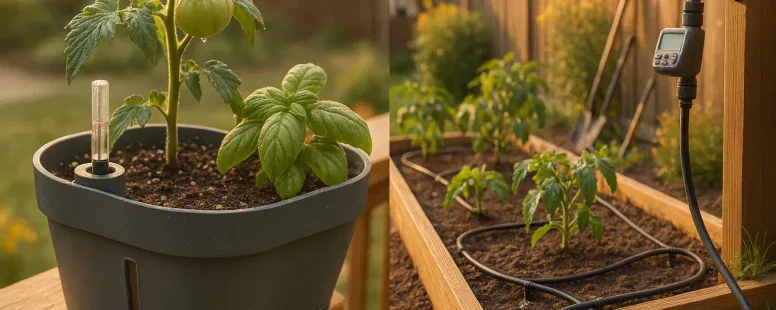
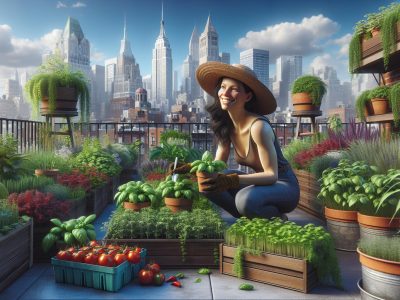
Self-watering pots and drip irrigation both save water and time, but they solve different problems. Picture a balcony of thirsty tomatoes and a backyard bed that dries out unevenly after a long weekend, one system keeps individual containers consistently moist, the other delivers measured water across rows and gardens. You’ll learn how each system moves water, which plants they suit, real-world trade-offs, and practical steps so you can pick or combine them with confidence. Expect clear comparisons, honest pitfalls, and tips you can try this season.
How Self-Watering Pots Work
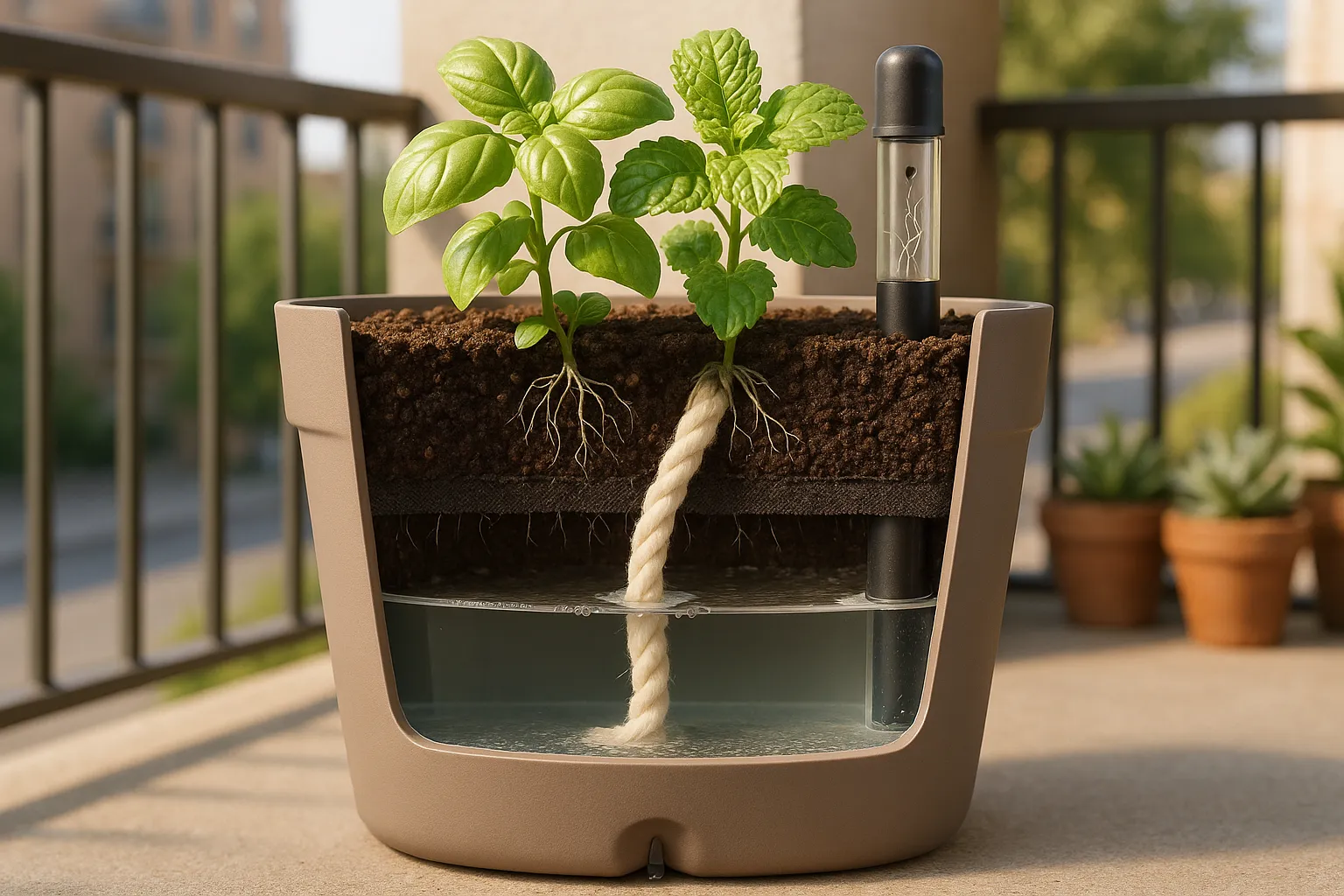
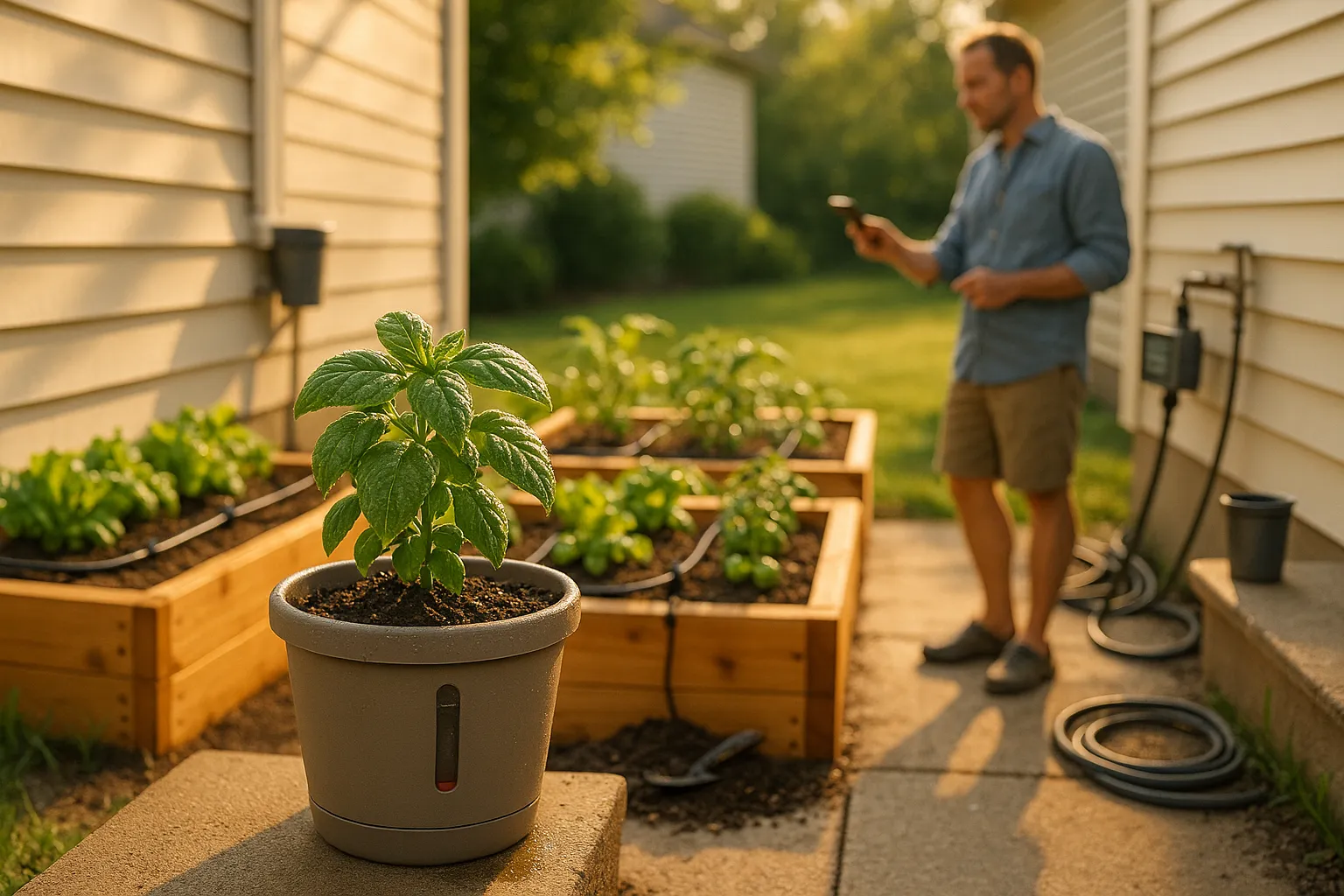
Fact: Self-watering pots deliver water from a reservoir to the root zone via capillary action and wicking. In plain terms, the pot separates a water reservoir from the soil with a barrier, then uses a wicking column, fabric, or perforated tube to let water move upward as the soil dries. Many designs include an overflow hole to prevent root rot and a fill tube for easy refills.
Mechanics and semantic entities: A typical self-watering pot contains three named parts: reservoir (holds water), wicking medium (cloth, rope, or soil column), and root zone (growing medium). Brands like Gardener’s Supply and Lechuza popularized the modern double-pot design, and small DIY versions use a plastic bottle as the reservoir.
You should know how soil and roots interact: when the upper soil dries, capillary forces draw water from the reservoir into the root zone. That keeps moisture near roots without saturating the crown. The dependency between reservoir level and root uptake is direct: low reservoir leads to lower capillary supply: high reservoir increases humidity in the root area.
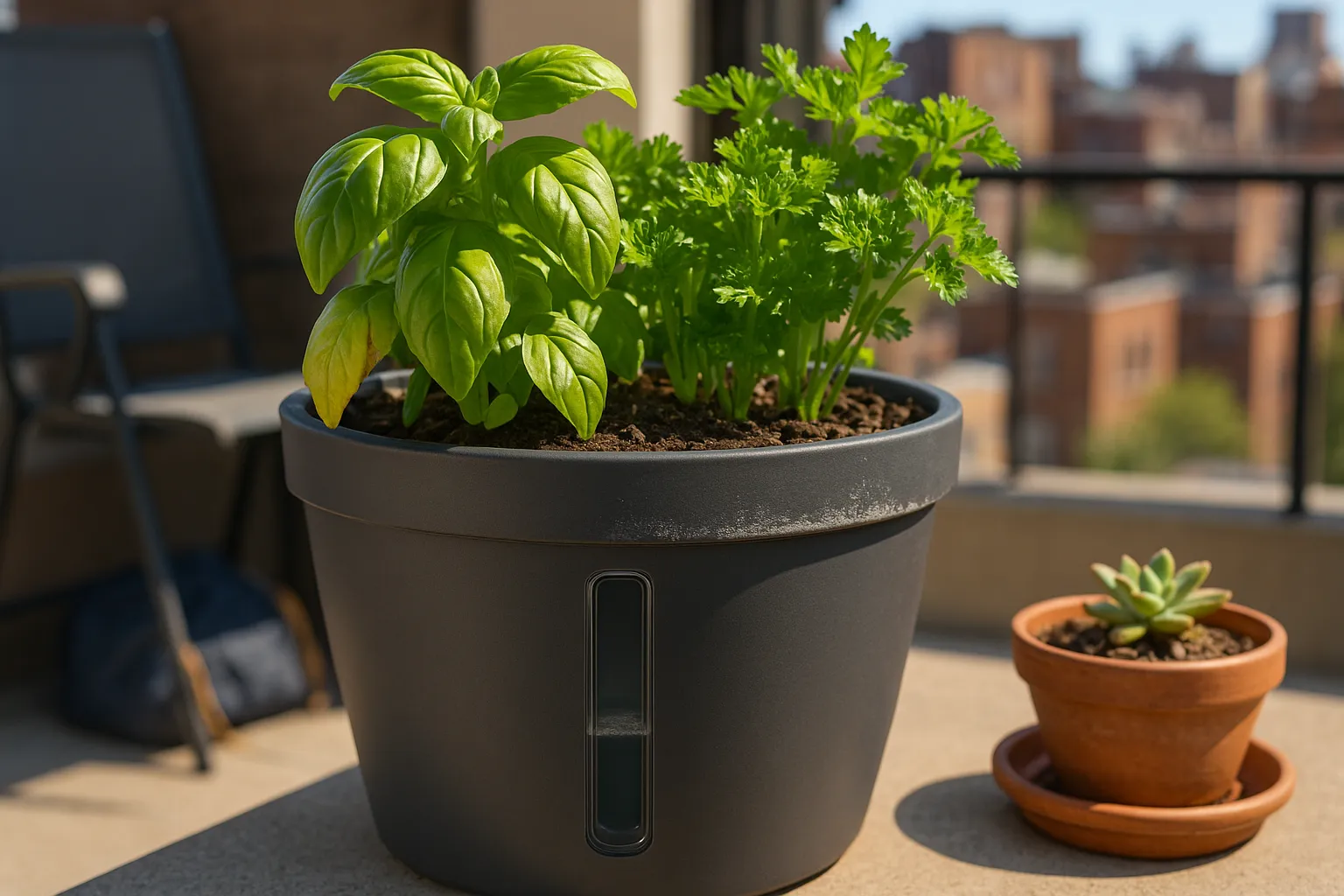
Common use cases: You’ll see self-watering pots excel in balconies, patios, and indoor herb gardens where container volume limits available soil. They are especially good for plants that prefer consistent moisture, basil, mint, and many leafy greens. But they can suit tomatoes and peppers too when you monitor nutrient buildup.
Limitations you must watch: reservoirs can concentrate salts because frequent surface watering leaches fewer minerals. Also, containers warm faster in sun, which can accelerate evaporation from the soil surface even if the reservoir stays full. Those are easy to manage with periodic flushes and shading, though.
How Drip Irrigation Works
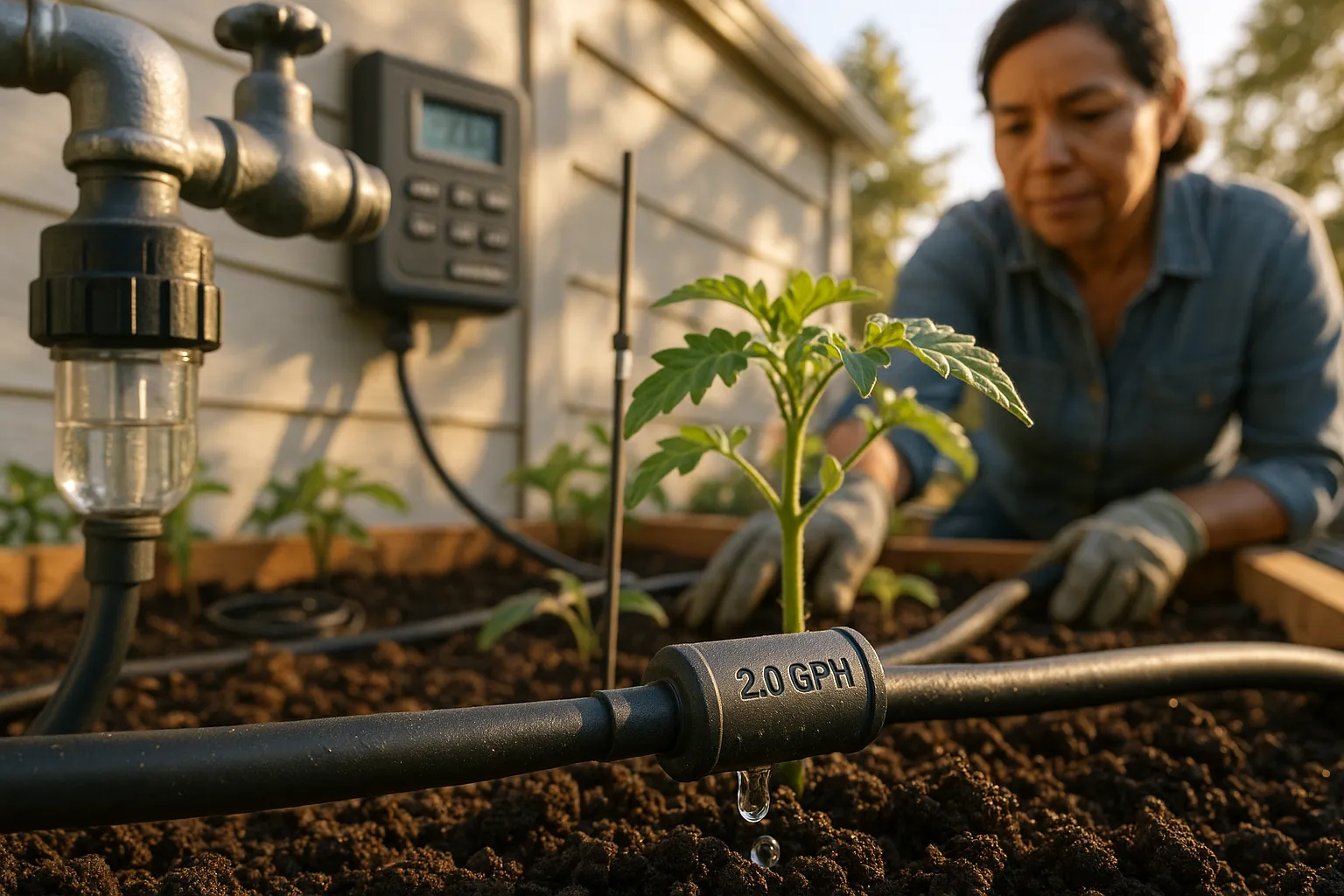
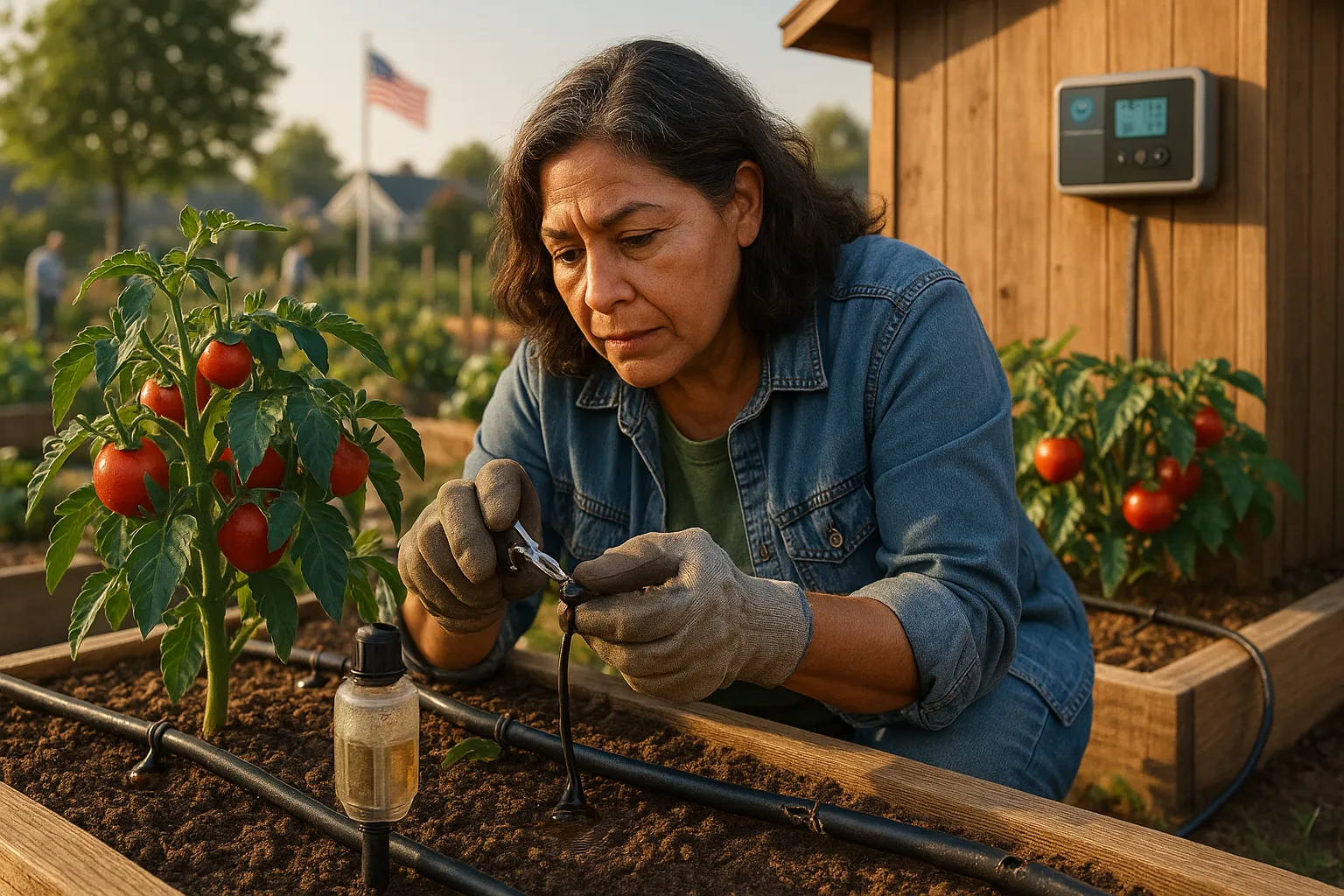
Fact: Drip irrigation delivers water through tubing and emitters directly to the soil near every plant at a controlled rate. The system uses a pressurized supply (hose or municipal line), main tubing, lateral lines, and emitters (drippers, micro-sprayers) to meter water where roots can use it.
Mechanics and semantic entities: Key components include a pressure regulator, filter, mainline tubing (usually 1/2″ or 3/4″), drip tape or microtubing, and emitters (gph rated). Manufacturers such as Rain Bird, Netafim, and DripWorks specify emitter flow rates in gallons per hour (gph). Flow control and filtration are critical: without a filter, emitters clog from particulates or mineral buildup.
You should note system control: a timer or smart controller lets you schedule frequency and duration: sensors (soil moisture probes) can refine irrigation. The dependency grammar here is simple: controller -> valve -> tubing -> emitter -> soil moisture outcome. If any link fails, the system under- or over-waters.
Common use cases: Drip is ideal for row crops, raised beds, orchards, and landscapes where you want uniform distribution and scalability. It’s the standard for professional growers because it reduces evaporation and weed watering by targeting root zones.
Limitations you must watch: installation requires planning, line layout, pressure testing, and seasonal blowouts in freeze climates. Emitters need cleaning: rodents or garden tools can damage tubing. But with basic maintenance, a drip system gives long-term consistency and large water savings.
Pros And Cons: Self-Watering Pots
Fact: Self-watering pots reduce watering frequency and protect plants from drought stress. Pros: they keep soil moisture steady, cut watering time, and are low-tech, no electricity, no pressure, no timers. They let you travel for days without plants crashing.
Practical advantages: For container gardeners you get predictable moisture and fewer wilted mornings. They’re portable: you can move plants to shade easily. New gardeners find them forgiving.
Drawbacks and warnings: They can trap salts, so you must flush the medium occasionally. They tend to over-supply moisture to plants that prefer dry feet, like many succulents, so they’re not universal. Reservoirs reduce oxygen near roots if they’re overfilled and left without drainage: that invites root rot. Also some cheap models have narrow reservoirs that dry faster than advertised.
Real-life note: A friend switched to self-watering pots for balcony herbs and cut watering from daily to weekly during summer. But she had to rinse pots monthly because the leaves yellowed, nutrient salts had built up. Lesson learned: convenience doesn’t remove the need for monitoring.
Pros And Cons: Drip Irrigation
Fact: Drip irrigation offers precise, scalable water delivery and reduces water waste. Pros: high water efficiency, easy automation, and suitability for large or irregular gardens. Drip systems target roots, lowering evaporation and disease risk from wet foliage.
Practical advantages: With a timer or smart controller (for example, Rachio or Rain Bird controllers) you can water at night, reduce runoff, and keep plants happier. Commercial growers get predictable yields because each plant receives measured volume.
Drawbacks and warnings: Drip systems cost more upfront and need periodic maintenance. Emitters clog, tubing breaks, and rodents chew lines. You will need a filter in hard-water areas. Another downside: initial design mistakes (wrong emitter spacing or flow rate) produce uneven moisture and frustrate gardeners.
Real-life note: A community garden installed a drip mainline in raised beds and dropped water use by roughly 30% compared to overhead sprinklers, while improving tomato yields. They reported frequent early-season clogs until they added a 100-mesh filter.
Comparing Performance And Suitability
Fact: Choose based on plant type, space, and how much automation you want. Self-watering pots fit container and indoor growers: drip fits beds, rows, and scale.
When To Choose Self-Watering Pots
If you grow in containers, have limited space, or travel often, pick self-watering pots. They reduce daily checks and keep herbs, lettuces, and many ornamentals steady. Use them when you need portability or have irregular access to outdoor water lines. They work best for single-plant management.
When To Choose Drip Irrigation
If you manage raised beds, vegetable rows, fruit trees, or a larger landscape, pick drip irrigation. It suits multi-plant arrays and automated schedules. Choose drip when you want per-plant control, water savings at scale, or integration with timers and sensors.
Water Efficiency, Plant Health, And Yield
Fact: Drip systems typically save more water than traditional watering and often outperform self-watering pots at scale. The US Environmental Protection Agency reports that drip systems can reduce outdoor water use substantially versus sprinklers. For single pots, self-watering pots reduce water loss and keep plant stress low. In yield terms, professional growers often prefer drip for higher fruit set and uniform crop size: hobbyists may see equivalent quality with careful container use.
Trade-offs you must accept: for best yields you need nutrient management. Drip systems require fertilizer plans (fertigation) and filters: self-watering pots need periodic flushes to avoid salt buildup. Both systems can improve plant health when correctly managed.
Installation, Maintenance, And Troubleshooting
Fact: Proper setup and routine maintenance determine long-term success. Poor installation causes most problems.
Setup Steps For Self-Watering Pots
Pick a pot with a true reservoir and overflow.
Use a quality potting mix with perlite for aeration.
Place the wicking element so roots can access moisture.
Fill the reservoir and check the water-level indicator if present.
Monitor the first weeks to ensure roots grow downward toward the reservoir.
Practical tip: If you convert standard pots, insert a plastic bottle reservoir and a cotton wick: it works surprisingly well.
Setup Steps For Drip Irrigation
Map your garden and calculate flow requirements: add emitter gph values.
Choose a pressure regulator and a filter (especially for municipal or well water).
Lay mainline, punch holes for lateral lines, and install emitters at the root zone.
Test the system at run pressure and watch for leaks or low-flow outlets.
Add a timer or controller and schedule short, frequent runs to reach desired soil moisture.
Practical tip: Start small. Install drip on one bed, test emitter layout for two weeks, then expand.
Common Maintenance Tasks And Problems To Watch For
Fact: Regular checks prevent failures. Clean filters monthly: inspect tubing quarterly: flush lines seasonally. Look for wet spots that show leaks and dry pockets that show blockages. Replace UV-brittle tubing every few years, and winterize systems in freeze zones by draining lines.
Troubleshooting: If emitters clog, remove and soak them in vinegar or replace. If pots show yellow leaves, flush reservoirs and test for salt buildup. If plants wilt even though full reservoirs, check root health, overly wet crowns can mask root rot.
Cost, Scalability, And Environmental Considerations
Fact: Costs and environmental impact vary: self-watering pots have lower upfront cost per unit: drip has higher upfront cost but better scalability and long-term water savings.
Upfront And Long-Term Cost Comparison
Self-watering pot costs range from $10 for DIY setups to $60+ for high-end commercial pots. Drip systems cost more initially, basic kits start around $50–$150, while whole-yard systems can run hundreds to thousands depending on size. Long-term, drip saves municipal water and can reduce water bills if used correctly. Factor in replacement emitters, filters, and occasional tubing.
Scalability And Space Constraints
Self-watering pots scale linearly: each pot is an independent unit. That becomes cumbersome if you need dozens. Drip systems scale well across many plants from one water source and controller, making them better for large gardens or community plots.
Environmental Impact And Water Savings
Fact: Both systems conserve water relative to overhead irrigation. Drip irrigation reduces evaporation and runoff across beds: self-watering pots reduce overwatering in containers. If you aim to minimize your garden’s footprint on municipal supply, install drip to cover larger areas and use self-watering pots for containers. Also consider rainwater capture for either system to further cut environmental impact.
Deciding Which System Is Right For You
Fact: Match system to garden size, plant needs, and how much time you want to spend on maintenance.
Checklist For Garden Size, Plant Types, And Lifestyle
Small balcony or indoor herbs: self-watering pots.
Multiple raised beds or fruit trees: drip irrigation.
Desire for automation: drip with a timer is better.
Sensitive plants that need dry periods: avoid self-watering pots for succulents.
Use this quick rule: if you manage fewer than 10 containers, pots are simpler. If you manage contiguous planting areas totaling more than 50 sq ft, drip gives better efficiency.
Hybrid Approaches And Practical Tips For Mixed Gardens
Fact: You can combine both systems effectively. Use drip for beds and permanent plantings, and use self-watering pots on patios and balconies. Hybrid setups let you tailor water delivery: attach a micro-tubing feed from a drip line to a container reservoir for semi-automated refill.
Practical tips: label lines and emitters, keep a spare parts kit (emitters, clamps, tape), and test new layouts for two weeks before committing. If you’re unsure, start with a starter drip kit for one bed and three self-watering pots, you’ll learn what each system demands.
Final nudge: pick a system that fits how you live and which plants you love, then commit to simple maintenance. Your garden will repay you with steadier growth and less worry.
Last Updated: March 3, 2026 at 11:10 am by Ellie B, Site owner & Publisher
To provide the best experiences, we use technologies like cookies to store and/or access device information. Consenting to these technologies will allow us to process data such as browsing behaviour or unique IDs on this site. Not consenting or withdrawing consent, may adversely affect certain features and functions.
Functional
Always active
The technical storage or access is strictly necessary for the legitimate purpose of enabling the use of a specific service explicitly requested by the subscriber or user, or for the sole purpose of carrying out the transmission of a communication over an electronic communications network.
Preferences
The technical storage or access is necessary for the legitimate purpose of storing preferences that are not requested by the subscriber or user.
Statistics
The technical storage or access that is used exclusively for statistical purposes.The technical storage or access that is used exclusively for anonymous statistical purposes. Without a subpoena, voluntary compliance on the part of your Internet Service Provider, or additional records from a third party, information stored or retrieved for this purpose alone cannot usually be used to identify you.
Marketing
The technical storage or access is required to create user profiles to send advertising, or to track the user on a website or across several websites for similar marketing purposes.