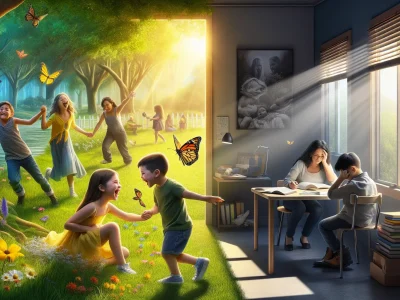
Imagine standing at the crossroads of who you are and who you could become. Are your talents, quirks, and choices etched into your DNA, or are they sculpted by the hands of experience and environment? The timeless debate of nurture versus nature challenges you to consider whether your life’s path is dictated by biology or shaped by the world around you.
This age-old question isn’t just a philosophical puzzle—it’s a window into understanding human potential. From the way you think to the passions that ignite your soul, the interplay between inherited traits and life’s influences weaves a complex world. What if the answer isn’t one or the other, but a fascinating blend of both? As you investigate deeper, you’ll uncover how this dynamic shapes not only individuals but the very fabric of society.
Understanding Nurture Versus Nature
The nurture versus nature debate examines how much of your behavior, personality, and abilities are shaped by genetics or by the environment around you. Genetics (nature) refers to inherited traits like eye color and height, while your upbringing, culture, and experiences (nurture) influence decisions, values, and habits. This discussion suggests that both forces may work in tandem rather than opposition.
Nature’s Role: Your biological blueprint, encoded in DNA, determines physical characteristics and predispositions to certain behaviors or talents. For example, musical aptitude often runs in families because of genetic inheritance. But, natural predispositions can remain latent without environmental triggers or opportunities for practice.
Nurture’s Contribution: Environmental factors like early childhood education, social interactions, and socioeconomic conditions can shape your potential. A child growing up in a supportive home is more likely to develop emotionally stable relationships later. Studies, such as those from the American Psychological Association, emphasize how adverse environments, like neglect, disrupt psychological and physical growth.
Scientific findings challenge you to view this debate as intersecting rather than conflicting. Behavioral genetic studies estimate the heritability of traits like intelligence to be between 50% and 80%, placing equal importance on upbringing. Twins studies provide compelling evidence; identical twins separated at birth often show similarities due to genes, but differences emerge based on upbringing.
The nurture versus nature conflict also raises profound ethical questions. For instance, if intelligence depends on both, how do you design educational systems? Should governments invest more in reducing environmental disadvantages to level the playing field?
By dissecting how these forces shape your life, you begin questioning the weight of each. Instead of opposing arguments, advancing research pushes toward integration—acknowledging that your biology sets limits, and nurture determines how far you go within those limits. This balanced perspective deepens our understanding of individuality and shared humanity.
The Role Of Genetics In Human Development
Genetics significantly shapes human development by influencing physical traits, behavioral tendencies, and predispositions to mental or physical health conditions. It offers a foundation upon which environmental factors act, creating a dynamic interplay that defines individuality.
Key Findings From Genetic Studies
Genetic research reveals that heredity contributes to various human traits with measurable accuracy. Twin studies provide insightful evidence, comparing monozygotic (identical) twins and dizygotic (fraternal) twins raised in both shared and separate environments. For example, studies on intelligence report heritability estimates between 50% and 80%, according to the American Psychological Association. This indicates substantial genetic input, though external influences remain critical.
Epigenetic studies add complexity by showing how environmental factors can amplify, suppress, or modify gene expressions. If you’re exposed to high stress in early childhood, it might activate genetic predispositions for anxiety or depression. Conversely, supportive environments might mitigate these risks, even if genetic tendencies exist.
The Human Genome Project demonstrates how genetic mutations or variations are linked to developmental disorders. Conditions like cystic fibrosis or sickle cell anemia are directly attributed to inherited genetics, highlighting the deterministic aspect of some genes.
Nature’s Influence On Personality And Intelligence
Personality traits like introversion, extraversion, and emotional stability are partially rooted in genetic frameworks. The Big Five personality model correlates heritability rates of traits like openness or conscientiousness, with estimates reaching up to 50%. This suggests genetics leave an imprint on how people engage with the world.
Intelligence connects even more tangibly to genetic makeup. For instance, polygenic scores—used in genomic prediction—allow researchers to identify genetic markers associated with cognitive abilities. But, access to educational resources and socio-economic status heavily influence the practical realization of these potentials.
By observing adoptive children studies, you can see environmental conditions modifying inherited tendencies. If an individual is naturally intelligent but raised in neglectful settings, their performance might starkly contrast their genetic blueprint, reinforcing the importance of nurture in fostering innate abilities.
Environmental Factors Shaping Individuals
Environmental influences shape behaviors, values, and ambitions. These external conditions interact with genetic predispositions to determine individual outcomes.
The Impact Of Parenting And Upbringing
Parenting styles and home environments are pivotal in personal development. Authoritative parenting, characterized by warmth and boundaries, often correlates with higher emotional intelligence and academic success. In contrast, neglectful environments may impede cognitive and emotional growth, shown by studies on adverse childhood experiences (ACEs).
The quality of caregiving influences attachment styles, which can either foster security or create lifelong challenges in trust and relationships. For example, children raised in supportive homes often exhibit better problem-solving skills. Parental expectations also affect self-esteem and motivation levels, further underlining their significance.
Socioeconomic factors, such as parental education and income, contribute to resource availability and enrichment opportunities. Access to quality education and extracurricular activities enhances learning, while financial instability can exacerbate stress and limit prospects.
Cultural And Societal Contributions
Culture shapes traditions, goals, and perspectives on life. Collectivist societies, like Japan, prioritize community harmony, encouraging collaborative traits. Conversely, individualistic cultures, such as the United States, often emphasize personal achievement, influencing independence and competitiveness.
Social norms dictate acceptable behaviors, creating frameworks for moral functions. Examples include gender roles and expectations, which influence professional aspirations and interpersonal dynamics. Individuals internalize societal values through socialization processes, impacting identity and decision-making.
Economic and political systems also influence societal opportunities. For instance, countries with higher levels of inequality tend to experience limited social mobility, restricting individuals from fully reaching their potential. Media narratives can reinforce stereotypes; but, diverse representation may challenge biases and inspire new aspirations.
The Interaction Between Nature And Nurture
The dynamics between nature and nurture revolve around their mutual influence on human development. Instead of existing in isolation, these factors collaborate to shape behaviors, talents, and growth.
Examples Of Nature And Nurture Working Together
Genetic predispositions often need environmental factors to manifest. For instance, a child may inherit a musical talent but excel only when exposed to music lessons or a supportive artistic environment. Similarly, studies on obesity reveal that genetic markers influence weight gain, yet lifestyle, diet, and social habits strongly determine health outcomes.
Language acquisition demonstrates this synergy. Biologically, humans are equipped with structures like Broca’s area for speech production. But, without interaction in a linguistic environment, linguistic abilities can’t develop fully. Instances of feral children, deprived of social exposure, highlight how nurture shapes inherent potentials.
Case Studies Highlighting Their Interplay
The Minnesota Twin Study illustrates nature and nurture’s interplay. Even though growing up apart, adopted twins display striking similarities in IQ and personality. But, differences emerge in values, preferences, and learned behaviors shaped by distinct experiences.
Another example lies in epigenetics. Research into stress responses shows that traumatic experiences in early childhood modify gene expression, influencing emotional regulation and mental health. Children raised in supportive settings often overcome genetic vulnerabilities.
Athletic performance also exemplifies the interaction. Sprinters like Usain Bolt possess genetic advantages such as fast-twitch muscle fibers. Their achievements, but, require rigorous training, discipline, and access to resources—highlighting how nature thrives when nurtured effectively.
Debates And Misconceptions About Nurture Versus Nature
The nurture versus nature debate raises intriguing discussions about the origins of human behavior and development. Misunderstandings and expert perspectives amplify the debate’s complexity, driving further exploration into how genetics and environment intertwine.
Common Misunderstandings
Confusion often arises from overstating the influence of either genetics or environment. Some believe traits like intelligence or personality are entirely inherited, ignoring environmental modifiers. For example, assuming a child born to academically successful parents automatically excels without considering educational access or emotional support leads to flawed conclusions.
Others simplify “nurture” to parenting alone, overlooking societal, cultural, and economic factors. Socioeconomic disparities, peer influences, and media exposure contribute significantly to behavioral outcomes. Without addressing such elements, attributing developmental challenges solely to poor parenting misrepresents reality.
Claims of a strict dichotomy also persist, implying nature and nurture function separately. In reality, they interact continuously. Epigenetics demonstrates how environmental factors, like stress or nutrition, impact gene expression. This makes the debate far more complex than “nature versus nurture.”
Expert Opinions On The Ongoing Debate
Experts highlight the importance of integrating multiple disciplines to understand human development. Developmental psychologists emphasize balanced perspectives, urging consideration of both genetic predispositions and environmental variables. For instance, Dr. Robert Plomin, a behavioral geneticist, underscores how heritability affects traits like cognitive ability while acknowledging contextual influences that shape outcomes.
Neuroscientists reveal that early-life interactions significantly shape brain architecture. Enrichment activities, language exposure, and caregiving quality activate neural pathways, demonstrating nurture’s role. Twin studies further confirm genetic similarities, yet differences in educational or emotional environments contribute to divergent life trajectories.
Sociologists argue that systemic inequities, like unequal access to healthcare and education, reinforce nurture’s role in perpetuating or overcoming genetic predispositions. Addressing such structural imbalances, they suggest, can maximize individual potential regardless of innate abilities.
Real-World Applications And Implications
The interplay between nature and nurture extends beyond academic debates, affecting real-world strategies in various domains. Understanding this balance helps refine approaches in education, healthcare, and beyond.
Education And Behavioral Interventions
Educational systems leverage insights from both genetics and environment to design effective learning strategies. For example, students with genetic predispositions for dyslexia benefit from tailored reading interventions, demonstrating how nurture can mitigate challenges rooted in nature. Adaptive learning technologies, which personalize content based on individual strengths and weaknesses, align with this principle by enhancing cognitive development.
Behavioral interventions address environmental influences, such as disruptive home settings, to improve educational outcomes. Initiatives like Positive Behavioral Interventions and Supports (PBIS) create supportive school environments that counteract negative external factors. These programs, grounded in behavioral psychology, promote emotional regulation and accountability. If you consider the impact of neuroscience, strategies like brain-based learning further bridge the gap between innate abilities and contextual learning needs.
Healthcare And Mental Health Strategies
In healthcare, personalized medicine exemplifies how genetic and environmental factors inform treatment plans. Genetic testing identifies predispositions to conditions like diabetes or cancer, allowing early interventions. But, lifestyle factors, such as diet and exercise, remain crucial in managing these risks. You see that a balanced approach, addressing both inherited and environmental aspects, enhances patient outcomes.
Mental health strategies incorporate the nurture-versus-nature dynamic by addressing both biological predispositions and life experiences. Cognitive Behavioral Therapy (CBT), for instance, targets thought patterns shaped by upbringing, while psychiatric medications address neurochemical imbalances linked to genetic factors. Post-traumatic stress disorder (PTSD) treatments often combine psychotherapy with epigenetic research findings. Studies on gene expression reveal how childhood trauma interacts with stress-response genes, guiding trauma-informed care practices.
This multifaceted understanding of nature and nurture informs real-world applications, improving interventions and empowering individuals in diverse fields.
Conclusion
The nature versus nurture debate reveals the intricate balance between genetic predispositions and environmental influences in shaping who you are. By embracing this interplay, you can better understand the factors that drive human potential and individuality.
This perspective not only deepens your appreciation for personal development but also highlights the importance of creating environments that nurture growth. Whether in education, healthcare, or daily life, recognizing the combined power of nature and nurture equips you to make informed decisions that empower yourself and others.
To provide the best experiences, we use technologies like cookies to store and/or access device information. Consenting to these technologies will allow us to process data such as browsing behaviour or unique IDs on this site. Not consenting or withdrawing consent, may adversely affect certain features and functions.
Functional
Always active
The technical storage or access is strictly necessary for the legitimate purpose of enabling the use of a specific service explicitly requested by the subscriber or user, or for the sole purpose of carrying out the transmission of a communication over an electronic communications network.
Preferences
The technical storage or access is necessary for the legitimate purpose of storing preferences that are not requested by the subscriber or user.
Statistics
The technical storage or access that is used exclusively for statistical purposes.The technical storage or access that is used exclusively for anonymous statistical purposes. Without a subpoena, voluntary compliance on the part of your Internet Service Provider, or additional records from a third party, information stored or retrieved for this purpose alone cannot usually be used to identify you.
Marketing
The technical storage or access is required to create user profiles to send advertising, or to track the user on a website or across several websites for similar marketing purposes.