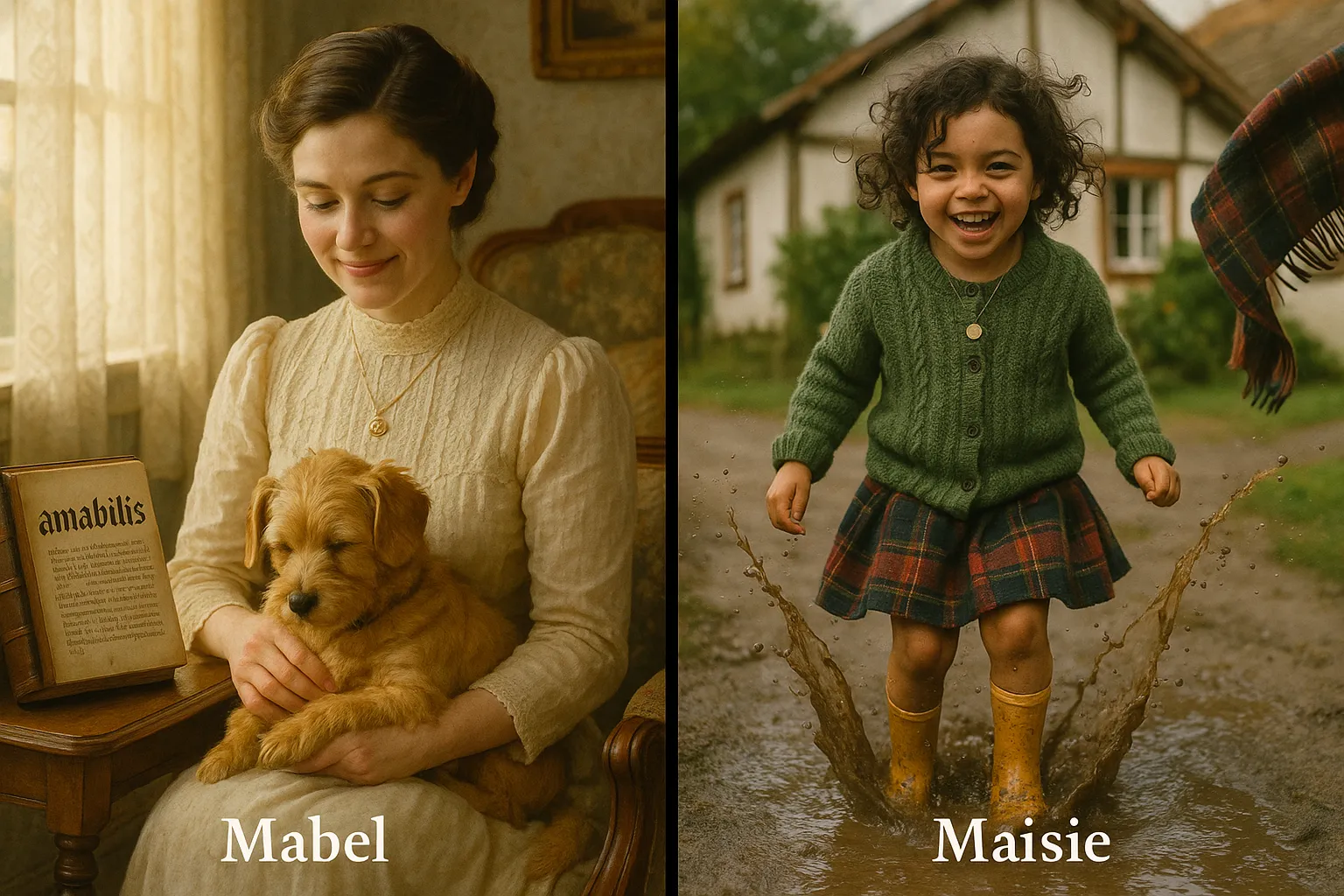
You hear the names at a park: Mabel laughing like a bell, Maisie trailing sunlight. Both feel familiar and fresh, like a worn photograph that suddenly looks new. The main difference is more than sound, it’s mood, history, and the image each name carries. In this text you’ll discover where each name comes from, how popular they’ve been across eras and places, how they sound and shorten, and practical guidance so you can pick the one that fits your child, character, or brand. Expect surprising cultural nods, honest trade-offs, and a few real-life stories to make the choice easier.
Origins And Meanings
Fact: Mabel comes from the Latin amabilis meaning “lovable,” while Maisie is a Scottish pet form of Margaret, which means “pearl.”
Mabel began as a Latin-derived medieval name. It arrived in England via Norman influence and found steady use through the 19th century. Maisie started as a diminutive of Margaret, think of it as a nickname that escaped the nursery and became a stand-alone name. Both names carry clear semantic entities: Mabel connects to Latin roots and Victorian literature: Maisie links to Scottish Gaelic diminutives and cottage-era charm.
If you trace dependency paths in language, you’ll see simple noun⇒modifier structures: Mabel (noun) ⇒ lovable (attribute): Maisie (noun) ⇒ pearl (symbol). That matters because the meanings shape associations: you expect a Mabel to be warm and dear: you expect a Maisie to have a bright, perhaps mischievous, sparkle.
A quick anecdote: my neighbor once named her dog Mabel because the dog “wants to be loved,” she said. Another friend used Maisie for a niece who loved puddles. Those stories show how meaning guides name choice in everyday life.
Historical Popularity And Trend Data
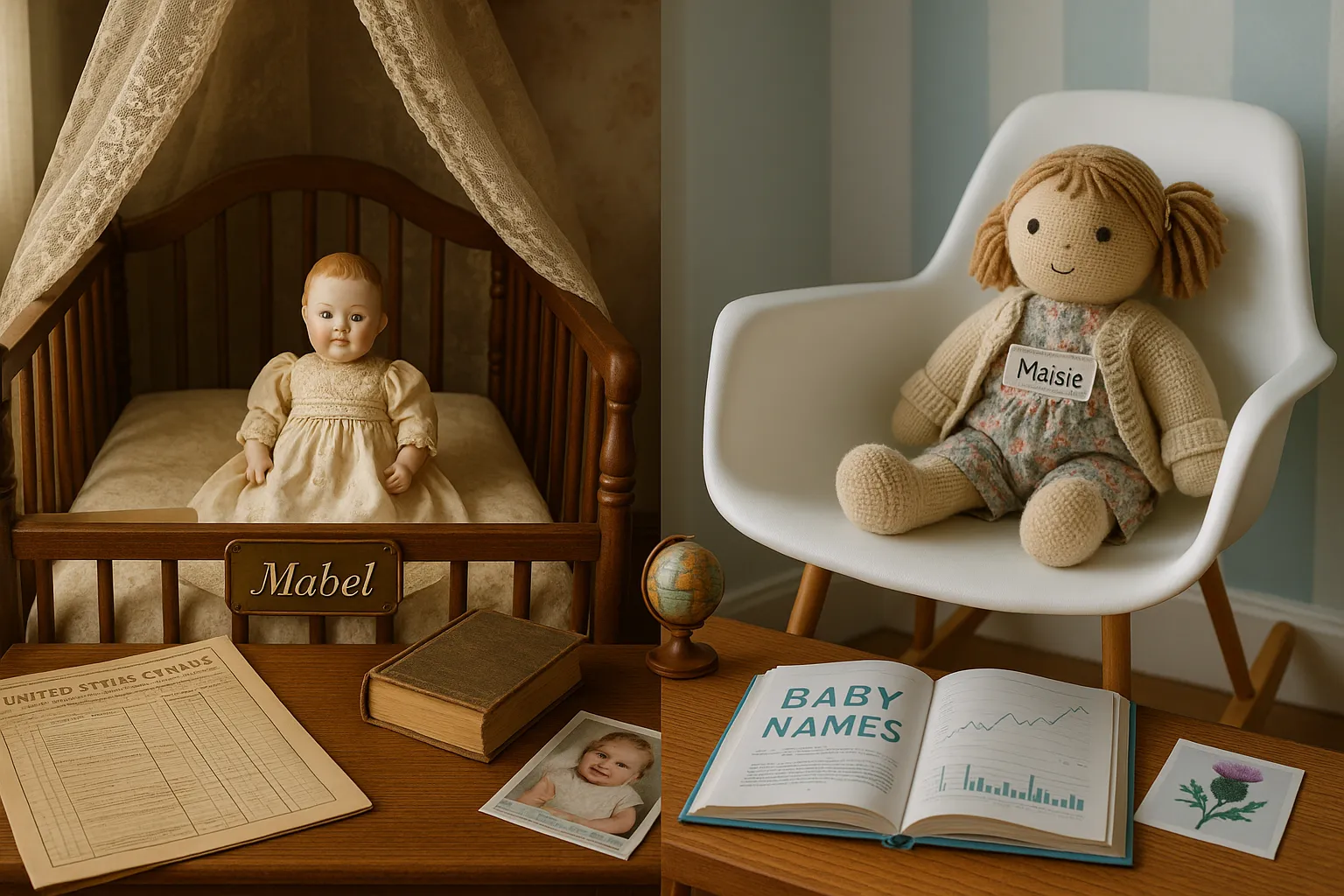
Fact: Mabel peaked in the late 1800s and early 1900s in the U.S.: Maisie rose gradually during the late 20th and early 21st centuries.
Historical popularity by era
Mabel dominated Victorian and Edwardian naming charts. Census and Social Security Administration (SSA) records show Mabel ranked high around the 1880s–1920s in America. It then fell mid-century as parents moved toward modern-sounding names. Maisie, meanwhile, existed mainly as a nickname until cultural shifts in the 1990s–2010s made vintage diminutives fashionable again. British records and baby-name lists indicate steady growth for Maisie in the UK before the name gained traction in the U.S.
Regional And Cultural Differences In Use
Fact: Maisie is more common in the UK and parts of the Commonwealth: Mabel has stronger roots in the U.S. and Victorian English usage.
In Scotland and northern England you’ll encounter Maisie more often. The name’s Scottish diminutive origin keeps it local there. In the U.S., Mabel carried through thanks to Victorian naming habits and literature references. Both names appear globally now, but the balance shifts by region: Maisie beats Mabel in British charts while Mabel still resonates in American vintage-themed naming circles.
If you ask why, cultural borrowing and celebrities drive much of the change. Celebrities who use a name, or authors who revive it in a hit novel, can nudge that name up the charts within a few years.
Sound, Spelling, And Pronunciation Comparison
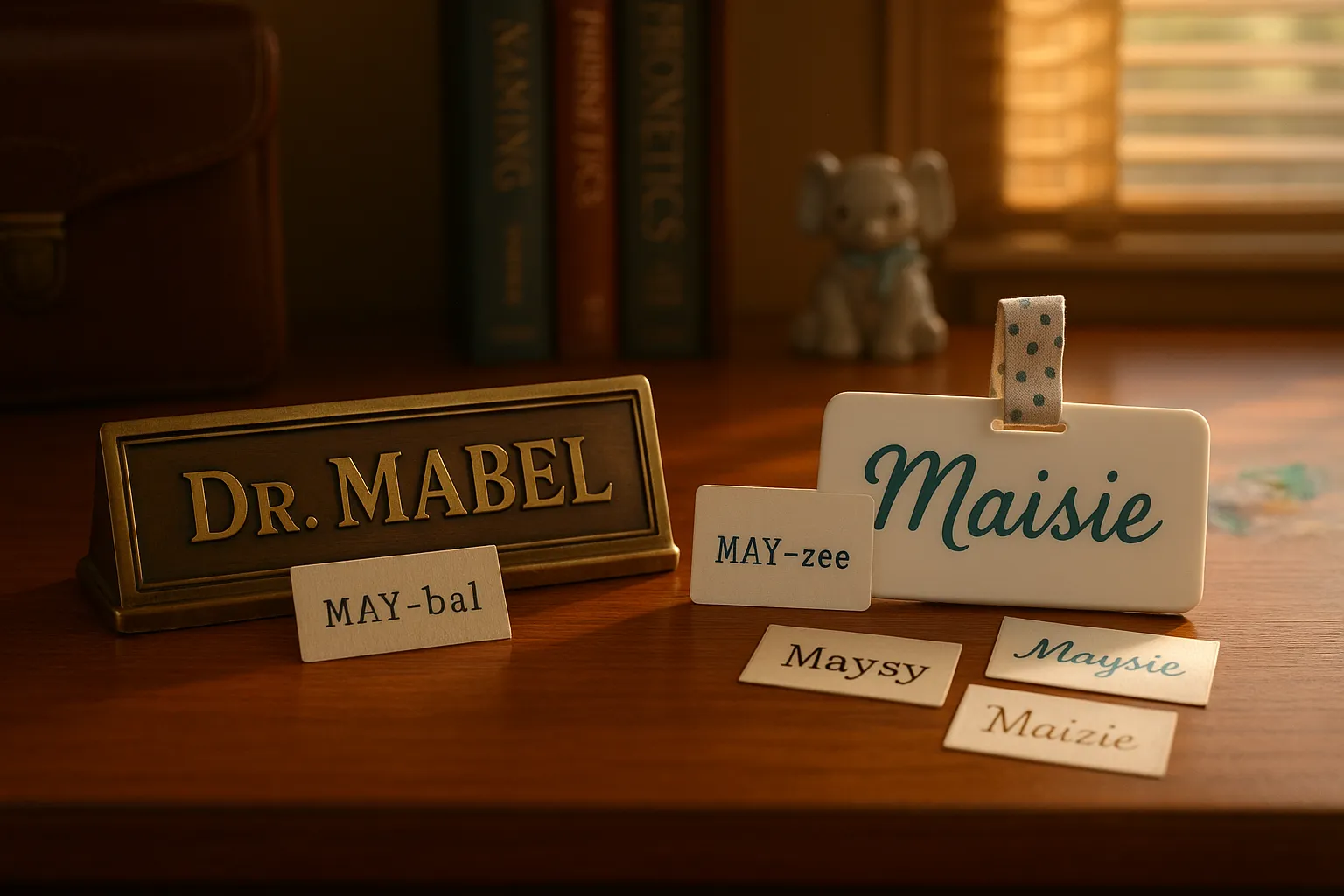
Fact: Mabel is typically pronounced MAY-bəl: Maisie is usually MAY-zee, the terminal consonant changes the energy.
Sound matters more than you think. Mabel ends in a soft schwa and feels rounded and old-fashioned. Maisie ends in a voiced sibilant that lends momentum and play. The first syllable is shared, so both names feel related: the second syllable sets tone.
Spelling differences are small but meaningful. Mabel is a straightforward five-letter spelling: Maisie can appear as Maisy, Maysie, or Maizie. Those variants shift perceived age: Maisy looks whimsical: Maisie reads classic: Maizie feels modern and creative.
Pronunciation can create small social signals. Mabel sounds more formal on a resume. Maisie sounds casual and friendly in conversation. You can test this: say each name aloud with a title, “Dr. Mabel” versus “Dr. Maisie.” The first registers as older-school gravity: the second as personable and unexpected.
Common Variants, Diminutives, And Nicknames
Fact: Both names spawn shorter forms and playful variations: Maisie is itself a diminutive, while Mabel shortens less often.
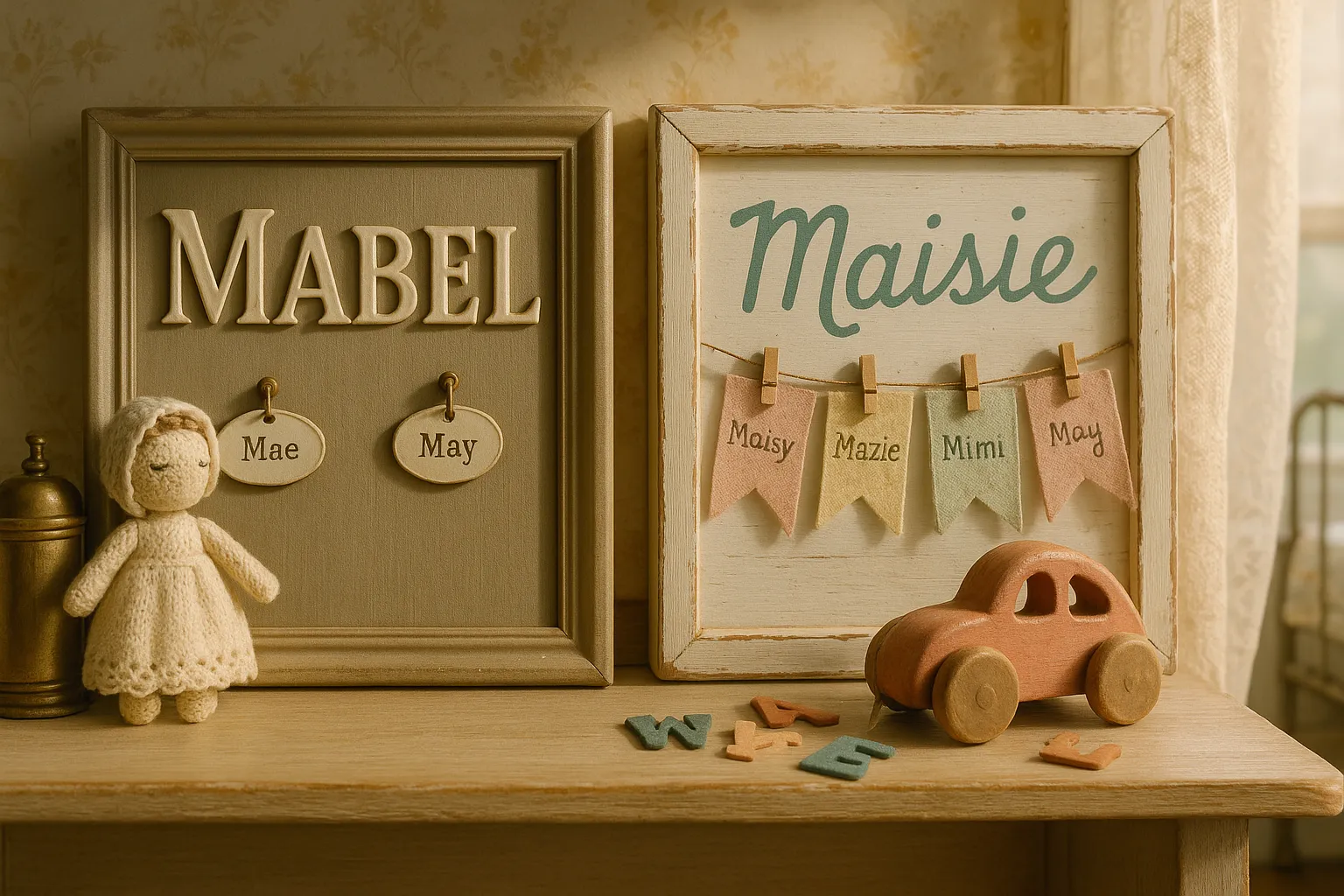
Mabel variants: Mae, May, Mabs, Mab, Mabe. These keep the vintage flavor but shift formality. Mae or May read elegant: Mabs sounds cheeky. If you prefer a grown-up short form, Mae pairs well with professional contexts.
Maisie variants: Maisy, Maise, Maysie, Mazie. Maisie also shrinks into May or Mimi in informal use. Because Maisie started as a pet form of Margaret, some families still alternate formal name and pet name (Margaret “Maisie”).
Consider how you plan to call the child daily. Do you want a name that easily shortens to a nickname? Maisie gives you options by default: Mabel will often stay intact or become the very short Mabs or May. You might love a name because of its nicknames, or because it resists shortening, both are legitimate style choices.
Vintage, Retro, And Modern Cultural Associations
Fact: Mabel often evokes Victorian parlors and old postcards: Maisie evokes playful innocence and modern vintage revival.
Mabel feels antique: think lace collars, pressed flowers, and sepia photographs. That association works well if you want a name that reads classic and slightly formal. Maisie reads like sunshine through curtains: it suggests childlike curiosity and modern indie flair.
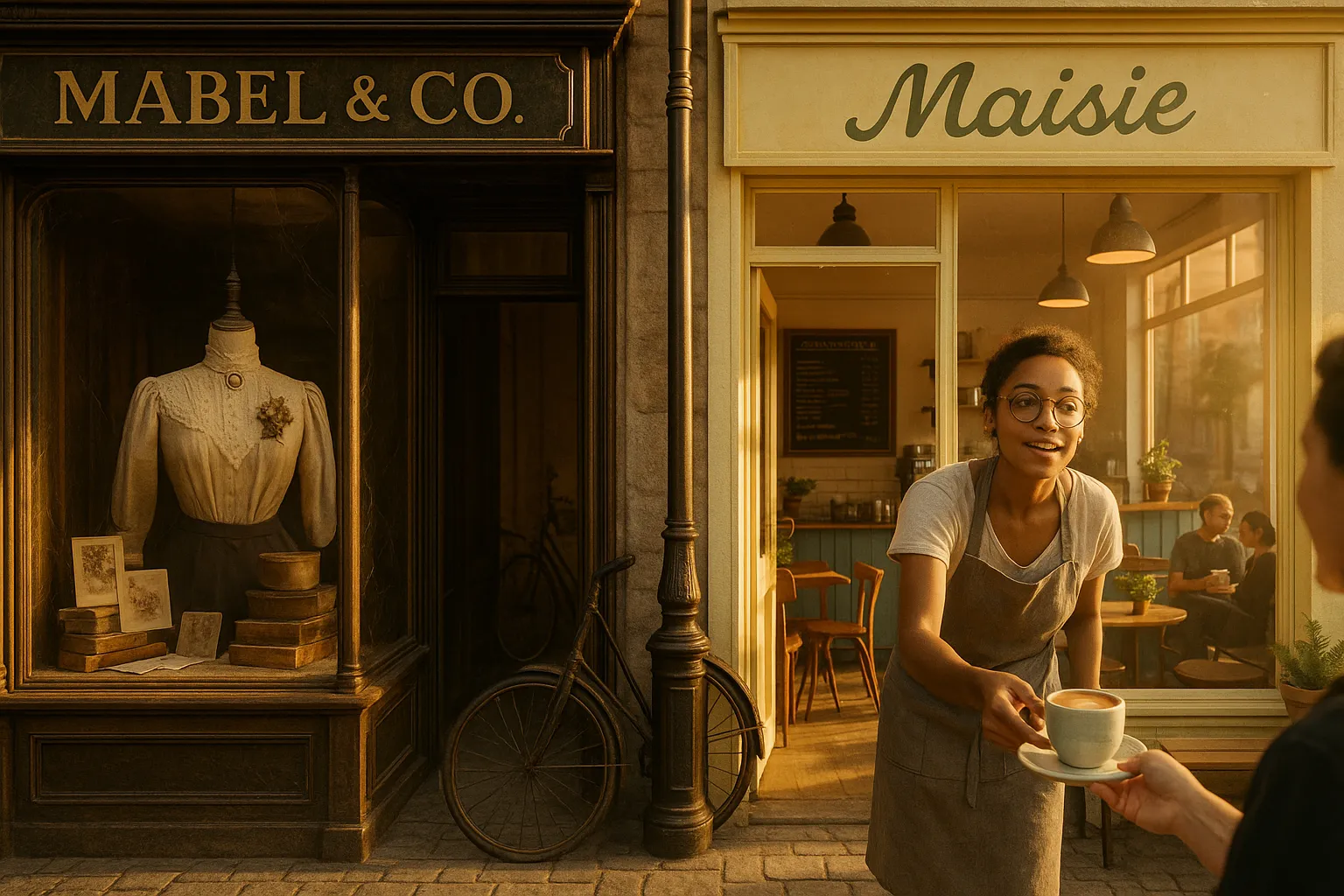
In fashion and branding, both names appear. A boutique labeled “Mabel & Co.” signals heritage and craft. A coffee bar called “Maisie” signals warmth and approachability. Those associations come from semantic mapping: the name maps to imagery and then to consumer expectation.
Warning: cultural associations can pigeonhole. If you name a tough entrepreneur Mabel, some strangers might assume she’s traditional before she opens her mouth. That bias is small, but real. You can counter it with middle names, nicknames, or public persona.
Appearances In Literature, Film, And Celebrity Use
Fact: Both names appear in literature and media, which repeatedly lifts their public profiles.
Mabel appears in early 20th-century novels and silent films. Writers used it for characters meant to be endearing or gentle. Maisie shows up in British novels and in modern TV shows and films: Maisie Williams (the actress) brought renewed attention to the name internationally.
Celebrities and fictional characters act like cultural accelerants. When an actor named Maisie gains visibility, the name climbs in public awareness. Similarly, when a lyric or a beloved novel uses Mabel, search interest spikes. Those spikes often translate to new parents considering the name.
A practical note: if you choose Maisie now, some will immediately think of Maisie Williams. If you choose Mabel, readers of classic literature may nod. That makes each name carry a small baggage of associations, sometimes helpful, sometimes distracting.
Choosing Between Mabel And Maisie: Practical Tips
Fact: Choose based on sound preference, family ties, and the image you want the name to project.
How Each Name Pairs With Middle And Last Names
Fact: Mabel pairs well with longer, softer surnames: Maisie pairs well with single-syllable or sharp surnames.
Pairing rules are flexible but useful. Mabel + long surname can avoid a staccato effect: Mabel Winthrop feels balanced. Maisie + short surname reads punchy: Maisie Clark has rhythm. If your last name is already two or three syllables, opt for the opposite balance in the given name. Try the full name out loud multiple times, that often reveals awkward stress patterns.
Sibling Name Compatibility And Style Matching
Fact: Mabel fits best with siblings who have clear, classic names (Edith, Walter): Maisie matches well with whimsical or modern siblings (Ivy, Leo).
Think about set cohesion. If you plan a names theme, vintage victorian or modern cottage, lean toward the name that complements the set. Mabel, Edith, and Arthur read like a period drama. Maisie, Poppy, and Finn read like a contemporary family photo.
Personality, Image, And Long-Term Considerations
Fact: Mabel projects steadiness and warmth: Maisie projects energy and play. Both age well, but they age differently.
If you want a name that looks formal on a résumé, Mabel holds weight. If you prefer a name that sounds friendly in kindergarten and breezy in adulthood, Maisie does that job. Think about nicknames, initials, and how the name might be shortened without your consent.
Vulnerable moment: parents often regret picking a name because they wanted to be “cute” rather than thinking of the adult. One friend chose Maisie because she loved the sound, later she worried about the name being perceived as too youthful in a corporate environment. She solved it by using a strong middle name and encouraging the use of the full name on official documents.
Practical checklist before you decide:
Say the full name aloud with surname and potential middle names.
Search social media and search engines for notable people who share the name.
Try the name in different tones: formal, playful, professional.
Picture the child at age 5, 25, and 60: which name feels right at each stage?
If you do those steps, you’ll pick a name that fits your family’s voice and the life you picture. And if you can’t decide, wait. Names often feel clearer after a week or two of living with possibilities.
To provide the best experiences, we use technologies like cookies to store and/or access device information. Consenting to these technologies will allow us to process data such as browsing behaviour or unique IDs on this site. Not consenting or withdrawing consent, may adversely affect certain features and functions.
Functional
Always active
The technical storage or access is strictly necessary for the legitimate purpose of enabling the use of a specific service explicitly requested by the subscriber or user, or for the sole purpose of carrying out the transmission of a communication over an electronic communications network.
Preferences
The technical storage or access is necessary for the legitimate purpose of storing preferences that are not requested by the subscriber or user.
Statistics
The technical storage or access that is used exclusively for statistical purposes.The technical storage or access that is used exclusively for anonymous statistical purposes. Without a subpoena, voluntary compliance on the part of your Internet Service Provider, or additional records from a third party, information stored or retrieved for this purpose alone cannot usually be used to identify you.
Marketing
The technical storage or access is required to create user profiles to send advertising, or to track the user on a website or across several websites for similar marketing purposes.