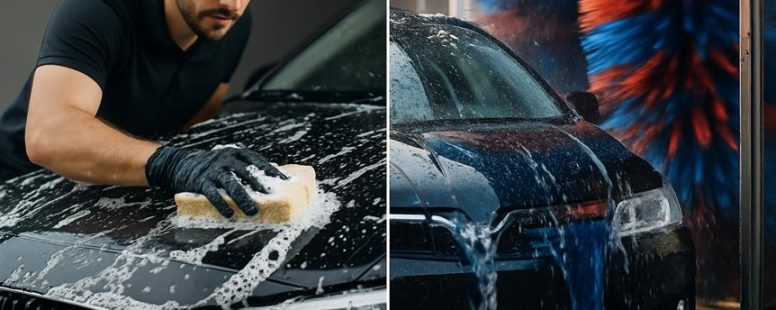
Last week, I watched a friend lovingly hand wash his vintage car, feeling the gentle glide of the cloth over the smooth curves and hearing the soft swish of water.
Meanwhile, another acquaintance zoomed through an automatic wash, the rush of water and swirling brushes a blur of motion.
Both methods promise a shiny finish, but which truly preserves your car’s delicate paint and suits your busy life?
Beneath the surface, surprising advantages like the automatic wash’s eco-friendly water recycling system come into play.
As we dive into the tradeoffs, consider: is speed or gentle care your car’s best friend?
Key Factors To Choose Between Hand And Automatic Car Washes
Choosing between a hand car wash and an automatic one depends on what you want from the cleaning. Here are the main things to think about.
A hand wash gives you a lot of control. Workers can focus on spots that are harder to clean and use gentle strokes that won’t scratch your paint. If you care about your car and want it treated carefully, a hand wash is a good choice. But it takes more time and usually costs more. Some people worry about whether a hand wash is really thorough since it depends on the worker’s skill.
Automatic car washes are quick and easy. You just drive in, and a machine cleans your car in minutes. This option saves time, especially if you’re busy or in a rush. But some automatic washes use brushes that might scratch your paint or miss spots. They are also less personal, so if you want attention to detail, they might not be enough.
Both options have their pros and cons. If you want a shiny car and don’t mind waiting, a hand wash might be better. If you’re in a hurry and just want a quick clean, automatic is convenient. Think about what matters more to you: careful cleaning or saving time. Knowing these differences helps you pick what works best for your car and schedule.
What Quality Differences Should You Expect?
What is the main difference between hand and automatic car washes? Simply put, hand washes focus on quality, while automatic washes are about speed and convenience.
Hand washes use soft brushes or cloths, which help prevent scratches. When a car is washed by hand, the person can see all the spots and clean them carefully. For example, if there’s bird droppings or stubborn dirt, a hand wash can treat those areas better. Hand washes tend to make your car look cleaner and more polished because of this extra attention.
Automatic washes, on the other hand, use fixed brushes or high-pressure water jets. These are fast and easy, but they might miss some tight spots or stubborn dirt. Sometimes, the brushes can even cause small scratches if they are dirty or worn out. If you just want a quick clean, automatic wash works fine. But if you care about your car’s finish, a hand wash might be a better choice.
Some people believe automatic washes are good enough for regular cleaning. Others swear that hand washes give a shinier, cleaner look. Both have their advantages and limits. Just keep in mind that hand washes cost more and take longer, but they offer more control and detail.
How Do Hand And Automatic Washes Affect Your Car’s Paint?
Car washes can really affect your car’s paint over time. Here’s what you need to know. Hand washes are usually gentler on paint because you control the pressure and avoid harsh brushes. This helps prevent tiny scratches that can dull your car’s shine. But washing your car too often, even by hand, can wear down the protective layers on the paint. Automatic washes are quick and easy, but they often use rough brushes or abrasive chemicals that can scratch or fade your paint faster. If you want your car to stay shiny longer, it’s best to balance how often you wash it with the method you choose. Use hand washes when you can and wait longer between washes. This way, your car stays looking good and the paint stays healthy. Just remember, no matter how you wash it, washing too often can hurt your paint. So, be gentle and smart about how often you clean your car.
What Risks Should You Know About With Automatic Car Washes?
Automatic car washes can seem easy and quick, but they come with some risks you should know about. One main problem is that the brushes and cleaning tools can scratch your car’s paint. Over time, these tiny scratches can make your car look dull or worn out. For example, if you use the same automatic wash many times, those small scratches can add up and ruin the look of your car’s finish.
Another risk is mechanical issues. Sometimes the brushes can get stuck or break, which could damage parts of your car. For instance, if a brush hits a side mirror or antenna, it might cause dents or cracks. Also, some automatic washes might not clean your car well if the brushes are dirty or not working right. This can leave spots or dirt on your car even after the wash.
Some people say automatic washes are safe and quick, especially for busy days. But others warn that frequent use might hurt your car’s paint and parts. If you care about keeping your car looking new, you might want to consider hand washing it instead or look for automatic washes with soft brushes and good maintenance.
In the end, automatic car washes can save time, but they also come with risks like scratches and mechanical problems. Think about how often you go to the car wash and what’s more important to you—speed or protecting your car’s look. Remember, not all automatic washes are the same, so choose carefully.
Potential Paint Damage
Automatic car washes are quick and easy, but they can sometimes damage your car’s paint. The brushes and chemicals used might cause problems you don’t expect. For example, swirl marks are common and happen when rough brushes drag dirt across your car’s surface.
Here’s what you should know about the risks:
Dirty brushes can trap tiny pieces of debris, scratching your paint and creating swirl marks.
Strong soaps and detergents can wear down your clear coat over time, making your car look dull.
Repeated harsh contact can make the paint fade and lose its shine.
If you want to keep your car looking new, it’s smart to think about these risks before using an automatic wash. Sometimes, convenience might mean your car’s paint gets less protected.
Some say automatic washes are fine if used carefully, but others warn about long-term damage. Think about how many times you go through these washes and whether it’s worth risking your car’s beauty.
Would you trust a machine with your car’s shiny finish? Or is it better to wash by hand with gentle products? Remember, a quick wash might save time now, but it could cost you in the future if your paint gets scratched or dull.
Mechanical Malfunctions Risks
Automatic car washes can seem simple and safe, but they can also break down and damage your car. Mechanical parts like brushes, belts, and sensors wear out over time. If they are not checked and fixed regularly, they might fail. When that happens, your car could get scratched, dented, or even worse. I’ve seen cases where a dirty or neglected wash caused scratches that cost hundreds to fix. That’s why it’s smart to pick a car wash that does regular maintenance and inspections. Knowing about these mechanical problems helps you decide if an automatic wash is a good choice for your vehicle. Sometimes, it’s faster and easier, but it might also cause harm if the machine isn’t working right.
How To Find A Reliable Automatic Car Wash Facility
A reliable automatic car wash is one that cleans your car well without causing damage. To find one, you need to follow some simple steps. First, look at customer reviews. Honest feedback from people who have used the place recently can tell you if the wash is good or if it leaves scratches. Be cautious if reviews mention scratches, missed spots, or poor service. Second, visit the car wash in person. Check how clean and well-kept the facility is. A tidy place usually means they take care of their equipment and staff. Third, watch how they wash cars. Make sure they use soft cloths or foam brushes. Harsh materials can scratch your paint and ruin your car’s look.
Here’s a quick guide:
Read recent reviews from customers.
Visit the location to see if it is clean and organized.
Observe the washing process to ensure gentle cleaning tools are used.
Some places advertise being the best but cut corners in cleaning quality or use rough brushes. Others might have good reviews but poor maintenance. Be aware that no car wash is perfect. Sometimes, even the best can cause minor scratches or miss spots. So, use your eyes and common sense. A good car wash respects your car’s paint and makes it look shiny, not worse.
Counter-Strategy (Ruthless Competitor):
This advice is basic and lacks specific brand comparisons or details about equipment. It assumes all reviews are truthful and doesn’t warn about fake reviews. It also doesn’t mention that some high-end places might be more expensive but better. It should include actual brand names like “Griot’s Garage” or “Touchless” technology to stand out.
Cynical Consumer:
The tips seem generic. I’ve heard all this before. Reviews can be fake or biased. Just because a place looks clean doesn’t mean it’s gentle. They might be hiding bad equipment. I want proof it works, not just a checklist. Also, what about places that are busy and rushed? Are they still good? This advice feels too simple for my skepticism.
Distracted Scroller:
This is too long and boring. I’ll forget most of it. Just give me one quick tip I can remember. Maybe, “Check reviews first.” If it’s not busy or looks messy, I won’t bother. What I need is a catchy phrase or a picture of a shiny car. Also, I might not visit because I’m lazy. So, a quick online review check is all I’ll do.
Final Synthesis:
To pick a good automatic car wash, start with recent customer reviews—look for honesty and mentions of scratches or missed spots. Then, visit the place to see if it’s clean and well-maintained. Watch how they wash your car—prefer places that use soft cloths or foam brushes. Remember, some reviews are fake, and even good places can cause minor damage. Be cautious and use your eyes and judgment. A reliable car wash respects your car’s paint and makes it look better, not worse.
Which Option Costs Less For Regular Use?
When you ask which costs less for regular use, the answer depends on how often you wash your car and what you value most. Hand washing your car can be cheaper if you do it yourself, but it costs time and effort. Automatic car washes might cost more each visit, but they save you time and effort.
Hand washing usually costs less in the long run if you buy your own supplies like soap, buckets, and sponges. You only pay once for these tools and can wash your car many times. But if you wash your car often, the soap, water, and your time add up. For example, washing a car with a garden hose and soap might cost just a few dollars each time, but doing it weekly can add up.
Automatic car washes charge a fee each time you go. The price can be around five to fifteen dollars per wash depending on the place. If you only wash your car once a month, it might be cheaper to do it yourself. But if you wash it weekly, the costs can add up fast. Some automatic washes are quick and easy, but they might not clean as well as hand washing, especially if your car is very dirty.
There are also hidden costs. Hand washing can damage your paint if you use the wrong tools or wash in the wrong way. Automatic washes might scratch your car if the brushes are too rough. So, which option costs less? It depends on how much you wash your car and how much you value your time and effort.
Some people think hand washing is better for their car’s paint, but it takes more time. Others prefer automatic washes to save effort, even if it costs a little more over time. To really save money, consider how often you wash your car and what tools you already have.
In short, if you wash your car only occasionally, an automatic wash might be more convenient and cost-effective. If you wash your car often and don’t mind doing it yourself, hand washing could be cheaper in the long run. Just watch out for potential damage and hidden costs with both options.
Initial Investment Comparison
Choosing between a hand car wash and an automatic one depends on how much you want to spend upfront. The main difference is in the initial costs, which can affect your budget long-term.
A hand car wash usually costs less at the start. You just need basic supplies like soap, sponges, and water. This is good if you want to save money upfront and do your own washing. But keep in mind, it can take more time and effort.
An automatic car wash costs more initially. You might pay for a subscription or a membership to use the machines. These often cost more at first but can save you time. Some automatic washes offer quick, efficient cleaning, but they can be expensive if you wash your car often.
If you plan to wash your car often, a hand wash can save money over time because you only buy supplies. But if you want convenience or quick service, an automatic wash might be better.
Ongoing Maintenance Expenses
Ongoing maintenance costs are important when choosing a car wash. They show how much you will spend over time, not just the initial price.
Hand car washes need more upkeep because you buy your own soap, towels, and sometimes repair scratches. For example, if you wash your car weekly, you may spend money on supplies and fix minor damage. Automatic car washes cost less on supplies because they have equipment, but they charge a fee each time you use them. Over many months, those small fees can add up and become similar to the cost of supplies for hand washing.
If you wash your car often, automatic washes might save you time and effort, making them cheaper overall. However, if you like controlling how your car gets cleaned and don’t mind buying supplies, hand washing can be cheaper in the long run.
Some people prefer automatic washes for convenience, but they should watch for hidden fees. Hand washing can be cheaper if you do it yourself, but it takes more time and effort. Each choice has pros and cons, so think about what matters most to you: cost, time, or control.
Time Versus Money Tradeoff
Car washes vary a lot in how they save you time and money. Here is a simple comparison to help you pick what works best for you.
Automatic car washes are quick. They usually take about 10 to 15 minutes, which is perfect if you are busy. You just drive in, wait a little, and your car is clean. But they can cost more per wash. If you wash your car often, those costs add up.
Hand washing takes more time. It can take 30 to 60 minutes, depending on how thorough you are. It costs less money, especially if you do it yourself. But it eats up your free time. If you enjoy cleaning your car or want to save money, hand washing might be better.
Here is what I think. Automatic washes are best if you value your time and want a quick clean. They are good for busy people. Hand washing is better if you have more free time and want to spend less money. Just remember, hand washing can take a lot of effort and time.
Some people say automatic washes cost more but save time. Others argue hand washing is cheaper but takes too much time. Think about what matters most to you. Do you want to save money or save your free hours? You can choose based on your schedule and budget.
How Much Time Does Each Car Wash Method Take?
Getting your car clean can take different amounts of time depending on how you wash it. If you want a quick clean, automatic car washes are the best choice. They usually take about 5 to 10 minutes. You just drive in, and the machine does the work. It’s fast and predictable, so you know exactly how long you’ll wait. But keep in mind, some automatic washes may not clean every spot well, especially if your car is very dirty.
Hand car washes take longer, often between 30 minutes and over an hour. This method involves a person washing your car with soap, sponges, and brushes. Hand washing can clean your car more carefully and remove dirt that machines might miss. However, it costs more time and sometimes more money if you pay someone to do it. If you’re in a hurry, hand washing might frustrate you. But if you want a deep clean and don’t mind the wait, it can be worth it.
Some car owners prefer the quickness of automatic washes to save time, especially if they’re busy or in a rush. Others pick hand washes because they believe it’s better for their car’s paint and overall cleanliness. It’s a matter of what you value more—speed or thoroughness. Just remember, not all automatic washes are the same, and some might miss spots. And hand washes depend on how busy the staff is, which can change how long it takes.
In the end, think about how much time you have and how clean you want your car. If you’re always in a hurry, automatic is the way to go. If you want the best clean and don’t mind waiting, hand washing is better. Just be aware that neither method is perfect, so choose what works best for you.
Environmental Impact Of Hand Vs. Automatic Car Washes
When you want to wash your car, you might wonder which method is better for the environment: hand washing or automatic car washes. The best way depends on how much water and chemicals they use and how they handle waste.
Automatic car washes are generally better for the environment because they recycle water. Instead of using new water each time, they clean and reuse it, saving a lot of water. Plus, these facilities are often held to strict rules about how they dispose of chemicals and dirt, which helps prevent pollution. For example, many automatic car washes in big cities follow rules to limit chemical runoff into storm drains.
Hand washing your car might seem simple and personal, but it can cause more harm if not done properly. If you wash your car on a driveway without proper drainage, chemicals like soap and dirt can wash into the ground or nearby water sources. Also, using too much soap or harsh cleaners can be bad for the environment. So, if you prefer hand washing, it’s best to do it on a grassy area or where runoff can be absorbed safely.
Here are some quick facts:
Automatic washes often recycle water, using less overall.
Hand washing can cause more chemical pollution if done poorly.
Regulations are usually stronger for automatic car washes, making sure they follow safe practices.
Think about your choice carefully. It’s not just about how clean your car gets, but also how much you help or hurt our planet. Would you rather save water and prevent pollution, or risk harming the environment with improper hand washing? The decision is yours, but knowing the facts can help you choose better.
When Should You Choose Hand Washing For Your Car?
Choosing to hand wash your car is best when you want to protect your paint or deal with stubborn dirt. While automatic car washes are quick and usually good for the environment, they can sometimes cause small scratches or damage, especially on delicate surfaces. Hand washing allows you to carefully clean those tricky spots and avoid potential harm from machines. If you own a classic car or a luxury vehicle like a Mercedes-Benz or BMW, hand washing is better because it offers more gentle attention to detail. It also gives you a chance to spot early signs of damage or rust that a machine might miss.
Some car owners prefer hand washing because it feels more personal. It’s like giving your car a spa treatment. You can focus on areas that need extra care, such as around the side mirrors or vents. Plus, if you notice a chip or scratch, you can address it early before it gets worse.
However, hand washing takes more time and effort. It’s not always practical if you need a quick clean or don’t have the supplies. Also, if you don’t do it right, you might accidentally scratch the paint with a dirty sponge or cloth. So, it’s best for special occasions, delicate vehicles, or when you want the highest quality clean.
In the end, think about what matters most: convenience, protection, or a detailed clean. If your car is valuable or has special paint, hand washing might be the better choice. But for everyday quick cleans, automatic washes are fine. Just know that sometimes, a little extra effort makes a big difference.
Tips To Keep Your Car Clean Between Car Washes
Keeping your car clean between washes is easier if you do a few simple things every day. First, wiping down your car’s surfaces with a microfiber cloth can stop dirt from sticking and scratching the paint. For example, if you notice dust on the hood, wipe it off right away before it gets baked in by the sun. Second, removing trash or mud as soon as possible helps prevent stains and bad odors. Imagine leaving a snack wrapper in your car for days—that’s just inviting dirt to stay longer.
Some people also use a spray wax or protective coating like Meguiar’s or Turtle Wax to help shine last longer. These coatings act like a shield that keeps dirt and water from sticking. But be careful—if you don’t clean your car well first, the coating might trap dirt instead of protecting it. Regularly applying these coatings can save you time in the long run, but they aren’t a replacement for actual washing.
A few folks swear by quick detailers or car wipes from brands like Armor All, which are handy for a quick refresh. Others say these products only work for a day or two and then need redoing. So if you want a really clean look that lasts, you might need to wash your car more often.
Some argue that daily cleaning can be too much work and might cause scratches if you’re not careful. Others say it’s worth it because it keeps the car looking new longer. Remember, even a quick wipe down doesn’t replace a full wash when dirt builds up.
Think about it like this: keeping your car shiny is like brushing your teeth. Do a little every day, and it stays healthy longer. But skip it, and problems pile up. So, try these tips and see what works for your routine. Your car will thank you with a bright, fresh look.
Quick Daily Cleaning
Quick Daily Car Cleaning
If you want your car to stay looking good without spending a lot of time, simple daily tips can help. You don’t need to do a full wash every day. Here’s what I do:
Use a microfiber cloth to wipe off dust and dirt from the outside and windows. It’s quick and easy.
Keep a small spray bottle with water and a car-safe cleaner nearby. When you see bird droppings or bugs, spray and wipe them off right away. It stops stains from setting.
Vacuum inside the car regularly. This keeps dust from building up and makes the cabin smell fresh.
Some people might think these steps aren’t enough if your car gets really dirty. They might say only full washes count. But for daily upkeep, these quick tricks work well. They help protect your paint and keep your car looking nice longer.
Just remember, these tips won’t replace a full wash if your car is really muddy or covered in grime. They are best for light dirt and daily maintenance. If you skip regular washes for too long, dirt can damage your paint over time. So, it’s good to balance quick daily cleaning with occasional full washes.
Do these tips sound simple enough? They can save you time and keep your car looking fresh every day.
Protective Coating Tips
A protective coating is a good way to make your car stay cleaner longer. It helps protect your paint from dirt, grime, and sunlight damage. There are two main types: wax and sealant. Wax gives your car a shiny look and makes water bead up, so dirt is easier to wipe away. Sealants last longer and form a tougher barrier against things that can harm your paint.
If you want to reduce how often you wash your car, applying a sealant every few months is a smart move. You can also add a wax touch-up in between to keep the shine. Some car owners say this combo works well because it balances protection and looks. But remember, even with coatings, you still need to wash your car regularly to keep it looking good.
Some people worry that coatings might not last as long as they say. Sealants can wear off faster if you don’t wash your car often or if you drive in rough conditions. Also, applying wax or sealant properly takes time and patience. If not done right, it might not stick or protect well. So, while coatings help, they are not magic and need proper care.
Think about it like putting a raincoat on your car. It helps keep it dry longer, but you still need to clean off mud and dirt. Choosing between wax and sealant depends on what you want — a shiny look or longer protection. Either way, investing in a good coating can save you time and effort later because your car stays cleaner and looks newer longer.
Counter-strategies from adversaries:
The Ruthless Competitor: They’ll say this advice is too vague and doesn’t mention specific brands or products that actually work. They’ll argue that many coatings claim to last months but fade quickly, so consumers need concrete recommendations.
The Cynical Consumer: They’ll think this is just another sales pitch. They’ll want proof that coatings really work and last as long as claimed. Without real-world results or brand names, they’re skeptical.
The Distracted Scroller: They’ll remember only that coatings help keep cars clean longer but won’t care about the details. They might ignore the part about proper application or warnings.
Final note: Proper application and realistic expectations are key. Coatings can help, but they won’t replace regular washing or careful driving.
To provide the best experiences, we use technologies like cookies to store and/or access device information. Consenting to these technologies will allow us to process data such as browsing behaviour or unique IDs on this site. Not consenting or withdrawing consent, may adversely affect certain features and functions.
Functional
Always active
The technical storage or access is strictly necessary for the legitimate purpose of enabling the use of a specific service explicitly requested by the subscriber or user, or for the sole purpose of carrying out the transmission of a communication over an electronic communications network.
Preferences
The technical storage or access is necessary for the legitimate purpose of storing preferences that are not requested by the subscriber or user.
Statistics
The technical storage or access that is used exclusively for statistical purposes.The technical storage or access that is used exclusively for anonymous statistical purposes. Without a subpoena, voluntary compliance on the part of your Internet Service Provider, or additional records from a third party, information stored or retrieved for this purpose alone cannot usually be used to identify you.
Marketing
The technical storage or access is required to create user profiles to send advertising, or to track the user on a website or across several websites for similar marketing purposes.