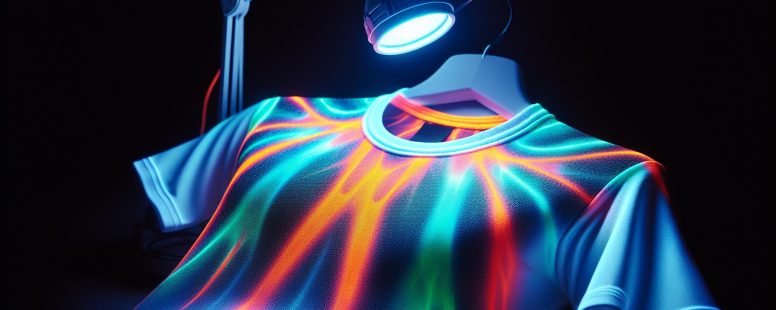
Picture stepping into a room illuminated by an otherworldly glow, where vibrant colors pop and hidden details come to life. You might think you’re witnessing magic, but it’s all thanks to UV and black lights. These fascinating types of light often leave people scratching their heads—are they the same thing or completely different?
While both belong to the ultraviolet spectrum, their purposes and effects couldn’t be more distinct. From scientific applications to party decorations, understanding how UV and black lights work can help you unlock their full potential. Whether you’re curious about their role in fluorescence or simply want to know why your white shirt glows under one but not the other, this guide will shed some light—literally and figuratively—on what sets them apart.
What Is UV Light?
UV light, or ultraviolet light, refers to a type of electromagnetic radiation with wavelengths shorter than visible light but longer than X-rays. It falls within the range of 10 to 400 nanometers (nm) on the electromagnetic spectrum. While invisible to the human eye, its effects can be observed in various ways.
Types Of UV Light
UV light is categorized into three main types based on wavelength:
UVA (320-400 nm)
This is the longest-wavelength UV and accounts for about 95% of sunlight reaching Earth’s surface. It’s associated with skin aging and tanning due to its ability to penetrate deeper layers of the skin.
UVB (280-320 nm)
This medium-wavelength UV causes sunburn and contributes significantly to skin cancer risks when overexposed. Its intensity varies by geographic location, altitude, and time of year.
UVC (100-280 nm)
UVC has the shortest wavelength and is mostly absorbed by Earth’s atmosphere before reaching ground level. Artificial UVC sources are used in sterilization processes since it effectively destroys bacteria and viruses.
Common Uses Of UV Light
UV light serves numerous scientific, medical, industrial, and decorative purposes:
Sterilization And Disinfection
UVC lamps destroy pathogens in hospitals, laboratories, water treatment facilities, and air purification systems.
Fluorescence Analysis
UVA lights reveal fluorescent materials in forensic investigations or counterfeit currency detection.
Medical Therapies
Controlled UVB exposure treats conditions like psoriasis or vitiligo under medical supervision.
Tanning And Cosmetic Products
UVA rays are utilized in tanning beds or products designed for artificial bronzing effects.
Insect Traps
Many bug zappers use UVA lights due to their ability to attract insects effectively.
Astronomy And Scientific Research
UV telescopes study celestial objects that emit ultraviolet radiation beyond visible spectra limits.
What Is Black Light?
Black light is a type of ultraviolet (UV) light that emits UV-A radiation, which has wavelengths ranging from 320 to 400 nanometers. Unlike visible light, black lights produce minimal illumination and are designed to reveal fluorescence in objects.
How Black Lights Work
Black lights operate by emitting UV-A radiation, the least harmful part of the ultraviolet spectrum. A phosphor coating on the bulb filters out most visible light, leaving only UV rays and a faint violet glow. This process causes certain materials containing phosphors to fluoresce or glow under the light.
For example, substances like tonic water, highlighter ink, and white fabrics often contain fluorescent compounds. These compounds absorb energy from UV rays and release it as visible light, creating their characteristic glowing effect.
Applications Of Black Lights
Entertainment: Black lights enhance visuals in clubs or theaters by making fluorescent paints or decorations stand out.
Forensics: Investigators use black lights to detect bodily fluids or identify counterfeit documents due to unique fluorescence patterns.
Pest Detection: Certain insects like scorpions glow under black lights, aiding pest control efforts.
Artistic Creations: Artists incorporate black-light-reactive paints for immersive artwork or installations.
Authentication Tools: Businesses use them to verify currency authenticity through embedded security features that fluoresce.
Key Differences Between UV And Black Light
Ultraviolet (UV) light and black light differ in their properties, visibility, and applications. Understanding these differences helps you choose the right type for specific needs.
Wavelength Variances
UV light spans a spectrum of wavelengths between 10 to 400 nanometers (nm), divided into UVA (320-400 nm), UVB (280-320 nm), and UVC (100-280 nm). Black lights emit primarily UVA radiation, with wavelengths ranging from 320 to 400 nm. These longer wavelengths make black lights safer for casual use, unlike shorter-wavelength UVB or UVC rays linked to skin damage or sterilization purposes.
For example, UVC is used in germicidal lamps due to its high energy that disrupts DNA, while black lights highlight fluorescence without causing harm.
Visibility To The Human Eye
Black lights produce minimal visible violet light alongside UVA radiation, creating a faint glow under dark conditions. In contrast, most UV light is invisible to human eyes but interacts with materials differently depending on wavelength. Fluorescent objects like neon posters or white clothing appear vibrant under black lights because they absorb ultraviolet rays and re-emit them as visible colors.
If you’ve ever seen glowing stars on ceilings or vibrant party decorations illuminated by specific lighting—chances are it was a black light showcasing fluorescence effects.
Functional Differences
UV lights serve diverse scientific and industrial functions such as sterilizing surfaces, curing adhesives, detecting biological substances in forensic analysis, and aiding astronomical observations. Meanwhile, black lights focus more on entertainment and practical tasks like enhancing visuals at concerts or identifying counterfeit currency through fluorescence reactions.
Selecting between the two depends entirely upon your needs: UV’s broader spectrum suits technical applications; black lights excel where aesthetics meet functionality.
Pros And Cons Of Using UV And Black Light
UV and black lights each offer unique benefits and limitations. Choosing between them depends on the specific application and desired effects.
Advantages Of UV Light
UV light supports diverse scientific, medical, and industrial applications. It sterilizes water, air, and surfaces effectively by eliminating bacteria and viruses through UVC radiation. Medical therapies use UVB for treating skin conditions like psoriasis or eczema. Fluorescence analysis in laboratories identifies substances such as minerals or biological samples with precision.
UV light also aids forensic investigations by revealing hidden evidence like bloodstains or fingerprints under specialized wavelengths. Insect traps use UV to attract pests for control purposes. Commercial tanning lamps rely on UVA to produce artificial tans efficiently.
Drawbacks Of UV Light
Excessive exposure to UV radiation can harm living organisms. Prolonged contact with UVA or UVB increases the risk of skin cancer, premature aging, and eye damage without protective measures like sunscreen or eyewear.
UVC poses risks due to its high energy levels; it may degrade materials over time and requires strict safety protocols during usage. Overuse in sterilization could lead too microbial resistance concerns if not regulated properly.
Advantages Of Black Light
Black lights enhance visual effects creatively in entertainment spaces like clubs or theaters by making fluorescent paints and objects glow vividly. They verify the authenticity of banknotes, IDs, or artworks through fluorescence detection efficiently.
In pest control settings, black lights help identify certain insects that fluoresce under their wavelength range (320-400 nm). Artists incorporate black lights into innovative projects that explore luminous designs visible only under these conditions.
Drawbacks Of Black Light
Black lights have limited functionality beyond fluorescence-related tasks compared with broader-spectrum UV devices. Their lower intensity makes them unsuitable for applications requiring disinfection or deep material analysis.
Which One Should You Choose?
Your choice between UV lights and black lights depends on your intended application. If you require precision for sterilization, forensic analysis, or scientific research, full-spectrum UV light is more effective. Its ability to eliminate bacteria and viruses or reveal hidden details makes it vital in professional fields.
For casual uses like enhancing artistic creations, inspecting currency authenticity, or creating vibrant visual effects at events, black lights offer a safer and aesthetically pleasing option. Their focus on UVA radiation minimizes harmful exposure while highlighting fluorescent materials vividly.
Consider safety measures when deciding. Prolonged exposure to certain UV wavelengths can cause skin damage and eye irritation without proper protection. Black lights generally pose fewer risks but still necessitate caution in prolonged scenarios.
Evaluate the environment and purpose of use before selecting a light source. For instance, choose a UV-C sterilizer for medical equipment disinfection but opt for a black light fixture to enhance glow-in-the-dark party themes effectively.
Conclusion
Understanding the differences between UV and black lights ensures you can make informed decisions based on your needs. Whether you’re aiming for precise scientific tasks or creative visual effects, each type of light offers unique benefits. By recognizing their distinct properties, applications, and safety considerations, you’ll be better equipped to choose the right solution for any situation.
To provide the best experiences, we use technologies like cookies to store and/or access device information. Consenting to these technologies will allow us to process data such as browsing behaviour or unique IDs on this site. Not consenting or withdrawing consent, may adversely affect certain features and functions.
Functional
Always active
The technical storage or access is strictly necessary for the legitimate purpose of enabling the use of a specific service explicitly requested by the subscriber or user, or for the sole purpose of carrying out the transmission of a communication over an electronic communications network.
Preferences
The technical storage or access is necessary for the legitimate purpose of storing preferences that are not requested by the subscriber or user.
Statistics
The technical storage or access that is used exclusively for statistical purposes.The technical storage or access that is used exclusively for anonymous statistical purposes. Without a subpoena, voluntary compliance on the part of your Internet Service Provider, or additional records from a third party, information stored or retrieved for this purpose alone cannot usually be used to identify you.
Marketing
The technical storage or access is required to create user profiles to send advertising, or to track the user on a website or across several websites for similar marketing purposes.