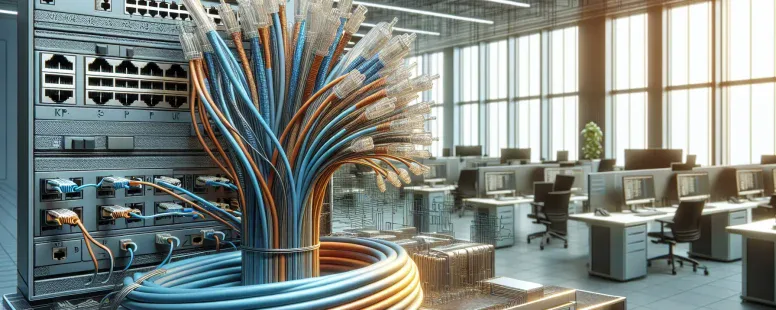
Picture you’re setting up a network, and every cable choice feels like a puzzle piece that could make or break your connection. Among the countless options, two names stand out—UTP (Unshielded Twisted Pair) and STP (Shielded Twisted Pair). At first glance, they might seem identical, but their differences hold the key to performance, reliability, and cost in your setup.
Choosing between UTP and STP isn’t just about picking a cable; it’s about understanding how each interacts with interference, signal quality, and your specific environment. Whether you’re working on a home network or an industrial system surrounded by electrical noise, knowing what sets these cables apart can save you from future headaches.
So what makes one better than the other? Let’s unravel the twists—literally—and explore how UTP and STP differ in design, functionality, and when to use them for optimal results.
Understanding UTP And STP
Understanding the differences between UTP and STP cables helps you choose the right option for your network. Each cable type offers distinct characteristics that align with specific use cases.
What Is UTP?
UTP (Unshielded Twisted Pair) cables are designed without additional shielding around their twisted wire pairs. They reduce electromagnetic interference by tightly twisting the wires together, relying on this design rather than external protection.
Commonly used in home networks, offices, and data centers, UTP cables support Ethernet connections and telephone systems. For instance, Cat5e and Cat6 cables—frequently seen in residential setups—are examples of UTP. Their lightweight structure makes installation simpler compared to shielded alternatives.
While cost-effective, they may be less reliable in environments with high interference, such as industrial areas or locations near heavy machinery.
What Is STP?
STP (Shielded Twisted Pair) cables feature an additional layer of shielding around each pair or the entire group of wires. This shielding minimizes signal degradation caused by external interference like radio frequencies or electrical noise.
These cables are often chosen for industrial settings where robust performance is crucial even though harsh conditions. An example includes connecting equipment within manufacturing plants or hospitals where electromagnetic interference is common.
Though offering superior protection against noise, STP cables require grounding to function optimally and have a thicker build that complicates installation in tight spaces. Also, they’re typically more expensive than UTP options due to their enhanced construction features.
Key Differences Between UTP And STP
Understanding the differences between UTP (Unshielded Twisted Pair) and STP (Shielded Twisted Pair) cables is essential when choosing the right option for your networking needs. While both serve similar purposes, their design and functionality cater to different environments.
Shielding Mechanism
UTP cables lack any additional shielding around the twisted pairs of wires. This simplicity makes them lightweight, flexible, and easier to handle. But, without shielding, they are more susceptible to electromagnetic interference (EMI), especially in areas with high electrical noise.
STP cables include a metallic shield—either foil or braid—that wraps around each wire pair or all pairs collectively. This shield reduces external interference significantly, ensuring minimal signal degradation even in industrial environments where EMI levels are high. For example, STP cables perform better near heavy machinery emitting strong magnetic fields.
Cost Comparison
UTP cables are typically more cost-effective due to their simpler manufacturing process and lighter materials. Commonly used variants like Cat5e and Cat6 offer reliable performance at an affordable price point for home networks or office setups.
STP cables come at a higher price because of added shielding materials and complexity in production. These costs make STP ideal only when superior interference resistance justifies the investment—for instance, in data centers handling critical operations or factories with harsh conditions.
Cable Type
Average Cost Per Foot
Use Case Examples
UTP
$0.10–$0.30
Home offices, small businesses
STP
$0.40–$1
Industrial sites, data centers
Performance And Signal Quality
UTP provides adequate signal quality for most standard applications but may experience crosstalk issues over longer distances or in noisy settings. Crosstalk occurs when signals from one wire interfere with others within the same cable bundle.
STP minimizes crosstalk due to its shielding layers while maintaining consistent performance across extended lengths and challenging environments. For instance, running a 100-meter Ethernet connection through an area filled with electronic equipment would favor an STP cable over UTP because of reduced attenuation risks.
Installation And Flexibility
Installing UTP is straightforward since it requires no grounding; this ease speeds up deployment times during large-scale installations like office buildings or residential complexes. Its flexibility also simplifies routing through tight spaces such as conduits or wall cavities.
Common Applications Of UTP And STP
Understanding the applications of UTP and STP cables helps you choose the right type for your specific networking needs. Each cable serves distinct purposes based on its design and performance characteristics.
Typical Uses Of UTP Cables
UTP cables are widely used in environments where electromagnetic interference (EMI) is minimal. These include home networks, small offices, and educational institutions. For example, Cat5e UTP cables are commonly installed to support internet connections in residential settings due to their affordability and ease of installation.
In data centers or corporate offices, Cat6 UTP cables often provide reliable connectivity for Ethernet networks supporting speeds up to 1 Gbps or more. Their lightweight construction simplifies large-scale deployment through conduits or ceiling spaces.
Voice communication systems also rely heavily on UTP cabling. Analog phone lines and Voice over IP (VoIP) setups frequently use these cables because they deliver adequate signal quality without additional shielding costs.
Typical Uses Of STP Cables
STP cables excel in industrial environments with high levels of EMI, such as factories with heavy machinery or power plants generating electromagnetic noise. The metallic shielding in STP minimizes signal degradation, ensuring consistent performance where interference poses a risk to data integrity.
Telecommunication hubs often deploy STP cabling for transmitting sensitive information across long distances without compromising signal quality. For instance, shielded Cat7 or Cat8 cables support high-speed data transfers while reducing crosstalk between adjacent channels.
Security camera systems benefit from STP’s robust design when installed outdoors or near electronic devices emitting significant EMI. Shielding enhances video signal clarity even under challenging environmental conditions like proximity to transformers or fluorescent lighting fixtures.
Cable Type
Common Environments
Specific Examples
UTP
Home networks, offices
Internet connections (Cat5e), VoIP systems
STP
Industrial sites, telecom hubs
Factory networks (Cat7), CCTV installations
These examples illustrate how each cable type aligns with different operational requirements based on its unique capabilities and limitations.
Pros And Cons Of UTP And STP
Understanding the pros and cons of UTP (Unshielded Twisted Pair) and STP (Shielded Twisted Pair) cables helps you make an well-informed choice when selecting the right cable for your network setup. Each type brings unique advantages and limitations based on its design and intended use.
Advantages Of UTP
UTP cables are lightweight, flexible, and cost-effective. Their simple construction makes them easy to install in large-scale projects such as office buildings or data centers. For example, Cat5e and Cat6 UTP cables support internet speeds up to 1 Gbps over short distances without requiring additional grounding. These cables work well in environments with minimal electromagnetic interference (EMI), like home networks or small offices.
Their affordability is a significant benefit. UTP cables typically cost between $0.10 and $0.30 per foot, making them accessible for budget-conscious users. Also, their compatibility with standard RJ45 connectors simplifies integration into existing setups.
Disadvantages Of UTP
UTP’s lack of shielding leaves it vulnerable to external interference from nearby electrical equipment or power lines. In high-EMI environments, this can lead to signal degradation or crosstalk between adjacent wires within the cable itself.
Their performance decreases in industrial settings where consistent data transmission is critical due to higher exposure to EMI sources such as machinery or heavy electronics. Installing UTP in these scenarios may result in unreliable connections or increased maintenance costs over time.
Advantages Of STP
STP cables include a metallic shield that significantly reduces interference from external sources, ensuring stable signal quality even in challenging conditions like factories or telecommunications hubs where EMI levels are high. This shielding enhances performance by minimizing crosstalk between wires within the same cable.
Conclusion
Choosing between UTP and STP cables eventually depends on your specific network needs and the environment where they’ll be used. If you’re prioritizing cost, flexibility, and ease of installation in low-interference settings, UTP cables are a practical choice. For environments with high EMI or where signal integrity is critical, the shielding provided by STP cables offers a more reliable solution.
By understanding the strengths and limitations of each cable type, you can make an well-informed choice that balances performance, budget, and installation requirements. Whether it’s for a simple home setup or a complex industrial network, selecting the right cable ensures your system operates efficiently and meets your expectations.
To provide the best experiences, we use technologies like cookies to store and/or access device information. Consenting to these technologies will allow us to process data such as browsing behaviour or unique IDs on this site. Not consenting or withdrawing consent, may adversely affect certain features and functions.
Functional
Always active
The technical storage or access is strictly necessary for the legitimate purpose of enabling the use of a specific service explicitly requested by the subscriber or user, or for the sole purpose of carrying out the transmission of a communication over an electronic communications network.
Preferences
The technical storage or access is necessary for the legitimate purpose of storing preferences that are not requested by the subscriber or user.
Statistics
The technical storage or access that is used exclusively for statistical purposes.The technical storage or access that is used exclusively for anonymous statistical purposes. Without a subpoena, voluntary compliance on the part of your Internet Service Provider, or additional records from a third party, information stored or retrieved for this purpose alone cannot usually be used to identify you.
Marketing
The technical storage or access is required to create user profiles to send advertising, or to track the user on a website or across several websites for similar marketing purposes.