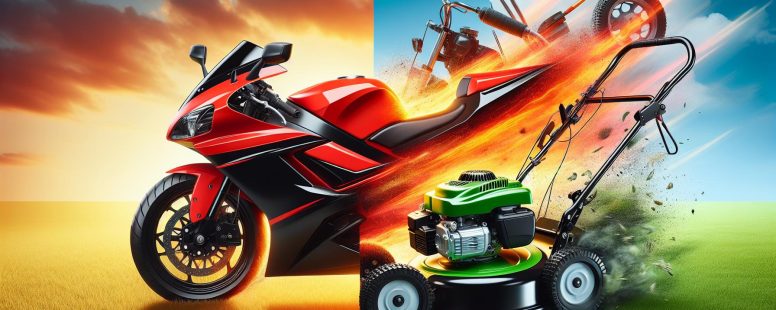
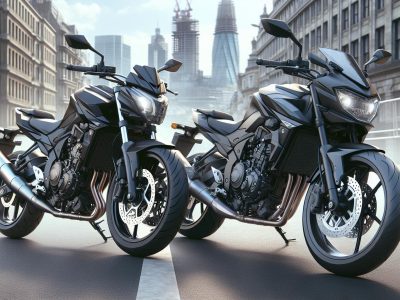
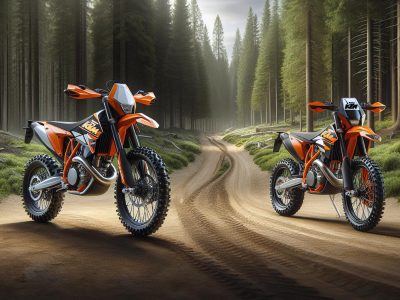
Picture the thrill of a roaring engine beneath you, its rhythm dictating the pace of your journey. Whether you’re riding a motorcycle or powering up a lawnmower, the type of engine driving that machine plays a crucial role in its performance. But what sets two-stroke and four-stroke engines apart? These mechanical marvels might sound similar, yet they operate on entirely different principles.
Overview Of Two-Stroke And Four-Stroke Engines
Two-stroke and four-stroke engines operate differently, impacting their performance and application. A two-stroke engine completes a power cycle in two strokes of the piston, while a four-stroke engine requires four strokes. These differences influence efficiency, maintenance, and usage.
Two-Stroke Engines:
These engines complete one power cycle with every revolution of the crankshaft. They’re lightweight and compact, making them suitable for motorcycles or chainsaws. They produce more power within smaller sizes but consume more fuel due to less efficient combustion. Examples include dirt bikes or certain outboard motors.
Four-Stroke Engines:
Four-strokes involve intake, compression, power, and exhaust strokes across two revolutions of the crankshaft. They offer better fuel efficiency and reduced emissions compared to their two-stroke counterparts. Commonly found in cars or lawnmowers, they require less frequent maintenance than two-strokes but are heavier and more complex mechanically.
Both types have specific advantages depending on your needs—whether you’re looking for speed (two-strokes) or longevity (four-strokes).
How A Two-Stroke Engine Works
A two-stroke engine completes a power cycle with just two piston movements—an upward and downward stroke. This simplified process merges intake, compression, combustion, and exhaust into two actions.
Key Components Of Two-Stroke Engines
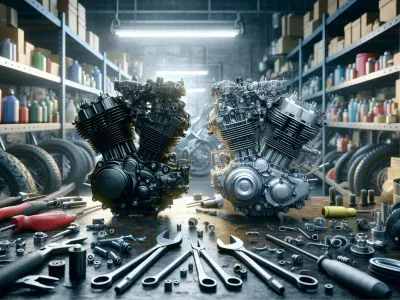
Two-stroke engines have fewer components than four-strokes. The cylinder forms the main combustion chamber. The piston moves within the cylinder, controlling airflow through ports instead of valves. Ports include intake (for air-fuel mixture) and exhaust (to expel gases). Crankshafts transfer energy to power external mechanisms.
Spark plugs ignite the compressed air-fuel mixture during each cycle. Lubrication is mixed directly with fuel in most designs since there’s no separate oil reservoir or pump system.
Advantages Of Two-Stroke Engines
Two-strokes deliver high power-to-weight ratios because they generate power after every revolution of the crankshaft. This makes them ideal for lightweight applications like motorcycles, chainsaws, and outboard motors.
Their compact design reduces manufacturing costs while enabling portability. Maintenance requirements are minimal due to their simpler construction compared to four-strokes.
Disadvantages Of Two-Stroke Engines
Higher fuel consumption occurs as these engines mix oil with fuel, causing incomplete combustion at times. Emissions are less environmentally friendly due to unburnt hydrocarbons escaping from exhaust ports.
Durability issues arise when wear increases without regular lubrication replenishment since all moving parts rely on pre-mixed fuel-oil blends for operation efficiency.
How A Four-Stroke Engine Works
A four-stroke engine operates through a sequence of four distinct piston movements, or strokes, within its cylinder. Each stroke serves a unique purpose in the power cycle: intake, compression, combustion (power), and exhaust. This design ensures efficiency and durability across various applications like cars and lawnmowers.
Key Components Of Four-Stroke Engines
Four-stroke engines rely on several critical components to function effectively:
Cylinder: Houses the piston and facilitates the transfer of energy from fuel combustion into mechanical motion.
Piston: Moves vertically inside the cylinder to compress air-fuel mixtures and transfer force generated during combustion.
Crankshaft: Converts the piston’s linear motion into rotational energy for powering wheels or other machinery parts.
Valves: Control airflow during intake and exhaust phases, ensuring proper timing for each stroke in the cycle.
Camshaft: Coordinates valve timing by synchronizing with crankshaft rotations through gears or belts.
For example, if you’re driving a car with a 2-liter four-cylinder engine, each cylinder contains these essential components working harmoniously to deliver smooth performance.
Advantages Of Four-Stroke Engines
The advantages of four-stroke engines contribute to their widespread use in vehicles and equipment:
Fuel Efficiency: Consuming less fuel per power cycle compared to two-strokes saves costs over time.
Cleaner Emissions: Produces fewer pollutants due to separate lubrication systems avoiding pre-mixed oil.
Longer Lifespan: With robust construction and reduced wear-and-tear mechanisms, they last longer under consistent maintenance.
Versatility: Suitable for larger machines like cars, trucks, boats—and even some motorcycles that prioritize reliability over raw speed.
A real-world example includes most modern sedans utilizing four-stroke engines because they balance performance with environmental concerns effectively.
Disadvantages Of Four-Stroke Engines
Even though benefits above there are drawbacks associated with these engines:
Complexity In Design: More moving parts make them harder—and costlier—to repair or replace than simpler two-strokes.
Heavier Weight: Added components increase weight; this reduces suitability for lightweight applications such as chainsaws or dirt bikes.
Lower Power-To-Weight Ratio: Generates less immediate power relative-to-size when compared against similar-displacement two-stoke counterparts.
Key Differences Between Two-Stroke And Four-Stroke Engines
Two-stroke and four-stroke engines differ significantly in performance, efficiency, maintenance needs, environmental impact, and applications. Understanding these distinctions helps you make informed decisions based on your requirements.
Performance And Power Output
Two-stroke engines generate power with every revolution of the crankshaft. This results in a higher power-to-weight ratio and quicker acceleration, making them ideal for motorcycles or chainsaws. For instance, motocross bikes often use two-strokes for their agility and speed.
Four-stroke engines produce power once every two revolutions of the crankshaft. While they deliver smoother performance and consistent torque, their lower power-to-weight ratio suits heavier machines like cars or tractors. These engines excel in prolonged operations requiring steady output.
Fuel Efficiency
Fuel consumption is higher in two-stroke engines because they mix oil directly with fuel for lubrication. Some energy escapes unburnt during the exhaust process due to overlapping intake and exhaust cycles.
Four-stroke engines are more efficient since they separate lubrication from combustion processes using dedicated oil reservoirs. Controlled intake cycles minimize fuel wastage while maximizing mileage—a key factor for vehicles prioritizing economy.
Maintenance Requirements
Frequent maintenance is necessary for two-strokes because of simpler construction but faster wear-and-tear components like spark plugs or pistons wearing out quickly due to high RPMs.
Four-strokes demand less frequent servicing since their complex design reduces internal strain on parts over time; but replacement costs may rise when repairs eventually arise owing too intricate mechanisms involved!
Emissions And Environmental Impact
Two strokes emit more pollutants as incomplete combustion leads towards increased hydrocarbons escaping into air negatively affecting environment around us! Consider lawn equipment often criticized under stricter regulations globally nowadays already adapting alternatives gradually phasing traditional models away…
Conversely four strikes comply better eco-friendly standards by burning cleaner fuels reducing harmful emissions output protecting ecosystems surrounding areas implementing greener solutions effectively long-term wise approach overall sustainability goals met industry wide efforts combined together worldwide initiatives shared common interests alike…
Choosing Between Two-Stroke And Four-Stroke Engines
Selecting between two-stroke and four-stroke engines depends on your specific requirements, including performance needs, budget constraints, and environmental considerations. Each engine type suits distinct applications due to its unique characteristics.
Performance Priorities
For high power-to-weight ratios and rapid acceleration, two-stroke engines excel. They’re ideal for motocross bikes or handheld tools like chainsaws. In contrast, if smoother operations and consistent torque matter more—common in cars or lawnmowers—a four-stroke engine becomes the better choice.
Fuel Efficiency Considerations
When conserving fuel is a priority, four-strokes outperform as they burn fuel more efficiently with separate oil reservoirs. Two-strokes consume more because of their lubrication process but offer simplicity in design.
Maintenance Requirements
Two-strokes require frequent servicing since components wear out faster due to higher RPMs. Four strokes last longer between maintenance intervals yet involve complex repairs when issues arise.
Environmental Impact Evaluation
Four-strokes align better with eco-friendly standards by emitting fewer pollutants. Even though their lightweight advantage, two-strokes release unburnt fuel into the environment during operation, making them less sustainable for long-term use cases where emissions are regulated.
Assess application demands carefully; recreational riders may prefer agility offered by two strokes while commuters prioritize efficiency provided by four strokes for daily travel tasks.
Conclusion
Understanding the differences between two-stroke and four-stroke engines equips you to make smarter decisions based on your specific needs. Whether you’re drawn to the lightweight power of a two-stroke or the efficiency and reliability of a four-stroke, each engine type offers unique advantages. By considering factors like performance, maintenance, fuel efficiency, and environmental impact, you can choose the engine that aligns best with your priorities.
To provide the best experiences, we use technologies like cookies to store and/or access device information. Consenting to these technologies will allow us to process data such as browsing behaviour or unique IDs on this site. Not consenting or withdrawing consent, may adversely affect certain features and functions.
Functional
Always active
The technical storage or access is strictly necessary for the legitimate purpose of enabling the use of a specific service explicitly requested by the subscriber or user, or for the sole purpose of carrying out the transmission of a communication over an electronic communications network.
Preferences
The technical storage or access is necessary for the legitimate purpose of storing preferences that are not requested by the subscriber or user.
Statistics
The technical storage or access that is used exclusively for statistical purposes.The technical storage or access that is used exclusively for anonymous statistical purposes. Without a subpoena, voluntary compliance on the part of your Internet Service Provider, or additional records from a third party, information stored or retrieved for this purpose alone cannot usually be used to identify you.
Marketing
The technical storage or access is required to create user profiles to send advertising, or to track the user on a website or across several websites for similar marketing purposes.