Picture the roar of an engine echoing through a quiet morning—the sharp, punchy growl of a two-stroke or the steady, rhythmic hum of a four-stroke. Each sound tells a story of power, precision, and engineering magic. But what really sets these engines apart beyond the music they make?
You might think it’s all about speed or fuel, but the differences run deeper than you’d expect. From the way they breathe to the secrets hidden in their mechanical hearts, two-stroke and four-stroke engines offer surprising advantages. Whether you crave lightning-fast acceleration or crave reliability for the long haul, understanding these engines could change the way you see every ride.
Overview of Two Stroke and Four Stroke Engines
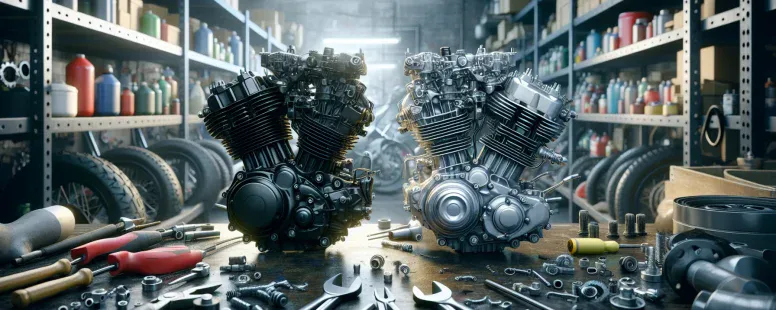
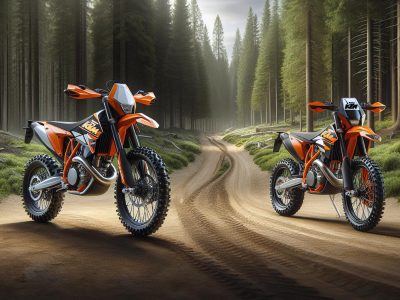
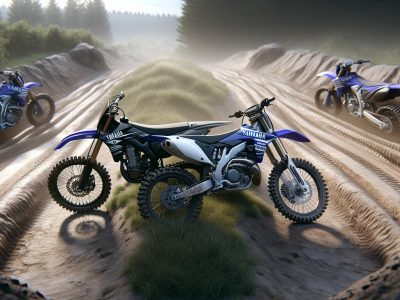
Two-stroke engines ignite a sense of immediacy—every revolution counts. You’ll notice each movement directly impacts both power output and sound, which explains why dirt bikes and chainsaws fill stadiums and forests with their sharp, buzzing roar. These engines blend the intake and exhaust strokes, compress air-fuel, ignite quickly, and expel gases in just two movements: up and down. Yamaha’s YZ250, for example, shoots off the line with acceleration that’s difficult to match.
Four-stroke engines, on the other hand, operate with a rhythm closer to a heartbeat: intake, compression, combustion, and exhaust. This systematic cycle smooths out delivery, increases fuel efficiency, and cuts emissions, which is probably why most street motorcycles—think Honda’s CRF450R—prefer this design. You’ll rarely hear one shout; they purr confidently, stressing longevity over raw aggression.
Ever wondered why lawnmowers mostly hum instead of scream? That’s because four-stroke engines dominate quieter applications, trading bursts of speed for sustained performance. Two-strokes prefer environments where weight matters and maintenance remains straightforward, even though increased pollution.
Think of how outboard motors or go-karts behave—what’s more exhilarating, the shriek of a two-stroke at peak revs or knowing your four-stroke cruiser just passed 20,000 miles with minimal fuss? Maybe you’re noticing how emission regulations shape your choices, as the Environmental Protection Agency (EPA, 2022) notes a clear industry shift toward four-strokes for environmental compliance.
Clutching the handlebars, do you long for the nostalgia of smoky exhaust and breakneck sprints? Or do you value the reliability that gets you home every night? Recognizing the way these engines work benchmarks every decision you make around performance, maintenance, and environmental responsibility.
Key Mechanical Differences
Key mechanical differences between two-stroke and four-stroke engines shape how you experience power delivery, maintenance, and reliability. Understanding these differences clarifies why a two-stroke dirt bike crackles over trails, while a four-stroke cruiser hums steadily along highways.
Engine Cycle Operations
Engine cycle operations define how these engines turn fuel into motion. Two-stroke engines complete their power cycle in just two piston movements (up and down) for each crankshaft rotation. Every time you twist the throttle on a two-stroke, you get a burst of power with each stroke—fuel, compression, combustion, and exhaust all happening rapidly. Chainsaws and motocross bikes rely on this compact design for aggressive acceleration and lightweight handling.
Four-stroke engines stretch the process across four piston movements: intake, compression, power, and exhaust. One full power cycle needs two rotations of the crankshaft. Street motorcycles, generators, and cars use this extended cycle for better fuel efficiency, cooler operation, and reduced emissions. According to SAE International, this separation of phases leads to smoother performance and quieter engine notes (SAE, 2023). Which experience would you prefer: the thrill of instant power or the predictability of a measured engine beat?
Number of Parts and Complexity
Number of parts in each engine type directly affects their mechanical complexity. Two-stroke engines use fewer parts—eliminating valves, using only ports for intake and exhaust, and often relying on oil mixed with fuel for lubrication. Mechanics find their construction is simpler and lighter; you might recall repairing a two-stroke weed trimmer with just a screwdriver and grit.
Four-stroke engines boast additional components such as camshafts, rocker arms, and separate lubricant systems. These additions raise the count of moving parts, increase durability, and support continuous use. Honda’s four-stroke engines, for example, last over 20,000 miles with maintenance, but they need more frequent valve adjustments (Honda Maintenance Guide, 2024). While more parts mean greater reliability, they also bring higher repair costs and longer downtime when issues arise.
If a spark plug fouls during a weekend ride, do you want the straightforward fix of a two-stroke or the layered challenge of a four-stroke teardown? Mechanical simplicity appeals to tinkerers, while robust construction attracts those seeking long-distance consistency—even when it’s means grappling with more nuts and bolts.
Performance and Efficiency Comparison
Performance and efficiency both drive your engine choice, especially when you’re eyeing speed or savings at the pump. These differences shape experiences for motorsport enthusiasts and daily commuters alike.
Power Output and Acceleration
Two-stroke engines deliver explosive power, hitting max RPM almost instantly after you twist the throttle. Picture launching down a motocross track—your two-stroke dirt bike screams ahead, its lightweight frame and minimal moving parts delivering a jolt that leaves four-strokes lagging at the gate. Racers favor these engines for that snappy response and aggressive torque, so you’ll see two-strokes leading in high-adrenaline racing events. For instance, the iconic Yamaha YZ250 (two-stroke) often outpaces heavier four-strokes on technical, tight courses.
Four-stroke engines, in contrast, rely on a more methodical energy release, producing smoother and more manageable acceleration. You’ll notice four-strokes dominate street motorcycles and touring bikes—take the Honda CBR600RR, for example—where the riding environment demands steady, predictable pull rather than raw surges. Power builds gradually, which suits environments where control trumps chaos.
If you’ve ever wondered why some machines sound more like a feral chainsaw and others more like a purring lion, it reflects these engine types’ firing characteristics. Two-strokes explode with every crank rotation, while four-strokes save their fire for every other, changing not just noise but responsiveness.
Fuel Efficiency and Emissions
Fuel efficiency finds four-stroke engines in the lead, using a precise intake and exhaust cycle to squeeze every drop out of the fuel-air mix. According to the Environmental Protection Agency, four-strokes burn up to 30% less fuel than comparable two-strokes in standard road use. You’ll notice this difference during long rides, as your tank will stretch the miles further on a four-stroke—think Honda CRF250L over a two-stroke equivalent.
Emissions play a pivotal role in modern engine design. Two-strokes, with their simultaneous fuel and exhaust cycles, tend to expel more unburned fuel and oil. This trait leads to visible smoke and a higher presence of pollutants like hydrocarbons and carbon monoxide. You’ll find two-strokes restricted in urban settings or places with tight environmental regulations. By contrast, four-strokes perform a clean burn, keeping emissions within regulatory limits and avoiding oil-mixed fuel altogether.
Which engine takes the crown in real-world efficiency? Four-strokes rarely leave you paying extra at the pump or worrying about failing emissions checks. Two-strokes may thrill with raw power, but they’ll hit harder on your wallet and the atmosphere. Since engine design keeps evolving, manufacturers might innovate ways to bridge these gaps, yet these fundamental traits define both types today.
Engine Type
Power Delivery
Typical Fuel Efficiency
Emissions Level
Common Use Example
Two-Stroke
Rapid, aggressive (e.g., YZ250)
Lower (approx. 15-25%)
Higher (visible smoke)
Motocross, Chainsaws
Four-Stroke
Smooth, predictable (e.g., CBR)
Higher (25-30% better)
Lower (meets norms)
Street bikes, Lawnmowers
Maintenance and Longevity
Maintenance and Longevity affects your relationship with two-stroke and four-stroke engines in everyday use. Servicing intervals, parts wear, and failure risks shape your ownership experience.
Service Requirements
Service requirements for two-stroke engines come often. You’d check oil levels with every refuel, since two-strokes mix lubricant with fuel directly. Spark plugs foul much faster, leading dirt bikers, for example, change them weekly. Carburetors in two-strokes demand frequent cleaning, especially after dusty rides. If you skip these steps, loss of power and smoky exhaust shows up immediately. Chainsaw operators prefer two-strokes for simplicity, but they carry around extra spark plugs and air filters as standard practice.
Four-stroke engines, in contrast, use separate lubricating systems. This design extends oil change intervals to 3,000 miles or longer for street motorcycles, as stated in Honda and Yamaha owner’s manuals. Valves, cams, and timing chains introduce more complexity—expect scheduled maintenance at defined cycles, like every 6,000 miles. Adjusting a four-stroke’s valves isn’t a quick trailside fix. Shop labor costs rise along with the maintenance sophistication. Commuters and tourers might value these long intervals, but might hesitate when faced with expensive repair bills if you miss them.
Durability and Lifespan
Durability and lifespan split the two-stroke versus four-stroke debate sharply. Two-stroke engines live fast but retire early. Motocross racers measure rebuilds in hours, sometimes as few as 20-40 for high-output engines—Yamaha’s competition manuals echo this. Cylinder scoring or piston slap means a trip to the bench, not just a new spark plug. If you ride two-stroke scooters daily, you’ll notice declining performance before 10,000 miles.
Four-strokes extend your engine’s horizon. Standard street bikes can log 50,000 or even 100,000 miles with proper care. This robustness comes from lower RPM operation, oil separation, and precision timing. Adventure riders recount tales of crossing continents and racking up 100,000+ miles on a single Honda CRF250L, only replacing routine items. Four-strokes bear the metaphor of endurance athletes—steady, persistent, engineered for the long game. If you neglect regular oil changes, though, even the best four-stroke can fail catastrophically.
Engine Type
Typical Service Interval
Major Rebuild Interval
Example Real-World Application
Two-Stroke
1-3 rides or 500 miles
20-50 hours
Motocross racing, chainsaw, trail bikes
Four-Stroke
3,000+ miles
50,000+ miles
Street motorcycles, touring, scooters
What matters most, really? The pace of adventure or the promise of longevity? Ask yourself how often you’d rather turn wrenches versus rolling on the throttle. Knowing these differences informs the way you choose, ride, and care for your machine.
Common Applications of Each Engine Type
Two-stroke engines power stories of grit and speed. You’ll see these engines whirring in motocross bikes, jet skis, chainsaws, and ultralight aircraft. Racing up a dirt hill, the two-stroke engine crackles—lightweight and unburdened, launching you forward with an aggressive bark. Gardeners choose them in trimmers and leaf blowers for their power-to-weight tilt, even if they have to refuel more often. Did you ever witness a motocross race, where riders flick the throttle and leap over jumps, relying on instant power delivery? That lively roar marks the two-stroke’s signature.
Four-stroke engines stroll through a completely different boulevard of uses. You spot these engines under the hoods of cars, in most motorcycles, lawnmowers, and portable generators. Commuters prefer four-strokes in street bikes and scooters, trusting smoother rides, longer intervals between services, and lower emissions. Picture steady hum of a family sedan or the low, dependable purr of a Honda generator at a campsite—these all signal four-stroke reliability in daily routines. You might have seen a touring bike cross a thousand miles, its engine cool and steady, echoing four-stroke confidence.
Some industries weigh cost, maintenance, and legal compliance to pick engines wisely. From aviation authorities restricting two-strokes in some airspaces (FAA), to cities banning high-emission yard tools, the decision often hinges on more than brute force. Why do elite racers still sometimes opt for two-strokes, even though stricter emissions laws? Yamaha’s YZ125, a classic two-stroke, remains a favorite for those chasing featherweight agility and fast rebuilds in MX events.
Choosing between these types draws you into a broader debate—speed against endurance, pure energy against environmental stewardship. If you enjoy instant power, lightweight handling, and are ready to service more frequently, two-strokes call your name. If you pursue comfort, efficiency, and want to ride longer between stops, four-strokes fit better.
Should you ever tip the scales—performance against practicality, tradition against technology—which engine aligns with your journey?
Pros and Cons of Two Stroke vs. Four Stroke Engines
Two-stroke and four-stroke engines each carve distinct paths through your riding experiences, inviting questions about what really matters: thrill or reliability. You hear a dirt bike with a buzzing two-stroke engine rip down a trail, its acceleration instantaneous. It’s an adrenaline rush, but is that all you’re after? If your mind ever wandered toward long highway rides, picturing a smooth and quiet journey, then you’ve already crossed into four-stroke territory.
Pros of Two-Stroke Engines
Raw Power Delivery: You get rapid throttle response. Motocross racers, for example, reach peak rpm in seconeds for fast overtaking.
Lightweight Build: You notice how dirt bikes, jet skis, and even ultralight aircraft favor these engines for agility. Less weight means quicker maneuvers, especially in tight spaces.
Simple Mechanics: You’ll find fewer moving parts, leading to quick repairs in remote places. Adventurers in wild terrains often choose two-strokes because an extra spark plug or gasket fits in a small toolkit.
Lower Upfront Cost: You pay less for these engines at purchase—great for beginners testing the world of motorsports.
Cons of Two-Stroke Engines
High Emissions: You face environmental restrictions. Cities like Los Angeles ban two-strokes in many public parks, echoing global eco-concerns (EPA, 2023).
Frequent Maintenance: You change oil and spark plugs nearly after every race—tedious for anyone, costly for hobbyists.
Shorter Lifespan: You rebuild engines after 30–50 hours of intense use, common in pro racing circuits, not rare exceptions.
Pros of Four-Stroke Engines
Fuel Efficiency: You cover more miles per gallon. Touring bikes and commuter motorcycles, such as the Honda CB500X, go farther on less, saving money over time.
Cleaner Emissions: You meet regulations easier—your ride’s welcome in more cities. Modern four-strokes pass Euro 5 and California CARB standards.
Long-Term Durability: You ride season after season. Four-strokes routinely hit 50,000+ miles with basic care, far exceeding the lifespan of most two-strokes.
Quieter Operation: You enjoy peaceful journeys. Street riders and family neighborhoods favor four-strokes because their engine noise blends into daily life.
Cons of Four-Stroke Engines
Complex Repairs: You face higher repair costs and longer downtimes. Four-strokes pack in valves, cams, and timing chains—one slip, and the mechanics bill climbs.
Heavier Weight: You feel it while trail riding. Dual-sport enthusiasts sometimes lament the heavier frame, which dulls agility on rough paths.
Slower Power Surge: You notice a less explosive throttle response. Riders switching from two-strokes sometimes yearn for a sharper shove, especially when cornering hard or jumping obstacles.
Do you crave the two-stroke’s rebel roar, or does the methodical rhythm of a four-stroke call your name? Before choosing, ask yourself: are you chasing wide-open laps with no speed limits, or do you dream of riding farther, longer, and cleaner? The best engine, after all, isn’t always the fastest or the most efficient—it’s the one that fits your story best.
Conclusion
Choosing between a two-stroke and a four-stroke engine comes down to what you value most in your ride. Whether you crave instant power and a lightweight build or prefer fuel efficiency and long-term reliability, each engine offers unique benefits.
Think about how and where you’ll use your machine. Your riding style, maintenance expectations, and environmental concerns all play a role. By weighing these factors, you’ll find the engine that best matches your needs and delivers the experience you’re after.
To provide the best experiences, we use technologies like cookies to store and/or access device information. Consenting to these technologies will allow us to process data such as browsing behaviour or unique IDs on this site. Not consenting or withdrawing consent, may adversely affect certain features and functions.
Functional
Always active
The technical storage or access is strictly necessary for the legitimate purpose of enabling the use of a specific service explicitly requested by the subscriber or user, or for the sole purpose of carrying out the transmission of a communication over an electronic communications network.
Preferences
The technical storage or access is necessary for the legitimate purpose of storing preferences that are not requested by the subscriber or user.
Statistics
The technical storage or access that is used exclusively for statistical purposes.The technical storage or access that is used exclusively for anonymous statistical purposes. Without a subpoena, voluntary compliance on the part of your Internet Service Provider, or additional records from a third party, information stored or retrieved for this purpose alone cannot usually be used to identify you.
Marketing
The technical storage or access is required to create user profiles to send advertising, or to track the user on a website or across several websites for similar marketing purposes.