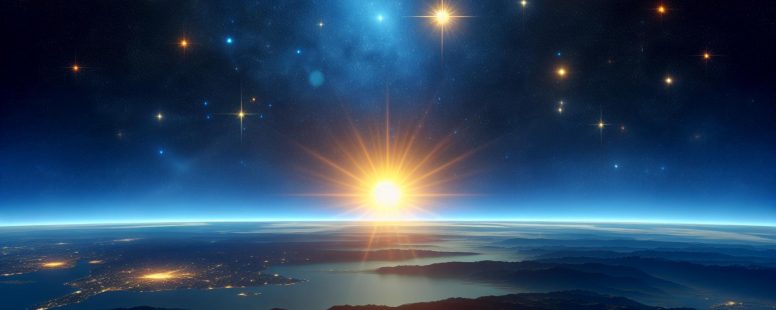
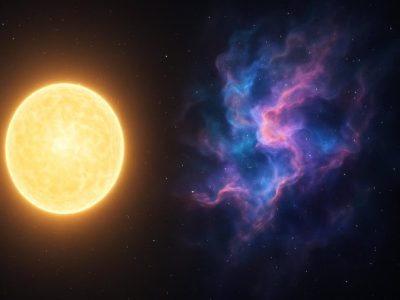
When you gaze up at the night sky, it’s easy to lose yourself in the shimmering expanse of twinkling lights. But what makes some of those points of light stars and others planets? While they might look similar from Earth, these celestial bodies couldn’t be more different in their nature and purpose.
Stars burn with fiery intensity, creating their own light through nuclear fusion, while planets quietly reflect that brilliance as they orbit around stars. One is a powerhouse of energy; the other is a wanderer bound by gravity. Understanding this difference not only deepens your appreciation for the universe but also uncovers fascinating insights into how life itself exists.
So next time you’re stargazing, you’ll know that some of those lights are distant suns blazing millions of miles away, while others are neighbors within our cosmic backyard—planets waiting to be explored.
Understanding Celestial Objects
Planets and stars dominate the night sky, yet their differences define their unique roles. Observing these celestial objects helps you grasp the complexity of our universe.
What Are Planets?
Planets are massive celestial bodies orbiting stars due to gravitational forces. They don’t generate light but reflect starlight, making them visible from Earth. Our solar system contains eight planets, such as Mercury, Jupiter, and Earth.
Planets fall into categories like terrestrial (rocky) or gas giants based on their composition. Terrestrial planets, including Mars and Venus, have solid surfaces and thin atmospheres. Gas giants like Saturn consist mostly of hydrogen and helium gases without a defined surface.
Orbital patterns also distinguish planets from other objects. For example, Earth’s orbit sustains life by maintaining an optimal distance from the Sun within the “habitable zone.” In contrast, distant planets like Neptune experience extreme conditions unsuitable for life as we know it.
What Are Stars?
Stars are luminous spheres powered by nuclear fusion at their cores. This process combines hydrogen atoms to produce immense energy in the form of heat and light. The Sun is Earth’s closest star and sustains life by providing essential energy.
Stars vary in size and brightness depending on mass and age. Massive blue stars burn hotter but exhaust fuel faster than smaller red dwarfs that can last billions of years longer. Betelgeuse in Orion’s constellation exemplifies a red supergiant nearing its lifecycle’s end.
Stars often group into constellations or galaxies containing millions to billions of stellar objects bound gravitationally. The Milky Way galaxy houses countless stars alongside our Solar System—showcasing the vastness beyond what meets your eye during nightly stargazing sessions.
Key Differences Between Planets And Stars
Planets and stars differ fundamentally in their formation, composition, and behaviors within the universe. Understanding these distinctions enhances your comprehension of celestial dynamics.
Formation And Composition
Stars form from collapsing clouds of gas and dust, primarily hydrogen and helium. Their cores ignite nuclear fusion due to immense pressure and temperature. For example, our Sun is a main-sequence star powered by this process.
Planets emerge from residual material around forming stars in protoplanetary disks. They consist mostly of rock, metal, or gas. In our Solar System, Earth has a rocky composition while Jupiter contains mainly hydrogen and helium.
Size And Mass
Stars generally exceed planets in size and mass by vast margins. The Sun’s mass is 333,000 times that of Earth. Massive stars like Betelgeuse can span up to 1 billion kilometers across.
Planets vary widely but remain much smaller than stars. Gas giants like Saturn are larger than terrestrial planets yet still minuscule compared to even small stars such as red dwarfs.
Light Emission
Stars emit their own light through nuclear fusion at their cores—this makes them luminous objects visible across great distances. Sirius A appears bright due to its intrinsic energy output combined with proximity to Earth.
Planets reflect light from nearby stars instead of producing it themselves. Venus outshines many other objects because it reflects sunlight effectively even though lacking its own luminosity.
Orbital Behavior
Stars occupy fixed positions relative to each other over long periods but move within galaxies on enormous scales; for example, the Sun orbits the Milky Way’s center every 225 million years.
Planets orbit around stars under gravitational influence. Earth’s annual revolution around the Sun defines one year while Mars takes about 687 days due to its greater distance from the Sun.
Position In The Universe
Stars cluster into constellations or large-scale structures like galaxies containing billions of individual entities—the Andromeda Galaxy alone has an estimated trillion stars alongside interstellar matter.
Significance Of Distinguishing Planets And Stars
Recognizing the difference between planets and stars enhances your understanding of celestial mechanics and cosmic phenomena. It contributes to advancements in astronomy, scientific research, and your appreciation of the universe’s complexity.
Importance In Astronomy
Understanding planetary and stellar distinctions is essential for mapping the cosmos. Stars serve as reference points due to their relatively fixed positions, aiding in navigation and celestial coordinate systems. For example, sailors historically relied on Polaris (the North Star) for orientation.
Planets’ orbital movements reveal dynamic interactions within solar systems. Observing these motions helped early astronomers like Johannes Kepler identify orbital laws governing planetary motion around stars. Differentiating planets from stars ensures accurate identification of exoplanets, crucial for studying potential life-bearing worlds beyond our Solar System.
Impacts On Scientific Research
Distinguishing these bodies drives breakthroughs in astrophysics and space exploration. Analyzing starlight spectra unveils chemical compositions, ages, and distances of stars, shaping theories on galaxy formation. In contrast, studying planet atmospheres provides insights into climate systems or habitability factors; NASA’s James Webb Telescope recently detected carbon dioxide on an exoplanet.
Conclusion
Understanding the difference between planets and stars deepens your appreciation for the cosmos and its intricate workings. These celestial objects, though vastly different in nature, play essential roles in shaping the universe and advancing scientific discovery.
By recognizing their unique characteristics and behaviors, you gain insight into everything from the formation of solar systems to the potential for life beyond Earth. This knowledge not only enhances stargazing but also connects you to the broader mysteries of space that continue to inspire exploration and curiosity.
To provide the best experiences, we use technologies like cookies to store and/or access device information. Consenting to these technologies will allow us to process data such as browsing behaviour or unique IDs on this site. Not consenting or withdrawing consent, may adversely affect certain features and functions.
Functional
Always active
The technical storage or access is strictly necessary for the legitimate purpose of enabling the use of a specific service explicitly requested by the subscriber or user, or for the sole purpose of carrying out the transmission of a communication over an electronic communications network.
Preferences
The technical storage or access is necessary for the legitimate purpose of storing preferences that are not requested by the subscriber or user.
Statistics
The technical storage or access that is used exclusively for statistical purposes.The technical storage or access that is used exclusively for anonymous statistical purposes. Without a subpoena, voluntary compliance on the part of your Internet Service Provider, or additional records from a third party, information stored or retrieved for this purpose alone cannot usually be used to identify you.
Marketing
The technical storage or access is required to create user profiles to send advertising, or to track the user on a website or across several websites for similar marketing purposes.