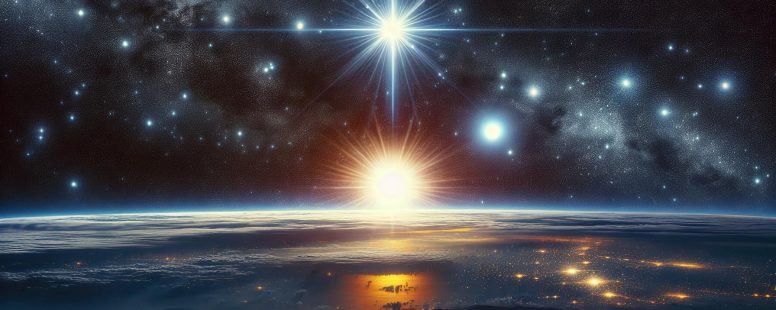
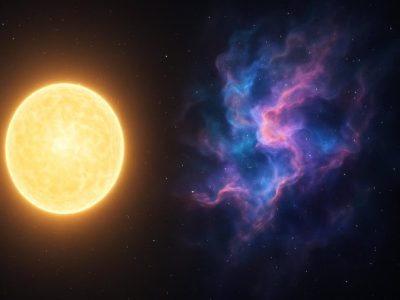
When you gaze up at the night sky, do you ever wonder what separates the dazzling stars from the planets that quietly share their glow? At first glance, they might seem like distant points of light, but their stories couldn’t be more different. Stars burn with fiery intensity, creating their own light through nuclear fusion, while planets reflect borrowed sunlight as they orbit these celestial powerhouses.
Understanding the difference between stars and planets isn’t just about astronomy—it’s about uncovering how our universe works. From the radiant heat of a star to the steady path of a planet, each plays a unique role in shaping cosmic harmony. Whether you’re stargazing or pondering life beyond Earth, knowing what sets them apart adds depth to your view of the cosmos. So next time you look up, you’ll see more than just lights—you’ll see worlds and wonders waiting to be explored.
What Are Stars?
Stars are massive celestial bodies made of hot plasma, primarily hydrogen and helium. They emit light and energy through nuclear fusion occurring in their cores.
Characteristics Of Stars
Stars produce energy by fusing hydrogen into helium under immense pressure and heat. This process releases vast amounts of light and heat that radiate into space. They vary in size, mass, temperature, and luminosity. For example, the Sun is a yellow dwarf star with a surface temperature around 5,500°C (9,932°F), while blue stars exceed 20,000°C (36,032°F).
Stars appear stationary due to their distance from Earth but move at speeds ranging from tens to hundreds of kilometers per second relative to other celestial objects. Their lifespans depend on mass; larger stars burn fuel faster and live shorter lives compared to smaller stars like red dwarfs.
Types Of Stars
Astronomers classify stars based on spectral type, color, temperature, size, and stage in life cycle:
Main Sequence Stars: These include most known stars like the Sun during its stable phase.
Giant Stars: Larger than main sequence counterparts; examples involve red giants such as Betelgeuse.
White Dwarfs: Dense remnants of low-mass stars post-nuclear fusion.
Neutron Stars: Extremely dense stellar cores left after supernovae explosions.
Supergiant Stars: Massive stars nearing end stages; Rigel is one notable example.
Their classification aids understanding of stellar evolution processes across cosmic timelines.
What Are Planets?
Planets are celestial bodies that orbit a star and do not produce their own light. They reflect the light of their parent star and possess unique physical properties based on their composition and location in the solar system.
Characteristics Of Planets
Planets have distinguishing characteristics that set them apart from stars. They are generally smaller than stars and lack nuclear fusion processes in their cores. Most planets exhibit a nearly spherical shape due to gravitational forces.
The planetary atmosphere varies depending on its type, with gas giants like Jupiter having dense hydrogen-helium envelopes while terrestrial planets like Earth have thinner atmospheres composed primarily of nitrogen and oxygen. Unlike stars, planets revolve around stars along fixed orbits, as seen with Earth’s 365-day revolution around the Sun.
Some planets host moons (e.g., Saturn has 146 confirmed moons), rings (e.g., Uranus), or surface features like volcanoes (e.g., Olympus Mons on Mars). These attributes make each planet distinct within its system.
Types Of Planets
Astronomers classify planets into two main types: terrestrial and gas giants. Terrestrial planets include Mercury, Venus, Earth, and Mars; they have rocky surfaces and relatively small sizes compared to other planetary types. Gas giants such as Jupiter and Saturn consist mostly of gases with no solid surface.
Another category includes ice giants like Uranus and Neptune, which feature frozen elements such as water, ammonia, or methane beneath thick gaseous layers. Some exoplanets—planets beyond our solar system—challenge these classifications by exhibiting hybrid traits or extreme conditions unobserved locally.
Each type contributes to the diversity of planetary systems across galaxies—a testament to cosmic complexity shaping astronomical discoveries over time.
Key Differences Between Stars And Planets
Stars and planets differ in their formation, energy production, size, temperature, and orbital behaviors. Understanding these distinctions helps you appreciate the diversity of celestial objects.
Formation And Composition
Stars form from collapsing clouds of gas and dust due to gravitational forces. They consist primarily of hydrogen and helium, undergoing nuclear fusion in their cores. For example, the Sun formed about 4.6 billion years ago from a molecular cloud.
Planets arise from the remaining material around a forming star within a protoplanetary disk. They vary in composition; terrestrial planets like Earth are rocky with metallic cores, while gas giants such as Jupiter contain hydrogen-helium envelopes mixed with other gases.
Light Emission And Energy Production
Stars produce light through nuclear fusion by converting hydrogen into helium at extremely high temperatures and pressures. This process releases immense energy visible as starlight—examples include red dwarfs emitting dim light or blue stars shining intensely due to higher fusion rates.
Planets reflect sunlight instead of generating their own light since they lack internal nuclear reactions. For instance, Venus appears bright because its thick atmosphere reflects sunlight efficiently even though being relatively small compared to stars.
Temperature And Size
Stars exhibit extreme temperatures ranging from thousands to millions of degrees Kelvin depending on their type—white dwarfs can reach up to 100,000 K while red giants have cooler outer layers around 3,000 K. Their sizes range widely; supergiants like Betelgeuse dwarf even large planets.
Planets generally have much lower surface temperatures influenced by distance from their parent star and atmospheric conditions—for example, Mercury’s day side reaches 430°C while Neptune’s surface averages -214°C. Sizes also vary but remain significantly smaller than stars; Earth has a diameter of about 12,742 km compared to the Sun’s nearly 1.4 million km diameter.
Orbital Patterns
Stars move within galaxies but don’t orbit other bodies due to their massive gravitational dominance in systems unless part of binary or multiple star systems where mutual gravitation governs movement—Alpha Centauri is an example involving three stars orbiting each other complexly.
Similarities Between Stars And Planets
Stars and planets, even though their distinct differences, share several similarities within the cosmos. Both are celestial bodies that exist in vast numbers across galaxies, contributing to the structure and dynamics of the universe. You can observe them with telescopes or even the naked eye; many of these objects have been studied for centuries.
Composition
Both stars and planets contain elements like hydrogen, helium, carbon, and oxygen. While stars primarily consist of hydrogen undergoing nuclear fusion (e.g., the Sun), planets also feature these elements in varying proportions—gas giants like Jupiter being rich in hydrogen and helium.
Gravitational Influence
Each exerts a gravitational force on nearby objects. Stars hold planetary systems together through gravity (as seen with our solar system’s Sun), while planets attract moons or rings into orbit around them—like Saturn’s ring system or Earth’s Moon.
Spherical Shape
Gravity shapes both into near-perfect spheres when their mass exceeds a critical threshold called hydrostatic equilibrium. For instance, Earth’s shape mirrors this principle just as much as Alpha Centauri A does among stars.
Presence In Star Systems
You’ll find stars and planets coexisting within star systems. Planets rely on nearby stars for light and heat while forming part of dynamic ecosystems—examples include exoplanetary systems discovered using missions like Kepler.
Interaction With Light
Though they differ fundamentally in how they handle light generation versus reflection, both interact visibly with it: you see starlight directly emitted by nuclear fusion processes; meanwhile reflected sunlight allows observation of planetary surfaces or atmospheres through telescopic imaging techniques.
Why Understanding The Difference Matters
Recognizing the distinctions between stars and planets enhances your comprehension of the universe’s structure. Stars serve as energy sources, driving life-sustaining processes on planets like Earth. Planets, on the other hand, offer diverse environments that support exploration and potential habitability. Without understanding these roles, it’s challenging to appreciate their interconnectedness in cosmic systems.
In astronomy, distinguishing stars from planets helps interpret observational data accurately. For example, identifying a star’s luminosity or a planet’s orbital pattern requires knowing their unique characteristics. Misinterpreting such data could lead to errors in studying celestial phenomena or mapping planetary systems.
Understanding these differences also impacts technology and research advancements. Space missions targeting exoplanets rely on recognizing whether an observed body emits light (star) or reflects it (planet). This distinction guides telescope designs and detection methods used in astrophysics.
From a cultural perspective, separating stars from planets deepens your appreciation for myths and histories tied to constellations or planetary movements. These stories often reflect early human efforts to make sense of celestial objects’ behaviors based on observations of their differences.
Finally, grasping this difference fuels curiosity about extraterrestrial life possibilities. Exploring why some planets can sustain life while others can’t begins with differentiating them from stars that provide essential heat and light conditions for those environments.
Conclusion
Understanding the differences between stars and planets opens a gateway to appreciating the complexity and beauty of the universe. Each plays a unique role in shaping celestial systems, influencing life, and driving scientific exploration. By distinguishing their traits, you not only enhance your knowledge of astronomy but also deepen your connection to the vast cosmos. This awareness inspires curiosity and underscores our place within an ever-evolving universe filled with endless discoveries waiting to be made.
To provide the best experiences, we use technologies like cookies to store and/or access device information. Consenting to these technologies will allow us to process data such as browsing behaviour or unique IDs on this site. Not consenting or withdrawing consent, may adversely affect certain features and functions.
Functional
Always active
The technical storage or access is strictly necessary for the legitimate purpose of enabling the use of a specific service explicitly requested by the subscriber or user, or for the sole purpose of carrying out the transmission of a communication over an electronic communications network.
Preferences
The technical storage or access is necessary for the legitimate purpose of storing preferences that are not requested by the subscriber or user.
Statistics
The technical storage or access that is used exclusively for statistical purposes.The technical storage or access that is used exclusively for anonymous statistical purposes. Without a subpoena, voluntary compliance on the part of your Internet Service Provider, or additional records from a third party, information stored or retrieved for this purpose alone cannot usually be used to identify you.
Marketing
The technical storage or access is required to create user profiles to send advertising, or to track the user on a website or across several websites for similar marketing purposes.