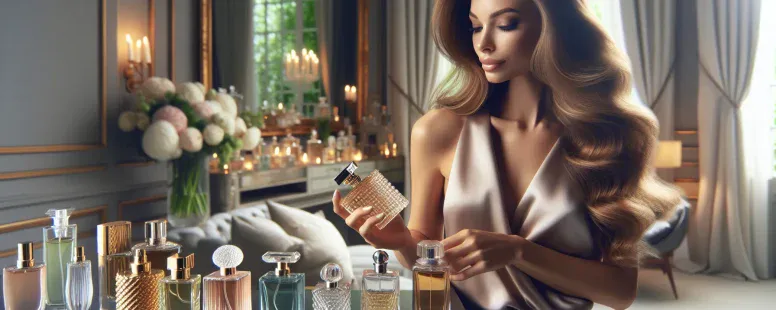
Picture stepping into a sunlit room where a single spritz lingers in the air, weaving invisible threads of memory and emotion. Fragrance isn’t just a finishing touch—it’s a signature, a secret language that speaks before you say a word. But when you reach for that elegant bottle, do you know if you’re choosing perfume or eau de toilette?
The answer might surprise you. Beyond the price tag and pretty packaging, the difference between parfum and EDT can transform how a scent unfolds on your skin and how long it stays with you. Understanding these subtle distinctions isn’t just for fragrance connoisseurs—it can help you find a scent that truly fits your style and mood, unlocking a world of olfactory possibilities.
Understanding Fragrance Types
You encounter so many scent categories lining store shelves, but do you wonder, what really separates them? Fragrance terminology expresses more than just fancy French; it distill core differences. Perfume houses use olfactory labels like parfum (perfume), eau de toilette (EDT), and eau de parfum (EDP)—each echoing a unique narrative about scent composition and strength.
You hear the term concentration tossed about—it’s refering to the ratio of fragrance oil to alcohol. Parfum holds the highest concentration, ranging between 20%-30% oil (Chanel No.5 Parfum exemplifies this richness). Eau de toilette, on the other hand, contains around 5%-15% oil. If you ever sprayed Acqua di Gio EDT after a shower, you notice its lighter trail, it matches this category well. Why does it matter? You walk into a room and want your scent to linger, you’d choose a higher concentration in most cases.
You spot testers in a department store and maybe, without knowing, sampled an EDT, not realizing how quickly its character changed compared to a parfum version. Have you shared a memory of a loved one’s perfume, the trace they left long after leaving? That’s parfum at work—longevity tied to concentration.
Does preference drive your pick, or practicality? Perhaps you opt for parfum before a formal event, seeking intensity and enduring presence, or prefer spritzing EDT on summer mornings for freshness and subtlety. Fragrance experts like Roja Dove point out that environmental factors, such as weather and skin type, affect performance. Warm climates amplify scents, causing EDTs to dissipate even faster (Harvard Health Publishing, 2019).
If labels confuse, you’re not alone. Many shoppers recall hesitating in aisles, deciphering letters and French phrases. Yet, you empower yourself each time you recognize that parfum is the marathon runner, EDT is the casual sprinter. Being mindful of this, your fragrance wardrobe grows versatile, tailored for any season or mood.
What Is Perfume (Parfum)?
Perfume (parfum) offers the most concentrated olfactory experience in the fragrance world. Many perfume experts consider it a crafted art piece, transforming emotions and memories into a wearable essence.
Concentration and Longevity
Perfume (parfum) boasts a fragrance oil content, usually 20%-30%, creating long-lasting impressions. You might notice a single dab lingering 8 to 12 hours on your skin for brands like Chanel No. 5 Parfum or Clive Christian No. 1. Wearing perfume, it’s almost like carrying an invisible signature that marks each room you enter. Fragrance molecules in parfum bind with skin lipids, which results in slower evaporation and deeper scent evolution, compared with lighter eau de toilette (EDT) forms. If your skin runs dry, parfums often persist less—moisturized skin helps scent molecules adhere better (Harvard Health, 2022).
Typical Uses and Occasions
Parfums, due to their intensity and price, frequently accompany special occasions such as weddings, important meetings, or evening galas. Spritzing parfum isn’t the same as daily routine; many reserve this luxury for moments demanding grave impact or sophistication. Portrait of a Lady by Frederic Malle and Baccarat Rouge 540 by Maison Francis Kurkdjian, for instance, both become your silent statement at elegant affairs. You may ask yourself—does every day justify a masterpiece, or is there wisdom in holding back? Parfum gives you options to impress, envelop, or comfort, but they’re best enjoyed where duration matters. Some, preferring subtlety for daily use, save parfum for personal milestones.
What Is Eau De Toilette (EDT)?
EDT walks a lighter path in the fragrance world, offering an approachable essence that lingers without overwhelming the senses. For many, EDT feels like a daytime companion, subtle but present, inviting discovery with every movement.
Concentration and Longevity
EDT contains a mixture of 5%–15% fragrance oil dissolved in alcohol and water, a noticeably lighter formula compared with parfum’s dense character (IFRA, 2023). Because of this, longevity ranges from 3 to 5 hours on skin, as quickly-evaporating top notes—like bergamot, grapefruit, or neroli—dance before fading. If you spritz an EDT before work, chances are the scent gently drifts away by lunchtime, urging reapplication or blending with other lighter scents.
Designers often use EDT to showcase citrus, green, or aquatic accords. For instance, Dior Sauvage EDT opens with zesty bergamot and pepper, radiating freshness for the first hours. Sillage—the scent trail—remains close, rarely shouting its presence across the room.
Typical Uses and Occasions
People use EDT as an everyday fragrance, ideal for casual encounters or professional settings where low-commitment scent is appreciated. If you’re seeking an unobtrusive aura during meetings, coffee dates, or commutes, EDT’s airy profile delivers. Someone may ask, “What are you wearing?” rather than remarking on the scent before you’ve even arrived.
You’ll likely find EDT on vanities in warmer climates, where heavy perfumes suffocate in the afternoon sun. Summer launches from brands like Calvin Klein (CK One) or Versace (Dylan Blue Pour Homme) lean heavily toward EDT, highlighting the category’s versatility.
Maybe you want to experiment with fragrance layering—EDT won’t compete with your body lotion or hair mist, it just harmonizes. That’s why fragrance novices usually start with EDTs; they’re forgiving, easy to wear, and let you change your olfactory signature as easily as swapping accessories.
Ever noticed memories tied to fleeting scents in a park or café, not overpowering, but enough to turn your head? That’s the EDT effect: present yet ephemeral, guiding—never commanding—attention.
Key Differences Between Perfume (Parfum) and EDT
Perfume (parfum) and eau de toilette (EDT) both offer unique scent experiences, yet their differences extend far beyond the names. Knowing what sets these two apart helps you choose a fragrance that fits your style, mood, or occasion.
Scent Strength and Longevity
Scent strength directly connects to fragrance oil concentration in perfume (parfum) and EDT. Parfum contains 20%–30% fragrance oils, making each drop intense and ensuring lasting power. You’ll often find a spritz of Chanel No. 5 Parfum lingers through a whole workday or late-night dinner, still recognizable long after application. EDT, by comparison, sits in the 5%–15% range, so its aroma is lighter and fades quicker—think of Dior Sauvage EDT brightening your morning routine but weakening by lunch. When you wear parfum, your scent narrative endures all day, with richer base notes lingering on your skin, while EDT paints a fleeting fragrance story, closer to a watercolor than an oil canvas.
Price and Bottle Size
Price tags reflect a fragrance’s concentration and longevity. Parfums, being more concentrated and crafted with abundant raw materials, come at a premium. A 50 ml bottle of Tom Ford Black Orchid Parfum can cost over $200, while its EDT counterpart may be half the price. Parfum bottles often are smaller—just 7.5 ml to 30 ml—encouraging moderation, almost like savoring an expensive spirit. On the flip side, EDTs arrive in generous 50 ml or 100 ml sizes, designed for liberal use each day. Value for money pivots on your needs: do you cherish a perfume that stays with you for hours, or do you enjoy the freedom to refresh and reapply often?
Application and Suitability
Application technique shifts based on fragrance strength. Parfum, with its deep intensity, needs only a dab on pulse points—behind the ear or on the wrist. Wearing parfum to a quiet dinner, you create a subtle presence that lingers. EDT, lighter and brisk, can be sprayed freely—neck, shirt, even hair. In busy open-plan offices, EDT’s fresh notes won’t overwhelm neighbors, whereas parfum might command too much attention. Suitability also relates to climate; wearing parfum in humid weather could feel overwhelming, so many opt for EDT in the summer, reserving parfum for cool evenings or special milestones like weddings. Are you choosing your signature scent for daytime vibrance or night-time elegance? This is where the difference between perfume and EDT becomes less a matter of preference and more a choice of personal ritual.
Feature
Perfume (Parfum)
Eau de Toilette (EDT)
Fragrance Oil %
20%–30%
5%–15%
Longevity
8–12 hours (Chanel No.5)
3–5 hours (Dior Sauvage EDT)
Price Example
$200+ for 50 ml (Tom Ford Parfum)
$75–$125 for 100 ml (EDT version)
Bottle Sizes
7.5–30 ml
50–100 ml
Application
Dab on pulse points
Spray freely, reapply as needed
Suitable For
Special events, evenings, cold
Daily wear, work, warm climates
Which One Should You Choose?
Choosing between perfume (parfum) and EDT isn’t just a routine decision—it’s a reflection of your personal narrative. Picture yourself standing at the vanity, sun pouring through the window, your pulse racing before a big job interview. Would you reach for parfum—the olfactory equivalent of a velvet curtain, heavy with anticipation—or spritz on EDT, as crisp and fleeting as the first morning breeze? The answer, curiously, might depends on more than just the event.
Parfum, with its intricate composition and longer staying power, lends itself to evenings under city lights or moments you want etched in memory. Think of attending a wedding or stepping into an important negotiation. A Parisian art dealer once told Fashionista (2019) that her choice of parfum was deliberate: “I want my presence to linger even after I have left the room.” Still, for many, the steep price tag and bold sillage don’t make sense for everyday wear.
EDT, on the other hand, fits like a favorite linen shirt—easy, breathable, and endlessly adaptable. On a busy weekday, or when the temperature outside rivals a desert, EDT’s lighter formula won’t overwhelm colleagues or lunch dates. It also invites more liberal application, so you can experiment: one day citrus, the next aquatic. According to a Mintel report (2021), working professionals most often reach for EDTs due to their affordability and lighter profile.
You might wonder: what about layering? Well, some fragrance experts suggest pairing a soft EDT during the day with dabs of matching parfum for evening sophistication. This approach gives you both flexibility and a scent that evolves with you, like a story told in chapters.
But let’s admit, not everyone wants to fuss with fragrance wardrobes. If you crave a signature scent—one that announces you in any crowd, parfum’s complexity could be your calling card. Conversely, if you change your style as often as the seasons, building a collection of EDTs mirrors your fluidity and curiosity.
So, how will you let your scent speak? Will you reserve parfum for candlelit dinners and milestone celebrations, or let EDT accompany your daily rituals? Fragrance choice isn’t just about preference; it’s about intent, impact, and the subtle art of being remembered.
Conclusion
Choosing between perfume and EDT is about more than just scent—it’s about how you want to present yourself and the impression you wish to leave behind. Whether you gravitate toward the intensity of parfum or the lightness of EDT your fragrance is a powerful tool for self-expression.
Let your preferences guide you and don’t be afraid to experiment with both options. With a better understanding of what sets these fragrances apart you’re now equipped to find a scent that truly matches your lifestyle and personality.
To provide the best experiences, we use technologies like cookies to store and/or access device information. Consenting to these technologies will allow us to process data such as browsing behaviour or unique IDs on this site. Not consenting or withdrawing consent, may adversely affect certain features and functions.
Functional
Always active
The technical storage or access is strictly necessary for the legitimate purpose of enabling the use of a specific service explicitly requested by the subscriber or user, or for the sole purpose of carrying out the transmission of a communication over an electronic communications network.
Preferences
The technical storage or access is necessary for the legitimate purpose of storing preferences that are not requested by the subscriber or user.
Statistics
The technical storage or access that is used exclusively for statistical purposes.The technical storage or access that is used exclusively for anonymous statistical purposes. Without a subpoena, voluntary compliance on the part of your Internet Service Provider, or additional records from a third party, information stored or retrieved for this purpose alone cannot usually be used to identify you.
Marketing
The technical storage or access is required to create user profiles to send advertising, or to track the user on a website or across several websites for similar marketing purposes.