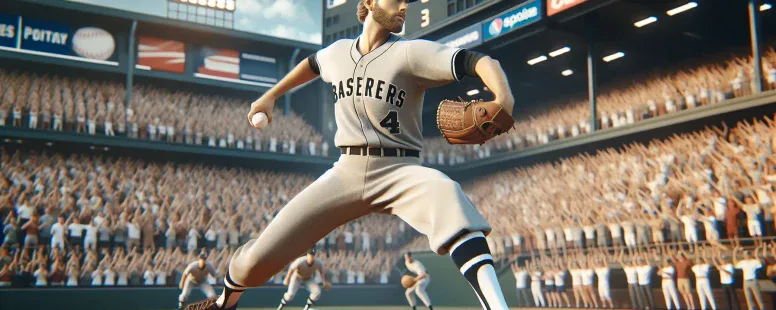
Picture the electric hush of a packed stadium as the final out hangs in the air—your heart pounds because you know you’re witnessing something rare. Baseball’s most elusive feats, the perfect game and the no-hitter, shimmer like legends on the diamond, yet their true nature often slips through the cracks of casual conversation.
Picture the tension as every pitch could tip the balance, the crowd holding its breath with each swing and miss. These moments aren’t just milestones for pitchers—they’re seismic events that ripple through the sport’s history. Unraveling the subtle yet critical differences between a perfect game and a no-hitter unlocks a deeper appreciation for the drama and skill woven into every inning. Get ready to discover why these achievements are more than just numbers on a scoreboard—they’re stories that redefine what’s possible on the field.
Understanding Baseball Milestones
Baseball recognizes two major pitching feats: the perfect game and the no-hitter. Each one creates moments that linger in collective memory. You can think of a no-hitter like walking a tightrope—every pitch clings to hope, every crack of the bat draws the air from the stadium. Could you picture being on the mound, every out tightening the coil of tension, just like Don Larsen in Game 5 of the 1956 World Series?
A no-hitter happens when a pitcher or combination of pitchers prevent all opposing batters from recording a hit throughout at least nine innings, though baserunners might reach—walks, errors, or hit-by-pitches sometimes intervene (MLB, Official Rules). Pitchers Nolan Ryan and Sandy Koufax tossed multiple no-hitters, their names echoing throughout decades, joined by others whose single day of dominance reshaped careers.
A perfect game, though, means pure statistical symmetry. Nobody reaches base. No walks, no errors, not even the smallest misstep. Twenty-seven up, twenty-seven down. This rare achievement—just 24 instances in MLB history as of 2023 (Baseball-Reference)—holds mythic status, something akin to threading a needle through every shadow and light on the diamond. Could any sport offer a performance so unforgiving, where even a teammate’s slight bobble derails history?
What drives pitchers to chase these milestones—legacy, adrenaline, or something even deeper? Journalists recount firsthand Roger Clemens’ meticulous routines and Roy Halladay’s icy focus, yet each game delivers new drama and unique risks. Is the crowd’s silence louder when the final inning approaches, or is it all in the pitcher’s mind?
Ask yourself what emotions would flood you watching your team on the edge of these milestones. Would you dare mention the accomplishment in progress? In baseball’s unwritten lore, some refuse to speak the words aloud, fearing a jinx.
Baseball milestones like the perfect game and no-hitter cultivate legends. You might see them as more than stats—painted moments that ask for reverence, debate, and sometimes heartbreak.
What Is a Perfect Game?
You stand in the ballpark, holding your breath as every pitch slices through the thick air—nobody moves, nobody blinks. In Major League Baseball, a perfect game becomes the pinnacle of pitching performance, something that echoes through stadiums long after the final out. But what really makes a perfect game so much more than just getting batters out?
Definition and Criteria
A perfect game happens when you face at least 27 batters in a standard nine-inning game, and not one reaches base—no hits, no walks, no errors, nothing that gets a player on. Catchers, fielders, and pitchers operate as a single, flawless mechanism, the defense never making a single misstep. According to MLB rules, even a dropped third strike or hit batter ends the pursuit, so it’s a razor-thin line between perfection and its opposite. Among MLB’s pitching feats, a perfect game stands unique since it leaves no margin for human error or luck.
Do you picture how rare it is? As of June 2023, only 24 perfect games had been recorded in over 150 years of MLB history (MLB.com)—fewer than triple plays or even unassisted triple plays. Fans and players, knowing the odds, start eyeing each inning with awe and sometimes old-school superstition—nobody dares to mention the word “perfect” in the dugout when it’s unfolding.
Notable Examples in History
You see some names carved into baseball lore. On May 29, 2010, Roy Halladay pitched a perfect game against the Florida Marlins, demonstrating icy command and precise strikes. Felix Hernandez, known as “King Felix,” harnessed his fastball and changeup on August 15, 2012, to retire all 27 batters against Tampa Bay Rays—a display of power and finesse. Perhaps you recall Don Larsen’s 1956 World Series perfect game, the only one in postseason history, floating forever in highlight reels.
Statistically, less than 0.01% of MLB games end as perfect games according to Baseball Reference. Each perfect game sparks debates: Was it a case of masterful strategy, a bit of luck, or a blend of both? Which play, maybe that diving catch in the seventh inning, kept the run alive? Perfect games combine tension, teamwork, and storytelling—you never know when you’ll witness one, and these moments become etched in the collective memory of baseball fans everywhere.
What Is a No-Hitter?
A no-hitter in baseball stands as a challenge to probability, a tapestry of tension woven through every inning. You feel the suspense with every pitch, tracking history as it unfolds in real-time. Stadiums buzz, scoreboards glow, and each moment seems to ask: how long can perfection on the mound truly last?
Definition and Criteria
A no-hitter means a pitcher—or a team of pitchers, in rare relief situations—keeps all batters from recording a base hit for at least 9 innings. For this feat, walks, errors, and hit batters can let players reach base, differentiating a no-hitter from a perfect game, where no one reach base at all. In the era of strict scoring, Major League Baseball (MLB) recognizes a no-hitter only if it ends after 9 or more innings and the opposing team records zero hits (MLB Official Rules, 2024).
Pitchers, for instance Nolan Ryan, have left their distinct signatures on no-hitter history, with Ryan tossing a record 7 no-hitters between 1973 and 1991. Each no-hitter rewrites expectations—sometimes cakewalks with dominating stuff, sometimes white-knuckle battles stitched together with clutch defense and luck.
How do you define dominance? In a no-hitter, dominance means every pitch hammers another nail, building suspense as hitters and fans feel the weight of each at-bat. Yet, one bloop, one error, or one base on balls can shift narratives entirely.
Memorable No-Hitter Performances
No-hitters have unfolded like dramatic plays on baseball’s grandest stages. On May 27, 2010, Roy Halladay’s clinical dismantling of the Florida Marlins lit up Miami with pinpoint command and icy precision. Or consider Hideo Nomo, who hurled a no-hitter for the Boston Red Sox at Coors Field in 2001—the high-altitude hitter’s park. Against the odds, Nomo tamed both bats and altitude, delivering a “rocky mountain” masterpiece.
The echoes of Nolan Ryan’s work stretch decades. Each of his seven no-hitters vines its way through baseball’s mythology. Ryan’s last no-hitter came in 1991, at age 44, showing that a fiery fastball and relentless spirit doesn’t always fade with age.
Questions often echo in the stands and living rooms: Would that fly ball land? Will the umpire’s strike zone shrink or grow? Could history slip away with a single mishap? These near-misses help paint the emotional topography of a no-hitter—where fans, teammates, and broadcasters avoid the subject, each superstitious word heavy with consequence.
You experience, during those final outs, a kinetic sense of time: each pitch stretching perception, each out drawing players and fans alike deeper into the shared reverie of something rare and almost mythic.
Key Differences Between Perfect Game and No-Hitter
Understanding the distinction between perfect games and no-hitters unlocks the drama embedded in every pitch. Both feats transform stadiums into theaters of suspense, but each brings unique requirements, rarities, and emotional weight.
Player and Team Achievement Comparison
A perfect game demands that both the pitcher and every fielder achieve flawless synergy. You watch each defensive player execute plays with razor-sharp focus since any walk, hit batsman, or error ends perfection instantly. Legendary moments, like Don Larsen’s 1956 World Series perfect game, reveal how a single individual can elevate a whole defense to history’s highest echelon. Contrast this with a no-hitter—a collective effort still, but walks, errors, and even wild pitches can still creep into the storyline. Nolan Ryan, for example, threw seven no-hitters without recording a perfect game, showing that brilliance and imperfection can dance together for nine innings. Your heart might pound as a reliever enters to preserve a combined no-hitter, a feat that blurs lines between individual and team glory.
Rarity and Significance
A perfect game etches itself in the sport’s mythology precisely because it’s exceedingly rare—only 24 times as of 2023 according to MLB.com. You start to wonder what separates mortals from legends each time a pitcher faces the 27th batter with perfection still intact. No-hitters, though more frequent, remain statistical anomalies; 322 occurred in MLB history by 2023, still representing less than 0.2% of games. : which do you keep telling your friends about—the utterly uncontested mastery of a perfect game, or the wild, tension-filled journey to a no-hitter? Each carries its own legacy. Players whisper about jinxes, broadcasters dance around the words, yet fans measure the season’s magic in part by these improbable baseball events. A perfect game stands as the Everest of pitching, while a no-hitter feels like trekking a razor’s edge—close to perfection, but haunted by baseball’s unpredictable bounces.
Why the Distinction Matters in Baseball
Spotting the difference between a perfect game and a no-hitter lets you understand baseball’s narrative arcs more deeply. Picture the crowd in Yankee Stadium, June 18, 1999, watching David Cone retire all 27 Expos batters—it’s perfection not just in terms of pitching but in coordination, luck, and mental fortitude. If a walk or error crept onto the scoreboard, that air of invincibility would’ve instantly vanished, even if the hit column stayed untouched. Can you picture how the dugout’s tension shifts? A perfect game, as linguists might say, “maximizes the dependency chain”—each play depending utterly on the success of the last.
Every perfect game whispers legacy. When Don Larsen delivered his World Series gem in 1956, he changed not just the box score but the sport’s mythology (MLB.com). A no-hitter, like those crafted by Nolan Ryan or Hideo Nomo, mirrors resilience more than flawlessness. Walks, errors, hit batsmen—they break up the harmony, they introduce noise into the dependency framework, yet the pitcher’s willpower prevails. That’s a story of overcoming, not just dominating.
Baseball’s rules encode these differences. In a perfect game, not a single dependency fails: no walks, no errors, no opposing batters reaching base in any way; this syntactic purity heightens the drama. In a no-hitter, though, your dependency graph allows some branching—errors or walks, but never a hit. Still, as famed broadcaster Vin Scully mused, both accomplishments “turn a ballpark into a cathedral.”
Curious fans often debate: which feat’s more difficult, more meaningful, more fun to relive? The consensus—if such a thing exists—leans toward the perfect game’s rarity (only 24 since 1876), and the stories built around these moments become baseball’s folklore. But ask a pitcher—does the adrenaline from dodging loaded bases in a no-hitter not bring just as much joy, or terror, as the clean sheet of a perfect game? Making sense of these distinctions means appreciating how narrative, probability, and athletic skill interlock.
If you’re keeping score by the numbers:
Feat
MLB Occurrences (as of 2023)
Most Famous Examples
Perfect Game
24
Don Larsen (1956 WS), Roy Halladay (2010)
No-Hitter
320+
Nolan Ryan (7 times), Hideo Nomo
Witnessing either is like seeing linguistic ambiguity play out in real life: sometimes, the story’s in the flawless sentence, sometimes, it’s in the phrase that almost falls apart, but doesn’t. Next time you watch a game, consider how every pitch stitches a new line in baseball’s ever-evolving narrative. Would you celebrate the impossible, the improbable, or the drama in between? The choice, like the final out, always hangs in the balance.
Conclusion
Both perfect games and no-hitters stand as testaments to baseball’s unpredictability and drama. When you witness either, you’re not just watching a game—you’re part of a rare moment that will be talked about for generations.
These achievements remind you why baseball continues to captivate fans around the world. Whether you’re in the stands or following along at home, the pursuit of perfection always delivers a story worth remembering.
To provide the best experiences, we use technologies like cookies to store and/or access device information. Consenting to these technologies will allow us to process data such as browsing behaviour or unique IDs on this site. Not consenting or withdrawing consent, may adversely affect certain features and functions.
Functional
Always active
The technical storage or access is strictly necessary for the legitimate purpose of enabling the use of a specific service explicitly requested by the subscriber or user, or for the sole purpose of carrying out the transmission of a communication over an electronic communications network.
Preferences
The technical storage or access is necessary for the legitimate purpose of storing preferences that are not requested by the subscriber or user.
Statistics
The technical storage or access that is used exclusively for statistical purposes.The technical storage or access that is used exclusively for anonymous statistical purposes. Without a subpoena, voluntary compliance on the part of your Internet Service Provider, or additional records from a third party, information stored or retrieved for this purpose alone cannot usually be used to identify you.
Marketing
The technical storage or access is required to create user profiles to send advertising, or to track the user on a website or across several websites for similar marketing purposes.