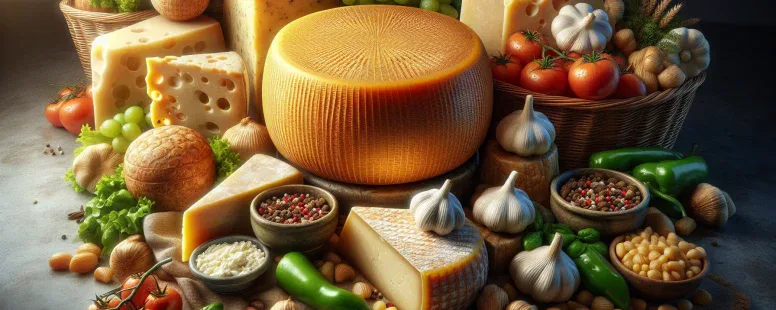
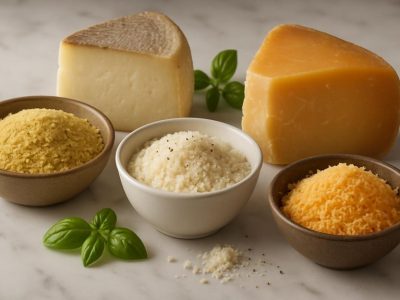
Picture yourself in a bustling Italian market—aromas swirling, wheels of cheese stacked high, each promising a taste of tradition. You reach for a wedge, but pause. Parmigiano Reggiano or Pecorino Romano? Both look similar, yet their stories and flavors couldn’t be more distinct.
Your next pasta dish could be transformed by the cheese you choose. Parmigiano Reggiano brings a nutty, crystalline crunch while Pecorino Romano surprises with a sharp, salty punch. Beyond taste, each cheese carries centuries of heritage and unique health perks that might just change the way you savor Italian cuisine. Ready to discover what sets them apart and why it matters for your next meal?
Overview of Italian Hard Cheeses
Italian hard cheeses, including Parmigiano Reggiano and Pecorino Romano, shape regional cuisines and traditions across Italy. You find Parmigiano Reggiano carved into thick wedges at bustling markets in Parma, its aroma filling the air as vendors slice samples for curious shoppers. Pecorino Romano, on the other hand, sits in Roman trattorias, grated fresh over tangled plates of pasta alla carbonara or cacio e pepe. If you wonder what makes these cheeses so distinctive, consider the relationship between their origins, ingredients, and purposes.
Usually, Italian hard cheeses rely on time, patience, and expert technique. Milk from specific breeds, like the Reggiana cows for Parmigiano Reggiano or Sardinian sheep for Pecorino Romano, determines the core flavors. There exists a strict geographic protection—known as PDO (Protected Designation of Origin)—which means you won’t find authentic Parmigiano Reggiano being made in Milan or authentic Pecorino Romano outside Lazio, Sardinia, or Grosseto. The law say authenticity matters, with PDO marking guaranteeing you real tradition in every wheel (European Commission, 2023).
Production ages the cheeses differently. Parmigiano Reggiano typically matures for at least 12 months, often extending beyond 30 months, yielding rich umami and a signature crystalline crunch. Pecorino Romano matures for a shorter span—5 to 8 months—intensifying tangy and saline notes perfect for bold pasta shapes.
Restaurants in Italy almost never substitute one cheese for the other, as each carries a culinary role. Picture your fork swirling through risotto finished with Parmigiano Reggiano, lending depth without overpowering the rice. Or picture biting into a piece of Roman pizza bianca, where Pecorino Romano provides sharpness that balances olive oil’s lushness. Do you ever notice the way a cheese’s saltiness lingers when you pair it with ripe tomatoes?
What stories would you uncover if you traced a wheel of cheese from the dairy pastures outside Parma or from the steep hillsides of Sardinia all the way to your kitchen table? Maybe your favorite memory comes from a market stall in Bologna, or perhaps a dish inspired by Gusto Sardo restaurant in Cagliari, where cheesemakers discuss their aging secrets in dialect.
Try questioning assumptions the next time you’re browsing grocery shelves. Why not experiment with both cheeses in different recipes and compare the results? Realize that each bite contains centuries of trade, migration, and invention—layers as complex as any novel or landscape.
Cheese
Milk Source
Region of Origin
Minimum Maturation
Protected Designation
Typical Uses
Parmigiano Reggiano
Cow (Reggiana)
Parma, Modena, etc.
12 months
PDO
Risotto, salads
Pecorino Romano
Sheep (Sarda)
Lazio, Sardinia, Grosseto
5 months
PDO
Pasta, pizza
Origins and History
Understanding the origins and history of Parmigiano Reggiano and Pecorino Romano unlocks the essence of Italian hard cheeses. Every rind, every granule, holds centuries of tradition that speaks to regional pride.
Parmigiano Reggiano: Roots in Northern Italy
Parmigiano Reggiano starts its journey in Parma, Reggio Emilia, Modena, and parts of Bologna and Mantua. Producers there’s crafted wheels as early as the 13th century, documented by monastery records and medieval trade ledgers. You’ll see the cheese woven into Renaissance banquets; poets like Boccaccio referenced it in stories of culinary delight. Artisans strictly followed a code—each wheel stamped with the signature pin-dot mark, denoting geographic promise. Rural families passed knowledge father to son, sustaining authenticity through world wars, economic upheaval, and EU protection laws. Discovering Parmigiano’s legacy means you’re experiencing a tangible link to Northern Italy’s agricultural roots, shaped by the unique cows, lush pastures, and soft Alpine breezes. Which town could claim the richest flavor, Parma or Reggio? Debate continues still.
Pecorino Romano: Ancient Roman Tradition
Pecorino Romano draws its life from Lazio, Sardinia, and the Tuscan Maremma where shepherds tended flocks since the Roman Republic. Livy, Columella, and Pliny the Elder described the cheese’s importance in their annals, essential for feeding Roman legions (source: The Oxford Companion to Cheese, 2016). While Parmigiano resided on feudal estates, Pecorino belonged to the road and the field—salty enough for long journeys, hard enough to grate over grain or beans. Picture Roman soldiers, pockets heavy with crumbly cheese, their armor reflecting the Mediterranean sun. Those same preservation techniques, dry-salting and aging in limestone cellars, persist in modern dairies. Do Sardinian ewes eat the same wild herbs as two millennia ago? Some shepherds even says so, claiming flavor echoes history. Tastes forged by empire, war, and migration, Pecorino’s identity remains a monument to the resilience of its makers.
Milk Source and Production Methods
Milk sources and production secrets make Parmigiano Reggiano and Pecorino Romano instantly recognizable in an Italian market. You’ll see it in their colors, smell it in their aroma, and definitely taste the difference in every dish.
Cow’s Milk vs Sheep’s Milk
Parmigiano Reggiano uses only Reggiana cow’s milk collected from Emilia-Romagna and Lombardy herds (Consorzio del Formaggio Parmigiano Reggiano, 2023). Cows graze on locally grown hay, which imparts grassy and nutty undertones. You might recall someone slicing into a Parmigiano wedge and describing it as “sweet and milky.” That sweetness owes everything to the cow’s milk. Pecorino Romano, in contrast, relies entirely on Sardinian and Lazio sheep’s milk. Sheep’s milk, richer and fattier, creates a cheese that’s sharper, saltier, and more assertive on the palate. Have you ever tasted Cacio e Pepe in Rome? Its distinct zing arises from sheep’s milk’s unique fat and protein structure.
Aging Process Differences
Aging transforms both cheeses, and the timeline reveals key distinctions. Parmigiano Reggiano matures for 12 to 36 months—a length that encourages crunchy tyrosine crystals to develop and deepens umami flavors (Parmesan.com, 2024). Cheesemakers stack wheels in cool cellars, turning each weekly—picture monks tending their silent, golden wheels. That process can make one wonder: how could so much patience be hidden in a single shard? Pecorino Romano, meanwhile, matures for 5 to 8 months, though artisan wheels can push up to a year. This shorter span yields a crumbly texture and intense, piquant notes. A chef might shave both cheeses atop pasta, but one bite instantly tells you which cheese aged longer.
Cheese
Milk Source
Aging Period
Distinctive Traits
Parmigiano Reggiano
Reggiana cow’s milk
12–36 months
Nutty, crystalline, savory
Pecorino Romano
Sardinian, Lazio sheep
5–12 months
Sharp, salty, crumbly
Do you ever ask yourself why Roman soldiers carried Pecorino but not Parmigiano on the march? The answer lies in sheep’s milk’s high salt content and the cheese’s rapid aging, which made it perfect for travel and endurance. Next time you choose a wedge at the deli, consider whether you want the quiet patience of Parmigiano or the bold, ancient energy of Pecorino—each wedge tells its own story about history, land, and the animals behind every grainy bite.
Flavor, Texture, and Culinary Uses
Experience unfolds in every bite—Parmigiano Reggiano and Pecorino Romano transport you right into the heart of Italy’s culinary tradition. You’ll find every cheese tells a story, and here, those stories are voiced through flavor, texture, and how you integrate them into favorite Italian dishes.
Taste and Aroma Profiles
Parmigiano Reggiano brings a melody of nutty, buttery notes, mingling with a faint hint of fruit and fresh-cut grass. Its crystalline crunch feels like hidden gems beneath your teeth, each shard melting away slowly on the tongue. If you ever opened a wheel in Parma, you’d recognize the faint hay and milk aroma right away.
Pecorino Romano, on the other hand, makes its presence knows instantly—a sharp, tangy bite almost pinches your taste buds. On the nose, it offers grassy, earthy undertones reflecting the wild Sardinian pastures where the sheep wander. Try shaving some over cacio e pepe; that pop of salt and sheep’s milk richness can take pasta from humble to heavenly. Which aroma pulls you closer: the delicate freshness of Parmigiano or the brisk boldness of Pecorino Romano?
Best Uses in Italian Cuisine
Parmigiano Reggiano graces risottos, soups, and salads, making every spoonful richer. Grate it over creamy risotto alla Milanese, and the grains soak up a caramel-like depth. Classics like eggplant parmigiana or Caesar salad dressings lean on Parmigiano to bind and balance flavors. Bartolomeo Scappi, the Renaissance chef, crowned his tortelli with this cheese, and you can, too.
Pecorino Romano’s salinity seasons Roman pasta classics like carbonara, amatriciana, and especially cacio e pepe. Sprinkle some onto a slice of Roman-style pizza bianca; you’ll instantly raise the bar. Its sturdy crumb lets it stand up to robust vegetables such as artichokes or fava beans. Roman soldiers carried Pecorino Romano for energy on lengthy campaigns—will you discover its stamina for your next kitchen adventure?
Cheese
Primary Flavor
Texture
Aroma
Typical Uses
Parmigiano Reggiano
Nutty, savory, buttery
Crystalline, firm
Milky, grassy
Risotto, salads, soups, dressings
Pecorino Romano
Sharp, salty, tangy
Hard, crumbly
Earthy, herbal
Carbonara, pizza, vegetables, pasta
Nutritional Differences
You walk into an Italian deli and see Parmigiano Reggiano and Pecorino Romano side by side—each a nutritional heavyweight, but just how different are they for your next meal? Nutrition shapes how these legendary cheeses fit in your life, whether you count calories, manage sodium, or seek out protein.
Parmigiano Reggiano offers a rich protein punch with about 35g protein in each 100g serving (USDA, 2023), nourishing anyone who chases muscle or satiety. The cheese brings calcium—over 1,200mg per 100g—supporting bones and steady nerves. Sodium? Parmigiano carries 650mg per 100g, a moderate tally for most diets.
Pecorino Romano tells a saltier tale. With 1,100mg sodium in each 100g (Twilley, Smithsonian Magazine), it delivers that signature briny bite, but it also means those tracking their salt intake might want to use restraint. Pecorino Romano doesn’t slouch on protein—32g per 100g—nor on calcium, which sits near Parmigiano’s at 1,060mg per 100g.
Compare their fat profiles and you’ll uncover further distinction. Parmigiano Reggiano contains 29g fat per 100g, mostly saturated, yet still marginally lower than Pecorino Romano’s 32g total fat (Cai, Journal of Dairy Science, 2021). The higher fat content, especially with sheep’s milk, makes Pecorino both richer and more caloric—about 393 kcal per 100g, compared to Parmigiano’s 392 kcal.
Nutritional Content Table
Nutrient (per 100g)
Parmigiano Reggiano
Pecorino Romano
Protein
35g
32g
Fat
29g
32g
Calcium
1,200mg
1,060mg
Sodium
650mg
1,100mg
Calories
392 kcal
393 kcal
Some will say Pecorino Romano’s intensity makes smaller servings ideal—think of it as the spice, not the main ingredient. Others, especially those looking for lower sodium, may gravitate towards Parmigiano Reggiano. A chef in Rome once joked, “You season with Pecorino, you finish with Parmigiano.” What about someone with lactose intolerance? Aged cheeses like both, due to fermentation, contain minimal lactose—less than 0.1g per 100g—making them digestible for many.
What happens if you pair both cheeses with the same dish? Sometimes the outcome bursts with flavors: Parmigiano adds depth, Pecorino sparks brightness. Nutrition speaks through taste, too, reminding you—flavor and health aren’t always a tradeoff.
Price and Availability
Shopping for Parmigiano Reggiano and Pecorino Romano introduces you to a world where tradition meets the modern marketplace. Parmigiano Reggiano’s price, reflecting its 12-36 month aging process and PDO protection, often ranges from $18 to $26 per pound in specialty stores in cities like New York or Chicago, according to data from the Specialty Food Association. Pecorino Romano, by contrast, generally appears on shelves between $10 and $17 per pound. The shorter aging time and wider production zones makes Pecorino Romano more affordable across U.S. retailers—Whole Foods and Trader Joe’s stock it year-round.
Table: Average U.S. Retail Price per Pound (2024 Estimates)
Cheese
Price Range ($/lb)
Typical US Retailers
Parmigiano Reggiano
18–26
Whole Foods, Eataly, Wegmans
Pecorino Romano
10–17
Trader Joe’s, Safeway, Costco
Finding Parmigiano Reggiano, you might feels like hunting for a prized artifact. Not every deli keeps authentic wheels, since only handfuls of Italian dairies—about 330 by the Consorzio Parmigiano Reggiano count—ship them overseas. Pecorino Romano’s producers, more dispersed across Lazio, Sardinia, and Tuscany, manage broader exports that fill supermarket bins even in smaller towns.
Picture yourself scanning the cheese counter at Eataly. The cheesemonger describes the “casein pin” on the rind of Parmigiano Reggiano—a kind of authenticity badge—and weighs a wedge that cost almost twice its neighbor, the crumbly Pecorino Romano. Why pay more? It’s the time, labor, and scarcity stamped into each granular bite.
Ever wonder why weddings in Parma feature showers of grated Parmigiano instead of confetti? Locals cherish its value— some families even save rinds for brodo and stews, stretching out every ounce. Meanwhile, Roman trattorias grate Pecorino Romano in heaping clouds atop carbonara: generous, affordable, universally available.
If you value authenticity and exclusivity, Parmigiano Reggiano offers a deeper investment but limited accessibility, especially outside metropolitan areas. Pecorino Romano, in contrast, lets you experiment—try dusting it over spring asparagus or melting it in polenta, any time the craving strikes.
Which cheese dominates your next shopping trip? Does nostalgia nudge you to Parmigiano’s stately wheel, or do you choose Pecorino’s tangy accessibility? Prices and availability not only shapes your kitchen, but they also connect you to centuries of culinary heritage, kept alive in each wedge and rind.
Conclusion
When you reach for Parmigiano Reggiano or Pecorino Romano you’re not just adding cheese to your dish—you’re inviting centuries of tradition and craftsmanship to your table. Each bite offers a taste of Italy’s rich heritage and the dedication of skilled artisans.
Let your palate guide you as you explore these iconic cheeses. Whether you crave the nutty complexity of Parmigiano Reggiano or the bold tang of Pecorino Romano you’ll discover new ways to elevate your favorite recipes and celebrate authentic Italian flavors in every meal.
To provide the best experiences, we use technologies like cookies to store and/or access device information. Consenting to these technologies will allow us to process data such as browsing behaviour or unique IDs on this site. Not consenting or withdrawing consent, may adversely affect certain features and functions.
Functional
Always active
The technical storage or access is strictly necessary for the legitimate purpose of enabling the use of a specific service explicitly requested by the subscriber or user, or for the sole purpose of carrying out the transmission of a communication over an electronic communications network.
Preferences
The technical storage or access is necessary for the legitimate purpose of storing preferences that are not requested by the subscriber or user.
Statistics
The technical storage or access that is used exclusively for statistical purposes.The technical storage or access that is used exclusively for anonymous statistical purposes. Without a subpoena, voluntary compliance on the part of your Internet Service Provider, or additional records from a third party, information stored or retrieved for this purpose alone cannot usually be used to identify you.
Marketing
The technical storage or access is required to create user profiles to send advertising, or to track the user on a website or across several websites for similar marketing purposes.