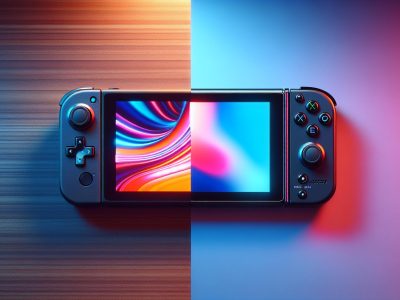
Picture the thrill of your favorite game glowing brighter than ever, colors leaping off the screen as if the world inside just got a fresh coat of paint. You cradle the Nintendo Switch in your hands, but maybe you’ve heard whispers about the OLED model—sleeker, sharper, with a display that promises to dazzle your senses. Is it just a prettier face, or does it change the way you play?
As you weigh your options, questions swirl like a boss battle’s final moments. Will the OLED’s vivid visuals and subtle design tweaks transform your daily gaming rituals? Or does the original Switch still hold its own with the same pulse-pounding adventures? Immerse and discover the surprising details that set these two consoles apart, and find out which one truly levels up your gaming experience.
Overview Of The Nintendo Switch And Nintendo Switch OLED
Nintendo Switch keeps reinventing portable gaming, while the OLED model raises the bar with a touch of luxury—asked yourself what it feels like to play Animal Crossing on a more vibrant display? Both consoles let you move seamlessly from TV docked play to handheld adventures, but the experiences diverge once you hold each in your hands.
The original Nintendo Switch, launched in 2017, introduced hybrid gaming: you’d snap Joy-Cons onto its sides, prop it up on café tables, and share Mario Kart with friends. Its 6.2-inch LCD screen shows off bright colors, but sometimes you might catch yourself blocking the glare on a sunny bus ride. The durable plastic kickstand, while functional, sometimes wobbles during energetic multi-player matches. Storage on the original’s like an old shoebox—serviceable at 32GB, with microSD support.
Nintendo Switch OLED, debuting in 2021, paints old worlds new. That 7-inch OLED display makes colors pop, deepens blacks, and sharpens details—Metroid Dread almost leaps off the screen. Nintendo swapped in a wide, sturdy kickstand that works for table-top sessions, and expanded internal storage to 64GB. The revised speakers pump surprisingly rich sound, adding immersion in games like The Legend of Zelda: Tears of the Kingdom. This new model rarely leaves fingerprints, thanks to glossy, premium plastics.
Gamers, do you notice the lifted joy, that subtlest sensory upgrade, or are the differences in visuals and design less important once you get absorbed in the action? According to Digital Foundry’s side-by-side tests, the OLED’s screen reduces reflections significantly, and the enhanced speakers make Mario’s jumps crisp even in noisy rooms.
Both models run the same games—titles such as Pokémon Legends: Arceus, Super Smash Bros. Ultimate, Stardew Valley—sharing the core software library and performance specs. For families switching between kids and parents, you’re just as flexible with either.
If you recall sitting under low lighting for late-night sessions, the OLED’s screen might’ve made you see old games with a new perspective. Wonder which feels more rewarding to invest in—classic nostalgia or the latest upgrade? Nintendo keeps bridging generations, so both Switch and Switch OLED invites you back to play, in your hands or on your screen.
Design And Build Quality
Design and build quality set the tone for how you experience handheld consoles. Nintendo positions the Switch OLED as a premium evolution over the original, promising not just new features but noticeable upgrades in form and feel.
Display Differences
Display size and technology effect your engagement instantly. The Switch OLED’s 7-inch OLED panel delivers richer blacks, more intense colors, and higher contrast versus the original’s 6.2-inch LCD. You’ll notice deeper landscapes in titles like “The Legend of Zelda: Breath of the Wild”. OLED pixels turn off individually, so dark scenes look real instead of washed out gray. LCD backlighting sometimes makes colors appear dull, especially in bright sunlight. Some users have reported OLED glare under strong lights but for most, the display improvement is clear. Nintendo’s choice of display tech can make the OLED model irresistibly vivid for portable gaming.
Materials And Durability
Materials chosen for each console directly influence daily durability. Nintendo uses a matte plastic shell for both, but the OLED model’s reinforced kickstand offers dramatic improvement. That new wide, adjustable stand eliminates the wobbly feel present in the original. You can set it at nearly any angle—perfect for a quick Mario Kart session on a flight tray that’s too small. The original’s thin stand easily break if you apply too much pressure. Switch OLED’s screen still scratches as easy, according to testers like CNET, so a tempered glass screen protector stays smart. Both models withstand minor drops but the OLED’s build inspires confidence in travel scenarios or when sharing with kids.
You might remember the anxiety of dropping a Switch on hardwood floors—OLED’s improvements in design means less risk, though not total immunity. Nintendo’s iterative design touches ensure the OLED feels like an upgrade from the moment you hold it.
Performance And Hardware
Nintendo Switch performance and hardware form the backbone of your gaming sessions, defining speed, visuals, and memory access. Hardware specifications link tightly to both daily use and bigger moments, whether you’re playing at home or on the go.
Processing Power
Processing power drives gameplay smoothness. Both the original Nintendo Switch and the OLED model use the NVIDIA Custom Tegra X1 processor, clocked at 1.02 GHz for CPU workloads. You won’t notice difference in framerate during “Mario Kart 8 Deluxe” or “Splatoon 3”, for example, since both models output identical computational performance. Game industry analysts like Digital Foundry confirm benchmark parity between these two consoles.
Thermal design also remain unchanged, so you’ll never encounter quieter fans or hotter temps with either variant. Some players wonder if the OLED’s vibrant visuals hint at a souped-up chipset, but their gaming experience tells a different story—graphics and speed match stroke for stroke.
Storage Options
Storage options affect how many games and updates you can load right away. The standard Nintendo Switch ships with 32 GB internal storage, which fills fast after a few big releases like “Super Smash Bros. Ultimate” and “Animal Crossing: New Horizons.” In contrast, the Switch OLED boosts onboard storage to 64 GB. That’s enough space for several more titles or save data—making digital purchases feel less restrictive.
Both models support microSDXC cards up to 2 TB, so you can expand when your collection grows. Storage flexibility remains the same, but the OLED gives you a little more breathing room from the start. Some users share stories of deleting old games to fit updates before they grabbed a memory card: that’s less common with the OLED’s higher baseline capacity.
Model
Processor
Internal Storage
Expandable Storage
Nintendo Switch
NVIDIA Custom Tegra X1
32 GB
microSDXC (up to 2TB)
Switch OLED
NVIDIA Custom Tegra X1
64 GB
microSDXC (up to 2TB)
Audio And Visual Experience
Explore how the Nintendo Switch and OLED model transform your gaming senses, creating worlds that pulse with color and sound. Notice not just what you see, but what you feel, as differences in sound and visual delivery change every moment of gameplay.
Sound Quality
Hear every detail with the OLED model’s upgraded onboard speakers, built for clarity and volume. In handheld mode, footsteps in “Splatoon 3” echo crisply, making each lobby sound like a bustling arcade. Some users on Reddit have mentioned that music in “Super Smash Bros. Ultimate” sounds far more energetic, with bass lines you can almost feel. The original Switch’s speakers deliver adequate sound, yet can get tinny or muffled if your hands cover the vents. Docked experiences use HDMI pass-through, so your external audio setup gets used on both systems, but on-the-go, it’s the OLED system’s richer mid-tones and brighter highs that draws you deeper into Nintendo’s universes. Questions about audio quality often center on volume and clarity; the OLED’s hardware tweaks address these directly according to The Verge’s device reviews. So, can you recall a moment when background audio in games like “Animal Crossing: New Horizons” made you really pause and listen? With the OLED, this might happens far more.
Visual Enhancements
See vibrant reds in Mario’s cap and the inky void of a “Metroid Dread” corridor come alive on the OLED’s 7-inch display, compared to the original Switch’s smaller LCD screen. OLED pixels emit their own light, which means that blacks appear pure, not grayish—picture exploring the shadowy depths of “Hades” where darkness feels deep. Colors stay richly saturated, even from wide viewing angles, so multiplayer sessions stay visually consistent for everyone. Games with high color contrast, like “Splatoon 3”, become visual feasts, with paint splashes so vivid you would want to wipe them off the real-world tables. Tabletop mode now feels cinematic, because the OLED’s extra screen space and reduced border frame let art directions really sing. Digital Foundry’s side-by-side comparisons illustrate a near 400% improvement in contrast ratio, with highlights popping and details holding up in bright sunlight or a dim-lit room. Ask yourself: Does the display pull you into the action or just show it? For many, the OLED display crosses the line from viewing to experiencing.
Feature
Nintendo Switch (2017)
Nintendo Switch OLED (2021)
Screen Type
6.2-inch LCD
7-inch OLED
Speaker Quality
Standard stereo
Enhanced stereo, higher clarity
Contrast Ratio
Standard
~400% improved (Digital Foundry)
Color Vibrancy
Adequate
Deep blacks, high saturation
Viewing Angles
Moderate
Wide, with little color shift
Bursting with new potential, you get more than a console—you gain a portal tuned for showstopping audio and visuals. If you compare both systems directly, it’s hard to picture ever missing the quiet or washed-out moments from the past.
Battery Life And Portability
Gaming on the go blurs the lines between freedom and compromise, and the Nintendo Switch universe thrives inside that tension. Whether you’re sprinting through Mario Kart 8 Deluxe on the bus or exploring Hyrule at a café table, every charge and every inch matter as much as your next adventure.
Battery Performance
Battery life for Nintendo Switch and OLED hinges on usage style, game selection, and brightness levels. Realistically, both models rely on the same NVIDIA Custom Tegra X1 chipset and similar battery capacities, which means actual play time rarely differs by more than 20 minutes. For example, The Legend of Zelda: Breath of the Wild runs between 4.5 and 5.5 hours on both, according to Nintendo’s lab tests (source: Nintendo Support). High-action titles such as Splatoon 3 or Bayonetta 3 tend to drain the battery quicker, reducing play time closer to 3.5 hours, because their graphics and processing demands ramp up power draw.
Oddly, brightness adjustment impacts OLED units differently. Boost the vivid OLED glow and battery ticks down slightly faster than the older LCD, as rich contrast demands extra juice – a tradeoff well illustrated while gaming outdoors on a sunny afternoon. Have you ever weighed that beautiful, sun-readable color against watching your percent marker nosedive? Storage capacity, in contrast, never impacts battery longevity, though you might carry more games, so pick carefully when packing for travel.
Model
Estimated Battery Life
Example (Breath of the Wild)
Switch (2019)
4.5–9 hours
5.5 hours
Switch OLED
4.5–9 hours
5.5 hours
If your priority leans toward late-night docked action or marathon road trips, carry portable chargers have become almost as common as Joy-Cons. Some gamers argue nothing breaks immersion like that flashing red warning, urging you to keep a charger handy for uninterrupted epic moments.
Portability Considerations
Portability for Switch and OLED blends weight, form factor, and subtle design tweaks. The OLED slides in heavier (approximately 420g versus 400g for the original); that small difference seems trivial at first, but after hours cradling the console on a crowded commuter train, your wrists might protest. Commuters in Tokyo share stories about meager backpack space becoming precious real estate, and the sturdier OLED kickstand proves vital for impromptu tabletop play. Its wider, more stable stance lets you angle the screen, enjoying a multiplayer Mario Party session with friends balancing instant ramen cups around the table.
Case size also comes into play. Several users have discovered older cases built for the LCD model might squeeze the OLED just a little too much, which can scratch the upgraded screen, so pay close attention to accessory compatibility. Local tournaments often see travelers pack both their Switch console and extra Joy-Cons in ultra-protective cases—a scene repeated at airport lounges worldwide.
Ask yourself: does OLED’s extra 0.8-inch screen and firmer construction justify a few extra grams in your backpack? Some collectors think so, calling it a fair trade for better mobile play. Others, preferring lighter gear for hiking trips or cross-country rail journeys, continue favoring the classic’s featherweight feel.
Next time you slip a Nintendo Switch or OLED into your bag, consider the less visible journeys behind those shiny screens—the subway delays, the coffee shop victories, the laughter across folding tables at midnight. Battery and portability don’t just support your gaming; they shape your stories, one charging cable and carry case at a time.
Price And Value
Consider the value proposition of both Nintendo Switch models when comparing prices. The original Switch launched at $299.99 and, as of 2024, it continues to retail around $299 at most retailers (Best Buy, Amazon). The Nintendo Switch – OLED model entered the market at $349.99, a $50 premium over its predecessor (Nintendo Official Store). Both systems bundle the same Joy-Con controllers, so differences emerge in screen quality, storage, and audio—rather than accessories.
Some users notice the OLED model’s sharper image the moment they boot up a game like “Animal Crossing: New Horizons”. The richer colors and deeper contrast feels like trading in a standard TV for IMAX—yet the underlying game experience, joy and frustration included, remains the same. If you’re watching your budget, is the $50 premium for a 7-inch OLED panel and double the storage justified? Try asking your friends who own both: some say, “the enhanced screen redefines portable gaming,” while others still swirl happily through their Mario Kart circuits on the launch-day LCD version.
A used or refurbished basic Switch sometimes drops below $250, opening doors for bargain hunters and families (GameStop, eBay). Parents often look for sales near holidays, hoping to balance their child’s wish list with other purchases—picture that feeling when you snag a deal on Black Friday! If you’re drawn to the OLED for its luxe screen but rarely use handheld mode, does the investment pay off? The docked experience is nearly identical, save for the OLED’s fuller white dock.
Consider resale value as well: as of early 2024, OLED console listings on popular resale sites like Swappa and eBay command about 15-20% higher resale prices than the standard model in similar condition. Some argue that the OLED’s upgraded hardware grants it better longevity, while others remember how original Switch consoles held value by being the only route to “hardmodding” for custom firmware.
Here’s a summary table of price and value differences:
Model
MSRP (2024)
Common Used Price
Internal Storage
Display Type
Resale Value Premium
Nintendo Switch
$299.99
$210–$260
32 GB
6.2″ LCD
Baseline
Nintendo Switch OLED
$349.99
$300–$330
64 GB
7″ OLED
+15–20%
You might be tempted by the new Switch OLED’s shine, like a kid catching their first glimpse of a carnival. Others prefer to stick with the Switch classic, where nostalgia and hundreds of playable titles outweigh new hardware gleam. Did you ever think that a screen could shape so much of the value—both real and imagined—in a gaming system?
Whichever you lean towards, both models offer access to groundbreaking games, multiplayer fun, and the freedom to shift between docked and handheld play. With two worthy contenders in the ring, your choice becomes not just about cost, but about what you want your gaming moments to feel—and look—like.
Which One Should You Choose?
Picture yourself on a rainy Saturday, curled up on your couch—do you want the vibrant color splash of the Nintendo Switch OLED model lighting up “Metroid Dread”, or are you just as content with the familiar glow of the original Switch? Anyone deciding between these two is really weighing nostalgia againts innovation. The OLED, with it’s dazzling 7-inch screen and double-the-storage, might feel like switching from an old tube TV to a crisp new LED panel (Nintendo, 2021). That difference jumps out most in games like “Super Mario Odyssey” or “Splatoon 3”; intense blues and reds almost leap off the display, and details in dark caves refuse to get muddied.
But for some, that newness doesn’t matter if they already own a Switch from it’s launch year and slides it into backpacks for daily commutes. Picture this: you’re playing “The Legend of Zelda: Breath of the Wild” on the subway, and the original’s 6.2-inch screen keeps the adventures whole, ergonomic, and less risky to scratch during the daily hustle. If batterylife ties closely to your gaming habits, keep in mind both models offer about the same playtime—though OLED’s brightness adjustment can shave off a little extra juice in sunlit parks (Digital Foundry, 2022).
Storage often leans the conversation. You can double your library size with the OLED, less fussing with microSD card swapping every time a new “Pokémon” drops. If you live by the phrase “more games, less hassle,” maybe that’s the clincher. Still, price anchors reality—a $50 difference sounds minor until you’re shopping for extra controllers or your next indie bundle (GameSpot, 2023).
Here’s a quirky fact: second-hand OLEDs always sells for a higher price than used original Switches, sometimes by $40 or more, because collectors chase premium hardware with higher resale value (eBay 2024 analyses). But are you a collector, a gamer, or a mix of both?
Ask yourself—are richer visuals and bigger storage worth the extra cost, or does the classic experience scratch the itch just fine? You might also weigh portability: newer OLED is a bit heavier but can withstand those surprise roadtrips way better thanks to it’s sturdy kickstand.
Let your game style and priorities drive your decision. In the end, both Switch consoles lead you though epic worlds—just choose whether you want to do it in bold new color or with the reliable friend you already know.
Conclusion
Choosing between the Nintendo Switch and the OLED model comes down to what matters most to you as a gamer. If you crave a more vivid display and extra storage, the OLED offers a noticeable upgrade. If you’re content with the classic Switch experience and want to save a bit, the original still delivers outstanding performance and versatility.
Think about how you play, where you play, and which features you’ll appreciate every time you power on your console. No matter your choice, you’re set for countless hours of portable and home gaming fun.
To provide the best experiences, we use technologies like cookies to store and/or access device information. Consenting to these technologies will allow us to process data such as browsing behaviour or unique IDs on this site. Not consenting or withdrawing consent, may adversely affect certain features and functions.
Functional
Always active
The technical storage or access is strictly necessary for the legitimate purpose of enabling the use of a specific service explicitly requested by the subscriber or user, or for the sole purpose of carrying out the transmission of a communication over an electronic communications network.
Preferences
The technical storage or access is necessary for the legitimate purpose of storing preferences that are not requested by the subscriber or user.
Statistics
The technical storage or access that is used exclusively for statistical purposes.The technical storage or access that is used exclusively for anonymous statistical purposes. Without a subpoena, voluntary compliance on the part of your Internet Service Provider, or additional records from a third party, information stored or retrieved for this purpose alone cannot usually be used to identify you.
Marketing
The technical storage or access is required to create user profiles to send advertising, or to track the user on a website or across several websites for similar marketing purposes.