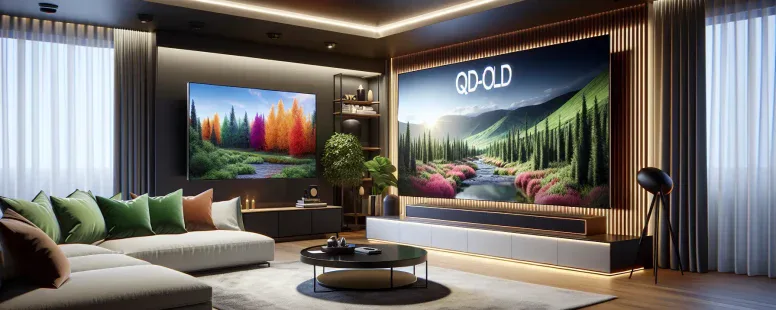
Picture settling into your favorite spot, ready to immerse yourself in a cinematic masterpiece. The screen lights up, vivid colors and deep contrasts pulling you into another world. But what makes one display more breathtaking than another? If you’re torn between QD-OLED and OLED technology, you’re not alone.
These two cutting-edge display types promise stunning visuals, but they achieve them in very different ways. From richer hues to sharper details, each has its own unique strengths that can transform your viewing experience. Understanding these differences isn’t just about tech specs—it’s about finding the perfect match for how you watch, play, and connect.
What Is OLED?
OLED, or Organic Light Emitting Diode, is a display technology that uses organic compounds to produce light. It eliminates the need for a backlight, resulting in thinner screens and superior image quality.
How OLED Technology Works
OLED displays use layers of organic materials sandwiched between electrodes. When electricity passes through these materials, they emit light directly at the pixel level. This process enables individual pixels to turn off completely, creating true blacks and an infinite contrast ratio.
For example, in a dark scene of a movie like “Interstellar,” OLED screens show black areas as truly black instead of dark gray. Each pixel operates independently, enhancing color accuracy and brightness levels while reducing energy consumption during darker visuals.
Advantages Of OLED Displays
True Blacks: Pixels can switch off entirely in dark areas, offering unmatched depth.
Wide Viewing Angles: Colors remain consistent even when viewed from extreme angles.
Lightweight Design: Absence of a backlight allows for ultra-thin panels ideal for wall-mounted TVs.
Faster Response Times: Ideal for gaming as it minimizes motion blur during fast-paced action scenes like those in “Call of Duty.”
Energy Efficiency in Dark Content: Less power usage when displaying predominantly dark visuals due to self-emissive pixels.
What Is QD-OLED?
QD-OLED, or Quantum Dot Organic Light Emitting Diode, combines quantum dot technology with OLED to enhance color reproduction and brightness. This hybrid approach delivers vivid visuals by leveraging the strengths of both technologies.
How QD-OLED Technology Works
QD-OLED creates images using blue OLED light as a base. Unlike traditional OLEDs, it incorporates a quantum dot layer that converts blue light into red and green colors. This process eliminates the need for color filters found in standard OLEDs, improving efficiency.
Each pixel in a QD-OLED display emits its own light directly. It uses precise layering of organic compounds and quantum dots to produce accurate colors and high brightness levels. By avoiding backlighting entirely, it achieves perfect blacks similar to traditional OLEDs while delivering enhanced color vibrancy.
Benefits Of QD-OLED Displays
Improved Color Accuracy: Quantum dots enable more precise color rendering compared to conventional displays.
Higher Peak Brightness: The absence of filters allows brighter images without sacrificing energy efficiency.
Wide Viewing Angles: Retains consistent image quality even when viewed from extreme angles.
Enhanced HDR Performance: Supports better contrast ratios and brighter highlights.
Examples include premium TVs like Samsung S95B or Sony A95K, which showcase superior performance due to this advanced technology.
Key Differences Between QD-OLED And OLED
Quantifying the differences between QD-OLED and OLED highlights how each technology caters to distinct viewing preferences. Factors like color accuracy, brightness, contrast, and cost play pivotal roles in understanding their unique attributes.
Color Accuracy And Brightness
QD-OLED displays excel in delivering superior color accuracy due to quantum dot layers that efficiently convert blue light into red and green without using traditional filters. This process enhances brightness levels by providing more vibrant colors across a broader gamut. For instance, televisions like Samsung’s S95B showcase richer hues compared to standard OLEDs.
OLED panels also offer excellent brightness and decent color reproduction but may struggle with peak brightness when displaying HDR (High Dynamic Range) content in brightly lit environments. If you prioritize vivid colors and top-tier luminance for cinematic experiences, QD-OLED is a better option.
Contrast And Black Levels
Both technologies achieve perfect blacks by emitting light at the pixel level without requiring backlights. But, OLED remains unrivaled in producing infinite contrast ratios because of its ability to switch off individual pixels completely.
While QD-OLED maintains exceptional black levels similar to OLED, its approach slightly affects overall contrast when combined with increased brightness output during HDR playback. You’d notice deeper contrasts on pure OLED screens during darker scenes where subtle details matter most.
Viewing Angles
Wide viewing angles are strong suits of both display types; but, QD-OLED’s quantum dot layer minimizes distortion from extreme side angles more effectively than traditional OLEDs. Watching content with friends or family ensures consistent image quality even if you’re seated away from the center position—making it ideal for group settings or larger rooms.
Standard OLEDs could exhibit minor shifts in color tone or intensity under steep viewing angles even though retaining overall sharpness.
Durability And Lifespan
OLED panels may experience burn-in over time if static images remain displayed for prolonged periods—a concern about durability especially for gamers or users who consume channel logos frequently. Manufacturers carry out software-based solutions like pixel shifting but can’t eliminate this entirely.
Conversely, QD-OLED offers improved resistance against burn-in issues thanks to advancements in material engineering combined with efficient heat management systems embedded within these displays’ architecture structures itself!
Applications Of QD-OLED And OLED Displays
TVs And Monitors
QD-OLED and OLED displays are widely used in high-end TVs and monitors. OLED screens, known for their perfect blacks and infinite contrast, excel in dark room environments, enhancing cinematic experiences. They work well for content creators needing accurate color reproduction during editing tasks. Popular models include the LG C3 and Sony A80L.
For brighter rooms or HDR-focused viewing, QD-OLED displays offer advantages with improved brightness and vibrant colors due to quantum dot layers. This makes them suitable for gaming setups or home theaters where dynamic range is essential. Examples like the Samsung S95C highlight these strengths by delivering exceptional visuals across various lighting conditions.
Smartphones And Wearables
OLED dominates smartphone displays because of its thin design, energy efficiency on darker UI themes, and deep black levels that enhance readability in low-light settings. Flagship devices like the iPhone 15 Pro Max use OLED panels to achieve stunning clarity while conserving battery life.
QD-OLED hasn’t yet gained adoption in smartphones but could revolutionize wearable devices if adapted due to its enhanced brightness and durability features. Advanced smartwatches might benefit from this technology by offering better outdoor visibility without compromising battery performance or display quality over time.
Which Technology Is Better For You?
Choosing between QD-OLED and OLED depends on your viewing needs, room conditions, and preferred content type. Each technology offers distinct advantages that cater to different use cases.
Prioritize cinematic experiences in dark rooms? OLED displays provide superior black levels and infinite contrast ratios by turning off individual pixels completely. This makes them ideal for movie enthusiasts seeking immersive depth in darker scenes. Models like the LG C3 deliver unmatched performance for such environments.
Need vibrant colors and high brightness? QD-OLED excels with its quantum dot layer, producing richer colors and higher peak brightness compared to traditional OLEDs. If you watch HDR-heavy or brightly lit content often, QD-OLED models like the Samsung S95C ensure brilliant visuals without compromising details.
Concerned about burn-in risks? Gamers or users displaying static images for long periods might prefer QD-OLED since it exhibits better resistance to burn-in due to advanced material engineering. But, standard OLED panels still provide excellent lifespan when used moderately or with varied content types.
Watch from wide angles or group settings frequently? QD-OLED minimizes color distortion more effectively at extreme viewing angles than traditional OLEDs, making it a better choice for family living rooms or social gatherings.
Consider your budget too; while OLED is generally more affordable across models, premium features of QD-OLED can justify its higher cost if vivid color accuracy and durability align with your priorities.
Conclusion
Choosing between QD-OLED and OLED eventually comes down to your specific needs and viewing habits. Both technologies offer exceptional performance, but their strengths cater to different preferences. Whether you value the unmatched black levels of OLED or the vibrant brightness and color accuracy of QD-OLED, there’s a display option that aligns with your priorities.
Take into account factors like room lighting, content type, and budget to make an well-informed choice. By understanding what each technology excels at, you can ensure a viewing experience that perfectly complements your lifestyle.
To provide the best experiences, we use technologies like cookies to store and/or access device information. Consenting to these technologies will allow us to process data such as browsing behaviour or unique IDs on this site. Not consenting or withdrawing consent, may adversely affect certain features and functions.
Functional
Always active
The technical storage or access is strictly necessary for the legitimate purpose of enabling the use of a specific service explicitly requested by the subscriber or user, or for the sole purpose of carrying out the transmission of a communication over an electronic communications network.
Preferences
The technical storage or access is necessary for the legitimate purpose of storing preferences that are not requested by the subscriber or user.
Statistics
The technical storage or access that is used exclusively for statistical purposes.The technical storage or access that is used exclusively for anonymous statistical purposes. Without a subpoena, voluntary compliance on the part of your Internet Service Provider, or additional records from a third party, information stored or retrieved for this purpose alone cannot usually be used to identify you.
Marketing
The technical storage or access is required to create user profiles to send advertising, or to track the user on a website or across several websites for similar marketing purposes.