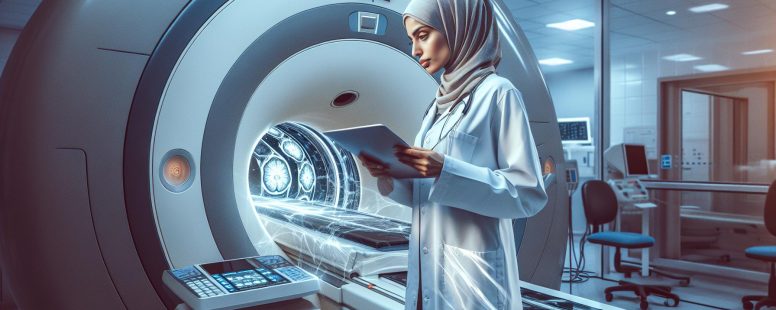
Imagine stepping into a world where the unseen becomes visible, where technology peels back the layers of your body to reveal its secrets. This is the area of medical imaging, where MRI and PET scans play starring roles. Each offers a unique lens into the intricate dance of your body’s inner workings, but how do they differ?
MRI, with its magnetic embrace, captures the elegance of soft tissues, painting vivid pictures of muscles, organs, and the brain. Meanwhile, PET scans illuminate the hidden symphony of cellular activity, using radioactive tracers to spotlight metabolic processes and reveal the subtle whispers of disease.
Understanding the difference between these two powerful tools can empower you to make informed decisions about your health. Jump into the intriguing area of MRI and PET scans, and discover how each can offer a unique perspective on the mysteries within.
Overview of Medical Imaging Techniques
Medical imaging techniques offer insight into the human body, revealing its complexity and illuminating health challenges. You may have encountered a doctor discussing an MRI or a PET scan, wondering what these terms mean for your diagnosis.
MRI (Magnetic Resonance Imaging): This technique creates detailed images of internal structures using strong magnetic fields and radio waves, particularly useful for visualizing soft tissues. It’s often employed to assess the brain, spine, and joints. For instance, if you have chronic back pain, an MRI might help pinpoint the source by showing if any herniated discs exist.
PET (Positron Emission Tomography) Scan: PET scans focus on metabolic processes, indicating how tissues and organs are functioning. They use radioactive tracers, which emit signals captured to form images highlighting areas of high chemical activity. This technique excels in detecting cancerous tissues, as tumors often exhibit increased metabolic rates.
Both imaging methods provide different yet complementary data. An MRI offers structural details, while a PET scan reveals functional insights. In complex cases like neurological disorders, combining these can give a comprehensive view—MRI showing brain anatomy, PET displaying brain activity patterns.
You might wonder, how do these technologies impact personal treatment plans? By understanding and leveraging the strengths of MRI and PET scans, healthcare providers tailor strategies that align with your specific medical needs.
The choice of technique depends on various factors, such as the suspected condition and the information required for a diagnosis. For example, while evaluating cardiac health, MRIs assess myocardial structure, PET scans gauge blood flow and metabolism. This ensures that you receive precise and targeted medical assessments.
What is an MRI?
An MRI, or Magnetic Resonance Imaging, creates detailed images of soft tissues, organs, and structures within your body. It relies on powerful magnets and radio waves to visualize internal components, which is particularly useful for diagnosing conditions affecting the brain, spine, and joints.
How MRI Works
MRI uses strong magnetic fields and radio waves to produce detailed images. The process involves placing your body inside a machine containing a magnet. It causes hydrogen atoms in the body to align with the magnetic field. Radio waves then knock these atoms out of alignment. As they return to their original position, they emit signals captured by the machine, which a computer converts into images.
Advantages of MRI
MRI offers exceptional detail and clarity, making it invaluable for examining complex structures like the brain. It doesn’t use ionizing radiation, which reduces the risk compared to X-rays or CT scans. Its ability to differentiate between soft tissues makes it ideal for detecting issues like torn ligaments or tumors.
Limitations of MRI
Even though its benefits, MRI has limitations. Those with metal implants, such as pacemakers, may not undergo this procedure safely. The scanning process can be noisy and lengthy, often uncomfortable for those with claustrophobia. Costs can also be high, and availability might be limited in some areas, impacting accessibility for timely diagnosis.
What is a PET Scan?
A PET scan is an advanced imaging technique that assesses metabolic activity within the body. It’s instrumental in identifying abnormal cellular functions, especially in cancerous tissues, where rapid growth increases metabolic rates.
How PET Scan Works
PET scans use radioactive tracers to visualize metabolic processes. The process begins by injecting the tracer into the bloodstream. These tracers often consist of glucose-related compounds, allowing them to accumulate in areas with high metabolic activity. The PET scanner then detects the emitted gamma rays to generate images. The intensity of the signals corresponds to the concentration of metabolic activity, highlighting any abnormalities.
Advantages of PET Scan
PET scans offer several benefits in medical diagnostics. They provide functional insights, making them valuable in oncology to detect cancer stages. Unlike other imaging techniques, PET scans can distinguish between benign and malignant tumors based on metabolic changes. They’re also used to evaluate treatment effectiveness by observing changes in metabolic activity. Also, PET scans play a crucial role in cardiology, assessing blood flow and identifying heart diseases.
Limitations of PET Scan
There are some limitations to consider with PET scans. The use of radioactive tracers, albeit in small quantities, poses minimal radiation exposure. PET scans often have lower spatial resolution compared to other imaging methods, potentially limiting their ability to detect smaller lesions accurately. Cost and availability can also be significant barriers, with many facilities lacking access to this technology. Preparing for a PET scan can be logistically challenging due to time-sensitive tracer decay.
Understanding these aspects of PET scans aids in making informed decisions about medical imaging tailored to your diagnostic needs.
Key Differences Between MRI and PET Scan
Explore the primary differences between MRI and PET scans to gain a deeper understanding of their unique applications in medical imaging.
Technology Used
MRI utilizes strong magnets and radio waves to generate detailed images of soft tissues. This technology aligns hydrogen atoms, allowing precise capture of organs and structures. PET scans, on the other hand, rely on radioactive tracers injected into the body. These tracers emit gamma rays, highlighting metabolic activity and functional aspects of tissues. Understanding these differences offers insights into their complementary roles.
Applications in Diagnosis
MRI excels in diagnosing conditions involving soft tissues like tendons or the brain. It’s particularly effective in assessing neurological conditions and musculoskeletal disorders. PET scans are optimal for detecting cancer, heart diseases, and brain disorders by identifying increased metabolic activity. Both scans offer valuable information, yet the choice depends on the specific diagnostic need.
Image Clarity and Details
When it comes to clear images, MRI leads the field by providing high-resolution images, making it ideal for detailed anatomical assessments. PET scans offer insights into metabolic functions but with a lower spatial resolution. Even though this, PET images reveal dynamic processes that are crucial for understanding a disease’s progression or response to treatment.
Safety and Risks
MRI is generally safe, using no ionizing radiation, but it can pose risks to those with metal implants due to its strong magnetic field. PET scans expose you to minimal radiation from radioactive tracers. Although safe, repeated exposure is limited. Both procedures present safety considerations and contribute to precision in modern diagnostics.
Choosing the Right Imaging Technique
Selecting between MRI and PET scans involves evaluating unique medical requirements. Each technique offers distinct advantages based on the specific context and condition.
Factors to Consider
Purpose: MRI excels in providing detailed images of anatomical structures, such as brain tumors, ligament injuries, or herniated discs. PET scans, on the other hand, reveal functional activity, effective in assessing cancer metabolism and neural disorders.
Safety: MRI is safe for most individuals unless they have metal implants; PET scans involve minimal radiation exposure due to radioactive tracers. Ensure you’re informed about these safety considerations before proceeding.
Cost and Accessibility: MRI machines may not be readily available in all areas, often leading to higher costs and potential delays. PET scans may also be costly, primarily due to the need for radioactive tracers.
Diagnostic Needs: Target soft tissue anomalies with MRI if structural information is crucial, or opt for PET scans to evaluate metabolic functions when assessing cancer or checking treatment response.
Neurological Disorders: Combine MRI’s detailed anatomical imaging with PET’s function-focused approach for comprehensive assessments of conditions like Alzheimer’s or epilepsy.
Oncology: Use PET scans to detect cancerous tissues and track disease progression; MRI adds value with its high-resolution imagery of affected areas for treatment planning.
Cardiology: Identify heart tissue viability, blood flow issues, or myocardial scars using PET scans; MRI can offer insights into structural changes in cardiomyopathy care.
Understanding the capabilities and limitations of each imaging technique empowers you to make informed decisions for accurate diagnosis and effective treatment planning tailored to your individual needs.
Conclusion
When exploring the complex world of medical imaging, understanding the distinct roles of MRI and PET scans is crucial. Each technique offers unique insights—MRI excels in providing detailed structural images, while PET scans reveal metabolic activities within the body. Your choice between these methods should be guided by the specific diagnostic needs and the type of information required. Whether you’re dealing with neurological disorders, cancer, or other conditions, selecting the right imaging technique can significantly impact the accuracy of diagnosis and effectiveness of treatment. By being informed, you empower yourself to make decisions that align with your health goals.
To provide the best experiences, we use technologies like cookies to store and/or access device information. Consenting to these technologies will allow us to process data such as browsing behaviour or unique IDs on this site. Not consenting or withdrawing consent, may adversely affect certain features and functions.
Functional
Always active
The technical storage or access is strictly necessary for the legitimate purpose of enabling the use of a specific service explicitly requested by the subscriber or user, or for the sole purpose of carrying out the transmission of a communication over an electronic communications network.
Preferences
The technical storage or access is necessary for the legitimate purpose of storing preferences that are not requested by the subscriber or user.
Statistics
The technical storage or access that is used exclusively for statistical purposes.The technical storage or access that is used exclusively for anonymous statistical purposes. Without a subpoena, voluntary compliance on the part of your Internet Service Provider, or additional records from a third party, information stored or retrieved for this purpose alone cannot usually be used to identify you.
Marketing
The technical storage or access is required to create user profiles to send advertising, or to track the user on a website or across several websites for similar marketing purposes.