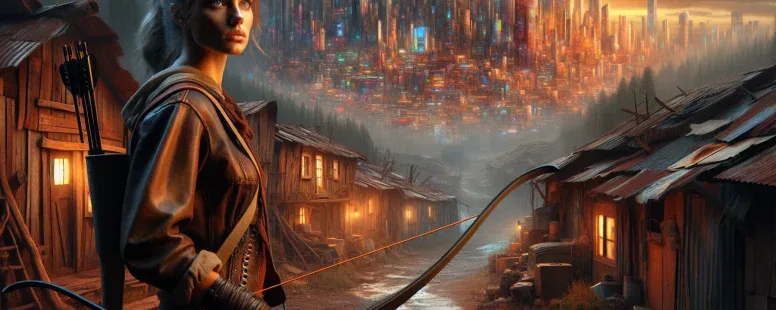
Picture stepping into the world of Panem, where every glance holds tension and every word carries weight. Whether you’ve flipped through the gripping pages of The Hunger Games or watched its action-packed scenes unfold on screen, you know each medium offers a unique experience. But how these two versions shape your connection to Katniss’s journey?
Books pull you deep into her thoughts, immersing you in raw emotions and vivid details that movies often can’t fully capture. On the other hand, the films bring Panem to life visually—its fiery arenas, haunting Capitol opulence, and heart-stopping moments playing out before your eyes. Each format has its strengths but also leaves something behind.
Overview Of The Hunger Games
The Hunger Games, authored by Suzanne Collins, presents a dystopian society divided into 12 districts controlled by the Capitol. Every year, two “tributes” from each district are chosen to participate in a televised fight to the death called the Hunger Games. This narrative combines survival, societal oppression, and personal resilience.
Katniss Everdeen, the protagonist, volunteers for her sister Primrose during the reaping ceremony. Her journey encapsulates themes of sacrifice and rebellion against injustice. The book deeply delves into Katniss’s internal struggles with morality and survival tactics while balancing her relationships with Peeta Mellark and Gale Hawthorne.
The film adaptation offers a visual representation of Panem’s harsh realities. From District 12’s poverty-stricken landscapes to the Capitol’s opulence, viewers witness stark contrasts that emphasize social inequality. Action sequences like those in the arena deliver tension through cinematography but sacrifice some of Katniss’s inner monologues present in the book.
Both formats highlight universal themes such as power dynamics and individual agency within oppressive systems but do so using different storytelling approaches tailored to their medium-specific strengths.
Key Differences Between Movie And Book Hunger Games
The Hunger Games book and movie adaptations differ significantly in their storytelling methods, character portrayals, and thematic emphasis. These variations highlight the unique strengths of each medium while altering how you experience the narrative.
Plot Differences
The book provides a first-person perspective through Katniss Everdeen’s narration, immersing you in her thoughts during pivotal moments. The movie omits much of this internal monologue, focusing instead on external events and visual storytelling. For instance, in the book, you understand Katniss’s strategy during the games through detailed explanations of her decisions. In contrast, the film simplifies or excludes some strategies to maintain pacing.
Certain scenes are altered or removed entirely in the films. An example is Madge Undersee’s absence; she gives Katniss the mockingjay pin in the book but doesn’t appear in the movies. Instead, Greasy Sae hands it over at The Hob marketplace to streamline storytelling.
Character Development
Books investigate deeply into characters’ motivations and backstories that movies can’t fully explore due to time constraints. Peeta Mellark’s complex feelings for Katniss receive more nuance in text form, especially his struggle between genuine love and strategic gameplay. Gale Hawthorne’s role also shifts—his rebellious tendencies are clearer in later books than films.
The lack of Rue’s detailed cultural background reduces emotional depth onscreen compared to written descriptions which include District 11’s customs like their whistle signals used for communication among workers.
Themes And Messages
Themes such as survival tactics and moral dilemmas take center stage differently across mediums. While both formats emphasize power imbalances within Panem’s districts versus Capitol elites’ luxury, nuances vary; readers grasp these themes more subtly via nuanced prose rather than explicit visuals dominating cinematic depictions (e.g., lavish Capitol costumes).
Impact Of These Differences On The Audience
The differences between the book and movie versions of The Hunger Games lead to varied emotional responses and interpretations from audiences. Each medium influences how you perceive characters, themes, and events within Panem’s dystopian world.
Book Readers’ Perspectives
Books immerse you in Katniss’s psyche through a first-person narrative that explores her fears, moral conflicts, and survival instincts. By understanding her inner dialogue, you gain a deeper empathy for her struggles. For example, the book elaborates on Katniss’s hesitations about forming alliances in the arena due to trust issues rooted in her upbringing. Such introspection is absent in the films, potentially altering your perception of her decisions.
You’ll notice how certain characters like Madge Undersee play pivotal roles in building thematic layers that reinforce rebellion origins. Since Madge is excluded from the movies, readers might feel a stronger connection to symbols like the mockingjay pin because they know its original backstory.
Movie Viewers’ Perspectives
Films focus on visual storytelling, heightening tension with dynamic action sequences and vivid imagery but simplifying complex character arcs. Watching District 12’s desolation juxtaposed against Capitol’s extravagance visually conveys class disparities without requiring lengthy explanations. If you’ve seen Rue’s death scene onscreen, you’ll remember its emotional impact amplified by music and cinematography rather than internal monologues.
But, omitting key details—like Rue teaching Katniss about cultural traditions—might leave viewers with less context about Panem’s diverse districts. Still, films excel at showcasing large-scale battles and revolution visuals that books can only describe abstractly.
Adaptation Challenges
Adapting intricate narratives like The Hunger Games involves balancing fidelity to source material with cinematic constraints such as runtime limitations or audience expectations. You may find some plot elements condensed or removed entirely; for instance Gale’s expanded role aligns better with Hollywood storytelling conventions prioritizing love triangles over subtle political nuances presented in text form.
Notable Omissions And Additions
Differences between the book and film versions of The Hunger Games include significant omissions and additions that impact plot depth, character arcs, and thematic exploration.
Scenes And Subplots
The omission of Madge Undersee is one of the most notable changes. In the book, Madge gives Katniss the mockingjay pin as a symbol of rebellion. The film alters this by having Katniss find it in The Hob, removing Madge’s role entirely. This change simplifies Katniss’s connection to the pin but reduces its narrative significance tied to District 12’s dynamics.
Another omitted subplot involves Peeta’s leg injury during the Games. While he loses a leg in the book and receives a prosthetic, this detail is absent from the films, lessening both his physical vulnerability and emotional bond with Katniss as she cares for him.
Additions include expanded scenes about President Snow’s motives. The films show private conversations between Snow and Seneca Crane that aren’t present in the books. These scenes provide viewers with insight into Panem’s political manipulation, enhancing their understanding of Snow’s authoritarian control.
Character Changes
Some characters undergo notable transformations or erasures. For example, Lavinia, a Capitol Avox who serves as an important figure in illustrating Capitol oppression in the books, doesn’t appear in the first movie adaptation at all. Her absence diminishes some nuances about Capitol cruelty toward dissenters.
Effie Trinket gains more screen time in later films compared to her limited portrayal in early books. Her increased presence adds comic relief but also humanizes her loyalty to Katniss and Peeta over time—a perspective not fully explored through text alone.
Rue’s cultural background also faces simplification on-screen. While her district identity carries significant weight in Suzanne Collins’ writing—highlighting systemic exploitation—the film focuses more on Rue’s bond with Katniss than these broader social themes.
Conclusion
Exploring The Hunger Games through both the books and films offers unique perspectives that cater to different storytelling preferences. Each medium brings its own strengths, whether it’s the emotional depth of Katniss’s internal struggles in the books or the gripping visuals and action sequences in the films.
These differences shape how you connect with the characters, themes, and world of Panem, highlighting how adaptations can transform a story while maintaining its core essence. Eventually, both formats provide compelling experiences that enrich your understanding of this dystopian saga.
To provide the best experiences, we use technologies like cookies to store and/or access device information. Consenting to these technologies will allow us to process data such as browsing behaviour or unique IDs on this site. Not consenting or withdrawing consent, may adversely affect certain features and functions.
Functional
Always active
The technical storage or access is strictly necessary for the legitimate purpose of enabling the use of a specific service explicitly requested by the subscriber or user, or for the sole purpose of carrying out the transmission of a communication over an electronic communications network.
Preferences
The technical storage or access is necessary for the legitimate purpose of storing preferences that are not requested by the subscriber or user.
Statistics
The technical storage or access that is used exclusively for statistical purposes.The technical storage or access that is used exclusively for anonymous statistical purposes. Without a subpoena, voluntary compliance on the part of your Internet Service Provider, or additional records from a third party, information stored or retrieved for this purpose alone cannot usually be used to identify you.
Marketing
The technical storage or access is required to create user profiles to send advertising, or to track the user on a website or across several websites for similar marketing purposes.