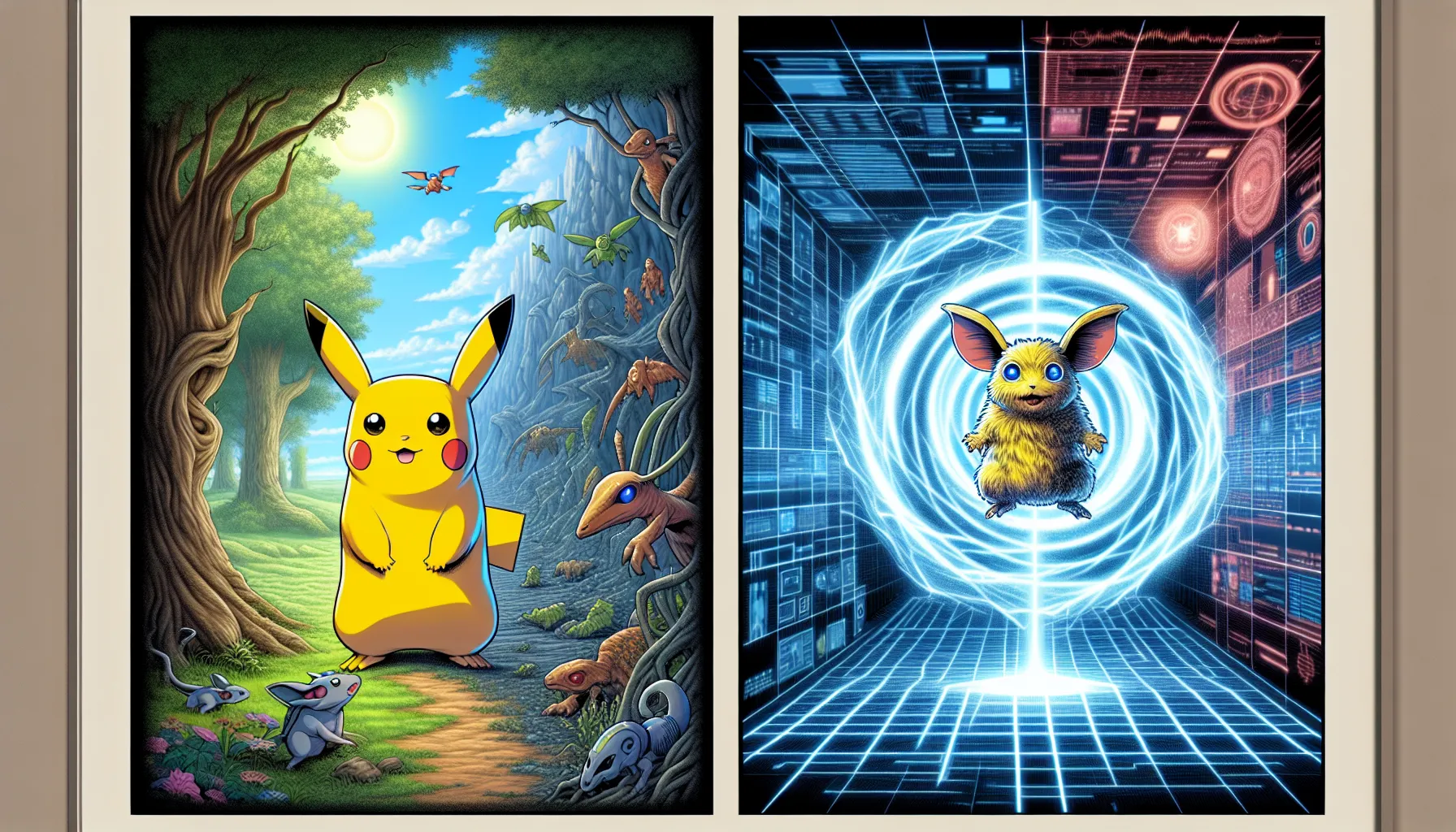
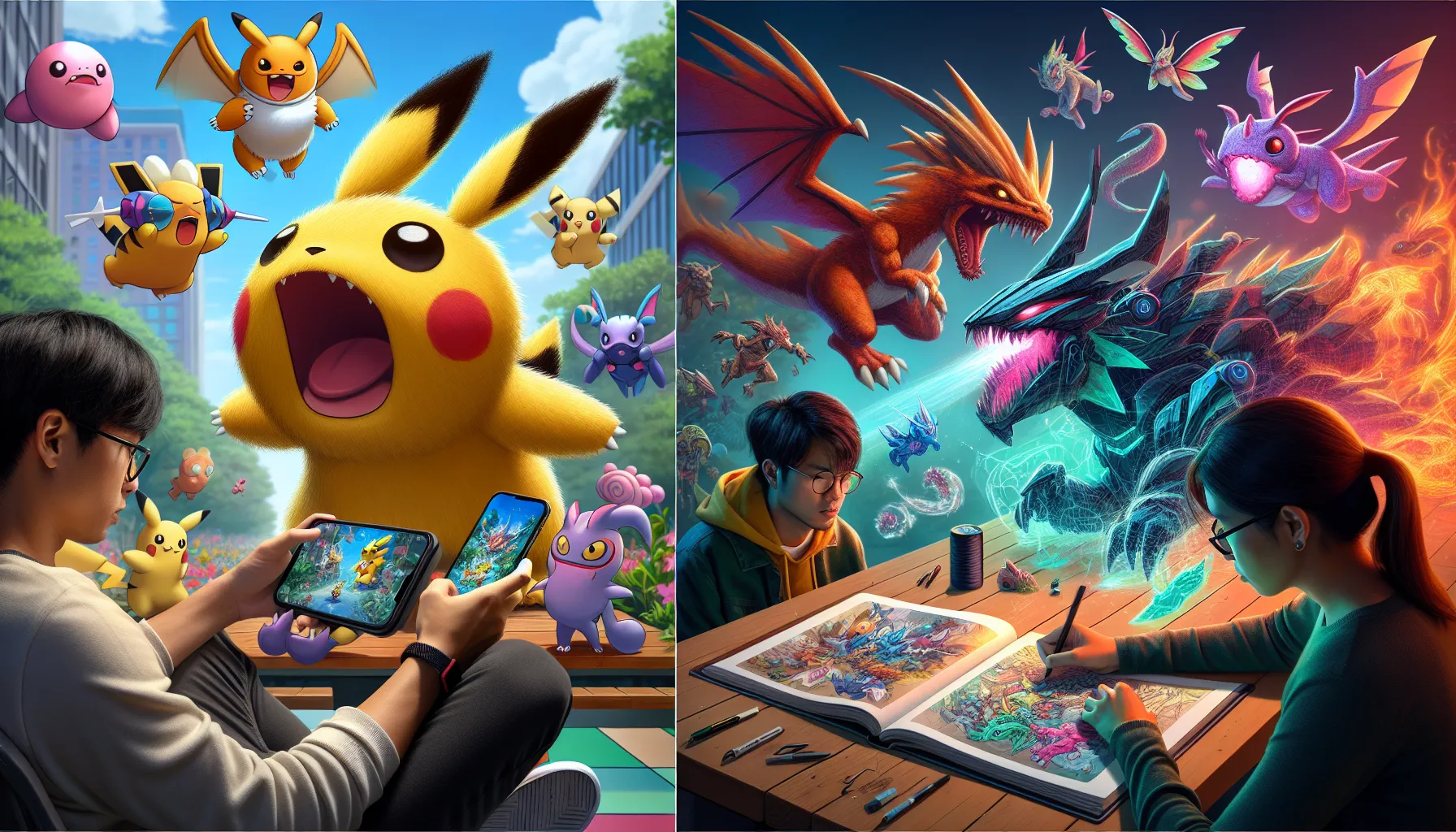
The world of animated series and gaming has introduced numerous fantastical universes that continue to capture the imaginations of audiences globally. Among the myriad of vibrant franchises, both Pokémon and Digimon have risen as stalwarts, each boasting exceptional depth and unique appeal. While at first glance they might seem similar, both featuring creatures and adventurous tales, their differences lie in foundational concepts and execution.
Overview of Pokemon and Digimon
Origins and Evolution of Pokemon
Pokémon, introduced by Nintendo in 1996, began as a pair of interconnected video games for the Game Boy. Created by Satoshi Tajiri, this franchise quickly expanded into a television series, trading card game, movies, and other merchandise. The fundamental premise revolves around Pokémon trainers capturing, training, and battling their Pokémon while exploring captivating storylines.
The Genesis and Development of Digimon
Digimon, a Bandai creation that emerged in 1997, originated as a digital pet toy similar in concept to the Tamagotchi. The franchise rapidly evolved to include an anime series, video games, and trading card systems. Digimon focuses on DigiDestined characters who partner with unique Digimon, exploring dynamic narratives interwoven with themes of digital worlds and moral complexities.
Conceptual and Gameplay Differences
Structure and Progression of Pokemon Games
In Pokémon games, players assume the role of a Pokémon trainer traveling through various regions, capturing creatures and training them to compete in battles. The gameplay emphasizes strategy and collection, with players aiming to “catch ’em all” and challenge regional champions.
Mechanics and Themes in Digimon Games
Contrasting Pokémon, Digimon games often investigate deeper into role-playing and storytelling elements, focusing on character bonds and evolving interactions between Digimon and their human partners. The progression system frequently revolves around decision-making, influencing Digimon evolutions and outcomes.
Cultural and Fandom Impact
International Influence and Reach of Pokemon
Pokémon’s universal appeal can be seen in its immense merchandising success, from collectible figures to the globally famous “Pokémon Go.” The franchise’s universality imparts nostalgia amid a broad age range, securing its position in popular culture.
The Legacy and Artistic Contributions of Digimon
While not as universally widespread, Digimon resonates deeply with its fanbase, offering intricate artworks and profound story arcs. The series provides a more introspective perspective on human-digital intersections, augmenting its unique allure.
Shared Elements and Collaborations
Comparing Storytelling and Character Design
Both franchises exhibit detailed narratives and innovative designs highlighting human-creature bonds. While Pokémon often maintains a lighter tone, Digimon delves into themes of transformation and duality, providing a complementary style.
Interactions Between the Franchises
Although Pokémon and Digimon are often viewed as competitors, the two franchises have indirectly influenced each other, inspiring their fanbases and diversifying the genres of creature-based fantasy tales.
To provide the best experiences, we use technologies like cookies to store and/or access device information. Consenting to these technologies will allow us to process data such as browsing behaviour or unique IDs on this site. Not consenting or withdrawing consent, may adversely affect certain features and functions.
Functional
Always active
The technical storage or access is strictly necessary for the legitimate purpose of enabling the use of a specific service explicitly requested by the subscriber or user, or for the sole purpose of carrying out the transmission of a communication over an electronic communications network.
Preferences
The technical storage or access is necessary for the legitimate purpose of storing preferences that are not requested by the subscriber or user.
Statistics
The technical storage or access that is used exclusively for statistical purposes.The technical storage or access that is used exclusively for anonymous statistical purposes. Without a subpoena, voluntary compliance on the part of your Internet Service Provider, or additional records from a third party, information stored or retrieved for this purpose alone cannot usually be used to identify you.
Marketing
The technical storage or access is required to create user profiles to send advertising, or to track the user on a website or across several websites for similar marketing purposes.