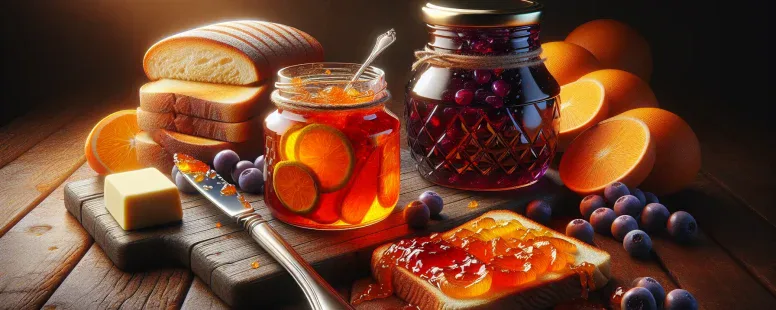
Picture spreading a glossy layer of orange marmalade over warm toast—the citrusy aroma rising, bits of peel catching the morning light. Now picture the smooth, jewel-toned shimmer of grape jelly, its sweetness promising a nostalgic burst of flavor with every bite. Both treats brighten breakfast tables and afternoon snacks, yet their differences go far beyond color and taste.
You might think marmalade and jelly are just distant cousins in the world of preserves, but understanding what sets them apart can transform your culinary adventures. Discovering the subtle artistry behind each spread not only elevates your next meal but also opens the door to surprising health perks and creative uses you may never have considered. Are you ready to taste the difference?
Understanding Marmalade and Jelly
Marmalade and jelly share the breakfast table but, like old friends with clashing personalities, each tells a wildly different story through taste and texture. Marmalade usually uses citrus fruits—think Seville oranges or grapefruits—utilizing not just the juice but also the peel. That’s where the magic happens. Chunks of bitter rind suspended in a translucent, golden gel make marmalade a puzzle in a jar. When you spoon it onto hot toast, you might find yourself pausing to admire the glowing, sunburst fragments, wondering how such bold flavors—bitterness, sweetness, tang—dance together in one bite.
Jelly, by contrast, keeps secrets. It filters out solids, relying just on fruit juice—concord grapes and strawberries, for example. Unlike marmalade’s wild sparkle, jelly rests smooth and glossy, like stained glass on your table. Every time you dip your knife into grape jelly, your sandwich pays homage to centuries-old preservation methods refined for clarity and simplicity. Ever noticed how jelly slides, almost rehearsed, onto PB&J without leaving pulp or peel behind? Kids embrace it, grandparents pass recipes down, and scientists, like those at the USDA, set strict definitions based on composition and sugar concentration.
Consider: What happens if you stir a spoonful of bitter orange marmalade into a classic vinaigrette? Or substitute tart apple jelly for honey in your next barbecue glaze? These simple swaps turn the ordinary into culinary experiments that spark curiosity and conversation.
Both spreads beg to be explored and compared—are you drawn to marmalade’s rustic character, its uneven, zesty bits, or does jelly’s gentle uniformity win your favor? Maybe you’ll taste more carefully next time, recognizing jelly’s affinity for smooth elegance and marmalade’s embrace of complexity.
Key Ingredients and Preparation Methods
Marmalade and jelly both charm your senses, but their essential differences start with what goes in and how you make them. These differences shape not just the taste and texture, but also their possible uses at your table.
What Goes Into Marmalade?
Marmalade contains whole citrus fruits—usually oranges—with the juice, pulp, and peel all starring in the recipe. When you spread a spoonful of orange marmalade, you notice pieces of translucent zest catching the light like tiny stained-glass windows. The bitterness from the peel stands out as a signature note, giving marmalade a complex character that appeals to fans of traditional British breakfasts. Food scientists, such as those at the National Center for Home Food Preservation, explain that pectin in the peel helps marmalade set firmly without need for extra gelling agents.
You might ask why the peel matters so much. Without the peel, marmalade misses its sharp edge and aromatic oils—kind of like lemonade missing its tang. That difference invites you to experiment: Seville oranges bring punchy bitterness while blood oranges yield sweeter, red-tinged marmalade. Sometimes home cooks add a splash of whiskey or ginger to play with flavors, making each batch as unique as your kitchen.
The Basics of Jelly Making
Jelly, in contrast, uses only fruit juice, sugar, and pectin. Grapes, apples, and berries—these fruits are the usual suspects. Jelly’s preparation reads like instructions for a magic trick: simmer the fruit, strain away all solids, then add sugar and pectin so a clear, jewel-like gel forms.
That clarity is where jelly gets its elegance. Unlike marmalade, no bits interrupt the smooth glide of jelly on your toast. The absence of rind and pulp lets the pure essence of the fruit shine. You might find that taste subtle, like a single melody with no harmony, but also reliably sweet and approachable, as seen in children’s favorite grape jelly sandwiches.
Don’t think jelly is limited to breakfast, though. Chefs sometimes use apple jelly as a glaze for roasted meats, because the shine and sweetness enhance the dish without adding distraction. The technique for jelly relies on precise ratios; too much sugar or pectin, and it turns rubbery, too little and it won’t set at all. The U.S. Department of Agriculture provides tested recipes, highlighting those delicate balances.
Both spreads begin with fruit, sugar, and pectin, yet their methods and choices shape the outcome. Next time you dip a knife into a sparkling jar, ask yourself: are you reaching for complexity or simplicity, for morning ritual or culinary experiment?
Texture and Appearance Comparison
Texture and appearance distinguish orange marmalade and grape jelly right from the first glance. Side-by-side at breakfast, the vivid differences might spark curiosity—why does one glisten like stained glass, while the other looks like sunlit citrus confetti?
Consistency and Clarity
You encounter two distinct consistencies: marmalade feels thick, chunky, and sometimes uneven, while jelly’s texture stays smooth and even. Marmalade brings you suspended citrus peel; each spoonful offering a chewy bite, often surprising new tasters with both softness and slight resistance from orange rind. This chunky texture, as noted by the Oxford Companion to Food, highlights traditional British craftsmanship (Davidson, 2014). Jelly, but, sits on toast like a flawless jewel. Its clarity prevents you from seeing any fruit pieces, which lends grape jelly a sense of finesse—no chunkiness interrupts your spread, creating a glassy surface that reflects light. If you’ve ever noticed how jelly sometimes quivers delicately, it’s thanks to a precise balance of fruit pectin and sugar, an effect you’d rarely see in rustic marmalade.
Color and Fruit Content
You’ll spot marmalade’s vibrant orange or amber hues even in dim morning lighting. Citrus fruit peels floating throughout lend character and authenticity—some brands pack their jars so densely with rind, your spoon stands upright. Jelly, in comparison, adopts the deep purple of Concord grapes or the lively red of apple varieties, but always with a uniform color. No visible fruit ever appears in jelly; its translucent gleam comes from filtering out pulp, seeds, and skin through fine mesh or muslin. If you ask yourself why fruit content varies, consider: marmalade prioritizes including whole segments and zest, following historic recipes that trace back 18th-century Scotland (BBC Good Food). Jelly’s purity stems from choice—only juice, no flesh, lets you experience one singular fruit essence, pure and unadulterated.
Texture, color, and fruit content reveal not just differences in process—each spoonful tells a story about your spread’s origins and purpose.
Flavor Profiles and Uses
Orange marmalade and grape jelly transform simple fruits into culinary gems, but their personalities diverge as much as their colors. Each spread creates a signature taste experience and opens up distinct uses in your kitchen.
Taste Differences
Marmalade brings bold, layered flavor, with citrus peel in every spoonful. When you taste marmalade, you’ll notice its sharp bitterness balanced by bright sweetness, which comes from both the zest and juice of Seville oranges. Grape jelly, in contrast, delivers a consistently sweet profile. You get pure fruit essence, without the hint of bitterness or texture from rind. The straightforward sweetness of jelly appeals to those who like uncomplicated spreads at breakfast.
If you favor complex flavors—think candied ginger, Earl Grey tea, or even hoppy craft beers—marmalade tends to intrigue your palate. Should you lean towards smooth, harmonious flavors—like honey or ripe watermelon—jelly sounds like your match. In one famous tale, British author Paddington Bear’s choice of marmalade sandwiches became a literary symbol of adventure and nostalgia, reinforcing its heritage appeal. Jelly, often starring in peanut butter and jelly sandwiches, evokes comfort and childhood in American homes (Smithsonian Magazine, 2017).
Common Culinary Applications
Marmalade and jelly excel in different roles on the table and beyond. Marmalade pairs classically with toast, bagels, or scones, but you also see chefs using it as a glaze for roast duck or ham. Try stirring it into roasted carrots for a tangy glaze or whisking some into salad dressings to brighten up greens. Celebrity chef Nigella Lawson has used marmalade in chocolate cakes to create contrast and complexity (BBC Food, 2020).
Jelly’s glassy texture melts into sauces and pastries with ease. When you spread grape jelly on warm biscuits, it dissolves in moments, adding instant tang. American cooks have famously added grape jelly to cocktail meatballs and quick pan sauces, creating unexpected layers of flavor. If you want a crystal-clear filling for thumbprint cookies or a shiny finish on cheesecakes, jelly works perfectly thanks to its smoothness and clarity.
Can you picture trading your usual breakfast spread for something bolder? You might discover marmalade’s zest matches espresso’s depth. Or, experiment with jelly in savory glazes to surprise your family at dinnertime. The way you interact with these spreads often depends on the memories and traditions you bring to the table, so let the choice reflect your own flavor story.
Nutritional Differences
Peering into the jars of orange marmalade and grape jelly, you’ll notice their nutritional stories diverge as much as their biographies. Marmalade, with its tangy citrus peel and whole-fruit bits, brings not just flavor but dietary fiber. In every tablespoon, you’ll usually get about 0.5 grams fiber (USDA, 2021), sometimes a bit more if you scoop up all those golden shreds. Jelly, consisting of strained, sweetened juice, rarely offers fiber—so if you’re chasing digestive benefits, the marmalade jar calls your name.
Examine the sugar content and you’ll see both fall into the sweet spread category, but their paths split again. Jelly tends to pack a little more sugar per serving—sometimes up to 14 grams in a tablespoon, especially those made with Concord grapes (Harvard T.H. Chan School of Public Health, 2023). Marmalade often contains 10–13 grams per tablespoon, depending on the recipe and type of citrus. Both get their sparkle from added pectin, but jelly’s smooth, jewel-like set borrows more from refined sugars for structure, while traditional marmalade relies more on pectin from the fruit itself.
Let’s throw in vitamin C, that citrus superstar. Marmalade wins this round—Seville orange marmalade can deliver up to 2 milligrams of vitamin C per tablespoon, a trace in the scope of daily requirements but still a nod to its sunlit origins. Jelly, unless it’s fortified, doesn’t offer much here due to the breakdown of nutrients during cooking and straining.
You might wonder whether there’s a calorie gap—there is, albeit slight. Marmalade and jelly both usually hover between 40 and 56 calories per tablespoon, haunted by the ghost of all that added sugar. If you reach for a “light” or “reduced-sugar” jar, both types slim down calorie-wise but at the expense of some flavor or texture complexity.
For those asking, “Which should I use if I’m minding my blood sugar?” Registered dietitians suggest that marmalade, with its fiber and occasional lower sugar content, might offer a marginal advantage—but, neither fits a low-glycemic profile (American Diabetes Association, 2023). Some folks with citrus sensitivities or allergies might find jelly, especially the grape variety, gentler on the system.
Here’s a quick macro-nutritional comparison to crystallize the nuance:
Spread
Sugar (g)
Fiber (g)
Vitamin C (mg)
Calories (kcal)
Marmalade
10–13
0.5–1.2
1–2
40–56
Grape Jelly
12–14
0
<1
50–56
Picture your breakfast: one slice of toast, spread with marmalade, layered with stories of Mediterranean orchards and peels shimmering like stained glass. Another, slicked with the purple gloss of jelly—the memory of childhood picnics and grapevines sunning on old wooden fences. Which gives you more than nostalgia? The answer is nuanced, twining the details of micronutrients with the silk threads of flavor memory.
What does your morning crave—fibrous zest or crystal sweetness? Every jar on your shelf becomes a choice shaped by nutrition, tradition, and the daily moods of your tastebuds.
How to Choose Between Marmalade and Jelly
Picture, for a moment, your breakfast table shimmering in the late morning light: a rustic loaf begging for a partner. You stand at a crossroads—orange marmalade shimmering with bits of citrus rind on one hand, and grape jelly glistening like a stained-glass window on the other. Which fits your mood, and which pairs best, with your culinary vision?
If texture matters most to you, marmalade reward you with bursts of chewy peel and zest in every bite—something like sun-dried fruit folded into a poem of sweet, tart, and bitter notes (see Seville orange marmalade, which BBC Good Food identifies as a signature British flavor [source]). Jelly, by contrast, slides easily onto breads with no resistance and melts pure as a melody on the tongue; think of it as silk compared to linen. Which feels right to your palate—patterned or pure?
Flavor complexity provides another key. Marmalade brings a contrast, a citrus orchestra playing sharp and sweet, bitterness in the bass clef. It’s a favorite, for example, of inventive bakers adding depth to glazes for duck or chicken (see Bon Appetit’s marmalade chicken). Grape jelly, simple and nostalgic, supplies a single, sweet note—it’s your go-to for PB&J sandwiches that recall lunchrooms past, and perhaps a smile from childhood.
Nutritional concerns also sway the decision. Marmalade earn you a bit more fiber per serving, thanks to those bold chunks of peel, and a modest amount of vitamin C (USDA FoodData Central: Marmalade, Orange). Jelly, though usually free from fiber, brings fewer bitter notes and sometimes more sugar. If you’re watching blood sugar or dietary fiber, marmalade can edge ahead for daily use, but jelly wins for pure, quick sweetness.
Still, culinary versatility colors the choice. Have you tried stirring marmalade into yogurt for a patterned swirl, or dropping a dollop into your next cocktail for a bitter zing? Jelly serves as a secret ingredient in barbecue sauces and glazes—spread it under cheese on crackers and it quietly lifts the whole bite. Next time you prep a charcuterie board, ask yourself: Which narrative do you want to tell—rustic, layered, and adventurous, or smooth, classic, and universally familiar?
Cultural context sometimes sways hearts. One survey by YouGov (2023) revealed regional preferences across the US: Northeasterners leaned towards jelly, while Southerners favored marmalade’s complexity. Does your pantry reflect your roots, or your curiosity?
If you’re still unsure, ask yourself: What story do you want to taste today? Marmalade writes with bold strokes, jelly pens in a delicate hand. Both invite you to experiment—add them to sauces, cheese pairings, or even grilled meats. Don’t let habit dictate choice; let exploration and flavor lead the way.
Conclusion
Choosing between marmalade and jelly is all about discovering what excites your palate and fits your lifestyle. Whether you’re drawn to marmalade’s bold flavors and chunky texture or you prefer the smooth sweetness of jelly, both spreads offer something special for your table.
Let your curiosity lead you to new recipes and pairings. By embracing the unique qualities of each, you’ll not only enhance your meals but also deepen your appreciation for these classic preserves.
To provide the best experiences, we use technologies like cookies to store and/or access device information. Consenting to these technologies will allow us to process data such as browsing behaviour or unique IDs on this site. Not consenting or withdrawing consent, may adversely affect certain features and functions.
Functional
Always active
The technical storage or access is strictly necessary for the legitimate purpose of enabling the use of a specific service explicitly requested by the subscriber or user, or for the sole purpose of carrying out the transmission of a communication over an electronic communications network.
Preferences
The technical storage or access is necessary for the legitimate purpose of storing preferences that are not requested by the subscriber or user.
Statistics
The technical storage or access that is used exclusively for statistical purposes.The technical storage or access that is used exclusively for anonymous statistical purposes. Without a subpoena, voluntary compliance on the part of your Internet Service Provider, or additional records from a third party, information stored or retrieved for this purpose alone cannot usually be used to identify you.
Marketing
The technical storage or access is required to create user profiles to send advertising, or to track the user on a website or across several websites for similar marketing purposes.