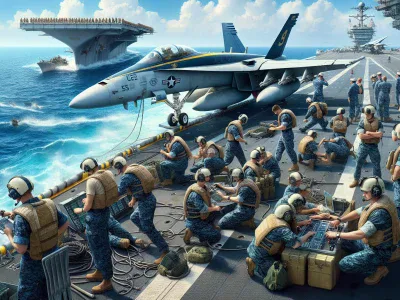
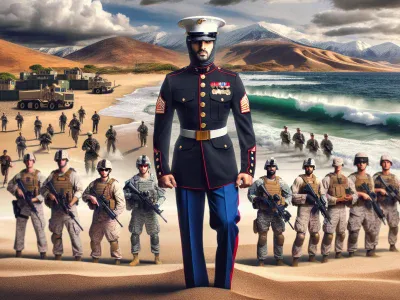
Imagine standing on the deck of a powerful ship, waves crashing beneath you, as the horizon stretches endlessly ahead. Now picture yourself storming a beach, adrenaline surging, with a mission that demands precision and grit. Both scenes evoke the essence of military might, yet they belong to two distinct forces—the Navy and the Marines.
You’ve probably heard these terms used interchangeably, but they’re far from the same. Each branch carries its own unique role, traditions, and responsibilities. Understanding the difference isn’t just about satisfying curiosity; it’s about appreciating the specialized expertise that keeps nations secure. So, what sets these two apart, and why does it matter? Let’s dive deeper into the fascinating worlds of the Navy and the Marines to uncover their defining traits.
Overview Of The Marine And Navy
The Marine Corps and the Navy function as distinct branches within the U.S. Department of Defense. The Marines specialize in amphibious warfare, focusing on rapid deployment to hostile terrains. They operate closely with ground forces and often serve as the first line of attack during military operations. Their motto, “Semper Fidelis” (Always Faithful), reflects their commitment to their mission and comrades.
The Navy, on the other hand, maintains superiority across the world’s oceans. Its primary goal includes securing sea routes, conducting naval warfare, and providing support for other military branches, including the Marines. The use of aircraft carriers, submarines, and destroyers underscores their reliance on advanced maritime technology for global presence.
Both branches share a connection due to their collaborative nature during joint operations. The Navy provides essential resources like transportation and supplies for Marine Corps missions, particularly during amphibious invasions.
Roles And Responsibilities
The Navy and the Marine Corps have distinct yet interconnected roles ensuring security on land, sea, and beyond. These responsibilities define their operations and highlight their complementary relationship in military strategy.
Marine Duties
Marines specialize in amphibious warfare. They act as rapid-response forces, often deployed first in hostile environments during conflicts. Their primary responsibilities include assault operations, seizing territories for strategic control, and enabling follow-up forces. Marines are also skilled in urban combat, expeditionary warfare, and crisis response during humanitarian missions.
For example, during World War II, Marines were essential in capturing Japanese-held islands in the Pacific. This amphibious capacity demonstrates their ability to bridge naval and land-based operations effectively. They also handle embassy security worldwide, ensuring protection in critical diplomatic locations.
Navy Duties
The Navy focuses on securing maritime dominance. Tasked with safeguarding international waters, the Navy ensures freedom of navigation and protects global trade routes. It conducts naval warfare, such as blockades and missile strikes, while providing logistical support to other military branches. The Navy also operates submarines, aircraft carriers, and destroyers for sustained oceanic superiority.
In peacetime, you notice the Navy engaging in anti-piracy missions or disaster relief efforts. For instance, the USS Comfort’s deployment during humanitarian crises showcases their capability to deliver aid globally. The Navy further supports the Marines by transporting them to combat zones via amphibious assault ships and ensuring air and sea coverage during operations.
Both branches’ responsibilities emphasize their teamwork and distinct expertise in maintaining national and global security. Together, they handle tasks that no other force combination could achieve effectively.
Training And Skills
Training programs in the Navy and Marine Corps reflect their distinct operational purposes, shaping specialized skills for each branch’s responsibilities.
Marine Training
Marines undergo rigorous training programs designed for high-intensity combat and amphibious operations. The 13-week Marine Corps Recruit Training, commonly known as “boot camp,” focuses on physical fitness, survival tactics, marksmanship, and combat scenarios. You’ll learn hand-to-hand combat through the Marine Corps Martial Arts Program (MCMAP) and practice amphibious landing procedures for rapid response.
Advanced training follows basic training, tailoring skills to specific roles. Infantry Marines train in urban warfare, while aviation units specialize in close air support. Expeditionary operations, first-response strategies, and adaptability remain core elements of Marine training. For example, Marines are often deployed within hours to conflict zones or natural disasters, showcasing their readiness and flexibility.
Navy Training
Navy training emphasizes maritime skills and technical expertise. During the 7–9 week Navy Recruit Training Command (RTC), often called “Boot Camp,” you’ll learn shipboard operations, firefighting, and swimming survival techniques. The Navy’s focus lies in building professional disciplines for roles such as navigation, engineering, and medical support.
Sailors receive specialized training after Boot Camp based on their assignments. For instance, nuclear technicians study reactor systems, while aviation technicians handle carrier-based aircraft repairs. Naval training also prepares personnel for humanitarian missions and joint operations with other military branches, including the Marines. Fleet deployments provide real-world experience in maintaining maritime dominance.
The tailored training, although distinct, enables both branches to operate cohesively during multi-faceted missions. Environmental and tactical dimensions divide their preparation, reflecting their unique contributions to defense and security.
Deployment And Operations
Deployment and operations in the Marine Corps and Navy stem from their distinct roles and responsibilities. They collaborate for national defense but execute missions in fundamentally different environments.
Marine Operations
Marines primarily conduct amphibious and expeditionary warfare. Their operations focus on rapid deployment to hostile or unstable regions. For instance, Marines are often sent first during a beach assault, establishing a foothold for further military actions. They operate in diverse settings, from urban combat in Iraq to humanitarian aid in Haiti after natural disasters, showcasing adaptability. These missions rely on combined forces, with air wings, infantry, and armored units working seamlessly.
Marines undertake short-term, high-intensity deployments. Their presence varies in size from small task forces to full Marine Expeditionary Units (MEUs), which integrate air, ground, and logistics components. Aboard Navy ships, MEUs remain ready for mobilization anywhere globally, ensuring fast responses to crises.
Navy Missions
Navy missions prioritize control of international waters and ensure maritime security. They maintain a constant global presence, safeguarding sea lanes that help over 80% of international trade, according to the U.S. Department of Defense. Operations range from anti-piracy patrols to nuclear deterrence and disaster relief, like delivering aid in the Indo-Pacific after tsunamis.
The Navy also supports sustained operations at sea. For example, aircraft carriers serve as mobile bases, enabling power projection without reliance on allied land bases. Submarines patrol underwater undisclosed, collecting intelligence or providing strategic deterrence. Their ability to operate in hostile environments makes them crucial for long-term engagements compared to the Marines’ quicker deployments.
Both branches, while distinct, complement each other. The Navy provides the transport and logistical backbone that makes Marine missions possible, underpinning their operational synergy.
Key Differences Between Marine And Navy
Marine and Navy differ in their primary missions, operational focus, and roles within the armed forces. Understanding these distinctions uncovers their strategic contributions to national defense.
Mission Scope
The Marine Corps concentrates on amphibious and expeditionary warfare, quickly responding to crises and acting as the first line of engagement. For example, Marines lead beach assaults, secure enemy territory, and participate in urban combat operations. In contrast, the Navy’s mission prioritizes maritime dominance, safeguarding international waters, and enabling global naval operations like anti-piracy patrols or maintaining nuclear deterrence.
Operational Environment
Marines operate across land and coastal areas, utilizing their expertise in transitioning from sea to shore. They ensure rapid deployment in hostile environments, such as securing forward positions during conflict. On the other hand, the Navy conducts long-term missions at sea, using advanced naval equipment including aircraft carriers and submarines to maintain security and support global trade routes.
Command and Structure
Marines fall under the Department of the Navy, reflecting their support dependency on naval resources. Even though this dependency, their command structures remain distinct for executing independent missions. In comparison, the Navy’s leadership directly oversees vast global operations requiring complex logistical and strategic support networks.
Equipment and Resources
Marine units rely on versatile gear, such as amphibious assault vehicles and light aircraft, tailored for quick, flexible engagements. Navy forces, but, manage extensive fleets, including destroyers, aircraft carriers, and supply ships, to sustain prolonged maritime operations.
Cultural Identity and Training
Marine Corps culture emphasizes a warrior ethos central to their motto, “Semper Fidelis,” instilling unwavering loyalty and resilience. Their rigorous training develops physically and mentally robust soldiers for high-intensity conflicts. Naval culture thrives on technological expertise and seamanship, with training focused on responsibilities like navigation, engineering, and operating sophisticated maritime systems.
Conclusion
Understanding the differences between the Navy and Marine Corps gives you a clearer appreciation of their vital roles in national defense. Each branch brings unique strengths and expertise to the table, ensuring that land, sea, and global security challenges are met with precision and efficiency.
By recognizing their distinct responsibilities and how they collaborate seamlessly, you gain insight into the incredible teamwork that drives their success. Both branches embody dedication and excellence, working together to protect and serve on every front.
To provide the best experiences, we use technologies like cookies to store and/or access device information. Consenting to these technologies will allow us to process data such as browsing behaviour or unique IDs on this site. Not consenting or withdrawing consent, may adversely affect certain features and functions.
Functional
Always active
The technical storage or access is strictly necessary for the legitimate purpose of enabling the use of a specific service explicitly requested by the subscriber or user, or for the sole purpose of carrying out the transmission of a communication over an electronic communications network.
Preferences
The technical storage or access is necessary for the legitimate purpose of storing preferences that are not requested by the subscriber or user.
Statistics
The technical storage or access that is used exclusively for statistical purposes.The technical storage or access that is used exclusively for anonymous statistical purposes. Without a subpoena, voluntary compliance on the part of your Internet Service Provider, or additional records from a third party, information stored or retrieved for this purpose alone cannot usually be used to identify you.
Marketing
The technical storage or access is required to create user profiles to send advertising, or to track the user on a website or across several websites for similar marketing purposes.