English Bluebells vs. Spanish Bluebells
You can spot a bluebell wood a half-mile away in spring: a low, fragrant blue haze that smells faintly of honey and wet earth. But not all bluebell carpets are the same. The English bluebell and the Spanish bluebell look similar from a distance, yet they differ in flower posture, scent, and ecological impact. Knowing those differences matters if you care for a garden, manage woodland, or want to protect native plants. This guide gives clear, practical distinctions, plus growing and management advice you can use now.
Quick Comparison At A Glance
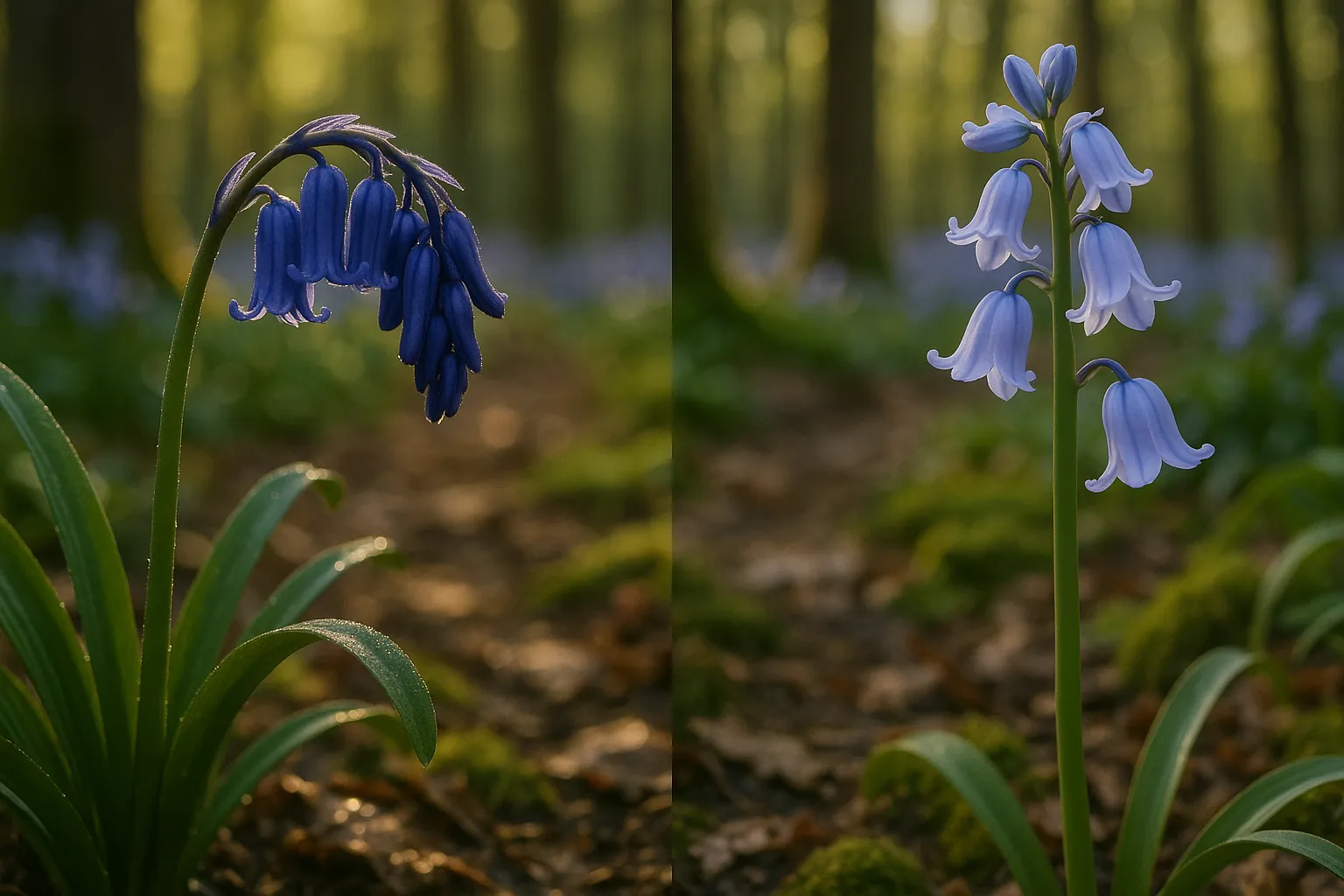
Fact: English bluebells (Hyacinthoides non-scripta) are loyal understory natives in Britain and parts of western Europe: Spanish bluebells (Hyacinthoides hispanica) are wider-ranging and more adaptable.
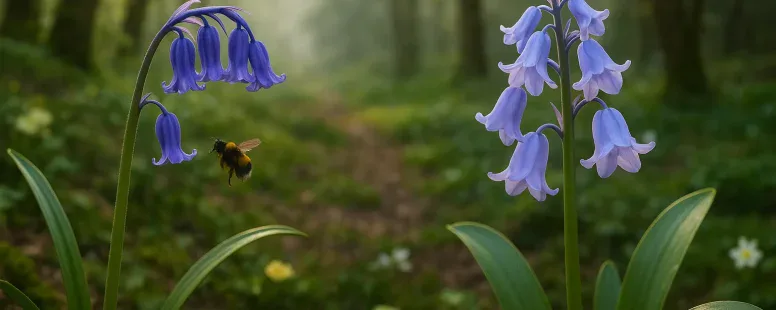
At a glance you should note three quick points: English bluebells have nodding, one-sided flower clusters and a strong sweet scent: Spanish bluebells hold flowers more upright and often have paler, broader blooms with little scent. English bluebells form dense, near-monoculture carpets in shaded woodlands. Spanish bluebells spread quickly in varied conditions and hybridize readily.
If you want a short field checklist: posture, scent, and habitat. Those three will tell you most of what you need before you dig, plant, or report an invasive sighting.
Identification: How To Tell Them Apart
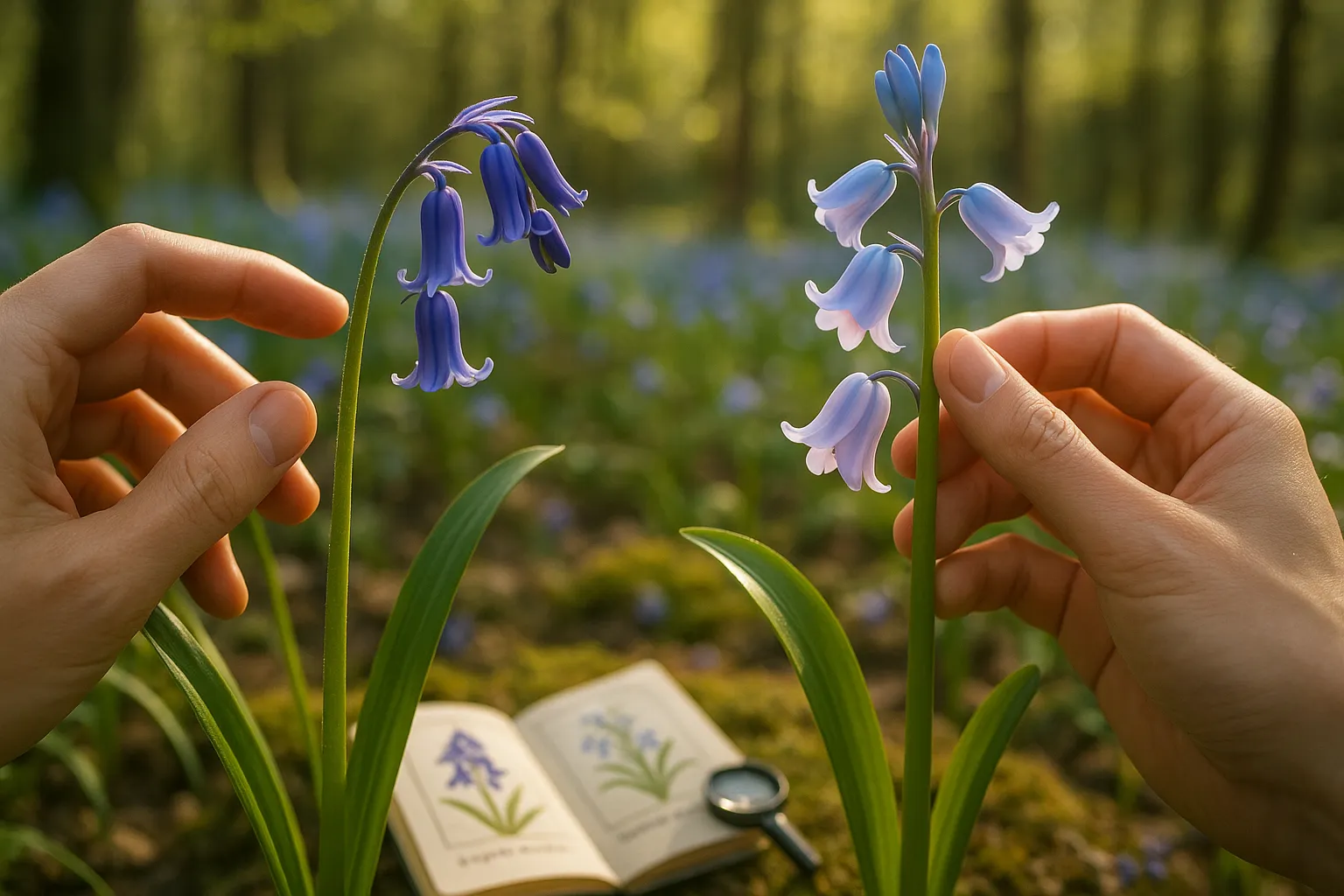
Fact: Physical traits give the clearest ID: start with the flowers, then check leaves, stem, and timing. Below are simple, subject-verb-object descriptions you can act on in the field.
text
Fact: The easiest rule is posture. English bluebells droop: Spanish bluebells stand more erect. When you walk into a blue haze, bend down and look closely. If the bells face downward in a neat row along one side of the stem, you almost certainly see Hyacinthoides non-scripta. If the bells ring outward and upward around the stalk, Hyacinthoides hispanica is likely. Many garden plants are hybrids, though, so check several traits.
Flower Shape, Color, And Orientation
Fact: Flower orientation separates them fast. English bluebell flowers are tubular and strongly pendulous: Spanish ones are wider and flared. English bluebells usually show deep violet-blue petals that curl back slightly at the tip and a pale stripe on the outside. Spanish bluebells come in blue, pink, white, and paler shades: their bells are broader, and the flowers often point in every direction.
Leaves, Stem, And Scent Differences
Fact: Leaves and scent confirm your ID. English bluebells form narrow, arching leaves and a thin, lightly hairy stem: they smell fragrant when crushed. Spanish bluebells have broader, stiffer leaves and a thicker, smooth stem: they have little to no scent. Touch the stem and leaves, you’ll feel the difference. Sniff a bloom gently: scent is a quick diagnostic tool you can use repeatedly.
Bloom Time And Seasonal Behavior
Fact: Bloom windows overlap but timing can differ by weeks. English bluebells typically bloom in mid to late April in the UK: Spanish types often start slightly later and keep flowering longer. English bluebell carpets fade quickly as the canopy closes and light drops. Spanish bluebells tolerate more sun and moisture variance, which helps them extend their flowering period in gardens and disturbed ground.
Native Range, Habitat, And Distribution
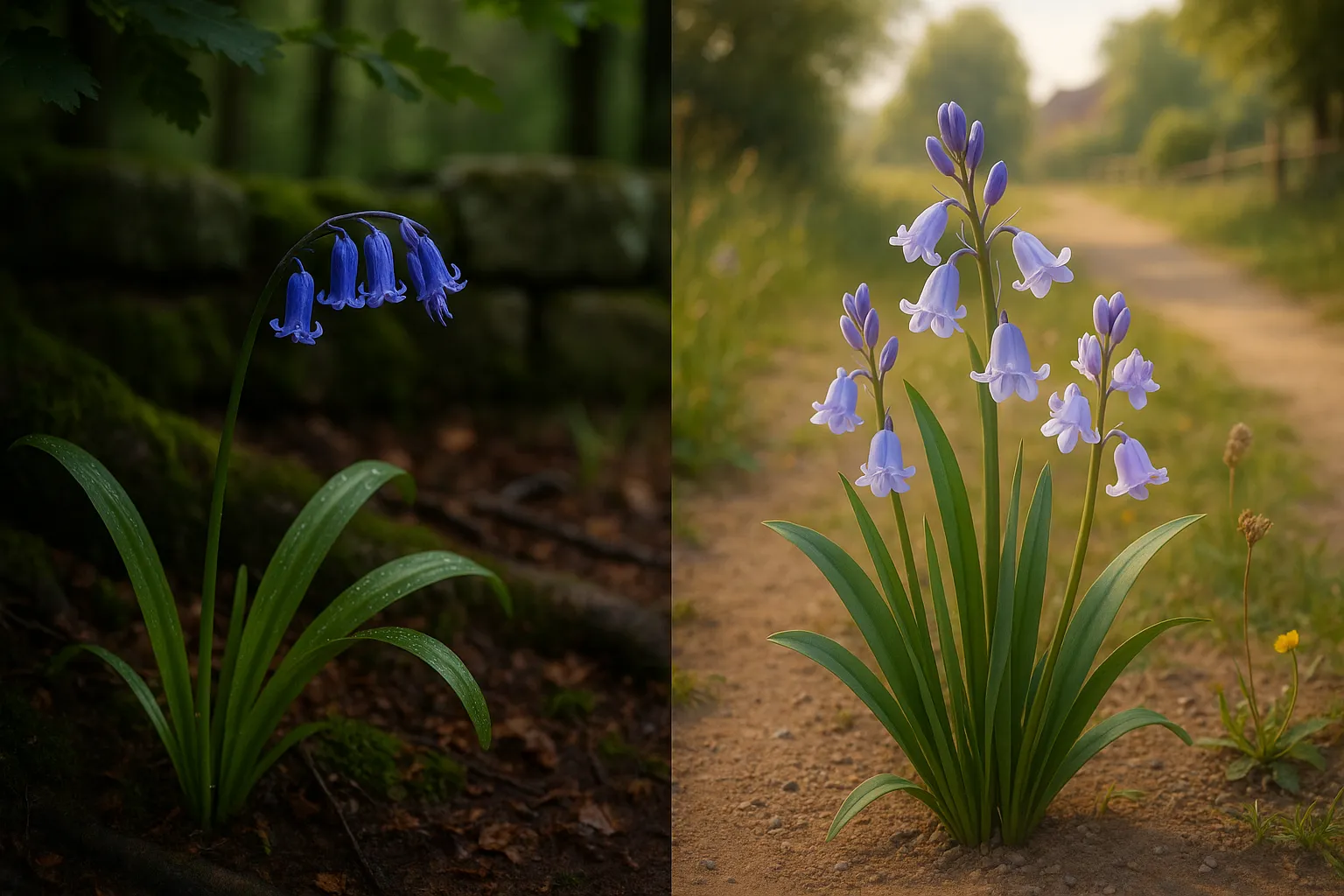
Fact: English bluebells are native to western Europe: Spanish bluebells originate from the Iberian Peninsula.
Native Ranges And Typical Habitats
Fact: Hyacinthoides non-scripta grows in ancient woodlands, hedgerows, and shaded banks in Britain, Ireland, and nearby coastal regions of France, Spain, and Portugal. The plants prefer cool, humid, shaded sites with undisturbed soil. Hyacinthoides hispanica is native across much of Spain and Portugal and occupies open meadows, disturbed soils, and garden borders. You will often find Spanish bluebells near human settlements and roadsides.
Introductions, Naturalization, And Invasive Status
Fact: Spanish bluebells naturalized outside their native range after gardeners introduced them for their ease and color range. Gardeners began importing Spanish varieties in the 18th and 19th centuries: plant breeders later created many cultivars. Spanish bluebells have escaped into the wild in the UK, Ireland, and parts of North America. Where they arrive, they can hybridize with native English bluebells and sometimes outcompete them. Many conservation bodies list Spanish bluebells as a species of concern because they alter local gene pools and ecosystem dynamics.
Cultivation: Growing Requirements And Garden Use
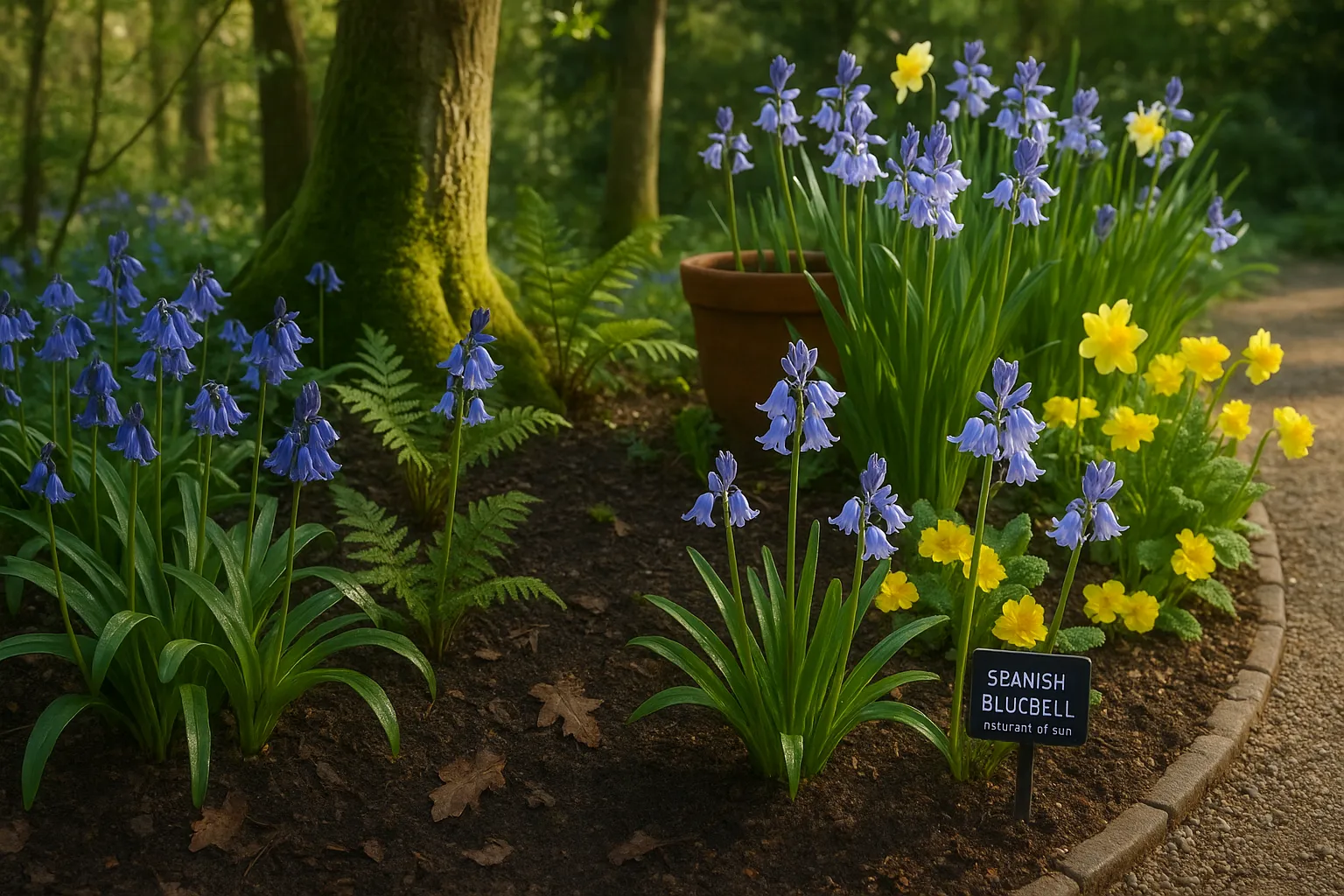
Fact: Both species are bulbous perennials, but their needs differ slightly. If you garden, choose based on light, soil, and ecological goals.
Soil, Light, And Moisture Preferences
Fact: English bluebells prefer moist, humus-rich, well-drained soil in shade. Spanish bluebells tolerate wider soil types and can handle more sun. Plant English bluebells under deciduous trees or beside shaded paths where leaf litter preserves moisture. Plant Spanish bluebells in mixed borders, drifts, or containers where they will not escape into wild hedgerows.
Planting, Propagation, And Maintenance Tips
Fact: You plant bluebell bulbs in autumn, about 10 cm deep and 10–15 cm apart. For authentic English bluebell displays, plant large groups of wild-sourced bulbs and avoid vigorous garden hybrids. You can propagate by dividing bulbs after foliage dies back, or by seed, but seeds from hybrids produce unpredictable offspring. Avoid composting or dumping clumps of Spanish bulbs where wild woodlands begin, because voluntary spread occurs. Water in dry springs but otherwise let bulbs follow seasonal rhythms.
Companion Plants And Landscape Uses
Fact: English bluebells fit best with shade-loving trees and ferns such as oak, beech, and Dryopteris ferns. Spanish bluebells pair well with primroses, hellebores, and spring bulbs like daffodils in mixed beds. Use Spanish varieties where you want longer color runs: use English types where conservation and native planting matter. Be mindful: planting Spanish near ancient woods risks genetic mixing.
Conservation, Ecology, And Environmental Impact
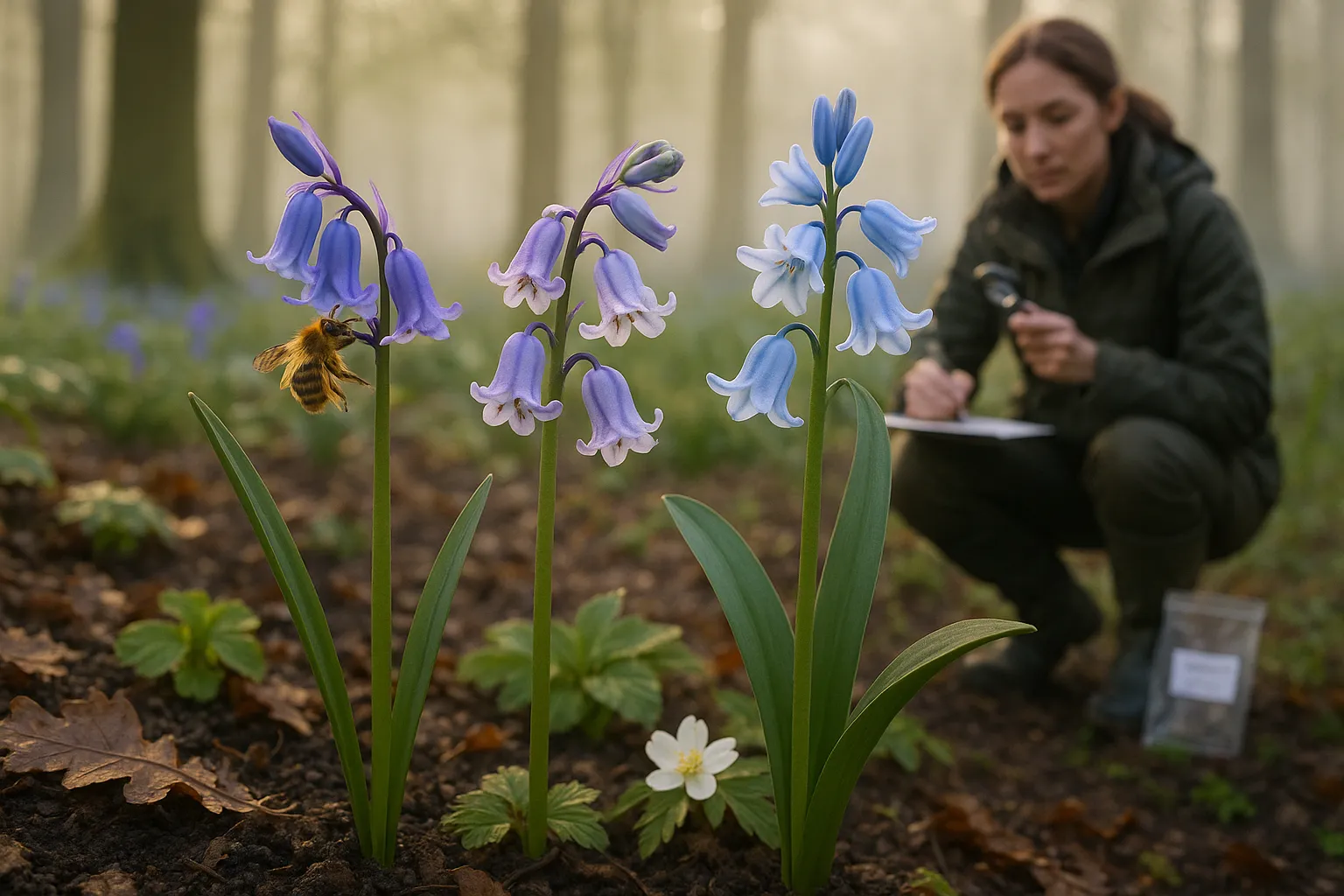
Fact: Spanish bluebells threaten native English bluebells through hybridization and competition. Conservationists monitor this closely.
Hybridization Risks And Genetic Swamping
Fact: Hybrids form easily between the two species. Hyacinthoides x massartiana (the hybrid) shows mixed traits: semi-erect flowers, variable scent, and wide leaves. Where hybrids are common, pure English bluebells decline genetically. Genetic swamping reduces the distinct gene pool of Hyacinthoides non-scripta, and that loss can be permanent once hybrids dominate. Studies by botanical gardens and conservation groups in the UK document rising hybrid presence near towns and gardens.
Impacts On Woodland Ecosystems And Native Flora
Fact: Replacement of native carpets changes pollinator relationships and soil dynamics. English bluebells support specialist insects and are adapted to undisturbed soils: Spanish types and hybrids alter the timing and structure of floral resources. That shift affects early-season pollinators like Andrena bees. Also, aggressive colonization by Spanish bluebells can reduce space for native spring ephemerals such as wood anemone (Anemone nemorosa) and primrose (Primula vulgaris).
Practical Management: Controlling Spanish Bluebells
Fact: Early action prevents spread: detect and remove Spanish bluebells before they seed or hybridize. Practical steps follow.
Prevention, Early Detection, And Removal Methods
Fact: Preventative planting choices matter. Don’t plant Spanish cultivars close to native woodlands. Inspect local woods in spring: mark probable Spanish clumps by upright flowers and wide leaves. For removal, lift bulbs after flowering when leaves yellow, then dry and destroy bulbs responsibly. Repeated digging over several years will reduce seed banks. Chemical control (glyphosate) can work on dense infestations but use it carefully and legally, and avoid spraying near water. Report suspect invasions to local conservation groups: they often run volunteer clearance events.
Restoration And Replanting With Native Species
Fact: After removal, restore with native bulbs and understory plants. Replanting with Hyacinthoides non-scripta sourced from reputable conservation nurseries helps re-establish pure stands. Add leaf litter and avoid soil compaction to favor native re-establishment. Plant complementary natives like primrose and native violets to recreate a full spring community and support pollinators.
Cultural Significance, Uses, And Safety Notes
Fact: Bluebells carry deep garden and folklore value, but they are also mildly toxic and require care. You should respect both their beauty and hazards.
Folklore, Garden History, And Ornamental Value
Fact: English bluebells feature in British folklore as symbols of humility and constancy: people long prized bluebell woods as seasonal treasures. Spanish bluebells gained popularity in Victorian and later cottage gardens for their range of colors and hardiness. Gardeners prize them for mass spring displays, and municipal plantings often include Spanish cultivars. If you manage heritage gardens, prefer English bluebells for authenticity: if you maintain mixed borders, Spanish varieties give you color options.
Toxicity, Handling Precautions, And Pets
Fact: Both species contain glycosides that can cause stomach upset if ingested by people or pets. Avoid eating any bluebell parts. Wear gloves when handling large amounts of bulbs if you have sensitive skin. Keep pets from chewing bulbs and foliage: signs of poisoning include drooling, vomiting, and lethargy, and you should contact a vet promptly. Store removed bulbs securely, don’t feed them to livestock or compost them where wildlife can access them.

- 7 Free Alternatives to Mobbin for UI/UX Design - October 4, 2026
- Mt 03 Competitors - October 4, 2026
- Top FBM Competitors Every Seller Should Watch - October 3, 2026
by Ellie B, Site Owner / Publisher