Picture yourself wandering through a sunlit bakery, the sweet aroma of toasted coconut mingling with delicate hints of almond in the air. Your eyes land on two treats—one a dainty pastel sandwich with a crisp shell and creamy center, the other a golden, chewy mound flecked with coconut. You might wonder, are these just different versions of the same dessert or do they each have a story of their own?
If you’ve ever felt a flicker of confusion at the pastry counter, you’re not alone. The difference between macarons and macaroons goes beyond a single letter. Unlocking the secrets behind these confections can open up a new world of taste and texture, letting you savor each bite with newfound appreciation. Get ready to discover why knowing the difference isn’t just trivia—it’s your ticket to a sweeter, more satisfying dessert experience.
Overview of Macaron and Macaroon
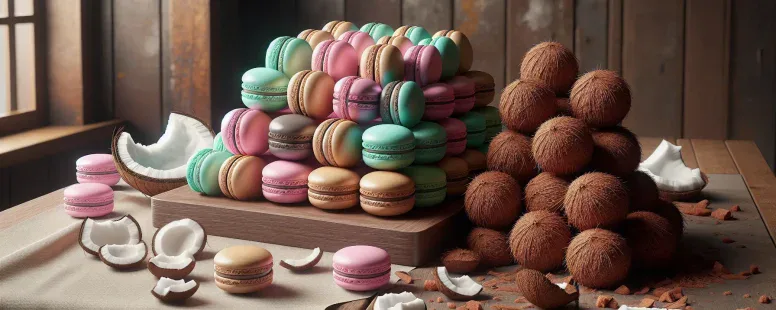
Macaron and macaroon each bring distinct characteristics to the dessert table, linking centuries-old French patisseries and coconut-filled kitchens around the world. You’ll notice, if you step into a Parisian bakery, neat rows of macarons stacked like pastel jewels, their crisp shells sheltering a melt-in-your-mouth center. Meanwhile, macaroons sit in cozy piles, golden-toasted and flecked with coconut, echoing holiday gatherings or childhood bake sales in America.
You can trace macarons’ roots to Renaissance-era Italy, but French bakers in the 20th century transformed them into the delicate double-decker sweets sold at Ladurée or Pierre Hermé. Each macaron combines almond flour, egg whites, and confectioners’ sugar—mixing chemistry and artistry with every batch. Their fillings—like ganache, buttercream, or fruit preserves—range from rose and pistachio to salted caramel.
By contrast, traditional macaroons rely heavily on shredded coconut and sweetened condensed milk. Their origins tie back to Italian monasteries, according to the Oxford Companion to Food. For instance, Jewish communities worldwide serve coconut macaroons during Passover because they’re unleavened. These dense morsels—sometimes dipped in chocolate—gained popularity in American home kitchens during the 20th century, thanks to their simplicity.
Do you wonder why consumers often confuse the two? The answer lies in their similar names and overlapping origins, but comparing the two with a keen eye reveals major differences in composition, preparation, and cultural significance. Is it the bold, smooth bite of a macaron that will win your palate, or the chewy, rustic heartiness of the coconut macaroon?
Notice how, though they share nearly the same letters, macarons and macaroons seldom share a plate—except, perhaps, at a bakery bent on surprising you.
Origins and History
Exploring the origins and history of macarons and macaroons, you’ll uncover a journey shaped by centuries-old traditions, shifting palates, and cultural landmarks. Stories about these desserts connect them to royal kitchens, home bakeries, and global migration.
The French Macaron
Tracing the French macaron’s story, you find its roots tangled in legend and migration. Birthed in 16th-century Italy, the almond-based treat traveled to France when Catherine de’ Medici married Henry II in 1533 (Larousse Gastronomique). French patisseries embraced and reinvented it, especially Ladurée in the 20th century. Their chefs layered two delicate shells with ganache or jam, creating the modern pastel macaron. Parisian cafés made them symbols of refinement. Each macaron you see today carries hints of royal courts, artistry, and innovation.
Questions linger, though: Did Venetian monks bake early macarons as sacred treats, or did Parisian pastry chefs truly elevate them to culinary art? These confections evoke the flair of haute cuisine and Sunday strolls along Rue Saint-Honoré.
The Coconut Macaroon
Observing coconut macaroons, you notice a different origin. Their timeline branches from Italian amaretti, rustic almond cookies born in medieval monasteries (Serious Eats). Coconut replaced nuts thanks to 19th-century American and Jewish bakers seeking Passover-friendly sweets. In this twist, macaroons became dense, chewy, coconut-laden—a far cry from the fragile, pastel macaron. Jewish delis in New York embraced their coconut richness, while home bakers everywhere adapted recipes for festive tables.
Anecdotes abound in family kitchens: a grandmother’s iron spoonfuls pressed onto baking sheets, the sticky scent of shredded coconut filling a holiday kitchen. Each macaroon you bake nods to inventor’s necessity and resilience through centuries of adaptation.
Historic divergence mirrors their textures—smooth and sophisticated for the macaron, hearty and comforting for the macaroon. Which lineage matches your own dessert memories?
Key Ingredients and Preparation
Macarons and macaroons might sound similar, yet their essence differs at every step—ingredients, method, even their stories whisper contrasting promises from bakery shelves. When you shift from pastel macaron towers to golden macaroon clumps, you’re not just trading shapes or shades, you’re stepping into distinct worlds of confection.
Macaron Ingredients and Method
A macaron’s foundation rests on almond flour, confectioners’ sugar, and aged egg whites. Take a moment to picture: you sift almond flour so fine, it almost floats, then you fold it—gently, deliberately—into glossy meringue. Whipping egg whites to stiff peaks is critical, and, if you rush this stage, flat or cracked shells spell heartbreak (The Kitchn, 2022).
Precision matters. Pâtissiers debate the right number of folds (some say 35, others 50). When the batter flows “like lava,” it’s ready to pipe onto parchment-lined trays in delicate rounds, each exactly spaced so no two will touch. Resting the shells until they form a skin (often 30—60 minutes) prevents those disastrous lopsided domes. Sandwiches get finished with ganache, fruit curd, or buttercream—Ladurée famously offers rose, pistachio, and salted caramel fillings.
What color would you pick for your first batch—lavender, lemon, or chocolate? The visual poetry of macarons, their palates and flavor stories, turns any kitchen into a Parisian atelier.
Key Ingredient
Macaron Example
Role in Preparation
Almond flour
Bob’s Red Mill Almond
Texture, gluten-free structure
Egg whites
Grade A, aged 1–3 days
Meringue, shell lift and chew
Confectioners’ sugar
Domino
Sweetness, smoothness
Filling
Ganache, buttercream, jam
Flavor and moisture contrast
Macaroon Ingredients and Method
A macaroon lives in coconut’s embrace. Shredded coconut, sweetened condensed milk or granulated sugar, and egg whites combine for chewy, dense bliss. Picture a bowl overflowing with coconut that, once mixed, clumps together without fuss. No piping bags or resting skins required. With spoons or hands, you heap mounds onto baking sheets—sometimes messy, always hearty.
Macaroons bake into golden haystacks. Jewish bakers have passed this recipe down for generations, making it a Passover staple (Serious Eats, 2017). Americans dip the cooled clusters in bittersweet chocolate, enjoying the shatter when you bite in. Chewy inside, crunchy outside, each macaroon feels like homemade comfort—just as likely to appear at a holiday table as at a bustling bake sale.
Have you ever tasted coconut toasted just right so it sings a little? Macaroons capture that exact note—no complicated steps, just honest ingredients working together.
Key Ingredient
Macaroon Example
Role in Preparation
Shredded coconut
Baker’s Sweetened
Chewy texture and rich flavor
Sweetener
Eagle Brand Condensed Milk
Moisture, binding, and sweetness
Egg whites
Fresh, whole
Structural binder
Optional flavors
Chocolate, almonds
Accent and variation
Appearance and Texture
Staring at a bakery display, you might spot trays of pastel sandwich cookies next to golden coconut mounds. That’s your first taste of the visual drama between macarons and macaroons. Macarons—those glossy, delicate sandwich cookies—arrive in shades worthy of a watercolor palette, from lavender to pistachio green and raspberry pink. Their shells, thin as blown glass, hides an airy interior that crumbles at the gentlest bite. The silky ganache, buttercream, or fruit jam at their core gives each morsel a burst of flavor that’s as ephemeral as Paris in spring.
Contrast that with the homespun look of a macaroon. You’ll likely notice their irregular shapes and rustic coconut shreds poking from dense, golden bodies. When you hold one, it’s sturdy in your hand, not fragile or crumbly. Macaroons, anchored by coconut, evoke memories of hand-mixed dough and bake sales, their crisped edges hiding a chewy heart. Sometimes they dip in glossy chocolate, adding another layer of temptation. Smithsonian Magazine notes how these coconut treats became American icons, often popping up at Passover tables or neighborhood bakeries.
If you finds yourself wondering why a macaron shell feels different from a macaroon’s chew, the answer lives in their chemistry. Macarons relies on whipped egg whites folded with almond flour, creating air pockets and that iconic ‘foot’—a ruffled border where the cookie lifts from the pan. Macaroons, on the other hand, skip the precision and embrace density, their mixture clinging together thanks to sweetened condensed milk and the fibrous embrace of coconut. You won’t confuse their mouthfeel: one melts quickly, the other lasts, sticking pleasantly to teeth like a secret meant just for you.
Which texture calls to your palate—ethereal crunch or hearty chew? Try biting into both at the same table. Maybe macarons remind you of dainty soirees and Parisian windows, while macaroons pulls your memory to family gatherings and holiday tins. Each dessert offers a unique sensory story, connecting you to centuries of bakers. Next time, don’t just judge by looks—let texture guide your choice.
Flavor Profiles
Taste marks a border between macarons and macaroons on your palate. Macarons, with their almond flour base and smooth ganache, buttercream, or fruit-jam fillings, present a delicate harmony. Raspberry macarons may burst with tartness while pistachio lends a mellow, nutty sweetness. Chocolate, lemon, and lavender versions expand the spectrum, sometimes introduced with unexpected accents like rosewater or salted caramel. French patisseries in Paris, such as Ladurée and Pierre Hermé, experiment seasonally, keeping you curious—did you ever think to try a yuzu-ginger macaron?
Macaroons walk another path, anchored in shredded coconut, which dominates the flavor landscape. Each bite delivers an earthy, toasted sweetness, sometimes sharpened with citrus zest or dipped in dark chocolate. American bakeries, often during Passover or at Christmas time, jazz up macaroons with candied cherries or even espresso powder—have you stumbled across one with crunchy pecans hidden inside? The coconut, dense and chewy, lingers even after a sip of coffee or tea.
Studies by the Journal of Food Science (2020) attribute the aromatic edge in macarons to volatile compounds in almond flour and fillings, while macaroons score higher in perceived “comfort dessert” rankings (Bon Appétit, 2022) due to their straightforward flavor profile. Macarons can be finicky: one over-baked shell will overshadow even the finest Madagascar vanilla cream, yet the best batches taste like clouds dashed with flavor. By contrast, one burnt edge on a macaroon sometimes makes a batch more memorable, evoking images of holiday kitchens and family gatherings.
Can your flavor memory tell them apart, blindfolded? Does the elegant, ephemeral taste of rosewater macaron speak to formal tea parties, while the sticky-fingered joy of coconut macaroons conjure potluck tables and laughter? Sensory details, tradition, and invention all entwine in these desserts—inviting you to taste history, artistry, and even a dash of nostalgia, whether or not a crumb falls from your lips.
Popular Uses and Occasions
Macarons regularly appear at fancy pastry shops, wedding dessert tables, and upscale tea parties. Their pastel shades and refined shapes make them Instagrammable stars at events like Paris Fashion Week and bridal showers—Ladurée’s iconic pistachio and raspberry versions get featured in Vogue photo spreads (Wright, 2018). Many luxury hotels in Paris and New York serve you a plate of macarons as a sweet welcome amenity. If you host a garden party in early spring, fresh lemon or lavender macarons align perfectly with the scent of blooming flowers and delicate porcelain cups.
Macaroons, unlike macarons, frequent holiday platters—especially Passover and Christmas, with classic coconut macaroons dipped in chocolate. Some American-Jewish families share a tinfoil box of Manischewitz macaroons across generations, retelling stories of how Grandma hid the best ones behind the flour bin. Because of their simplicity and dense texture, macaroons often show up at bake sales, church potlucks, and rustic farmhouse weddings—they stand up to travel, changes in temperature, and even a child’s sticky fingers.
Bakers and event planners choose macarons whenever they want to evoke sophistication and French charm; for example, a baby shower in Los Angeles might offer towers of rose and vanilla macarons beside delicate black-and-white cookies. Macaroons, meanwhile, conjure nostalgia and comfort—if you gift a box of coconut macaroons, odds are they’ll get eaten before the ribbon even falls off.
Questions about tradition or creativity surround both desserts. Do you personalize macarons for themed parties, airbrushing edible designs on each shell? Or, maybe you swap the coconut in macaroons for honey-toasted almonds to echo Mediterranean flavors. When you set the dessert table, are you inviting conversations about artistry and elegance, or celebrating the warmth of home and holiday? Macarons and macaroons, at their best, don’t just end a meal—they open a story, one crumb at a time.
Common Misconceptions
Many people confuse macarons and macaroons because their names sound nearly identical—yet these confections are as different as Parisian spring and a Florida beach picnic. Picture yourself at a bakery counter: you point to a rainbow-hued display, expecting a coconut chew but bite into a crisp almond shell instead. That mistaken expectation happens frequently, especially for first-timers.
Several customers share anecdotes about ordering “macaroons” at renowned patisseries like Ladurée, only to be handed a dainty, almond-based French macaron rather than the coconut treat they anticipated. This confusion extends to naming conventions. Major food retailers (e.g., Whole Foods, Trader Joe’s) sometimes list “macaroons” and “macarons” side-by-side, fueling uncertainty. Even recipe blogs often swap names, which further clouds the distinction.
Some food writers compare the difference to a chameleon changing color: both desserts share common egg white roots, but each takes on a unique flavor and texture identity based on key ingredients. If you picture coconut and almond as rival siblings, their shared lineage becomes clearer—yet their paths diverge sharply as soon as pastry chefs mix in sweetened condensed milk (macaroons) and almond flour (macarons).
Food historians like Dr. Rachel Laudan argue that linguistic evolution drives this confusion (source: “Cuisine and Empire,” 2013). Popular media, including Martha Stewart’s cooking segments, highlight their differences, but TV viewers still write in, puzzled about which treat matches which name.
Ask yourself: Is the dessert you crave rustic and chewy, echoing family Passover tables? Or delicate and sophisticated, fitting into a Parisian tea party? Misconceptions stick around because both traditions spread worldwide, crossing culinary borders and mixing family traditions.
Sometimes, food marketing blurs the lines to appeal to wider audiences—advertisements promise “luxurious coconut macarons” even though true macarons rarely contain coconut. If you see brown-toasted coconut, you’re really looking at a macaroon, regardless of the name on the sign.
Question old dessert labels next time you see them. Stay curious at bakeries: ask for ingredient lists or watch chefs pipe batter. Taste with intention, recognizing the layers of tradition and innovation behind each bite. The difference between macaron and macaroon isn’t just a quirk of spelling; it’s a flavorful journey encoded in centuries of sweet history.
Conclusion
Whether you lean toward the refined charm of macarons or the nostalgic warmth of macaroons your dessert choice says a lot about your taste and memories. Next time you spot these treats at a bakery you’ll know exactly what sets them apart and can savor each bite with newfound appreciation.
Let your curiosity lead you to try both and share the stories they inspire. With every bite you’re not just enjoying a sweet treat—you’re tasting a piece of culinary history.
To provide the best experiences, we use technologies like cookies to store and/or access device information. Consenting to these technologies will allow us to process data such as browsing behaviour or unique IDs on this site. Not consenting or withdrawing consent, may adversely affect certain features and functions.
Functional
Always active
The technical storage or access is strictly necessary for the legitimate purpose of enabling the use of a specific service explicitly requested by the subscriber or user, or for the sole purpose of carrying out the transmission of a communication over an electronic communications network.
Preferences
The technical storage or access is necessary for the legitimate purpose of storing preferences that are not requested by the subscriber or user.
Statistics
The technical storage or access that is used exclusively for statistical purposes.The technical storage or access that is used exclusively for anonymous statistical purposes. Without a subpoena, voluntary compliance on the part of your Internet Service Provider, or additional records from a third party, information stored or retrieved for this purpose alone cannot usually be used to identify you.
Marketing
The technical storage or access is required to create user profiles to send advertising, or to track the user on a website or across several websites for similar marketing purposes.