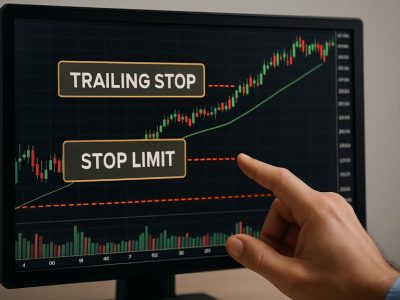
Navigating the intricate world of trading demands a clear understanding of the tools at your disposal. Among these, knowing the differences between a Limit Order and a Stop-Loss Order can significantly enhance your strategic capabilities. While both serve to optimize and protect your investments, their functionalities cater to distinct goals and scenarios. Let’s investigate deeper to distinguish these critical trading mechanisms.
Understanding the Basics of Trading Orders
Trading orders are fundamental mechanisms that help buying or selling securities in financial markets. They assert specific instructions to brokers or platforms, ensuring that trades align with traders’ objectives. Both Limit and Stop-Loss Orders serve to execute trades, but each follows a distinct methodology and serves different purposes.
What Is a Limit Order?
Definition and Purpose of a Limit Order
A Limit Order allows you to set a specific price at which you wish to buy or sell a security. It ensures execution only when the market reaches or exceeds your predefined target price.
Advantages and Disadvantages of Limit Orders
Advantages include control over pricing and the potential to capture optimal market conditions, though the downside is that the order might not execute if the target price isn’t met.
Practical Examples and Scenarios
Consider setting a Limit Order to purchase shares if they fall to $50, guarding against overpaying while adhering to tactful financial planning.
What Is a Stop-Loss Order?
Definition and Purpose of a Stop-Loss Order
A Stop-Loss Order is configured to sell a security automatically when its price falls below a certain threshold, minimizing potential losses.
Advantages and Disadvantages of Stop-Loss Orders
By establishing a clear exit point, it mitigates emotional decision-making under pressure: but, market volatility might trigger premature sales.
Practical Examples and Scenarios
For instance, if you own stock in a volatile sector, setting a Stop-Loss Order at 10% below the purchase price protects your investment against significant declines.
Key Differences Between Limit Orders and Stop-Loss Orders
Comparison of Uses and Strategies
Limit Orders aim at achieving advantageous trade values, while Stop-Loss Orders focus on preventing unfavorable outcomes. Their operational essence diverges in application and objective.
Choosing the Right Type of Order for Your Trading Goals
Electing between these orders depends on whether your priority lies in securing optimal entry/exit points or ensuring protection against unexpected risks.
To provide the best experiences, we use technologies like cookies to store and/or access device information. Consenting to these technologies will allow us to process data such as browsing behaviour or unique IDs on this site. Not consenting or withdrawing consent, may adversely affect certain features and functions.
Functional
Always active
The technical storage or access is strictly necessary for the legitimate purpose of enabling the use of a specific service explicitly requested by the subscriber or user, or for the sole purpose of carrying out the transmission of a communication over an electronic communications network.
Preferences
The technical storage or access is necessary for the legitimate purpose of storing preferences that are not requested by the subscriber or user.
Statistics
The technical storage or access that is used exclusively for statistical purposes.The technical storage or access that is used exclusively for anonymous statistical purposes. Without a subpoena, voluntary compliance on the part of your Internet Service Provider, or additional records from a third party, information stored or retrieved for this purpose alone cannot usually be used to identify you.
Marketing
The technical storage or access is required to create user profiles to send advertising, or to track the user on a website or across several websites for similar marketing purposes.