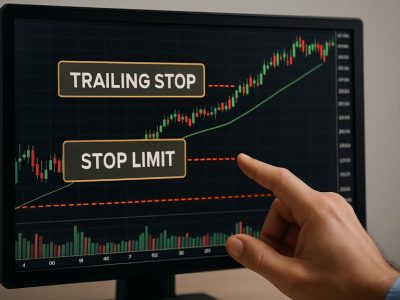
Imagine you’re exploring the bustling world of stock trading, where every decision is a delicate dance between risk and reward. In this rapid environment, understanding the tools at your disposal can make all the difference. Among these tools are stop and stop-limit orders—two powerful strategies that can help you manage your investments with precision. But what sets them apart?
Picture a scenario where the market’s volatility feels like a rollercoaster ride. A stop order acts as your safety harness, automatically selling your stock when it hits a specific price, protecting you from potential losses. Meanwhile, a stop-limit order offers a more tailored approach, allowing you to set both a stop price and a limit price, ensuring you get the price you want. By unraveling the nuances between these two, you empower yourself to make informed decisions, exploring the market’s twists and turns with confidence.
Understanding Stop Orders
Stop orders are essential tools for managing risk in stock trading. They provide automatic mechanisms to limit potential losses.
What Is a Stop Order?
Stop orders trigger a sale or purchase of stocks once a specific price is reached, acting as risk management tools in volatile situations. Unlike regular orders executed immediately, stop orders convert into market orders only when the stop price is met. This means you can’t actively monitor the stocks, yet still, safeguard investments.
How Stop Orders Work
When the stock’s price hits the pre-defined stop price, the stop order becomes a market order. Suppose you own stock ABC purchased at $50. To avoid significant losses, set a stop price at $48. If the market price drops to $48, the stop order executes, and the stock sells at the best available market price. But, if prices drop rapidly, the final selling price might be below $48 due to market volatility.
Stop orders help maintain control over investments in dynamic stock markets, providing peace of mind and efficient handling of unexpected market movements.
Exploring Stop Limit Orders
Stop-limit orders combine the features of stop orders and limit orders. They offer a precise mechanism to control trading outcomes when market conditions fluctuate.
What Is a Stop Limit Order?
A stop limit order is a directive to buy or sell a security once its price reaches a specific stop price. When this price is hit, the order transforms into a limit order, executing only if the limit price, which you set, can be met. This ensures no trade unless your price criteria are satisfied. It’s especially useful to navigate sudden market changes efficiently. While a stop order might execute at an unexpected market rate, a stop limit ensures your trade stays within your anticipated range.
How Stop Limit Orders Work
To grasp stop limit orders, consider this scenario. Suppose you own stock XYZ, currently trading at $100, and predict market dips. You decide setting a stop price of $95 and a limit price of $93. If XYZ drops to $95, your order becomes active, but it only sells at $93 or higher. If XYZ briefly dips to $92, your order will remain unexecuted unless the market rebounds. Stop limit orders are invaluable, they offer greater control in volatile markets, although transactions might not complete if the limit price isn’t reached. Understanding how these elements interact helps you manage investment strategies with precision.
Key Differences Between Stop and Stop Limit
Understanding the key differences between stop and stop-limit orders helps you navigate the financial markets more effectively. Each order type serves distinct purposes in trading strategies.
Risk Management
Stop orders offer a straightforward risk management approach. When the stop price triggers, they convert to market orders, prioritizing execution over price. In fluctuating markets, this may cause trade execution at unexpected prices. By contrast, stop-limit orders provide more detailed risk management, allowing you to specify both a stop price and a limit price. If the market reaches the stop price but doesn’t meet the limit, the order won’t execute, offering greater control over execution risk but potentially leaving trades unfilled. For instance, consider if you set a stop-limit order for stock DEF at a stop price of $50 and a limit of $49. If DEF falls to $50, the order activates, but execution only happens if the price is $49 or higher.
Price Execution
Execution price varies significantly between order types. Stop orders ensure execution by converting to market orders when triggered but sacrifice price certainty, often selling lower or buying higher than anticipated during big swings. In contrast, stop-limit orders transform into limit orders once activated, executing only within your specified price range, offering more price stability in volatile conditions. But, they risk leaving orders unfulfilled if the market never intersects the limit price. Imagine setting a stop-limit order for buying stock GHI at a stop price of $90 and a limit of $88. If GHI’s price rises only to $89, the purchase remains incomplete, ensuring control but requiring patience for the right opportunity.
Pros and Cons of Stop Orders
Stop orders play a crucial role in stock trading, helping manage risks during volatile market conditions. They offer several advantages and disadvantages which can impact your trading strategies.
Advantages
Stop orders provide automatic execution once a specified price is reached, enabling prompt action without constant monitoring. This mechanism safeguards investments by limiting potential losses in rapidly changing markets. They add discipline to your trading plan, ensuring decisions based on predefined criteria rather than emotional responses. For investors looking to study market trends, stop orders offer insightful data on price levels and investor activity.
Disadvantages
Although efficient, stop orders may execute at less favorable prices during sharp market downturns. In turbulent conditions, the final sale price might differ significantly from the stop price, affecting expected returns. Stop orders also lack precision as they convert directly to market orders, offering no control over the executed price level. If the market swiftly rebounds after a stop order is triggered, you may miss out on potential gains.
Understanding these pros and cons helps in choosing the right trading strategy, providing a balance between risk management and execution certainty.
Pros and Cons of Stop Limit Orders
Understanding the advantages and disadvantages of stop limit orders helps refine trading strategies. These orders provide more tailored control but come with their own set of benefits and drawbacks.
Advantages
Stop limit orders offer precision by allowing you to specify two prices: a stop price and a limit price. This dual pricing mechanism ensures trades only occur within a designated price range. Such control can be crucial in volatile markets. For instance, if the market suddenly dips, a stop order might execute at a lower price than anticipated. With a stop limit order, execution only occurs if the stock reaches the predetermined limit price, offering more predictable results. The ability to set upper or lower limits on trades can enhance your strategy by minimizing unexpected price losses.
Disadvantages
While stop limit orders improve control, they may also result in unexecuted trades if the market price doesn’t meet the limit. This unexecuted status can be frustrating in rapidly changing markets, where swift movements might bypass your specified price. Unlike stop orders, which execute once the stop price is hit over, stop limit orders require both the stop and limit prices to align with market conditions. This necessity might leave opportunities on the table, especially in fluctuating environments. Traders risk missing out on potential gains or avoiding losses if prices don’t adhere to their predefined thresholds.
Best Use Cases for Each Order Type
Use stop and stop-limit orders effectively to enhance your investment strategies. Understanding when to apply each order type can significantly impact your trading success.
When to Use Stop Orders
Use stop orders for straightforward risk management. If you’re dealing with a highly volatile stock, setting a stop order helps protect against sudden losses. Traders prefer stop orders when they want to execute trades swiftly without constant market monitoring. For example, when owning stock purchased at $70, you might set a stop order at $66 to limit potential losses, even if the market experiences rapid changes. But, remember, during sharp downturns, execution may occur at less favorable prices due to market conditions.
When to Use Stop Limit Orders
Set stop-limit orders when precise control over trade execution is paramount. These orders benefit traders focusing on a specific price range, particularly in unpredictable markets. Use stop-limit orders to define clear entry or exit points, ensuring trades only occur at desired prices. Suppose you own shares at $40 and aim to sell at a minimum of $38. Setting a stop price at $39 and a limit price at $38 allows the order to activate at $39, executing only if the price remains within your set range. The downside? If the market doesn’t reach the limit price, trades may remain unfilled.
Both order types offer unique advantages, determining the appropriate usage depends on your specific trading objectives and market conditions. Understanding these contexts helps refine your strategies and optimize trading outcomes.
Conclusion
Mastering the nuances between stop and stop-limit orders is crucial for effective investment management. By understanding their distinct functionalities, you can tailor your trading strategies to align with market conditions and personal risk tolerance. Stop orders offer a straightforward approach to risk management, while stop-limit orders provide precision and control. Knowing when to deploy each type of order allows you to navigate volatile markets with confidence, protecting your investments and optimizing trade outcomes. Embrace these tools to enhance your decision-making and achieve greater success in the dynamic world of stock trading.
To provide the best experiences, we use technologies like cookies to store and/or access device information. Consenting to these technologies will allow us to process data such as browsing behaviour or unique IDs on this site. Not consenting or withdrawing consent, may adversely affect certain features and functions.
Functional
Always active
The technical storage or access is strictly necessary for the legitimate purpose of enabling the use of a specific service explicitly requested by the subscriber or user, or for the sole purpose of carrying out the transmission of a communication over an electronic communications network.
Preferences
The technical storage or access is necessary for the legitimate purpose of storing preferences that are not requested by the subscriber or user.
Statistics
The technical storage or access that is used exclusively for statistical purposes.The technical storage or access that is used exclusively for anonymous statistical purposes. Without a subpoena, voluntary compliance on the part of your Internet Service Provider, or additional records from a third party, information stored or retrieved for this purpose alone cannot usually be used to identify you.
Marketing
The technical storage or access is required to create user profiles to send advertising, or to track the user on a website or across several websites for similar marketing purposes.