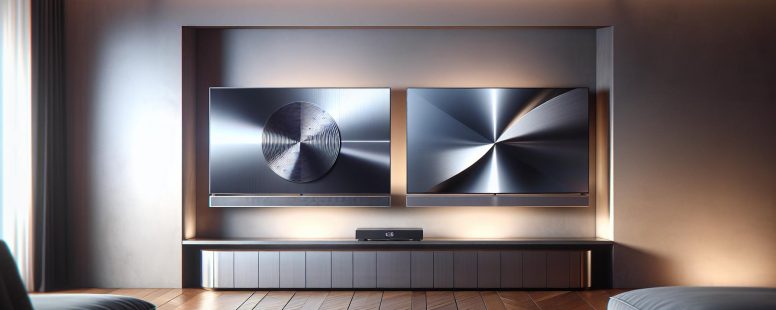
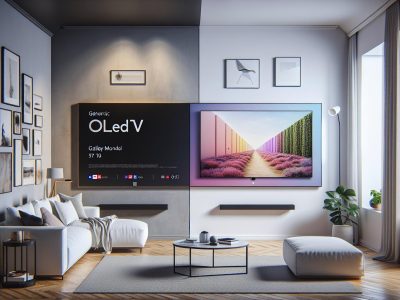
Choosing the perfect TV can feel like navigating a maze of endless options, especially when you’re comparing models as advanced as LG’s C3 and C4. Both promise cutting-edge technology and stunning visuals, but what truly sets them apart? Is it the picture quality, performance upgrades, or perhaps subtle design tweaks that could transform your viewing experience?
Picture sinking into your couch after a long day, remote in hand, ready to immerse yourself in vibrant colors and razor-sharp clarity. The difference between these two models might just be the key to elevating those moments. Whether you’re a cinephile chasing cinematic perfection or a gamer seeking seamless performance, understanding how the LG C3 and C4 stack up could make all the difference.
Let’s dive deeper into this comparison so you can decide which model deserves a spot in your living room.
Overview Of LG C3 And LG C4
The LG C3 and LG C4 are part of LG’s OLED TV lineup, offering premium display technology. Both models emphasize superior picture quality, advanced processing capabilities, and sleek designs.
Display Technology
Both TVs use OLED panels for deep blacks and vibrant colors. The LG C3 features the Alpha 9 Gen 6 processor to enhance image clarity and dynamic range. In contrast, the LG C4 introduces an updated Alpha 10 Gen processor, improving upscaling performance for lower-resolution content.
Design Features
The slim profiles of both models make them suitable for modern interiors. The LG C3 includes a standard wall-mount option, while the LG C4 integrates a more versatile stand design that supports multiple viewing angles.
Gaming Capabilities
LG prioritizes gaming with these TVs by including HDMI 2.1 ports in both models for high refresh rates (up to 120Hz). But, the Game Optimizer settings on the LG C4 provide additional customization compared to its predecessor.
These distinctions in processing power, design versatility, and gaming optimization highlight key differences between the two models without compromising core OLED benefits like exceptional contrast ratios or wide viewing angles.
Design And Build Quality
The LG C3 and C4 exhibit sleek, modern designs that complement contemporary living spaces. Both models emphasize premium aesthetics while incorporating functional elements.
Form Factor Comparison
The LG C3 features a slim profile with a standard wall-mount configuration, making it ideal for minimalist setups. Its compact design integrates seamlessly into tight spaces without compromising on visual appeal. The C4, on the other hand, introduces a versatile stand option that supports multiple viewing angles. This flexibility caters to users who prefer tabletop placement or frequently adjust their TV’s position based on room layout.
Both models share ultra-thin bezels for an immersive viewing experience but differ slightly in dimensions—C4 being marginally thicker due to its enhanced internal components. For example, if you’re looking at 65-inch variants, the C3 measures approximately 0.9 inches thick while the C4 adds about 0.2 inches more depth.
Material And Finish
High-quality materials define both models’ construction, ensuring durability alongside elegance. The LG C3 uses brushed aluminum accents combined with a matte-finish rear panel to resist fingerprints and smudges effectively. Conversely, the LG C4 incorporates anodized metal trims paired with textured finishes for added sophistication and improved grip during installation.
Color options also vary subtly: the C3 leans towards darker tones like graphite gray whereas the C4 offers lighter shades such as titanium silver, appealing to diverse aesthetic preferences. Both TVs maintain robust build standards suitable for long-term use under varying environmental conditions like humidity or temperature fluctuations seen in most homes today.
Display Specifications
Understanding the display specifications of LG C3 and C4 models is essential for evaluating their visual performance. Both models use advanced OLED technology, but nuanced differences impact viewing experiences.
Screen Technology
Both LG C3 and C4 feature OLED screens, providing perfect black levels and infinite contrast ratios. The self-emissive pixels in these displays allow individual pixel control, enhancing detail in dark scenes. While the C3 uses a standard WOLED panel, the C4 incorporates an upgraded MLA (Micro Lens Array) layer. This addition improves light efficiency and reduces energy consumption by spreading emitted light more evenly across the screen.
For gaming enthusiasts or cinephiles, the smoother motion handling on both TVs ensures fluid visuals during fast-paced scenes due to refresh rates up to 120Hz. The Game Optimizer settings on the C4 refine this further with improved latency reduction features.
Resolution And Brightness
The resolution of both models remains at Ultra HD (3840 x 2160), ensuring sharp imagery for 4K content. But, brightness capabilities differ slightly; the LG C4 outshines its predecessor with peak brightness levels reaching approximately 1,500 nits versus around 1,300 nits on the LG C3. This makes HDR content appear more vivid and impactful on the newer model.
Adaptive Brightness Adjustment enhances visibility under varying lighting conditions in both TVs, but Dolby Vision IQ integration performs better on the C4 due to enhanced processing power from its Alpha 10 Gen processor.
Performance And Features
The LG C3 and C4 offer advancements in processing power and usability, catering to different user needs. Both models build upon LG’s OLED technology while integrating features that enhance visual performance and interactivity.
Processing Power
The C3 incorporates the Alpha 9 Gen 6 processor, designed for refined image clarity and smooth motion handling. This processor uses AI-based algorithms to upscale lower-resolution content effectively, creating a sharper viewing experience suitable for streaming or gaming.
On the other hand, the C4 introduces the Alpha 10 Gen processor, which further enhances upscaling accuracy through more powerful machine learning techniques. This results in superior texture reproduction and reduced noise levels in complex scenes. For example, fast-paced sports events appear clearer on the C4 due to its improved motion interpolation capabilities.
Both processors support Dolby Vision IQ but with differing efficiencies; the Alpha 10 optimizes HDR content delivery under varying lighting conditions better than the Alpha 9. If you frequently watch movies in changing ambient light environments, you might notice how adaptive brightness feels more seamless on the C4.
User Interface
LG’s webOS platform powers both models’ smart TV interfaces but offers slight feature variations between them. The C3 runs an updated version of webOS tailored for intuitive navigation with quick-access menus for popular apps like Netflix or Disney+. Voice controls via ThinQ AI are also responsive on this model.
In comparison, the C4 leverages an upgraded webOS version with enhanced multitasking capabilities. You can split-screen multiple inputs—watch live sports while browsing stats simultaneously—something unavailable on earlier iterations found in the C3.
Gamers benefit from Game Dashboard improvements exclusive to the C4’s interface design. These enhancements allow quicker toggling of settings like VRR (Variable Refresh Rate) without disrupting gameplay flow—a practical addition when switching genres mid-session or adjusting parameters during competitive matches.
Sound Quality
Both the LG C3 and C4 offer impressive sound quality, but their differences cater to distinct user preferences. Their audio capabilities complement the immersive visuals, enhancing your overall viewing experience.
Speaker Performance
The LG C3 incorporates a 2.2-channel speaker system with 40W output. This setup provides clear dialogue and balanced sound for standard living room environments. The speakers perform well in mid-range frequencies but lack depth in bass-heavy scenes, making it ideal for casual TV watchers.
The C4 steps up with a 4.2-channel speaker configuration delivering 60W output. Its additional channels enhance surround effects and produce richer low-end audio, offering a cinematic experience at home. For instance, action sequences in movies feel more dynamic due to the improved bass response.
Audio Enhancement Features
Both models support Dolby Atmos for multidimensional soundscapes, ensuring spatial accuracy during playback of compatible content like blockbuster films or high-quality streaming services. But, the C4 benefits from its Alpha 10 Gen processor’s advanced AI Sound Pro feature that adapts audio settings based on scene analysis more effectively than the C3.
AI Acoustic Tuning is present in both models to optimize sound according to room acoustics by analyzing space dimensions via onboard microphones. The C4 refines this process further by integrating enhanced calibration algorithms for sharper precision when adjusting tonal balance.
For external setups, both TVs include eARC (Enhanced Audio Return Channel) over HDMI ports to connect high-fidelity soundbars seamlessly while supporting lossless formats like DTS:X and uncompressed Dolby TrueHD audio streams.
Connectivity And Ports
The LG C3 and C4 models offer robust connectivity options, catering to various user needs. Both include four HDMI 2.1 ports, ensuring compatibility with modern gaming consoles like the PlayStation 5 and Xbox Series X. These ports support features such as VRR (Variable Refresh Rate), ALLM (Auto Low Latency Mode), and 4K at 120Hz for smooth gameplay.
Both models incorporate three USB ports for external storage or device connections like flash drives and webcams. Also, there’s an Ethernet port for stable internet connections if your Wi-Fi signal is weak. The inclusion of Bluetooth 5.0 in both models facilitates seamless pairing with wireless accessories like headphones or soundbars.
The primary distinction lies in their enhanced data transfer capabilities: the C4 supports a faster Wi-Fi 6E standard compared to the C3’s Wi-Fi 6, providing reduced latency during streaming or online gaming sessions on compatible networks. This improvement is particularly beneficial when multiple devices share bandwidth within your home network.
Audio return channel (eARC) functionality is present in both models’ HDMI setups, enabling high-quality audio passthrough to external systems without compression loss—a feature critical for audiophiles using advanced sound systems.
For gamers seeking optimized experiences, the C4 integrates additional Game Optimizer settings that grant more detailed control over refresh rates and input lag adjustments compared to the C3’s standard configuration.
Price And Value For Money
The LG C3 and C4 differ in pricing, reflecting their varying features and performance levels. The LG C3 is generally priced lower, starting at approximately $1,300 for the 55-inch model, while the same size in the C4 lineup starts around $1,600. These price points vary based on retailers and seasonal promotions.
When considering value for money, the C3 appeals to budget-conscious buyers looking for premium OLED technology without additional frills. It delivers excellent picture quality through its Alpha 9 Gen 6 processor and a solid audio setup with Dolby Atmos support. Users who prioritize cost-effectiveness over cutting-edge brightness or gaming enhancements might find this model suitable.
In contrast, the C4 justifies its higher price tag by offering advanced features like an upgraded Alpha 10 Gen processor and MLA technology for improved brightness efficiency. Gamers benefit from enhanced Game Optimizer settings that provide greater control over refresh rates and input lag adjustments. Its superior peak brightness of 1,500 nits compared to the C3’s 1,300 nits makes HDR content more vivid in bright environments.
Both models include four HDMI 2.1 ports and Wi-Fi connectivity options; but, only the C4 supports Wi-Fi 6E for faster data transmission during streaming or competitive gameplay sessions. Buyers valuing future-proof tech investments might gravitate towards this option even though its higher upfront cost.
Eventually each model targets different audiences—C3 focuses on affordability without compromising core OLED benefits (e.g., wide viewing angles), while the C4 caters to those seeking enhanced performance metrics and next-gen capabilities at a premium price point.
Conclusion
Choosing between the LG C3 and C4 eventually comes down to your specific needs and preferences. Both models deliver stunning OLED visuals, advanced features, and sleek designs, but they cater to different priorities. The C3 offers excellent value with its premium performance at a more affordable price point, while the C4 stands out for its enhanced processing power, brighter display, and superior gaming capabilities.
If you’re looking for cutting-edge technology and don’t mind spending extra for added functionalities, the C4 is a great investment. On the other hand, if you want high-quality OLED performance without very costly, the C3 remains an impressive choice. Either way, you’re guaranteed an exceptional viewing experience tailored to modern entertainment demands.
To provide the best experiences, we use technologies like cookies to store and/or access device information. Consenting to these technologies will allow us to process data such as browsing behaviour or unique IDs on this site. Not consenting or withdrawing consent, may adversely affect certain features and functions.
Functional
Always active
The technical storage or access is strictly necessary for the legitimate purpose of enabling the use of a specific service explicitly requested by the subscriber or user, or for the sole purpose of carrying out the transmission of a communication over an electronic communications network.
Preferences
The technical storage or access is necessary for the legitimate purpose of storing preferences that are not requested by the subscriber or user.
Statistics
The technical storage or access that is used exclusively for statistical purposes.The technical storage or access that is used exclusively for anonymous statistical purposes. Without a subpoena, voluntary compliance on the part of your Internet Service Provider, or additional records from a third party, information stored or retrieved for this purpose alone cannot usually be used to identify you.
Marketing
The technical storage or access is required to create user profiles to send advertising, or to track the user on a website or across several websites for similar marketing purposes.