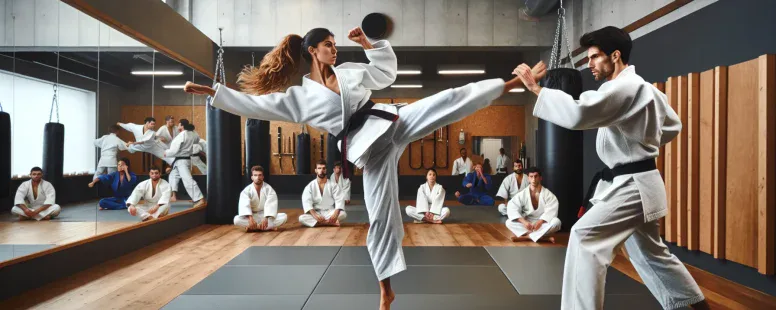
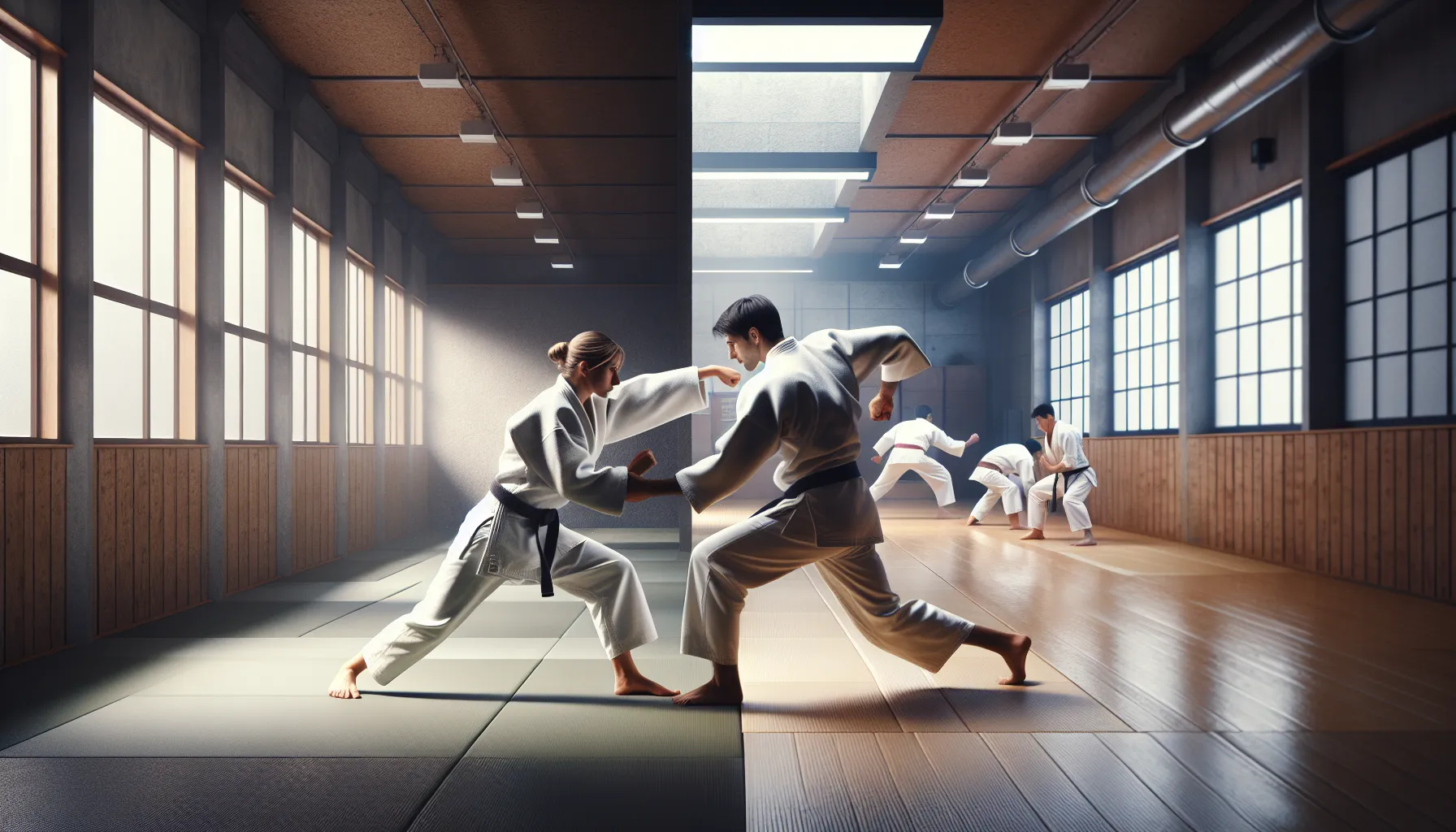
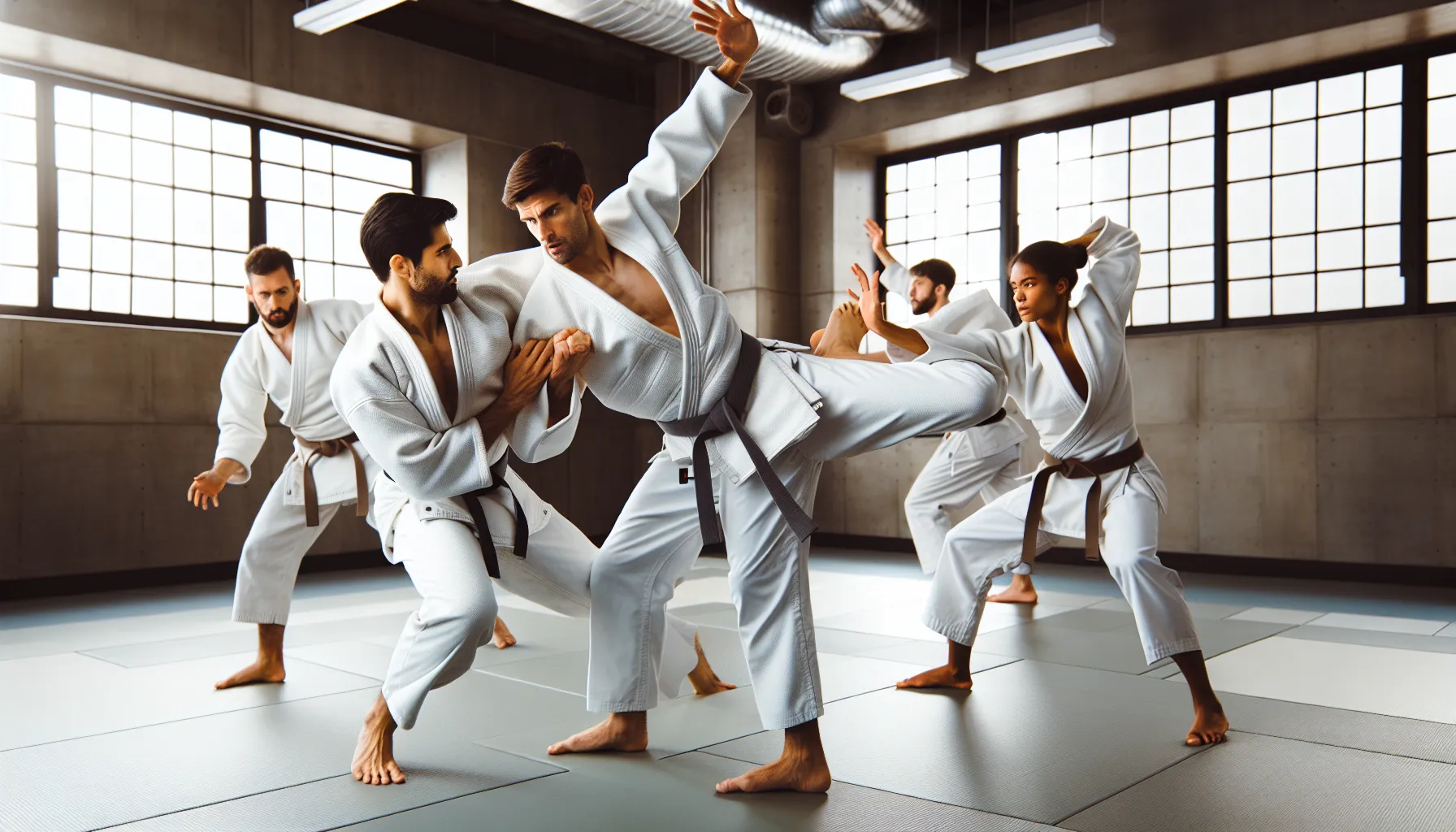
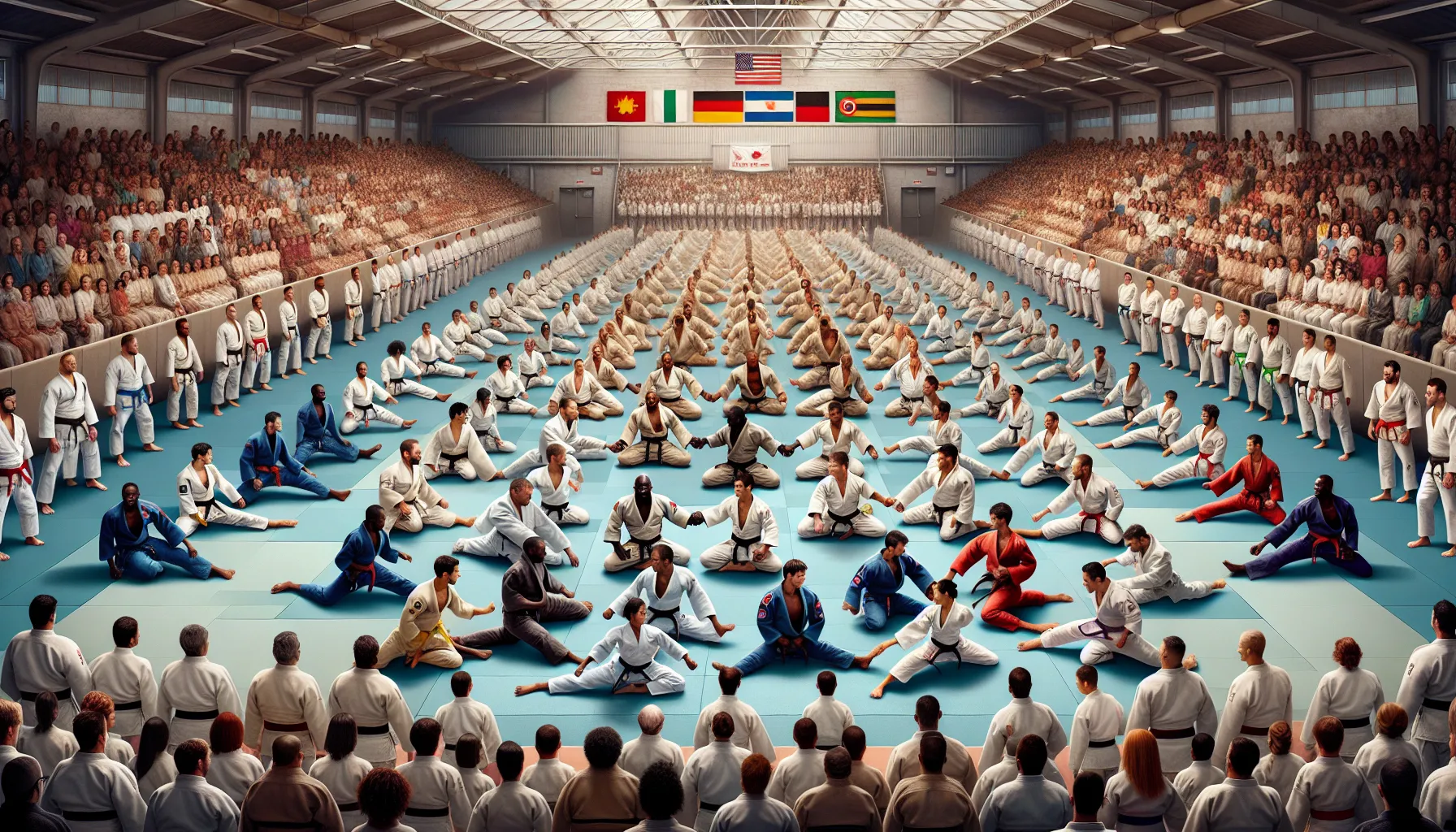
If you’ve ever delved into the world of martial arts, you might have encountered both Judo and Karate, two renowned disciplines with distinct characteristics. Although they share their roots in Japanese culture and emphasize self-improvement alongside physical prowess, their purposes, techniques, and philosophies diverge significantly. Let’s embark on a journey to uncover the nuances that set these two martial arts apart, guiding your understanding and appreciation for both.
Understanding the Origins of Judo and Karate
Historical Backgrounds of Judo
Judo, which means “the gentle way,” was developed in the late 19th century by Jigoro Kano in Japan. It focuses on the principles of mutual respect and efficiency, drawing from traditional Japanese jujutsu techniques to create a discipline that relies on leverage and balance rather than brute strength.
Historical Backgrounds of Karate
Originating in Okinawa, Karate, translated as “empty hand”, has roots in indigenous Ryukyuan fighting styles influenced by Chinese martial arts. In the early 20th century, it was formalized into a consistent system, emphasizing striking techniques such as punches, kicks, and defensive maneuvers.
Key Philosophical Foundations of Each Discipline
The Principles of Judo
Judo emphasizes the ideals of “maximum efficiency with minimal effort” and “mutual welfare and benefit.” Practitioners are encouraged to consider both self-improvement and contributing to community harmony.
The Principles of Karate
Karate practitioners often adhere to the “dojo kun”, a set of guiding principles that include respect, effort, and self-discipline. The philosophy often focuses on character development and striving for perfection.
Contrast in Techniques and Training Methods
Judo Techniques and Training
In Judo, the primary techniques involve throws, joint locks, and pins. Training often involves extensive practice with a partner to safely perform and counter techniques, emphasizing situational adaptability.
Karate Techniques and Training
Karate training includes katas (forms), kumite (sparring), and kihon (fundamental techniques). Practitioners work on strength, precision, and agility for delivering effective strikes.
Cultural Significance and Global Impact
Cultural Importance of Judo
As one of Japan’s leading sports, Judo has a prominent presence worldwide, contributing to cultural exchange through global competitions and the International Judo Federation’s endeavors.
Cultural Importance of Karate
Karate achieved widespread popularity partially thanks to media representation, becoming a symbol of discipline and resilience, particularly after its inclusion in the Olympics.
Competitive Formats and Rules
Judo Competitions: Rules and Structure
Judo competitions focus on achieving a clean throw, pin, or submission to score points. Rules prioritize safety and skillful execution of techniques.
Karate Competitions: Rules and Structure
Karate competitions are classified into kumite (sparring) and kata (forms) events, grading competitors based on precision, technique, and control.
Published: January 2, 2026 at 5:41 pm by Ellie B, Site owner & Publisher
To provide the best experiences, we use technologies like cookies to store and/or access device information. Consenting to these technologies will allow us to process data such as browsing behaviour or unique IDs on this site. Not consenting or withdrawing consent, may adversely affect certain features and functions.
Functional
Always active
The technical storage or access is strictly necessary for the legitimate purpose of enabling the use of a specific service explicitly requested by the subscriber or user, or for the sole purpose of carrying out the transmission of a communication over an electronic communications network.
Preferences
The technical storage or access is necessary for the legitimate purpose of storing preferences that are not requested by the subscriber or user.
Statistics
The technical storage or access that is used exclusively for statistical purposes.The technical storage or access that is used exclusively for anonymous statistical purposes. Without a subpoena, voluntary compliance on the part of your Internet Service Provider, or additional records from a third party, information stored or retrieved for this purpose alone cannot usually be used to identify you.
Marketing
The technical storage or access is required to create user profiles to send advertising, or to track the user on a website or across several websites for similar marketing purposes.