Ever found yourself tangled in the intricate web of martial arts, specifically grappling with the differences between Brazilian Jiu-Jitsu (BJJ) and Japanese Jujutsu (JJ)? You’re not alone. It’s a common conundrum for many enthusiasts stepping into this intriguing area.
While they may appear similar on surface level – both are ground-based combat forms that emphasize submission holds – there’s more than meets the eye. Each has its unique roots, techniques, and philosophies that set them apart significantly.
Intrigued? Great! Let’s dive deeper to untangle these complex art forms so you can better appreciate their distinctive characteristics and perhaps even decide which one is your perfect fit.
Overview of Brazilian Jiu-Jitsu (BJJ)
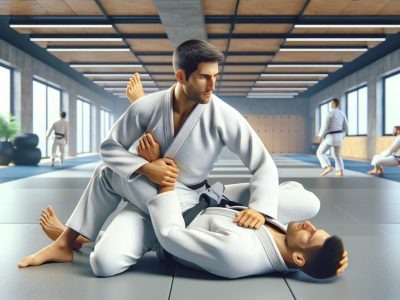
Delving into the world of BJJ, you find a martial art that primarily centers on ground fighting and submission holds. Originating from Kodokan Judo ground fighting fundamentals in the early 20th century, it’s been developed over many years in Brazil.
An interesting aspect is its emphasis on grappling strategies. In contrast to striking-focused martial arts like Karate or Muay Thai, BJJ practitioners focus more extensively on taking their opponent down to neutralize potential threats from kicks and punches.
With respect to techniques employed by practitioners during fights, they use various submissions including joint-locks and chokeholds alongside other maneuvers designed for self-defense scenarios where an individual may need rapid immobilization of an adversary without causing serious harm.
Notably differentiating itself from traditional Japanese jujutsu methods—often characterized by quick transitions between standing movements involving strikes or throws—it places a heavy importance on maintaining positions such as mount, back control or guard before moving towards applying submissions which necessitate intricate knowledge about human anatomy particularly joints’ range motion coupled with muscular strength endurance leverage techniques.
In terms of philosophy behind this discipline’s teaching practice lies concept “position before submission” emphasizing necessity first gaining controlling position then working systematically methodically apply finishing move ensuring least risk possible while maximum effectiveness
Understanding key principles at heart technique application can provide deeper appreciation complexities involved training perfecting one’s skills within area adding layer intrigue existing allure combat sports aficionados who might considering incorporating style into own regimen learning experience.
Overview of Japanese Jujutsu (JJ)
Diving deeper into the roots, you’ll find that Japanese Jujutsu, often shortened to JJ, is a traditional martial art. Originating in Japan’s samurai class over centuries ago, it focuses on close combat for defeating armed and armored opponents. Here’s what sets it apart.
Core Principles
Japanese jujitsu embeds itself deeply in principles related to balance disruption and leverage application against an opponent rather than relying solely on physical strength or speed. This makes its techniques highly effective even when up against larger adversaries.
Techniques Utilized
JJ incorporates a wide array of fighting techniques including throws (nage-waza), joint locks (kansetsu-waza), strikes (atemi-waza) and groundwork known as ne-waza – yet does not emphasize ground-fighting as much as BJJ does.
Technique
Definition
Nage-Wazas
Throwing Techniques
Kansetsu-Wazas
Joint Locking Techniques
Atemi-Wazas
Striking Techniques
What stands out about these methods? Well, they’re designed with practicality; aimed at real-world scenarios where self-defense could be crucially important.
Philosophical Aspects
The philosophy ingrained within JJ extends beyond just fighting tactics; It involves respect for tradition along with spiritual development through discipline and training which fosters personal growth – quite contrasting from Brazilian counterpart’s focus primarily on competitive aspects.
Key Differences Between BJJ and JJ
Techniques and Application
Brazilian Jiu-Jitsu (BJJ) centers on ground combat, leveraging your opponent’s weight against them. In contrast, Japanese Jujutsu (JJ), born from the battlefield tactics of samurai warriors, integrates a variety of techniques such as strikes, throws, joint locks along with groundwork. For example: in BJJ you’ll often see maneuvers like “rear naked chokes” or “arm bars,” while JJ might showcase movements akin to judo throws mixed with karate-style striking.
Rules and Scoring
The competition rules for these martial arts also differ greatly. Scored mainly on points during matches based upon successful takedowns or submission attempts is what characterizes Brazilian Jiu-Jitsu tournaments – there are no points awarded for striking moves. Conversely in Japanese jujutsu competitions that mimic real-life self-defense scenarios include scoring opportunities not only for grappling but also strikes which aren’t part of typical BJJ contests.
Training and Culture
Training environment plays a significant role too; contrasting cultural influences mold each art form’s teaching style significantly. You’ll find discipline steeped spiritual development emphasized by traditional dojos practicing Japanese jujutsu – it’s about more than just physical training here! Meanwhile in many Brazilian Jiu-jitsu gyms around the world adopt an intense competitive spirit where winning at international championships represents their ultimate goal.
Historical Evolution of BJJ and JJ
Continuing our journey from the previous section, let’s dive deeper into how Brazilian Jiu-Jitsu (BJJ) and Japanese Jujutsu (JJ) evolved historically.
Origins of Japanese Jujutsu
Japanese jujutsu originated during Japan’s Feudal era around 1532–1596 as a martial art for samurais to engage in close combat with an armed opponent when they were unarmed themselves or had lost their primary weapon on the battlefield. It was indeed a survival skill used by warriors.
Throughout history, different ryus, or schools developed diverse styles of jj focusing on various aspects such as throws, joint locks and strikes. One notable school is Takenouchi-ryū founded by Hisamori Takenouchi in 1532 – it’s considered one of the oldest documented martial arts systems that still exists today.
Later down the line came Kano Jigoro who created Kodokan judo at his Tokyo-based dojo in 1882 which you could argue was an evolution but also marked divergence from traditional jj philosophy emphasizing “maximum efficiency with minimum effort”. This move started to shift focus towards sportive competition over combative functionality — something we see reflected more prominently today especially within Olympic-style judo competitions.
Development of Brazilian Jiu-Jitsu
Fast forward to early twentieth century where Mitsuyo Maeda — a top student under Kano traveled across continents showcasing judo skills through circus acts & prize fights eventually landing him Brazil circa 1914. There he befriended Gastao Gracie whose son Carlos would become first member what later became global phenomenon known as Gracie family lineage.
Under Maeda’s tutelage along younger brother Helio began adapting techniques suit smaller physical stature prioritizing leverage control ground fighting principles basis modern day bjj seen practiced worldwide right now!
The influence extended beyond just technique though; ethos of Gracie Jiu-Jitsu also carried underlying philosophy self-defense, personal development and a strong belief in the martial art as a method for individual growth. This is why BJJ classes often start with standing techniques – to defend against initial attacks before taking it down to the ground where most fights eventually end up.
But unlike JJ or even judo that came from it; bjj has been further refined over years towards sports orientation thanks largely part competitive nature its practitioners — no better example than rise popularity IBJJF tournaments across globe during last two decades where points are awarded not only submissions but positions control too which could argue takes away somewhat original intent being primarily self-defence system albeit still very effective one!
So we see an interesting contrast yet interconnected journey between these arts: from samurai-era Japan’s battlefield tactics Brazil via influence Kodokan sportification now global grappling scene under banner Brazilian jiu-jitsu! It indeed highlights evolution combat systems through centuries influenced by cultures, circumstances & individuals who shaped them.
Conclusion
So you’ve journeyed through the unique world of Brazilian Jiu-Jitsu and Japanese Jujutsu, unraveling their individual strengths. You’ve learned that BJJ shines in ground combat while JJ offers a versatile toolkit for self-defense, from throws to strikes. Remember how these martial arts have evolved? From samurai warfare tactics forming the roots of JJ to BJJ’s birth under Maeda and the Gracies’ influence – it’s been an epic ride! And let’s not forget about BJJ’s shift towards a sports-oriented approach with its competitive tournaments and points systems. It is clear then: both offer distinct values yet share common threads tying them back to ancient battlefields. Whether your interest lies in spiritual development or rigorous competition, there’s something here for everyone – pick up your gi today!
To provide the best experiences, we use technologies like cookies to store and/or access device information. Consenting to these technologies will allow us to process data such as browsing behaviour or unique IDs on this site. Not consenting or withdrawing consent, may adversely affect certain features and functions.
Functional
Always active
The technical storage or access is strictly necessary for the legitimate purpose of enabling the use of a specific service explicitly requested by the subscriber or user, or for the sole purpose of carrying out the transmission of a communication over an electronic communications network.
Preferences
The technical storage or access is necessary for the legitimate purpose of storing preferences that are not requested by the subscriber or user.
Statistics
The technical storage or access that is used exclusively for statistical purposes.The technical storage or access that is used exclusively for anonymous statistical purposes. Without a subpoena, voluntary compliance on the part of your Internet Service Provider, or additional records from a third party, information stored or retrieved for this purpose alone cannot usually be used to identify you.
Marketing
The technical storage or access is required to create user profiles to send advertising, or to track the user on a website or across several websites for similar marketing purposes.