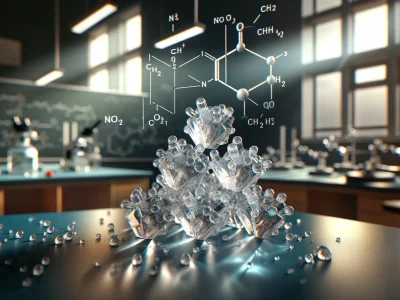
Imagine you’re holding two seemingly identical crystals. At first glance, they might appear the same, but investigate deeper, and you’ll discover a world of difference. This is the fascinating area of ionic and molecular compounds, where the invisible forces of chemistry shape the substances around us. These compounds play pivotal roles in everything from the salt on your dinner table to the sugar in your morning coffee.
Have you ever wondered why salt dissolves so effortlessly in water while sugar takes its time? The answer lies in the fundamental differences between ionic and molecular compounds. Ionic compounds, with their charged ions, create robust bonds, while molecular compounds rely on shared electrons for their structure. This distinction not only influences their physical properties but also their behavior in various environments.
Unraveling the mysteries of these compounds can enhance your understanding of the chemical world, revealing the intricate dance of atoms and molecules that define our everyday experiences.
Understanding Chemical Compounds
Chemical compounds form the foundation of material science, combining elements to create substances with new properties. You’ll come across two primary types in chemistry: ionic and molecular compounds.
Ionic Compounds: These compounds arise from the electrostatic attraction between oppositely charged ions. Common examples include table salt (sodium chloride) and calcium fluoride. In ionic compounds, one element donates an electron becoming positively charged, while the other accepts it becoming negatively charged. This electron transfer results in the formation of a crystal lattice, contributing to their high melting and boiling points and ability to conduct electricity in liquid states or when dissolved in water.
Molecular Compounds: Also known as covalent compounds, molecular compounds involve atoms sharing electrons. Unlike ionic compounds, which consist of metal and non-metal elements, molecular compounds typically involve non-metal atoms. Examples include water (H2O) and carbon dioxide (CO2). The shared electron pairs lead to a definite shape and lower melting and boiling points compared to ionic counterparts, making them poor conductors of electricity.
Understanding how these compounds differ enhances your grasp on how material and interaction differ in various environments. Knowing the distinctions between ionic and molecular compounds not only benefits science enthusiasts but enriches practical knowledge for uses in fields like pharmacology and material engineering.
What Are Ionic Compounds?
Ionic compounds arise from the electrostatic attraction between oppositely charged ions. These compounds play a significant role in everyday life, including in essential substances like table salt.
Characteristics of Ionic Compounds
Composition: Ionic compounds consist of metals and non-metals. For example, sodium chloride combines sodium and chlorine ions.
Structure: They form a crystal lattice, a repeating three-dimensional arrangement that contributes to their rigidity.
Physical Properties: High melting and boiling points result from strong ionic bonds. Solid state ionic compounds don’t conduct electricity but become good conductors when dissolved in water.
Solubility: Many ionic compounds dissolve readily in water, facilitating conductivity and reactivity.
Sodium Chloride (NaCl): Commonly known as table salt, used in cooking and food preservation.
Calcium Carbonate (CaCO₃): Found in chalk, limestone, and marble, essential in construction and art.
Potassium Bromide (KBr): Utilized in photography and as a sedative in medicine.
Magnesium Oxide (MgO): An antacid and refractory material, used in medicine and industry.
What Are Molecular Compounds?
Molecular compounds, also known as covalent compounds, form when non-metal atoms share electrons. The shared electrons create bonds that result in molecule formation, giving these compounds distinct physical properties compared to ionic compounds.
Characteristics of Molecular Compounds
Molecular compounds often have lower melting and boiling points compared to ionic compounds. These lower values arise because the forces holding molecules together are weaker than the electrostatic forces between ions in ionic compounds. Being poor conductors of electricity in any state is another distinct feature. Due to the absence of free-flowing ions or electrons, they generally do not conduct electricity whether solid or dissolved. Molecular compounds can be gases, liquids, or solids at room temperature based on their molecular structure and the specific intermolecular forces involved.
Examples of Molecular Compounds
Widely found in everyday substances, molecular compounds include water (H₂O) and carbon dioxide (CO₂). Water, essential for all living organisms, demonstrates hydrogen bonding which gives it a relatively high boiling point for a molecular compound. Carbon dioxide, a product of respiration in animals and photosynthesis in plants, exists as a gas at room temperature due to weak intermolecular forces between its molecules. Glucose (C₆H₁₂O₆) serves as a central energy source in the food chain, existing in solid form with a high melting point due to large molecular size and intricate hydrogen bonding. Each example highlights the diversity and significance of molecular compounds in both biological and environmental contexts.
Key Differences Between Ionic and Molecular Compounds
When comparing ionic and molecular compounds, it’s important to examine their formation, properties, and behavior in different environments.
Bond Formation
Ionic compounds form through the transfer of electrons between metal and non-metal atoms, resulting in charged ions. The attraction between these oppositely charged ions creates a strong bond. For example, in sodium chloride, sodium donates an electron to chlorine, forming Na⁺ and Cl⁻ ions. Molecular compounds arise from the sharing of electrons between non-metal atoms. In water, each hydrogen atom shares electrons with an oxygen atom, forming a covalent bond.
Physical Properties
Ionic compounds typically exhibit high melting and boiling points due to their crystalline structure and strong ionic forces. Sodium chloride melts at 801°C, showcasing this property. On the other hand, molecular compounds usually have lower melting and boiling points. Water, with its boiling point of 100°C, exemplifies molecular compounds’ relative weakness in intermolecular forces.
Conductivity and Solubility
Ionic compounds, when dissolved in water, conduct electricity as the ions move freely, completing an electric circuit. Table salt in water demonstrates this conductivity. Molecular compounds, with shared electrons, generally lack free ions and so do not conduct electricity. Sugar water remains non-conductive, highlighting this distinction. While ionic compounds often dissolve in polar solvents, molecular compounds vary in solubility based on polarity and molecular size.
Applications and Uses
Ionic and molecular compounds are vital in numerous industrial, biological, and environmental fields. Understanding their applications can enhance your grasp of their significance.
Ionic Compounds Uses
Industrial Use: Industries rely on ionic compounds like sodium chloride for de-icing roads during winter. Magnesium oxide serves as a refractory material in furnace linings due to its high melting point.
Medical Applications: Potassium bromide is used as a sedative, showcasing the diverse potentials of ionic compounds in healthcare. Another example is calcium carbonate, commonly found in antacids to neutralize stomach acid.
Water Treatment: Ionic compounds play a crucial role in water purification processes. Aluminum sulfate, often used as a coagulating agent, helps remove impurities in wastewater treatment facilities.
Molecular Compounds Uses
Pharmaceuticals: Molecular compounds such as acetaminophen alleviate pain and reduce fever. Highlighting chemical versatility, various medicines use molecular formulas for effective treatments.
Food Industry: The molecular compound glucose is pivotal as an energy source in living organisms and is employed as a sweetener in the food industry.
Agriculture: Insecticides often contain molecular compounds. DDT, historically significant, exemplifies a widely-used molecular compound in pest control.
Understanding how ionic and molecular compounds are utilized across different sectors underscores their pivotal role in technological and scientific advancements.
Conclusion
Understanding the differences between ionic and molecular compounds enriches your knowledge of chemistry and its practical applications. These compounds are not just theoretical concepts but are integral to numerous aspects of daily life and industry. By recognizing their distinct properties and formation processes, you gain insight into how they function in various environments. Whether it’s the robust structure of ionic compounds or the versatile nature of molecular compounds, each plays a unique role in technological and scientific advancements. This knowledge empowers you to appreciate the complexity and utility of these compounds in shaping the world around you.
To provide the best experiences, we use technologies like cookies to store and/or access device information. Consenting to these technologies will allow us to process data such as browsing behaviour or unique IDs on this site. Not consenting or withdrawing consent, may adversely affect certain features and functions.
Functional
Always active
The technical storage or access is strictly necessary for the legitimate purpose of enabling the use of a specific service explicitly requested by the subscriber or user, or for the sole purpose of carrying out the transmission of a communication over an electronic communications network.
Preferences
The technical storage or access is necessary for the legitimate purpose of storing preferences that are not requested by the subscriber or user.
Statistics
The technical storage or access that is used exclusively for statistical purposes.The technical storage or access that is used exclusively for anonymous statistical purposes. Without a subpoena, voluntary compliance on the part of your Internet Service Provider, or additional records from a third party, information stored or retrieved for this purpose alone cannot usually be used to identify you.
Marketing
The technical storage or access is required to create user profiles to send advertising, or to track the user on a website or across several websites for similar marketing purposes.