Ever found yourself standing in the tool aisle, perplexed by the difference between SDS and SDS Plus? You’re not alone. This common conundrum stumps even the most seasoned DIY enthusiasts. In the world of power tools, understanding these distinctions can mean the difference between a job well done and a task that’s tougher than it needs to be.
In this text, we’ll demystify the SDS vs SDS Plus debate. We’ll cut through the jargon, simplify the specs, and help you make an informed choice. Ready to become a more empowered tool user? Let’s drill down into the details.
Understanding the Basics of SDS and SDS Plus
In an effort to dispel confusion in choosing the right power tools, this segment tackles the essentials of SDS and SDS Plus.
The Origins of SDS Technology
Developed in the mid-1970s, the SDS system emerged as a brainchild of Bosch, a reputed company in the area of power tools. It’s an innovation that redefined the way hammer drills functioned, offering a more sophisticated method of changing drill bits. Respectively, one must understand that SDS stands for “Special Direct System” or “Spannen Durch System,” which translates to “Clamping System” in German, pointing to the system’s core function.
What Does SDS Stand For?
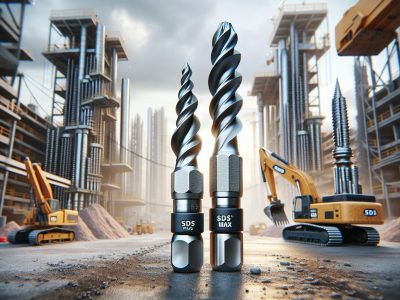
Contrary to confusion, SDS holds significance in the world of power tools, primarily drill bits. Three distinct types prevail – SDS, SDS Plus, and SDS Max. Each version deviates in terms of shank design and functionality, serving different purposes based on the magnitude of the task. For instance, SDS Plus, introduced as an advanced modification of SDS, caters to smaller tasks such as drilling holes in concrete or installing fixtures, providing an ease of operability for everyday tasks. But, in more substantial tasks that require higher power, SDS Max prevails supreme. Hence, it’s critical to decipher these distinctions in application when choosing between SDS and SDS Plus.
Key Features of SDS Drill Bits
The construction and designing of SDS drill bits are pivotal to their ought performance. These aspects are noteworthy, and understanding them can help you select the appropriate tool for your tasks.
The Design of SDS Shafts
Foremost, SDS shafts exhibit a unique design that sets them apart. Crafted with four grooves, two of them open-ended while the remaining two are closed-end, these designs plays a crucial role in SDS drills’ performance. The largest open groove, on the tool’s shank, interlocks with a ball bearing held within the chuck, so, providing a secure fit. Meanwhile, the smaller open groove allows for the sliding action during the hammering process. The two closed grooves, on the other hand, nestle within springs fitted in the chuck that keep the bit in place, enabling a hammering action without any rotation.
Take for instance a common SDS drill bit example like the Bosch SDS plus Bulldog Xtreme Rotary Hammer Bit. This prime example manifests how the design can impact efficiency, providing a firm grip, swift changing of the drill bit and a secure connection.
SDS Drill Bit Dimensions
Plus, SDS drill bits range in length and diameter, suitable for various drilling tasks. Standard SDS drill bits usually range from 110mm to 1000mm in length and about 5mm to 40mm in diameter. For example, a DeWalt Extreme 2 SDS Plus Drill bit measures 110mm in length and 5.5mm in diameter – an ideal choice for a home repair or minor construction tasks. In contrast, a drill bit like the Silverline 197982 Silverstorm SDS Plus Hammer Drill, measuring 600mm in length and 40mm in diameter, aptly serves heavy-duty tasks or professional construction work.
Understanding these dimensions is key. As it not only helps in choosing the right bit for the task but also ensures enhanced efficiency and durability of both the drill bit and the power tool.
SDS Plus: The Enhanced Version
Gaining in-depth knowledge about SDS Plus is indeed crucial for discerning tool enthusiasts. Building on the foundation of the SDS design, the SDS Plus edition brings incremental improvements to the table.
Reinforced Flutes and Enhanced Energy Transfer
SDS Plus drill bits feature reinforced flutes, a design modification that significantly improves the energy transfer from the power tool into the material you’re working on. This enhancement translates into a higher drilling rate, boosting efficiency and productivity. For instance, consider the DeWALT DW5461 Rock Carbide SDS Plus Hammer Bit. It embodies the advantage of reinforced flutes, demonstrating an exceptional performance on tough materials like concrete and brick.
Enhanced energy transfer, a standout feature of the SDS Plus tools, allows for a faster drilling action. It does so by reducing the energy loss between the drill bit’s impact point and the material. It’s crucial to realize that higher energy transfer equates to less effort required on your part, eventually ensuring output quality and performance longevity of your tools.
Compatibility and Versatility of SDS Plus
When we talk about the attributes of SDS Plus tools, their compatibility and versatility can’t go unmentioned. SDS Plus tools offer compatibility with a wide range of power tools, providing you with the flexibility to use them across various projects. Manufacturers like Bosch, DeWALT, and Makita produce a variety of drills and hammers compatible with SDS Plus bits, ensuring you can have the right tool for your specific task.
Versatility is another characteristic strength of SDS Plus. It lies in handling various tasks including but not restricted to drilling, chiselling, and screwing tasks. The end game with SDS Plus is indeed a seamless user experience, catering to various needs proficiently. From drilling holes in tough concrete walls to chiselling out channels for cable conduits, SDS Plus bites ensure a high-degree of job versatility.
Comparing SDS and SDS Plus
Shank Profiles and Slot Configurations
When comparing SDS and SDS Plus, the shank profiles and slot configurations play a significant role. Both systems feature a unique shank design, consisting of distinctive grooves and slots. The SDS has two open slots, while the SDS Plus comes with four. So, the additional slots on the SDS Plus offer greater tool retention and transfer of power, contributing to its enhanced performance.
Examining a few specific instances, like the Bosch HCFC2044 3/16 In. x 6-1/2 In. SDS-plus Bulldog Xtreme Rotary Hammer Bit, you can easily identify the reinforced flute design, a key feature of SDS Plus tools. This design enhances energy transfer, resulting in improved drilling rates and productivity.
Tool Compatibility: What You Need to Know
Tool compatibility cannot be overlooked when discussing SDS and SDS Plus. Most SDS Plus tools are backward compatible with the original SDS system. But, this doesn’t mean that every SDS Plus drill bit fits in an SDS drill, due to minor differences in the slot configuration.
Take, for example, the Makita HR2630 26 mm 3 Mode SDS Plus Rotary Hammer Drill. This model utilizes SDS Plus technology, yet maintain versatility by offering compatibility with SDS drill bits, a significant advantage for tradesmen catering to various projects.
Performance Differences in Various Materials
Even though them stemming from the same technology, there exist performance differences between SDS and SDS Plus when drilling into various materials. The SDS Plus holds an edge over SDS, especially when dealing with tougher materials like concrete and steel. This is because of its design enhancements, such as the aforementioned reinforced flutes.
For practical constructs, the EA Tools SDS Plus Hammer Drill Bit is a great example. It’s known for its remarkable performance in drilling concrete, because of the SDS Plus technology. Likewise, it’s also compatible with a range of SDS Plus rotary hammers, amplifying jobsite efficiency.
Understanding these differences and the corresponding attributes of SDS and SDS Plus prove crucial when selecting the right tool for your specific tasks. It’s about striking a balance between optimal performance, longevity, and efficiency.
When to Use SDS and When to Use SDS Plus
Considerations for Job Size and Material
When deciding between SDS and SDS Plus, factors like job size and material significantly influence the choice. In general, traditional SDS drill bits prove efficient for lightweight tasks and drilling into materials such as brick, concrete, and masonry. With a shank diameter of 10mm, SDS offers sufficient power to handle moderate-duty tasks on softer materials without any hassle. Consider, for instance, the use of the Bosch SDS Drill Bit for drilling clean, accurate holes in walls for installing fixtures or piping.
Contrarily, SDS Plus tools, with their enhanced features, demonstrate exemplary performance on heavy-duty tasks. Their reinforced flutes and versatile application make them suitable for drilling into harder materials, such as reinforced concrete or natural stone. They’re designed to address high-power requirements. The Bosch SDS Plus Bulldog Xtreme Rotary Hammer Bit, with its robust structure and optimized design, exemplifies the quality performance that SDS Plus tools deliver.
Professional Usage vs. DIY Projects
The choice between SDS and SDS Plus further widens when considering the user’s proficiency and application. SDS tools are generally more suited for DIY enthusiasts or homeowners due to their user-friendly design and functionality. They offer an uncomplicated way to carry out small-scale projects or repairs around the house.
On the other hand, SDS Plus tools stand out in professional settings where high efficiency and endurance are paramount. These tools are designed to withstand prolonged use, often in tougher environments. Besides, their compatibility with a wide range of tasks – drilling, chiselling and screwing – makes them the preferred choice for contractors and builders seeking reliable results and optimal performance. To illustrate, the DeWalt DCH273P2 20V Max SDS Plus Rotary Hammer provides the versatility, flexibility, and durability professional work demands.
Remember, choosing between SDS and SDS Plus depends on your specific requirements. Understanding their distinct features and strengths aids in selecting the right tool for the right task, thereby maximizing productivity and efficiency.
Care and Maintenance for SDS and SDS Plus Drill Bits
As already discussed in detail, SDS and SDS Plus tools, such as the Bosch SDS plus Bulldog Xtreme Rotary Hammer Bit, have distinct features that suit specific applications and materials. Apart from understanding their differences, taking proper care of SDS and SDS Plus drill bits stands crucial. Proper maintenance not only enhances their lifespan but also ensures safety during operation. Let’s investigate deeper into these aspects.
Prolonging the Lifespan of Your Drill Bits
Consistent maintenance routines extend SDS and SDS Plus drill bits’ lives. With proper cleaning, regular check for damages, and correct usage, you can lengthen the tool’s service life.
Cleaning: After each use, clean your drill bits. Dust and debris can reduce their efficiency, potentially damaging the bit over time. Eliminate this issue by brushing off any noticeable debris after every use.
Regular Inspection: Over time, wear and tear become inevitable. Inspect your drill bits regularly, looking for signs of stress fractures, wear, or any abnormalities on the drill bit.
Correct Usage: Use the right drill bit for the right job. If you’re working on a heavy-duty project, make sure you’re using an SDS Plus, not a standard SDS. Opt for an SDS for lighter, straightforward tasks on softer materials.
Safety Tips for Handling SDS Tools
Along with maintenance, ensuring safety when working with SDS tools becomes imperative. Here are a few tips that can help safeguard your health and enhance efficiency:
Personal Protective Equipment (PPE): Always wear safety glasses, a pair of quality work gloves, and sturdy work boots. Ear protection also becomes essential, considering the noise associated with drilling tasks.
Tool Inspection: Before starting a project, inspect the tool. Check for any damage or issue that might lead to a possible breakdown or injury.
Handling and Storage: Always handle your SDS drill tools with care. Secure them correctly when not in use to prevent unnecessary damage.
By following these tips, you can ensure prolonging the life of your SDS tools while maintaining safety on the job site. Remember, just as knowing the difference between SDS and SDS Plus aids in efficient task completion, proper care, and routine maintenance are equally vital in boosting tool longevity and safety.
Conclusion
Now that you’re familiar with the distinctions between SDS and SDS Plus, you’re better equipped to choose the right tool for your project. Remember, SDS Plus offers more versatility and enhanced features, making it an excellent choice for various tasks. Yet, don’t underestimate the power of standard SDS tools, especially when paired with high-quality bits like the Bosch SDS Plus Bulldog Xtreme Rotary Hammer Bit. Whichever you opt for, tool maintenance is crucial. By taking care of your SDS or SDS Plus drill bits, you’ll not only prolong their lifespan but also enhance safety on the job site. And, let’s not forget the importance of using personal protective equipment and proper storage. Your newfound knowledge will surely boost your efficiency and tool longevity, making every job a success. Keep drilling with confidence!
To provide the best experiences, we use technologies like cookies to store and/or access device information. Consenting to these technologies will allow us to process data such as browsing behaviour or unique IDs on this site. Not consenting or withdrawing consent, may adversely affect certain features and functions.
Functional
Always active
The technical storage or access is strictly necessary for the legitimate purpose of enabling the use of a specific service explicitly requested by the subscriber or user, or for the sole purpose of carrying out the transmission of a communication over an electronic communications network.
Preferences
The technical storage or access is necessary for the legitimate purpose of storing preferences that are not requested by the subscriber or user.
Statistics
The technical storage or access that is used exclusively for statistical purposes.The technical storage or access that is used exclusively for anonymous statistical purposes. Without a subpoena, voluntary compliance on the part of your Internet Service Provider, or additional records from a third party, information stored or retrieved for this purpose alone cannot usually be used to identify you.
Marketing
The technical storage or access is required to create user profiles to send advertising, or to track the user on a website or across several websites for similar marketing purposes.