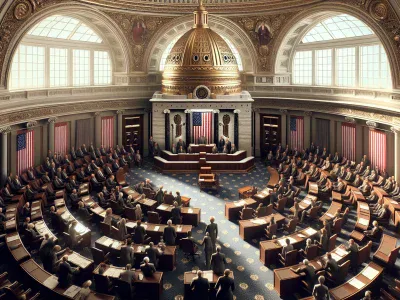
Picture yourself standing in the heart of the Capitol, sunlight streaming through grand windows as echoes of debate swirl around you. Two chambers—each with its own pulse, rhythm, and purpose—shape the laws that touch every corner of your life. But what really sets the House and Senate apart beneath the marble and tradition?
You might think they’re just two sides of the same coin, yet their differences hold the key to how your voice travels from local neighborhoods to the nation’s highest halls. Unraveling these contrasts doesn’t just satisfy curiosity—it sharpens your understanding of how power, compromise, and representation truly work in America. Ready to see the gears turning behind the scenes?
Overview of the House and Senate
Picture you, a citizen standing at the edge of the iconic Capitol steps, peering through the massive columns. Directly ahead, the House of Representatives buzzes with 435 voices—each one carrying the interests of a unique district from Alaska’s tundra to Manhattan’s blocks. If you turn slightly, the Senate looms more hushed. Fewer faces, just 100 senators, but each they wield equal weight regardless of their state’s population.
Why do you think it matters? The House, operating like a fast-moving river, channels the current of public opinion—elections hit every two years, which makes members responsive, sometimes even reactive, to waves of change. The Senate, instead, acts like a deep lake; senators serve six-year terms and most only face voters three times a decade. This longer cycle slows the process, offering a place for deeper debate and, sometimes, bipartisan pause.
You might recall the Affordable Care Act, a law that glimpsed the razor-thin vote margins where the Senate’s slower deliberation shaped the outcome, while the House raced to mirror the country’s polarized mood. Both chambers use committees—consider them like specialized teams—yet the Senate gives each state’s concerns equal time, while the House weighs in favor of population. Did this feel fair when, say, Wyoming’s two senators had the same floor power as California’s, representing nearly 40 million?
Sometimes, you’ll see lawmakers swap witty banter or unleash fiery speeches, but behind the grandstanding, the procedural rules and constitutional mandates draw boundaries tighter than any referee. The House, by law, starts all revenue bills—a nod to the Founders’ intent. The Senate confirms presidential appointments and approves treaties by a supermajority, often leading to gridlock or, occasionally, historic compromise (think: 1964 Civil Rights Act).
If you’ve ever wondered whose voice counts more, picture census-takers counting neighborhoods, deciding how big each state’s House delegation gets; or picture the Senate, balancing old and new states with equal numbers, locking in a check against runaway majority rule.
You’re part of this ongoing debate—every vote, every law, every tension between the people’s passion and the states’ wisdom, filtered through these two very different rooms under a single marble dome.
Structure and Membership
You find two chambers—distinct in structure, membership, and the nature of representation—within the U.S. Capitol’s storied walls. While you might consider them similar at a glance, exploring their framework reveals contrasting identities. Which chamber pulls more towards the people, and which reverberates with the steady voice of statehood?
House of Representatives
You see the House of Representatives standing as the bustling market of democracy—435 members racing on two-year electoral cycles, each seat tethered to shifting populations and ZIP codes. Every representative speaks for a slice of the 50 states, with California sending 52 while Wyoming claims 1. The seats, like musical chairs, are distributed Every ten years after the census, ensuring emerging cities, like Austin or Phoenix, grow in influence as demographics shift (U.S. Census Bureau, 2022).
Chairs in the House aren’t all equal. Seniority, committee assignments, and leadership roles ripple with unseen power, shaping who sets the agenda. The Speaker of the House, second in line to the presidency, guides the chamber’s tempo—picture Nancy Pelosi steering debate on stimulus bills or gaveling for unity in moments of crisis.
How does the House feel for members? Picture casting hundreds of votes a year—a churn of amendments, bills, quick debates. Members complain about spending more time in their districts than the marble halls, connecting with schools, mayors, and voters. Would you prefer the swiftness and constant outreach, or is this speed dizzying?
Senate
You encounter the Senate built on symmetry and endurance—100 seats, 2 per state, mapping the shared sovereignty of Wyoming and California alike. Each senator, standing for a six-year term, shields against the House’s quick tides. The chamber’s design means rural Vermont and crowded Texas share equal voice—a deliberate tension echoing the founders’ fear of unchecked populism (Federalist No. 62).
Senators stride differently. They wield longer terms, forging broader coalitions. Legendary filibusters—like Strom Thurmond’s 24-hour speech—showcase just how slow and dramatic decisions can become. The Majority Leader, often less visible than the Speaker, orchestrates committee appointments and priorities through negotiation.
You may wonder, why does the Senate act so deliberate? Reality is, the Senate was meant to “cool” legislation, giving less populous states leverage and pausing majoritarian rushes. Consider historic examples, like the impeachment trials or treaty ratifications—rare moments when a single chamber carries weight equal to the executive branch.
Which chamber would fit your legislative style? Would you anchor yourself in the House’s rapid tides or the Senate’s patient currents? Both formats sculpt American law, but their very structures shape the voice each brings to your government.
Powers and Responsibilities
Each chamber in Congress wields its own set of legislative tools, like two artisans shaping a single statute from marble. The House, with its swift tempo, carves quickly through popular issues, while the Senate, cautious and enduring, sculpts finer details. These complementary powers—sometimes clashing, often converging—define how your government responds to running challenges and rare crises.
Legislative Powers
The House and Senate share core responsibilities in lawmaking, but procedural constraints inject significant differences at every turn. Both chambers introduce, debate, and vote on bills, but only the House can start revenue-related legislation. Suppose you recall the debates over tax reform or budget reconciliation: those must begin among the 435 Representatives—by mandate, not preference (U.S. Constitution, Article I, Section 7).
Senators, though fewer in number, exerts profound influence through their role in amending and debating bills. Their tradition of unlimited debate—the filibuster—can bring the chamber to a standstill, as famously seen during the 1964 Civil Rights Act proceedings, when senators spoke for more than 60 days before a final vote. This structural check, cherished by some as a protection for minority viewpoints, frustrates others who seek swifter action. Did you ever wonder, as you watched C-SPAN, why a simple bill can languish in the upper chamber for months?
Unique Functions
Distinct constitutional functions set the chambers further apart. For instance, only the House can impeach a federal official, but only the Senate can try impeachments and remove officials from office if two-thirds of senators agree. This split power played out dramatically during the impeachments of Presidents Andrew Johnson, Bill Clinton, and Donald Trump—all impeached by the House, all acquitted by the Senate.
Beyond impeachment, the Senate alone confirms presidential appointments—think Supreme Court justices or Cabinet members. When Justice Amy Coney Barrett was nominated in 2020, every sitting senator’s vote shaped the composition of the highest court. The upper chamber also ratifies treaties, a legacy of 18th-century suspicion toward concentrated executive power.
Meanwhile, the House decides the presidency if no candidate wins a majority in the Electoral College, as happened in the election of 1824, placing a rarely used but significant power in representatives’ hands.
Chamber
Unique Legislative Power
Example (Year/Event)
House
Originates revenue bills
Tax Cuts and Jobs Act (2017)
House
Impeachment of federal officials
Impeachments of 1868, 1998, 2019
Senate
Tries impeachments
Senate trials (all acquittals)
Senate
Confirms presidential appointments
Ketanji Brown Jackson (2022)
Senate
Ratifies international treaties
New START Treaty (2010)
House
Decides contested presidential races
Election of 1824
Across Congress, powers and responsibilities flow like twin rivers—shaped by history, redirected by politics, and never stagnant. As you track fast-breaking headlines or follow a slow-moving debate, where do you see your voice echoing most—in the House’s clamor or the Senate’s deliberative silence?
Election Process and Terms
Every two or six years, Americans across neighborhoods and towns help write the next chapter of Congress. Your vote echoes in two very different contests—one shaped by the tides of your local community, the other by the weight of your entire state.
House Election Process
House elections use single-member districts. Each of the 435 seats reflects a district’s population, so densely-packed states like California get dozens, while Wyoming recieves just one. These races happen every two years; representatives must constantly tune in to local pulses. For instance, Alexandria Ocasio-Cortez unseated a longtime incumbent in New York’s 14th district by challenging the status quo and engaging younger voters [New York Times, 2018].
If turnout increases in a midterm year, the chamber rapidly shifts, amplifying new voices. Candidates often walk block-by-block, knocking on doors, listening to concerns, and adjusting their platforms in real time. The short term means representatives always consider how their decisions play on main streets and town halls.
Senate Election Process
Senate elections span the state, covering broad regions from city skylines to rural fields. There are only 100 seats—two for every state, no matter the population. Each senator serves a six-year term. Only about 1/3 face re-election every two years, so the chamber’s membership rarely turns over all at once.
A Senate campaign can resemble a marathon rather than a sprint. For instance, Illinois voters who put Senator Tammy Duckworth in office considered not only party but also military service, healthcare stance, and crisis response [Chicago Tribune, 2016]. If Senate control hangs on one race, the stakes—and scrutiny—intensify.
Senators sometimes navigate national currents instead of just local issues. They stay visible across years, meeting stakeholders statewide, holding town halls, and weighing whether today’s headlines merit long-term solutions. This design offers continuity; you might notice a senator’s voice growing more influential as their tenure builds.
Chamber
Total Members
Seats per State
Election Frequency
Term Length
Election Area
House
435
Population-based (1–53)
Every 2 years (all)
2 years
District
Senate
100
2 per state
Every 2 years (1/3)
6 years
Statewide
Picture crossing a river—House races flow quickly, refreshing the course often, while Senate elections are like stones set across the current, offering stable footing even as the water rushes by. If you ever feel your House vote holds immediate sway, it’s design. If you see Senate debates lingering, echoing through years, that’s the point. Which current do you feel more a part of?
Key Differences in Operation
Operation in the House and Senate looks different in nearly every session. When you picture the hustle in the House, you might see quick decisions, crowded floors, and a tempo that echoes Wall Street at closing bell. The Senate, on the other hand, resembles a quiet chess match—calm moves, careful watching, and the long view always in mind.
Rules and Procedures
Rules shape the legislative rhythm in both chambers. In the House of Representatives, strict rules and time limits push debates along. For example, most House bills face a cap of 40 minutes for discussion, so representatives got to make every word count (U.S. House of Representatives, Office of the Clerk). With 435 voices, disorder could erupt in seconds. House Rules Committee acts like a traffic cop, scheduling bills, setting speaking limits, and sometimes allowing only certain amendments. If a bill loses the committee’s favor, it’s rare that it even reach the floor.
Senate operates by different grammar entirely. Senators work under a tradition called “unanimous consent,” so a single member can slow, or even halt, debate. The famous filibuster gives any senator the right to speak at length to delay a vote. That’s how, in 1957, Strom Thurmond talked for over 24 hours to protest the Civil Rights Act—picture trying that in the House. Supermajority rules also make Senate confirmations and treaties tougher; with 60 of 100 votes required to unblock legislation, coalition building becomes the only path forward. (Source: U.S. Senate, Historical Office)
Leadership Roles
Leadership in these chambers tells very different stories. The Speaker of the House—currently Mike Johnson (as of 2024)—holds more formal power than any senator. The Speaker decides which bills move, who gets to speak, and how the agenda is shaped. The Speaker’s shadow stretches across committee assignments, legislative priorities, and even party discipline. In 2010, when Nancy Pelosi rallied the House for the Affordable Care Act, her organizational grammar was on full display.
For the Senate, power diffuses. The Vice President’s role as President of the Senate is mostly ceremonial—who leads? That falls to the Senate Majority Leader, currently Chuck Schumer (2024), who sets the floor schedule but can’t dictate debate or amendments so tightly. Seniority often trumps title; a junior House member might have less say than a 30-year Senate veteran. This looser structure makes compromise and negotiation more visible in the Senate, like when bipartisan gangs form to tackle issues the nation can’t ignore.
Why does this matter for you? When you see gridlock, consider the rules. If you notice last-minute votes, think about leadership. Every headline—from budget showdowns to Supreme Court confirmations—has roots in these operational differences, shaping the policies that ripple through your daily life.
Importance of the Differences
Understanding the differences between the House and Senate shapes your view of how federal laws finally come to life. Picture watching a relay race, where each chamber passes the political baton in their own way—one sprinting, the other pacing itself. For example, the House’s rapid turnover, requiring members to campaign every two years, means your local concerns can become national headlines quickly. When an issue explodes onto social media—like a natural disaster or a budget crisis—your representative might rush your voice to the floor within days, reflecting how the House mirrors public opinion with little delay (Pew Research Center).
Contrastingly, the Senate acts more like a seasoned chess player, plotting moves over years. Senators carry the weight of statewide interests and staggered six-year terms, making it difficult for tides of public opinion to overturn the chamber overnight. For instance, after the passage of the Affordable Care Act in the House, the Senate slow-walked the bill through hundreds of hours of debate, reflections, and amendments—making the final law a tapestry woven from multiple threads of compromise (Congressional Research Service, 2010). Only a body with time to breathe could so thoroughly examine each stitch.
Both chambers use their unique rules to check the other. If you’ve ever wondered why some laws never see daylight, look to the Senate’s 60-vote filibuster rule—a firewall against sudden whims. Meanwhile, the House, with strict time limits on debate, often demands quick decisions, pushing urgent matters forward even as the Senate drags its heels. Such friction isn’t a glitch—it’s a deliberate design that prevents either chamber from dominating completely (Federalist No. 62; Madison, 1788).
Even committee structures reinforce divergent priorities. In the House, party leadership wields the whip, telling committees when and how to act. Ever try to wrangle a group project? Picture it with 435 voices. The Senate, though, rewards individual seniority and encourages cross-party coalitions, making compromise almost inevitable.
Ask yourself: Which dynamic reflects your idea of democracy? The House promises quick action for passionate causes—consider how quickly relief funding for hurricanes gets pushed through. The Senate, cautious and reflective, slows controversial reforms for more scrutiny—such as the months-long negotiation over Supreme Court appointments. In rare moments of unity—like the passage of the Civil Rights Act of 1964—it’s the convergence of both chambers’ methods that forges a law lasting generations (National Archives).
Procedural quirks influence historical outcomes. The impeachment of President Andrew Johnson in 1868 got decided not in the fervent House, but in the Senate by a single vote. Think of that: Your senator, perhaps the only face you recognize from your state delegation, might tip the scales of history.
If you see frustration in gridlock, consider what’s protected—minority rights, regional voices, or citizens from sweeping fads. Institutions like the Senate exist because the founders feared fleeting passions as much as tyranny. The result is an architecture where your voice, channeled through two chambers, bends public policy in ways both immediate and enduring.
These differences may seem frustrating in the short term, but over decades, you get a system that forces new coalitions, breeds compromise, and gives even the quietest minority a shot at being heard. Do the House and Senate’s opposing tempos help or hinder progress? That debate sits at the very core of American government and your role in it.
Conclusion
Your understanding of the House and Senate shapes how you engage with the nation’s laws and your government’s future. Whether you’re drawn to the fast pace of the House or the thoughtful debate of the Senate your awareness of their differences empowers you to follow issues that matter to you.
As you watch Congress in action you’ll see how each chamber’s unique strengths and responsibilities play a role in shaping the country. Your voice matters in both—so stay informed and make it count.
To provide the best experiences, we use technologies like cookies to store and/or access device information. Consenting to these technologies will allow us to process data such as browsing behaviour or unique IDs on this site. Not consenting or withdrawing consent, may adversely affect certain features and functions.
Functional
Always active
The technical storage or access is strictly necessary for the legitimate purpose of enabling the use of a specific service explicitly requested by the subscriber or user, or for the sole purpose of carrying out the transmission of a communication over an electronic communications network.
Preferences
The technical storage or access is necessary for the legitimate purpose of storing preferences that are not requested by the subscriber or user.
Statistics
The technical storage or access that is used exclusively for statistical purposes.The technical storage or access that is used exclusively for anonymous statistical purposes. Without a subpoena, voluntary compliance on the part of your Internet Service Provider, or additional records from a third party, information stored or retrieved for this purpose alone cannot usually be used to identify you.
Marketing
The technical storage or access is required to create user profiles to send advertising, or to track the user on a website or across several websites for similar marketing purposes.