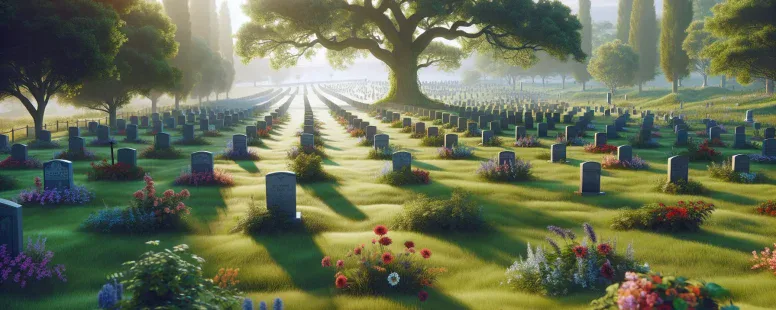
Picture wandering beneath ancient oaks as the sun dips low the air thick with the scent of moss and memory. You pause at a weathered stone and wonder—what stories hide in these silent rows? The words “graveyard” and “cemetery” might seem interchangeable but their roots run deeper than you think.
Unraveling the difference isn’t just about language—it’s a journey through history tradition and even a bit of mystery. You’ll discover surprising details that reveal how our ancestors honored their dead and how those choices still shape the landscapes around us. Prepare to see these resting places in a whole new light.
Understanding the Difference Between Graveyard and Cemetery
You step through old iron gates and wonder, is this a graveyard or a cemetery? The distinction often hides in plain site: graveyards attach themselves to churches, while cemeteries lie independent, sprawling over larger tracts of land. Think about when you walk beside St. Paul’s Churchyard in London—graves rest tight against ancient stone walls, intertwined with church history itself. Cemeteries like Père Lachaise in Paris, on the other hand, spread wide, inviting all faiths, and don’t rely on church oversight.
Picture trying to locate your ancestor’s grave. Would you ask a priest for a graveyard record, or check cemetery archives run by municipalities or private entities? In graveyards, family plots squeezed between headstones create crowded, almost tangled narratives, each marker nearly touching the next—a mosaic of community memory. Cemeteries, organized with mapped sections and planned landscaping, resemble parklands and feature sculpture gardens, reflecting changing societal views on mourning and public space.
Anecdotes multiply in local lore. Some say graveyards feel haunted by the whispers of the parish, while cemeteries inspire Sunday strolls and philosophical debate—Oscar Wilde’s tomb in Paris draws thousands seeking inspiration. Your own memories may link to churchyard Easter egg hunts or to Memorial Day picnics among cemetery oaks.
Public records and legal definitions offer another layer. The US Department of Veterans Affairs, for example, manages “national cemeteries” for veterans, establishing legal distinctions with regulations and perpetual care requirements (Source: va.gov). Graveyards, tied to religious institutions, rarely offer such formalized records, but instead carry legacy through congregation and oral tradition.
So, next time you see headstones stretching beneath a steeple, ask yourself: what stories do these graves whisper that, maybe, a vast, serene cemetery doesn’t? How do tradition, access, and stewardship shape your experience of commemoration? The roots of both words run deep in language and landscape, leaving you to decide where meaning most strongly takes root.
Historical Origins of Graveyards and Cemeteries
You see the word “graveyard” and instantly picture a huddle of headstones beside an old church, shrouded in fog, don’t you? “Cemetery”—by contrast—evokes a different image; perhaps a sprawling parkland with marble markers beneath big open skies. These impressions reflect centuries of shifting beliefs, changing laws, and evolving language.
Early Burial Practices
Early burial practices in Western Europe centered graves around houses of worship in tight-knit villages. You’d have found parishioners buried steps from Sunday services, reflecting the medieval belief that proximity to the church secured spiritual comfort. In England during the 7th and 8th centuries, clergy decided almost everyone in their flock belonged together in parish churchyards—the earliest “graveyards.” Charlemagne’s reign set the trend in France, too, ordering burials in “consecrated” church ground.
During outbreaks like the Black Death in the 14th century, churchyards simply couldn’t contain the dead. You’d have seen mass burials outside town walls; cities like Paris established extramural ossuaries, such as the Cimetière des Innocents. Most records from that time are sparse, but archeological digs reveal countless overlapping burials, a physical testament to society’s struggle with mortality.
Evolution of Terminology
Evolution of terminology for burial grounds followed social and legal changes. “Graveyard” entered common English in the 12th century, directly describing those crowded church-adjacent plots. You probably notice, though, modern “cemetery” sounds quite more generic—this word’s roots lie in Ancient Greek “koimeterion,” meaning “a sleep place.”
Cemeteries started appearing in records by the late 18th century, when rising urban populations forced cities like London and Boston to develop landscape burial grounds away from churches (Smithsonian Magazine, 2013). People wanted somewhere orderly and sanitary, free from church control and rapid overcrowding. By 1831, Mount Auburn Cemetery opened near Boston, debuting America’s first “rural cemetery” with landscaped paths and open plots for all faiths.
Which resonates more with you—a graveyard’s weaving family histories, or a cemetery’s promise of peaceful universality? Think about how words shape your sense of place, inviting you to ponder the way landscapes of the dead continue to define the living.
Key Differences in Location and Layout
You might think every final resting ground feels the same, but look a little closer—let’s see how their surroundings and design tell distinct stories of the living and the departed.
Churchyards Versus Independent Grounds
Graveyards embed themselves beside churches, their slate markers huddled close, a silent congregation clinging to faith’s architecture. Suppose you stroll through the grounds of St. Paul’s in New York or All Saints’ in England—centuries-old stones tilt among ancient oaks, legend and lichen woven together. Here, the parish and memory intertwine, so each grave maintains a parish connection. You’ll notice how these graveyards hold generations from one community, grandfathers buried beside grandsons, local lore running thicker than the moss. Would you feel more connected to your own ancestry if you walked these tight-knit plots?
Cemeteries, on the other hand, stand apart—literally, often lying on the town’s edge or within landscaped gardens, their gates opening to all, not only parishioners. As The Mount Auburn Cemetery reveals (National Park Service), American reformers in the 1800s sought fresh starts for burials: more spacious, public parks, circles of marble, not church clocks, marking time. Here, faiths mingle, names unfamiliar to each other, but bound in a democracy of rest. Do these sprawling layouts make you consider the growing diversity and anonymity of modern life?
Space and Design Considerations
Cemeteries and graveyards wear their space like a signature—each plot and path shaped by different hands and hopes. In graveyards, space tightens, old burials crowding new ones, informal footpaths threading through ivy and stone. Boundaries, set by church lands, create physical limits: plots overlap, headstones lean, some graves have vanished stories. Can you picture the hush of early morning, sunlight threading between crooked stones?
Cemeteries plan their space almost mathematically, with wide rows, tree-lined lanes, water features, and room for future expansion (American Planning Association). Here, design follows anticipation, not just tradition. You’ll find bench-lined walkways, mausoleums, and carefully mapped family sections. Sometimes, you’ll meet wildlife—geese gliding over a pond, squirrels darting between monuments—reminding you that these sanctuaries breathe with nature as well as history.
So when you pass through iron gates or crumbling stone walls, ask yourself: do the living shape these places, or do these places shape us? The difference between graveyard and cemetery isn’t just in name; it’s a reflection of your community’s heart and its memory’s horizon.
Cultural and Religious Significance
Cultural and religious practices shape your experience of graveyards and cemeteries, influencing memories, rituals, and community bonds inside these spaces. Each site isn’t just about death—it’s a stage for beliefs, where the living and the past keep a silent conversation going.
Associations with Traditions and Rituals
Rituals within graveyards carry the weight of centuries of religious meaning. You see graves hugging ancient churches, each stone marked with Latin crosses, Qur’anic verses, or Hebrew names. Candlelit vigils on All Souls’ Day illuminate Catholic graveyards across Spain or Mexico, as families gather to share food, memories, and hopes for intercession—a vivid example of theology living in memorial. Orthodox Christians in Romania paint eggs and bless bread at graves during Easter, while Jewish mourners leave smooth pebbles atop headstones, a practice marking lasting presence and respect.
Cemeteries, in contrast, reflect societal change and religious plurality. Islamic burial rows might align toward Mecca, Buddhist memorial gardens interring ashes near pagodas, and secular memorial parks feature sculpture gardens rather than carved angels. Colonial New England’s “soul effigy” gravestones once warned the living with winged skulls—a metaphor for Puritan anxiety—whereas the rolling lawns of 20th-century garden cemeteries symbolize a hopeful crossing to eternity.
Consider how these rituals ask questions: Who guards your memory after you’re gone? Does ritual comfort or disrupt grief? Readers often find their own answers within the symbolism etched on stone or echoed during shared prayers.
Impact on Community Practices
Community identity patterns around burial ground customs. In rural Ireland, village graveyards double as sites of seasonal fairs, their boundaries marked with hawthorn. Elder locals, storytellers themselves, recall encounters with unquiet spirits—a folklore anchoring place to tradition. In Southern US states, “Decoration Day” sees families repaint ironwork, plant lilies, and share potluck picnics at ancestral graves, weaving annual rhythms of remembrance.
Modern cemeteries, with their nonsectarian openness, reframe death as both an individual and collective rite. Urban planners design them to host public art walks and nature programs, inviting diversity but sometimes diluting intimacy. There’s tension: Do you feel more at home among closely-packed ancestral plots or the organized anonymity of new cemeteries?
Research from the Association for Gravestone Studies finds that communities preserve oral histories best in older graveyards, where storytelling, legend and local myth fill gaps left by missing records. Veterans’ cemeteries, like Arlington, morph collective mourning into national memory—a sociopolitical ritual reinforcing shared identity.
You can ask yourself—do burial spaces build communities or divide them? The conversation continues, long after the last bell rings out over the stones.
Modern Usage and Perceptions
Modern usage of “graveyard” and “cemetery” reflects shifting cultural landscapes and practical realities. Your everyday language choices trace centuries of separation between tradition, religion, and urban planning.
Shifts in Language Over Time
You can hear the word “graveyard” echo with history, old stone walls, and weathered church doors—maybe you picture ancient oaks throwing shadows over crumbling headstones when someone mentions it. “Cemetery”, in contrast, feels broad, sanitized, a space marked by symmetry and spaciousness. Dictionaries like Merriam-Webster define “graveyard” explicitly as a burial ground beside a church, while “cemetery” refers to any burial place, usually unaffiliated with religious property.
In the 21st century, language evolves alongside you. Journalists, city planners, and obituary writers favor “cemetery” as inclusion becomes a social value. Pop culture cements this—with movies like Pet Sematary invoking uneasy feelings, while real estate ads praise “beautiful cemetery views.” Can your word choice change how you mourn or remember ancestors? Local etiquette shapes the answer, with communities in New England still invoking “graveyard” when referencing saints resting outside white-steepled churches.
Legal and Administrative Distinctions
Modern burial sites operate under a web of regulations, ownership models, and bureaucratic layers. A graveyard usually sits on church land, so its plots often fall under religious law, with property managed by congregational boards or diocesan leadership (see Episcopal Church Canons). Records, if they exist, may live in yellowed parish ledgers, backed by memories or oral recitation during major religious festivals.
Cemeteries, in comparison, often resemble small nonprofit enterprises or city-deeded grounds. The US Department of Veterans Affairs maintains 155 national cemeteries as of 2024, with federal recordkeeping and digital archives (source: VA.gov). Private cemeteries—think Forest Lawn or Green-Wood—contract groundskeepers, offer perpetual care endowments, and submit to zoning codes. You might notice that municipalities enforce perpetual maintenance to prevent urban blight, while church graveyards may rely on volunteers.
Which system works better? You navigate this question every time your family faces burial arrangements. Anecdotes circulate about lost family plots or surprising discoveries in both, inspiring genealogists and stirring community debates about property rights. Local ordinances in Savannah force maintenance of even the smallest churchyard, while sprawling Texas cemeteries sometimes struggle with funding.
As society reimagines remembrance, your decisions about burial space intertwine with language, law, and memory.
Conclusion
Choosing between a graveyard and a cemetery isn’t just about location or tradition—it’s about how you want to honor and remember loved ones. Your decisions reflect your values, beliefs, and connections to history and community.
As you walk through these sacred spaces, you’re participating in a living narrative that spans centuries. Whether you seek the quiet intimacy of a graveyard or the open embrace of a cemetery, your choice shapes the legacy you leave and the stories you help preserve for generations to come.
To provide the best experiences, we use technologies like cookies to store and/or access device information. Consenting to these technologies will allow us to process data such as browsing behaviour or unique IDs on this site. Not consenting or withdrawing consent, may adversely affect certain features and functions.
Functional
Always active
The technical storage or access is strictly necessary for the legitimate purpose of enabling the use of a specific service explicitly requested by the subscriber or user, or for the sole purpose of carrying out the transmission of a communication over an electronic communications network.
Preferences
The technical storage or access is necessary for the legitimate purpose of storing preferences that are not requested by the subscriber or user.
Statistics
The technical storage or access that is used exclusively for statistical purposes.The technical storage or access that is used exclusively for anonymous statistical purposes. Without a subpoena, voluntary compliance on the part of your Internet Service Provider, or additional records from a third party, information stored or retrieved for this purpose alone cannot usually be used to identify you.
Marketing
The technical storage or access is required to create user profiles to send advertising, or to track the user on a website or across several websites for similar marketing purposes.