Picture yourself strolling through a sunlit park in late May. The air hums with the scent of blooming flowers and distant barbecues while American flags ripple gently in the breeze. You pause at a memorial, feeling a quiet reverence—but what exactly are you honoring today? Is it the living heroes in your community or the fallen who gave everything?
You might be surprised how many people mix up Veterans Day and Memorial Day. These holidays share patriotic spirit yet hold distinct meanings that shape how we remember and celebrate. Understanding their true significance not only deepens your appreciation but also connects you to stories of courage and sacrifice that echo through every flag, every parade, and every heartfelt thank you.
Understanding Veterans Day
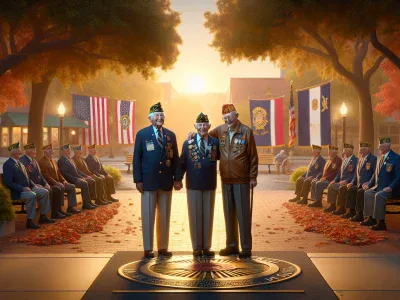
You maybe picture flags waving on crisp November mornings, children asking their parents why everyone pauses to clap for the old soldier in the parade. Veterans Day shapes how your community honors sacrifice—not with quiet remembrance, but by recognizing living men and women who’ve wore the uniform. Unlike the cookouts of Memorial Day, this date invites you to meet the people behind your country’s freedoms.
History and Origins of Veterans Day
Veterans Day begins as Armistice Day, marking November 11, 1918—the moment World War I guns fell silent. President Woodrow Wilson, reflecting a global sigh of relief, called for this date to be observed with gratitude and peace (National Archives, 2023). The holiday took a dramatic turn after World War II and the Korean War when voices like Raymond Weeks, a decorated veteran from Alabama, suggested Armistice Day should honor all American veterans, not just those fallen in war (Department of Veterans Affairs, 2022). By 1954, Congress approved, and President Dwight D. Eisenhower signed Veterans Day into law. why your teachers or coworkers correct those who say “Happy Memorial Day” in November? That language shift, from mourning to celebration, reflects decades of evolving diplomacy and national identity. The United States stand alone in this specific date, but nations such as Canada and Australia observe similar holidays the same day for different reasons—Remembrance Day and Armistice Day.
How Veterans Day Is Observed
Veterans Day unfolds like a living history book in towns big—like New York’s Fifth Avenue marches—and small—maybe a potluck at the VFW hall, or a flag-laying at the town veteran’s cemetery. The law requires every public school in Texas and Illinois to hold activities about military service (Texas Statutes, 2023), but the traditions stretch to moments with neighbors sharing stories, museums opening their doors, and local governments leading ceremonies with mayors often reading out names.
Consider a classroom, students hearing a Vietnam veteran describe the sound of helicopters overhead, or a mother explaining a photo of her Marine father to her child. Some businesses offer free meals to veterans—Applebee’s, Chili’s, Denny’s—while civic buildings fly the Stars and Stripes at full staff as a nod to the living. Veterans debate, sometimes, whether sales and discounts overshadow the true meaning, but most believe recognition—even if small—matters.
How do you thank someone who served? Maybe it’s not always about grand gestures but remembering, year after year, to ask the veteran next door what the uniform meant to them.
Understanding Memorial Day
Memorial Day pulses with reverence and gratitude each year. It’s your moment to pause amid the start-of-summer excitement and remember why those flags flutter so insistently in the breeze. Why is Memorial Day so powerful for American identity? You’ll want to dig deeper.
History and Origins of Memorial Day
Memorial Day grew roots in the aftermath of the Civil War—a time when loss touched almost every American home. Mothers and widows in cities like Columbus, Mississippi, decorated graves of both Union and Confederate soldiers with magnolias and roses, blurring battle lines (Blight, Race and Reunion, 2001). By 1868, General John A. Logan of the Grand Army of the Republic proclaimed May 30 as Decoration Day for “strewing flowers or otherwise decorating the graves of comrades.” This yearly ritual, echoing across local cemeteries and national headlines, gradually evolved into Memorial Day. The Uniform Monday Holiday Act consolidated the date to the last Monday of May in 1971, intending to give people more three-day weekends, though some veterans’ groups think the shift have weakened the day’s solemn meaning.
Why did so many towns claim to be Memorial Day’s birthplace? It’s more than pride—a nation grieving collectively. Some say Waterloo, New York, started it in 1866 with a community-wide commemoration; others point to Charleston, South Carolina, where Black Americans honored fallen Union soldiers before national recognition. Whatever the specifics, the connective thread is unmistakable: a commitment to remember that freedom costs lives.
How Memorial Day Is Observed
How you mark Memorial Day varies like family recipes at a potluck—customs shift by generation, region, and background. Across the country, parades thread through town squares, bands sounding taps for all who listen, and children wave flags as veteran groups march past. National cemeteries, including Arlington National Cemetery, bloom with flags placed by volunteers and military families at more than 400,000 graves. The ceremony hushes visitors; symbolism speaks louder than any words.
Some folks begin Memorial Day at 3 p.m., the National Moment of Remembrance, observing 1 minute of silence—one small act, shared by millions, connecting backyard barbecues and solemn memorials. You’ll see families honoring loved ones at gravestones or telling stories of courage and heartbreak around tables. For others, Memorial Day means racing into summer: baseball games, cookouts, beaches. But every form carries traces of the original promise—for every hot dog grilled, a memory honored.
Do you notice how history never entirely fades? Next time you pass a field of flags or glimpse a bouquet on an out-of-the-way grave, maybe you’ll pause. Memorial Day’s mosaic of rituals—personal, communal, and national—threads your experience to the past. What would you add that deepens the meaning, not just for you, but for everyone who watches those colorful flags whip in the May wind?
Key Differences Between Veterans Day and Memorial Day
Understanding the distinction between Veterans Day and Memorial Day helps you engage with American history beyond barbecue smoke and waving flags. These holidays may both paint towns in red, white, and blue, but you’ll step into two worlds of meaning when you celebrate each.
Whom Each Holiday Honors
Veterans Day honors all United States military veterans—living or deceased—who served in the country’s armed forces. Gathered on November 11, you find communities saluting family members who’ve returned home, sharing stories in schools, and meeting in city squares for parades. By contrast, Memorial Day, observed on the last Monday in May, commemorates only those who died in military service. It’s less about shaking a veteran’s hand and more about remembering those who never came home, their names etched in marble or stitched into the fabric of families.
Consider the Vietnam Veterans Memorial in Washington, D.C.: On Veterans Day, visitors lay flowers for any who served; on Memorial Day, they pause longer at the engraved names of lost loved ones. Can you picture the difference in conversation, the hush in the air?
Traditions and Activities
Veterans Day traditions usually center on recognition and living connections. Schools frequently invite veterans to speak, sharing firsthand accounts of past conflicts from World War II, Korea, Vietnam, and modern operations. Parades march through small towns and major cities, flags waving, veterans riding in convertibles or walking alongside grandchildren. Cafés, museums, and restaurants provide free meals to those who’ve worn the uniform (U.S. Department of Veterans Affairs).
Memorial Day, though, drapes itself in solemn rituals as well as casual gatherings. Since 1868, citizens decorate soldiers’ graves with flowers and small flags—a sight repeated in cemeteries large and small. At exactly 3 p.m. local time, the National Moment of Remembrance hushes crowds at sporting events and backyards alike, all bowing heads for a single silent minute (The White House, National Moment of Remembrance Act). Holiday weekends overflow with picnics, pool parties, and the unofficial start of summer, but at heart, the day’s pulse beats with gratitude for the fallen.
Do these ceremonies ever blur together? Sometimes, yes—many Americans conflate the gratitude expressed on both days, forgetting why the flag flies at half-staff on Memorial Day morning while waving highest on Veterans Day. Which stories are being told at your own family’s table this season?
Importance of Recognizing the Difference
Noticing the difference between Veterans Day and Memorial Day shapes how you honor the military, their history echoing in every flag or story you share. You ever wondered, standing by a grave with poppies swaying, why some celebrate while others mourn? That isn’t just tradition—it’s a matter of meaning. If you treat Veterans Day like Memorial Day, you miss the voices of the living veterans—each one carry tales of courage, transition from uniform to civilian, like Sergeant William Brown, who still shares his lessons at the local VFW. Memorial Day, in contrast, wraps its arms around memory and loss, the stories ending with sacrifice, not survival.
Think of these days like two paths through a battlefield memorial park. On Veterans Day, you might walk among the living, shaking hands with those who’ve returned. Conversations buzz with gratitude. You ask, “What was it really like?” and find humor, resilience, sometimes pain. Memorial Day pulls you into a hush, the markers rowed like silent sentinels. Maybe you pause by a name etched in stone, feeling the cool shadow. You realize that every misplaced word or mixed meaning risks erasing nuance.
It’s not just semantics; the Department of Veterans Affairs and the History Channel both stress (in articles from 2023) the importance of respecting each holiday’s intent. Community organizers often correct children or neighbors during school lessons or parade announcements, echoing, “Today we remember the fallen. In November, we thank those still with us.” When you recognize the right context, you help sustain the dignity of both observances. So many families, like the Martinez family in Texas, light a candle in May but host their grandfather’s story circle in November—it matters, to them, that you get it.
Some might ask, “Does it matter what you call it?” Yes, because every confusion chips away at collective remembrance. Flipping meanings may seem small, but in national conversation, it accumulates. Social scientists from Pew Research suggest, in 2022 data, that clear language about national holidays strengthens cultural cohesion and civic identity. Picture telling a child, “We’re honoring heroes who died,” and next season, “Let’s thank Grandpa for his service,” instead of blurring the lines. Clarity empowers empathy—it helps you look deeper for the who, not just the when.
Feel, question, and share each story with its truth. In a world streaming with hashtags like #HonorThem and #ThankAVet, drawing the line reminds you: every memory and handshake carries different weight. Don’t just pass by these days; walk through them with purpose, shaping remembrance into action.
Conclusion
When you take the time to understand the true meaning behind Veterans Day and Memorial Day you’re not just honoring tradition—you’re deepening your connection to the sacrifices and stories that shape our nation. These holidays offer you a chance to show gratitude in ways that go beyond ceremony or celebration.
Whether you’re reaching out to a veteran or pausing to remember those who gave everything your awareness makes a difference. By honoring each day for what it truly represents you help ensure that every act of remembrance carries the respect and empathy it deserves.
To provide the best experiences, we use technologies like cookies to store and/or access device information. Consenting to these technologies will allow us to process data such as browsing behaviour or unique IDs on this site. Not consenting or withdrawing consent, may adversely affect certain features and functions.
Functional
Always active
The technical storage or access is strictly necessary for the legitimate purpose of enabling the use of a specific service explicitly requested by the subscriber or user, or for the sole purpose of carrying out the transmission of a communication over an electronic communications network.
Preferences
The technical storage or access is necessary for the legitimate purpose of storing preferences that are not requested by the subscriber or user.
Statistics
The technical storage or access that is used exclusively for statistical purposes.The technical storage or access that is used exclusively for anonymous statistical purposes. Without a subpoena, voluntary compliance on the part of your Internet Service Provider, or additional records from a third party, information stored or retrieved for this purpose alone cannot usually be used to identify you.
Marketing
The technical storage or access is required to create user profiles to send advertising, or to track the user on a website or across several websites for similar marketing purposes.